Bedroom Ceiling Decorative Polyurethane Faux Beams
Interior Installation: fauxwoodbeams 027
Sleep Expert bedroom Environment Perspective
Bedroom design affects sleep quality more than most people realize. Light exposure, noise levels, air quality, and visual environment all influence how quickly we fall asleep, how deeply we sleep, and how rested we feel in the morning. Ceiling beams can contribute positively or negatively to the bedroom environment depending on how they're specified. After consulting with sleep specialists and reviewing the research on bedroom environmental factors, here's my evidence-informed approach to bedroom beam selection.
Faux Wood Beam Installation
Bedroom design affects sleep quality more than most people realize. Light exposure, noise levels, air quality, and visual environment all influence how quickly we fall asleep, how deeply we sleep, and how rested we feel in the morning. Ceiling beams can contribute positively or negatively to the bedroom environment depending on how they're specified. After consulting with sleep specialists and reviewing the research on bedroom environmental factors, here's my evidence-informed approach to bedroom beam selection.
writingStyle
sleep-expert bedroom-environment
Recommendations
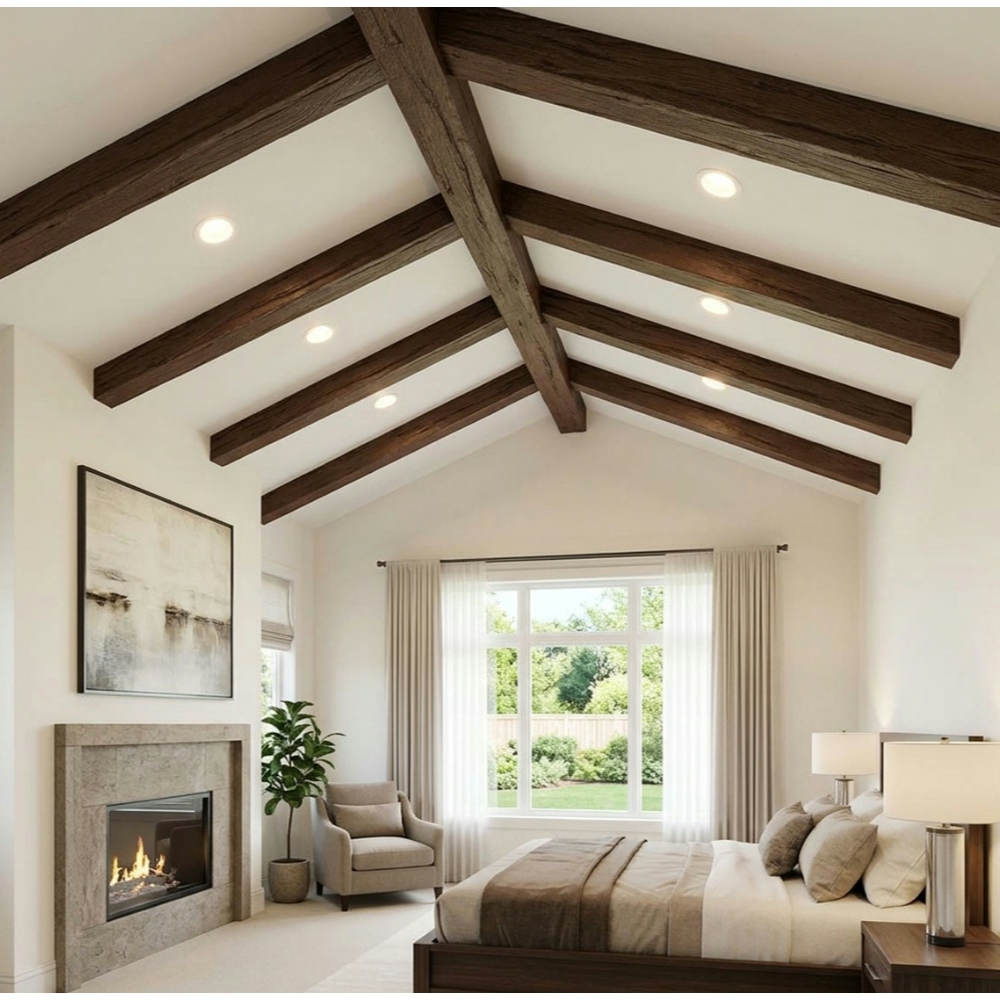
For most bedrooms, I'd recommend a single statement beam rather than multiple beams. The bedroom ceiling should be visually quiet to support relaxation - one architectural element is enough. The beam should be in a location that doesn't interfere with the bed position - either running perpendicular to the bed (so it doesn't visually 'press down' on the sleeper) or aligned with the room's symmetry (over a centered bed or centered dresser).
Finish Considerations
Matte finishes are generally better than gloss for bedrooms - they create less visual stimulation and don't reflect light as dramatically. Mid-tone wood colors work well because they're warm without being visually loud. Very dark beams can feel oppressive in a bedroom; very light beams can feel sterile. The goal is a finish that adds warmth and character without dominating the visual environment.
Integration
Bedroom beams often need to coexist with ceiling fans, light fixtures, and window treatments. Coordinate the beam layout with the ceiling fan location - either align the beam with the fan axis or position it perpendicular, never in random relationship. For window treatments, the beam shouldn't interfere with curtain rod mounting or with the operation of any motorized shades.
Scale and Proportion
Bedrooms are typically smaller than living spaces, which means beam proportions matter more. A beam that's appropriate in a 16x20 living room will dominate a 12x14 bedroom. For standard bedrooms, I'd recommend beam profiles in the 4x6 to 6x8 range rather than the larger 8x10 or 10x12 profiles used in larger rooms. The beam should add architectural interest without making the ceiling feel lower than it is.
Long-term Satisfaction
Bedrooms are rooms people use every day for decades - longer than most living spaces. The beam you choose should be something you can live with for 20+ years without tiring of it. Trends come and go, but a well-proportioned beam in a classic finish will look as good in year 20 as it did in year one. Choose for longevity rather than for current fashion.
Sleep Environment Factors
Frequently Asked Questions
Are faux wood beams realistic looking?
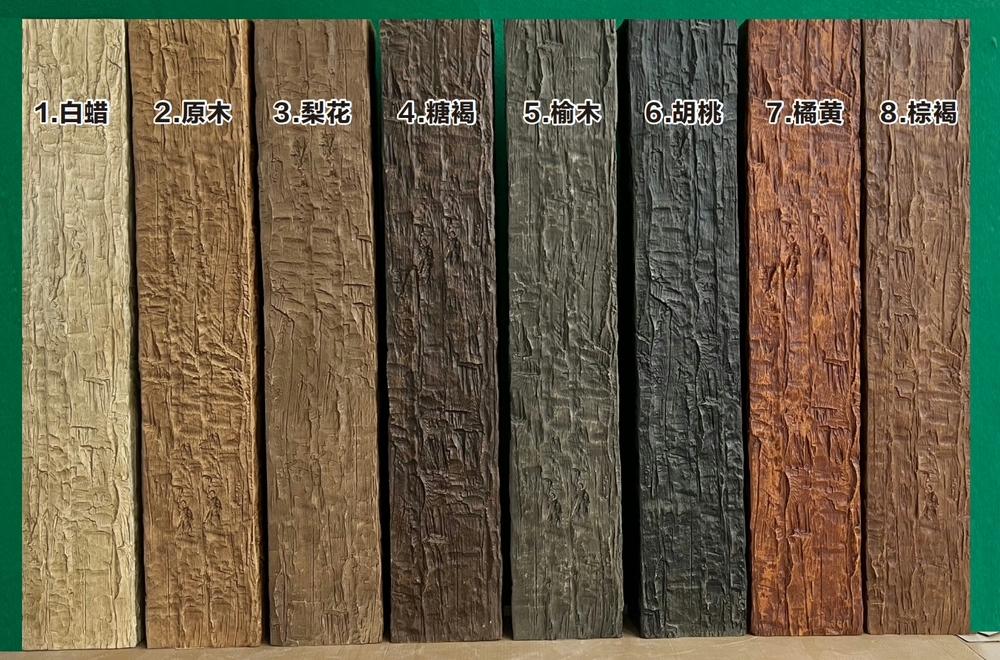
Yes, our faux wood beams feature hand-carved textures and multi-step finishing that captures every detail of authentic aged wood. Most people cannot tell the difference.
How much do these beams weigh?
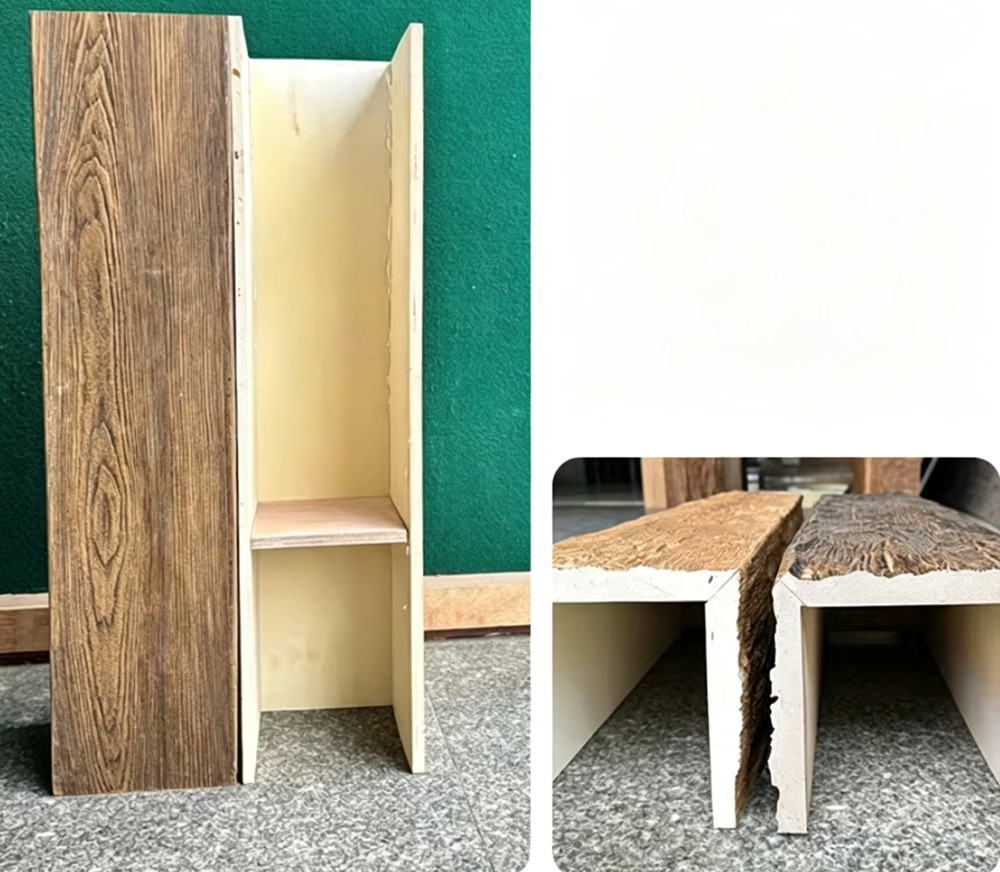
Our faux wood beams are approximately 88% lighter than real wood. A typical 8-foot beam weighs only 10-15 pounds, making DIY installation easy.
Can I install these outdoors?
Yes, we offer outdoor-rated faux wood beams that are UV-resistant and waterproof, perfect for covered patios and porches.
How do I get a quote?
Click the "Get Inspired - Contact Us" button above. We typically respond within 2-4 hours with pricing tailored to your project.