
Production home builders operate within brutal economic constraints—buyers expect distinctive architectural character at entry-level price points, construction schedules compress every phase to minimize carrying costs, and profit margins require relentless material cost management. Custom polyurethane faux beams address all three pressures simultaneously. Factory-direct sourcing eliminates distributor markup that can add 40-60% to beam costs. Custom manufacturing matches exact plan specifications, preventing the field modifications and waste that stock materials generate. Wholesale volume pricing transforms ceiling beams from luxury upgrades into standard features that differentiate builder product without destroying margin structure. For builders completing 20, 50, or 200+ homes annually, these advantages compound across every unit delivered.
Why Custom Beats Stock for Production Builders
Standard catalog beams force architectural compromise. Stock suppliers offer limited dimensional options—typically 6x6, 8x8, and 6x10 profiles in fixed 8, 12, and 16-foot lengths. Floor plans rarely align with these constraints. A great room ceiling spanning 22 feet requires either visible seams joining multiple beams or expensive custom ordering through traditional channels. Ceilings 9 feet 4 inches high get beams sized for 8 or 10-foot heights, looking either too small or requiring cutting that wastes material and time.
Custom manufacturing eliminates these problems systematically. Specify beams at 22 feet 6 inches for that great room—no seams, no splicing, no visible joints. Order 9 foot 4 inch heights matching exact ceiling dimensions. Request 7x9 cross-sections that perfectly proportion visual weight against room scale. This precision reduces installation labor, eliminates material waste, and delivers the architectural intent that buyers pay premiums to obtain.
Texture and color customization creates signature aesthetics that distinguish builder brand. Every production builder competes against similar floor plans in the same price segments. Buyers touring multiple communities see nearly identical spaces until they encounter details that signal quality and uniqueness. Custom beam textures—hand-hewn rustic, smooth contemporary, or lightly distressed farmhouse—establish visual identity. Proprietary stain colors matching specific flooring selections or cabinetry finishes create cohesive interiors that buyers remember and recommend.
Factory Direct Economics and Margin Protection
Distribution layers destroy profit margins. Traditional supply chains run manufacturer → national distributor → regional distributor → local dealer → builder, with each intermediary adding 15-25% markup. On a $200 beam wholesale cost, these layers can push builder purchase price to $350-400. Factory-direct purchasing collapses this chain, delivering manufacturer pricing directly to builders. That same $200 beam costs $220-240 including freight and customs—a 30-40% savings that either flows to builder margin or funds additional features differentiating product from competition.
Volume commitments unlock the deepest pricing tiers. Annual commitments of 2,000-3,000 linear feet—equivalent to 30-40 homes at typical beam usage rates—qualify for tier-one factory pricing. Builders executing multiple communities or operating in multiple markets easily reach these thresholds. Some manufacturers structure pricing by calendar year, allowing builders to aggregate purchases across projects. Others offer project-specific pricing for developments containing 50+ units, recognizing that multi-year buildout periods prevent annual purchase consolidation.
Payment structure affects project cash flow but shouldn't deter factory-direct sourcing. First-time orders typically require 50% deposit at placement and 50% before shipment. This upfront payment concentrates cash deployment but delivers material at costs that recover the financing expense within 2-3 home closings. Established relationships often negotiate 30% deposits and net-30 payment on balance, significantly easing cash flow pressure. Builders with strong financials sometimes arrange letters of credit eliminating deposits entirely while protecting manufacturer payment security.
Custom Specification Process and Lead Time Management
Design development drives custom specification. During plan design or modification, identify every beam location, desired visual effect, and dimensional requirement. Great room beams spanning ceiling length create drama. Kitchen beams positioned over islands define work zones. Bedroom beams in master suites add warmth without overwhelming smaller spaces. These decisions during design prevent specification scrambling during construction that delays framing closeout and interior finish start.
Dimensional specifications require three measurements: length, width, and height. Length corresponds to span between walls or desired visual extent. Width determines face dimension—the beam side visible from below. Height creates the vertical face profile. An 8-inch width by 10-inch height beam shows 8 inches of wood grain across its bottom face and 10 inches on each vertical side. Specify dimensions matching architectural drawings exactly—manufacturers mold beams to submitted specifications without adjusting for what they think you meant.
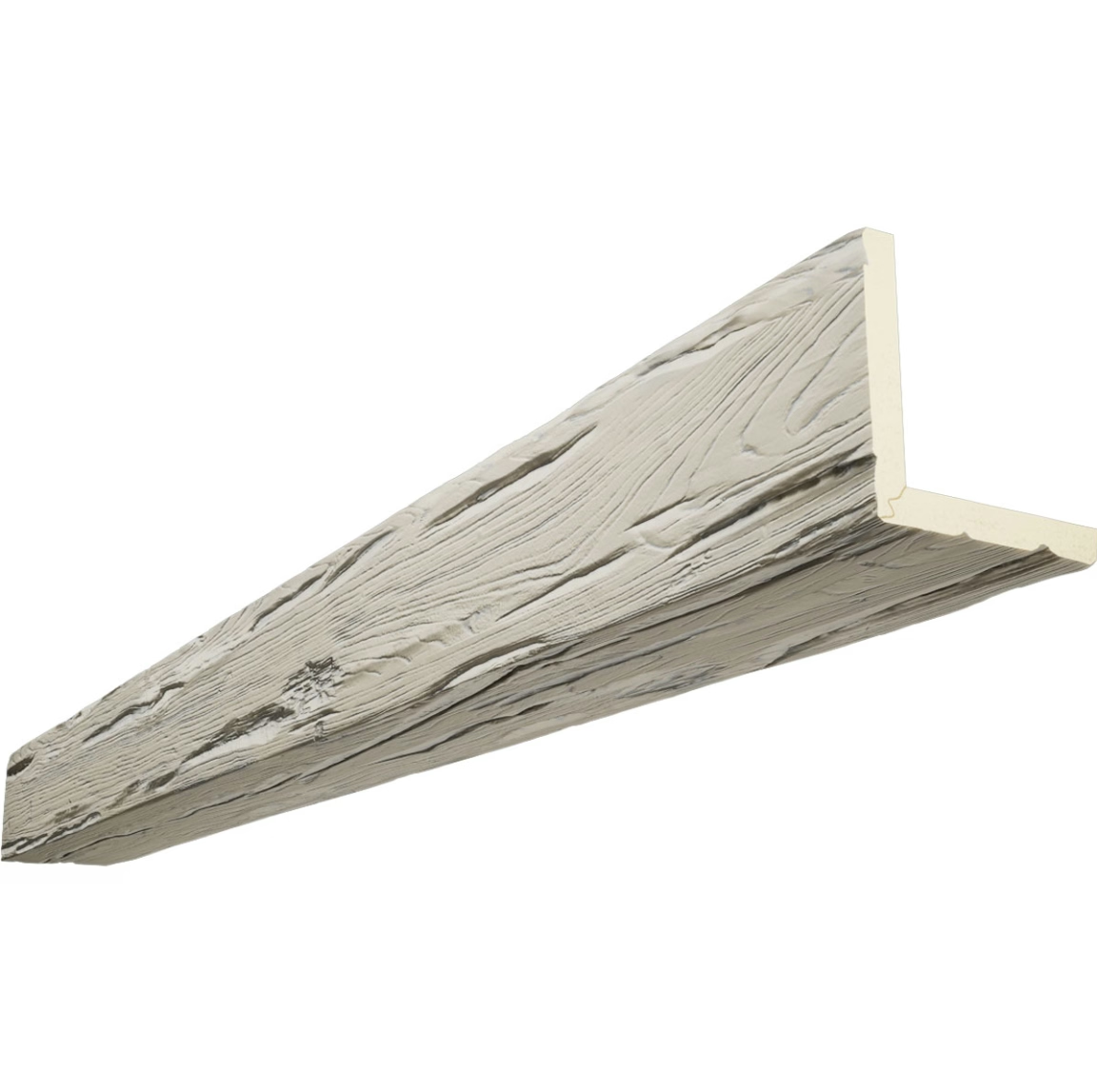
Cross-section profile selection determines structural concealment capability. Three-sided U-channel profiles slip over existing structural members—steel beams, glulam headers, or wood joists—concealing them entirely. Four-sided box beams mount to flat ceilings as decorative elements without covering structural components. U-channels require interior dimension specification matching the structural member being covered. Box beams simply need exterior dimensions. Confusing these profile types creates beams that don't fit their intended application, requiring costly reorders.
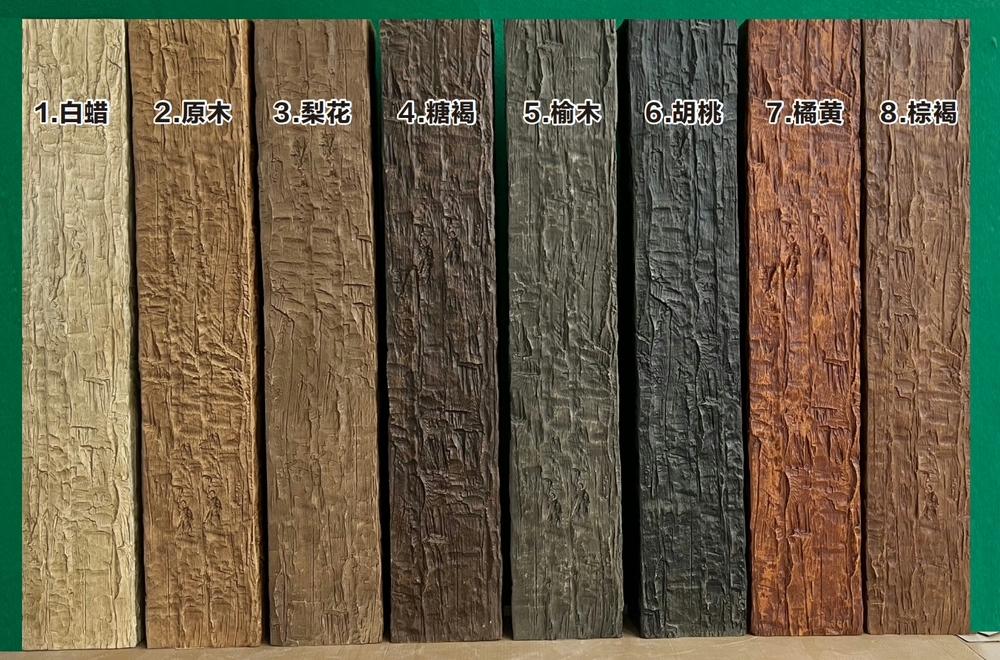
Texture specification communicates visual character intent. Hand-hewn textures show chisel marks, adze cuts, and irregular surfaces replicating timber shaped by hand tools. Sawn textures display circular saw or band saw marks with relatively smooth surfaces. Smooth textures minimize grain relief for contemporary aesthetics. Distressed textures add checking, corner wear, and age character. Request sample blocks showing texture options before finalizing specifications—photos don't adequately convey three-dimensional surface character that dramatically affects installed appearance.
Color specification requires either selecting from standard offerings or providing physical samples for custom matching. Standard colors—walnut, oak, grey, espresso—ship immediately without custom lab work. Color matching requires submitting 2x2 inch samples of the target finish—flooring scraps, cabinet door samples, or stain test boards. Manufacturers photograph samples under controlled lighting and formulate stain blends duplicating the target. Approval samples return to builders for verification before production begins. This process adds 7-10 days to lead time but ensures color integration with existing interiors or brand standard finishes.
Lead time planning prevents construction delays and rush charges. Standard specifications in stock colors ship within 10-14 business days after order placement. Custom colors add two weeks for sample approval cycles. Custom profiles requiring new tooling extend to 4-6 weeks. Builders integrating these timelines into construction schedules order beams when foundations pour or framing begins, ensuring arrival coincides with interior finish phases. Rush orders compress these timelines at 15-30% premium cost—avoidable expenses with adequate planning.
Installation Integration and Labor Efficiency
Installation simplicity directly impacts construction labor costs and schedule reliability. Polyurethane beams mount faster and with fewer workers than timber alternatives, creating measurable savings per home that compound across annual production volume.
Weight advantages eliminate heavy equipment and reduce installer count. A 20-foot solid wood beam weighing 300-400 pounds requires three workers and sometimes mechanical lifting. The polyurethane equivalent weighs 35-40 pounds—two installers handle it comfortably without assistance. This weight difference saves 2-4 labor hours per home on typical beam layouts. At $40-60 per hour loaded labor rates, that's $80-240 per home, or $4,000-12,000 annually for builders completing 50 homes.
Adhesive mounting eliminates fastener labor and visible attachments. Construction adhesive formulated for polyurethane provides structural bonding to drywall, plaster, or wood substrates. Apply continuous adhesive beads to beam backs, press into position, and temporary brace until adhesive sets. This approach prevents the drilling, countersinking, fastener driving, and hole filling that timber beams require. Installation time per beam drops from 45-60 minutes to 15-20 minutes. On a home with six beams, that's 3-4 hours labor savings—another $120-240 per house.
Cutting and fitting proceed with standard job-site tools. Miter saws, circular saws, and reciprocating saws cut polyurethane cleanly without specialized blades. Beams sand smooth without splintering. Joints fit tightly without planing or shimming. This tool compatibility means framing crews install beams without specialized training or equipment. The same workers hanging drywall competently install beams—no scheduling specialist trim carpenters who cost more and have limited availability.
Pre-finishing eliminates on-site staining and topcoating. Beams arrive colored and sealed, ready for immediate installation. Timber alternatives often require field staining to match surrounding finishes, consuming additional labor and creating application consistency challenges across multiple installers. Factory finishing ensures color uniformity across all beams in every home—impossible to achieve with field-applied finishes where batch variation, humidity, and applicator technique create visible differences.
Quality Control and Warranty Protection
Consistent material quality prevents callbacks, warranty claims, and reputation damage. Factory-direct sourcing from quality-focused manufacturers delivers reliability that builder-grade distribution channels don't guarantee.
Dimensional accuracy within 1/8 inch ensures beams fit specified locations without field modification. Custom beams molded to exact specifications should arrive ready to install. Reputable manufacturers verify dimensions after demolding and before packaging, catching production errors before shipping. This accuracy prevents the frustration of beams arriving 3 inches short, 2 inches too tall, or with cross-sections that don't fit the structural members they're intended to cover.
Surface finish consistency across production runs matters intensely. Beams in one room should match beams in other rooms within the same house and between houses in the same community. Color variation between production lots creates visible discontinuity that buyers notice immediately. Quality manufacturers maintain stain formulation records, replicate them precisely across orders separated by months, and provide quality certifications documenting color standards. Insist on seeing color consistency data before committing to suppliers—inconsistent color ruins otherwise successful installations.
Material warranties protect builders and transfer to homeowners. Standard warranties cover cracking, warping, and finish degradation for 10-15 years under normal interior conditions. These warranties demonstrate manufacturer confidence in product durability while protecting builders from replacement costs and installation labor on defective materials. Review warranty terms carefully—some exclude exterior applications, limit coverage in high-humidity environments, or require specific installation methods. Understanding these limitations prevents warranty disputes when problems occur.
Documentation packages support building department approval and homeowner education. Manufacturers should provide fire ratings, structural certifications, VOC test results, and installation guidelines. These documents satisfy plan review requirements and answer inspector questions during framing and finish inspections. For homeowners, simple care and maintenance sheets prevent inappropriate cleaning methods that could damage finishes while demonstrating builder attention to detail and product quality.
Multi-Unit Project Coordination and Phased Delivery
Production builders executing large communities or multiple concurrent projects require supply chain coordination beyond typical material ordering. Factory-direct manufacturers supporting builder needs provide logistical flexibility matching construction realities.
Phased delivery aligns material arrival with construction progress. Large developments built in phases over 18-36 months need beams delivered as homes reach installation readiness, not in single shipments requiring expensive on-site storage. Manufacturers coordinate delivery schedules matching construction timelines—first 20 homes receive beams in month three, next 30 homes in month seven, final 25 homes in month eleven. This phasing prevents material exposure to weather and job-site damage while ensuring availability doesn't delay construction.
Specification consistency across delivery phases maintains community visual continuity. Beams specified in homes closed during phase one should match beams installed in phase three homes closing a year later. Manufacturers maintain specification records and stain formulations ensuring perfect color and texture matching across multi-year projects. Without this control, early-phase and late-phase homes show visible differences that undermine community quality perception and complicate sales.
Containerized bulk delivery optimizes freight economics on large orders. A 40-foot container holds roughly 2,000 linear feet of standard 8x10 beams—enough for 30-40 typical homes. Communities containing 80-100 units receive 2-3 containers staged across the construction schedule. This container-level shipping captures lowest per-foot freight costs, significantly reducing total project expense compared to multiple smaller LTL (less than truckload) shipments. Some manufacturers offer partial container programs for smaller builders, consolidating orders from multiple customers to achieve container efficiency at lower individual volumes.
On-site storage and material handling require planning when beams arrive before immediate installation. Polyurethane beams tolerate temperature extremes and humidity variation better than wood, but job-site protection prevents surface damage from impact, abrasion, or contamination. Designate secure storage areas protected from direct weather exposure. Stack beams with separation padding preventing surface contact damage. Cover with protective sheeting preventing dust and overspray accumulation. These simple measures ensure beams install successfully when construction reaches interior finish phases weeks or months after delivery.
Value Engineering and Cost-Benefit Analysis
CFOs and project managers demand quantified justification for material decisions. Custom factory-direct beams deliver measurable economic advantages beyond purchase price comparison.
Installed cost comparison reveals true economics. Stock beam retail price might appear lower—$250 versus $200 for custom factory-direct. But stock requires field cutting (labor), generates waste (material cost), needs on-site staining (labor and materials), and demands longer installation time (labor). Factor these costs: $50 labor for cutting and fitting, $20 waste, $30 staining materials and labor, $40 additional installation time. That $250 stock beam costs $390 installed. The $200 custom beam installs in 15 minutes with adhesive—total installed cost $220. This $170 per-beam difference multiplied by six beams per home equals $1,020 per unit, or $51,000 across 50 homes annually.
Warranty and callback cost avoidance adds hidden value. Timber beams generate 3-5% callback rates within first year for gap appearance at joints, crack development, or finish inconsistency. Each callback averages $300-500 in labor, materials, and overhead. On 50 homes, that's $2,500-12,500 in callback expense. Polyurethane beams showing 0.5% callback rates essentially eliminate this cost—quantifiable savings beyond purchase price analysis.
Closing pace improvement from differentiated product increases carrying cost efficiency. Spec homes selling 15-20% faster because distinctive ceiling features attract buyers reduce interest carrying costs, enable faster capital recycling, and increase annual unit velocity. On $400,000 homes carrying $8,000 monthly interest, a one-month faster sale saves $8,000—far exceeding any beam material cost differences. This velocity advantage compounds across multiple communities, dramatically improving builder return on invested capital.
Supplier Relationship Development and Strategic Sourcing
Transactional purchasing never captures full economic potential. Strategic supplier relationships deliver advantages unavailable through spot-market buying.
Annual volume commitments secure lowest pricing and priority production scheduling. Builders projecting 2,500 linear feet annually negotiate tier-one pricing and guaranteed lead times. Manufacturers value predictable volume, offering better economics and service levels to committed customers versus one-off buyers. These commitments don't require single large orders—they aggregate purchases across multiple projects over 12 months. Some builders formalize these arrangements with simple annual agreements documenting volume targets and associated pricing.
Exclusive profile development creates product differentiation competitors can't replicate. Invest $5,000-8,000 in custom tooling for a proprietary beam profile used exclusively in your homes. The manufacturer owns the mold but contractually agrees not to sell that profile to competitors within defined markets. This signature element becomes recognizable builder branding—buyers identify your homes by distinctive ceiling beams unavailable elsewhere. The tooling investment amortizes across 200-300 beams (40-60 homes), adding minimal per-unit cost while delivering substantial differentiation value.
Technical collaboration improves installation practices and problem resolution. Manufacturers experienced with their products provide installation training, adhesive recommendations, and troubleshooting assistance. When unusual conditions arise—higher humidity, delayed installation, integration with complex ceiling designs—factory technical staff guide solutions preventing costly trial-and-error. The best suppliers view this support as customer success investment rather than unwanted expense.
Conclusion
Custom polyurethane faux beams sourced factory-direct deliver measurable economic and operational advantages for production home builders. Purchasing directly from manufacturers eliminates distribution markup, custom specifications prevent field modification waste and labor, and volume pricing protects profit margins while enabling product differentiation. Installation efficiency advantages compound across annual production volume, reducing labor costs $150-300 per home. Quality control consistency prevents callbacks that erode margin and damage reputation. Multi-unit coordination capabilities match large-project delivery requirements that traditional suppliers cannot accommodate. Quantified value engineering reveals total installed cost advantages exceeding purchase price differentials. Strategic supplier relationships unlock exclusive profiles creating brand differentiation and ensuring priority service during peak construction seasons. For builders completing 20+ homes annually in competitive markets, custom factory-direct beam sourcing represents not just a material decision but a strategic advantage in delivering distinctive product at market-competitive pricing while protecting margin structure essential to sustainable business operations.
Technical References
ASTM standards cited in every specification
Test Data
Lab results from internal testing program
Updated 2026
Reviewed against current product specs