
Builders working in coastal markets, humid southern climates, or lakefront developments face persistent material challenges. Wood expands and contracts with seasonal moisture fluctuations, creating gaps at joints and cracks along grain lines. Within months of installation, timber beams in high-humidity environments show dimensional changes—warping, twisting, or checking—that compromise architectural intent and generate costly callback visits. Moisture-proof polyurethane faux wood beams eliminate these problems through material chemistry that remains inert to water vapor and liquid moisture exposure. For contractors building in Charleston, Miami, Houston, or Pacific Northwest coastal markets, understanding moisture-resistant beam characteristics becomes essential to delivering projects that maintain architectural quality through seasonal humidity extremes.
Moisture Problems Wood Cannot Solve
Wood's cellular structure creates fundamental moisture vulnerability. Hygroscopic cell walls absorb water vapor from surrounding air until reaching equilibrium moisture content with ambient conditions. In 70% relative humidity, wood stabilizes around 13% moisture content. When humidity drops to 40%, that same wood piece releases moisture until reaching 8% equilibrium. This dimensional change causes wood to expand and contract perpendicular to grain direction—the reason plank floors gap in winter and swell tight in summer.
Ceiling beams experience these same dimensional changes but manifest problems differently. A 12-foot beam expanding 1/8 inch seasonally creates visible gaps at end connections or stress cracks if joints resist movement. Twisted or bowed beams no longer sit flush against ceilings, creating shadow lines that emphasize the defect. In extreme cases, fasteners pull loose as wood movement overpowers mechanical connections. These problems intensify in coastal markets where summer humidity reaches 80-90% and winter HVAC operation drops indoor levels to 30-40%.
Solid timber's density and mass compound moisture-related installation challenges. Heavy beams resist precise positioning during adhesive setup. If humidity conditions during installation differ from long-term averages, beams will move as they reach new equilibrium—potentially weeks after final inspection. Coastal projects closing in dry winter months sometimes experience beam movement when humid summer conditions arrive, creating callback situations months after builder occupancy release.
Traditional wood treatment methods—kiln drying, moisture barriers, sealants—only delay rather than prevent moisture interaction. Even perfectly sealed wood eventually develops finish imperfections allowing moisture infiltration. Once inside, moisture can't escape through intact sealer, creating localized swelling and finish failure. This explains why timber beam projects in humid climates generate disproportionate warranty claims and customer satisfaction problems compared to dry-climate installations.
Polyurethane's Moisture Immunity
Closed-cell polyurethane foam exhibits fundamentally different moisture behavior than wood. The material's cellular structure consists of discrete sealed bubbles that don't absorb water vapor. Immerse a PU beam in water for 48 hours and it gains less than 1% weight—and that moisture exists on surface texture, not absorbed into material structure. Remove the beam from water, and surface moisture evaporates within hours, returning the beam to original dimensions.
This moisture immunity translates directly to dimensional stability. Polyurethane beams maintain exact dimensions across 30-90% relative humidity ranges. The 12-foot beam that measures 8.00 inches wide in January will measure 8.00 inches in August regardless of seasonal humidity swings. This stability prevents joint gaps, eliminates warping, and maintains flush ceiling contact that timber installations cannot guarantee in variable-moisture environments.
Chemical resistance extends moisture protection to cleaning and maintenance scenarios. Polyurethane surfaces tolerate routine cleaning with standard household products without swelling or finish damage. Accidental water exposure from roof leaks or plumbing failures doesn't create permanent damage—once water source stops and material dries, beams return to original condition. Wood in these situations often requires replacement after moisture exposure causes irreversible swelling or rot initiation.
Temperature stability complements moisture performance in climate-controlled and unconditioned spaces. Garages, covered patios, and three-season rooms experience wider temperature swings than interior living spaces. Wood in these applications expands and contracts with both moisture and temperature changes, compounding dimensional instability. Polyurethane remains dimensionally stable across temperature ranges from -20°F to 140°F, maintaining architectural integrity in these challenging locations where timber consistently fails.
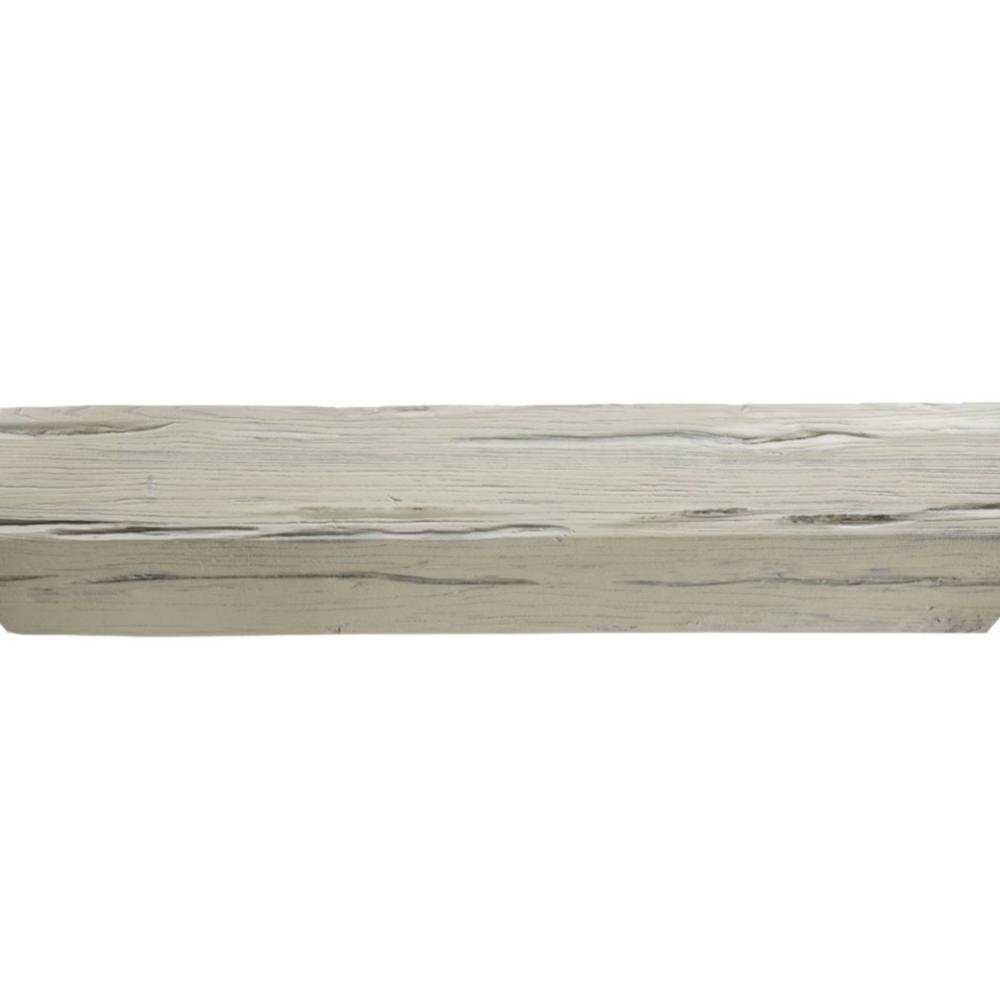
Coastal and Marine Environment Applications
Saltwater proximity creates the most aggressive moisture environment for building materials. Onshore wind carries salt-laden moisture that accelerates wood deterioration through direct moisture delivery and salt's hygroscopic properties. Coastal homes within two miles of open water experience persistent moisture challenges that make timber ceiling beams particularly problematic.
Polyurethane's salt resistance prevents the accelerated degradation coastal timber experiences. Salt crystals deposited on beam surfaces during humid conditions don't penetrate PU's closed-cell structure. Simple periodic cleaning removes surface salt without the deep-cleaning or refinishing timber beams require to prevent salt-accelerated wood fiber breakdown. This low-maintenance characteristic particularly benefits vacation rental properties and second homes where owners aren't present for regular maintenance.
Hurricane and storm exposure testing demonstrates PU beam resilience. Beams subjected to 48-hour water immersion followed by rapid drying showed no dimensional change or surface degradation—conditions simulating severe storm infiltration. Timber beams in identical testing showed 3-7% dimensional change and finish failure requiring refinishing or replacement. For builders working in hurricane-prone coastal markets, this storm resilience reduces risk of moisture-related warranty claims following severe weather events.
Dock houses, boathouses, and waterfront pavilions represent extreme moisture challenges where timber beams historically required frequent replacement. Polyurethane beams in these applications show indefinite lifespan without the 7-10 year replacement cycles wood requires. Though these structures represent small market segments, they demonstrate PU's moisture immunity under conditions exceeding typical residential exposure.
High-Humidity Interior Environments
Certain interior spaces generate localized high-humidity conditions where standard building materials struggle. Understanding these applications guides specification decisions on material selection.
Indoor pool enclosures create near-constant 60-70% humidity with periodic spikes to 80-85% during pool use. Chlorine vapor adds chemical exposure beyond moisture alone. Traditional wood beams in these spaces require annual maintenance and replacement every 8-12 years as moisture and chlorine degrade wood fibers and finishes. Polyurethane beams tolerate this environment indefinitely, maintaining appearance and structural integrity without refinishing or special maintenance. The material's chlorine resistance prevents the bleaching and fiber breakdown wood experiences in pool environments.
Bathrooms and spa spaces—particularly those with steam showers or soaking tubs—generate humidity spikes to 90-100% during use. Even with exhaust ventilation, these spaces maintain elevated baseline humidity. Ceiling beams in luxury master bathrooms or spa-inspired spaces benefit from polyurethane's moisture immunity, preventing the warping and finish failure timber beams develop within months of installation. For high-end residential projects where spa bathrooms represent significant design features, PU beams eliminate material performance concerns.
Commercial kitchen and restaurant applications combine moisture, grease, and temperature exposure. Health departments require regular deep cleaning including ceiling surfaces where grease accumulates. Wood beams resist the moisture and chemical exposure these cleaning processes involve, requiring refinishing or replacement every few years. Polyurethane beams tolerate aggressive cleaning without degradation, reducing maintenance costs while maintaining appearance standards critical to restaurant ambiance.
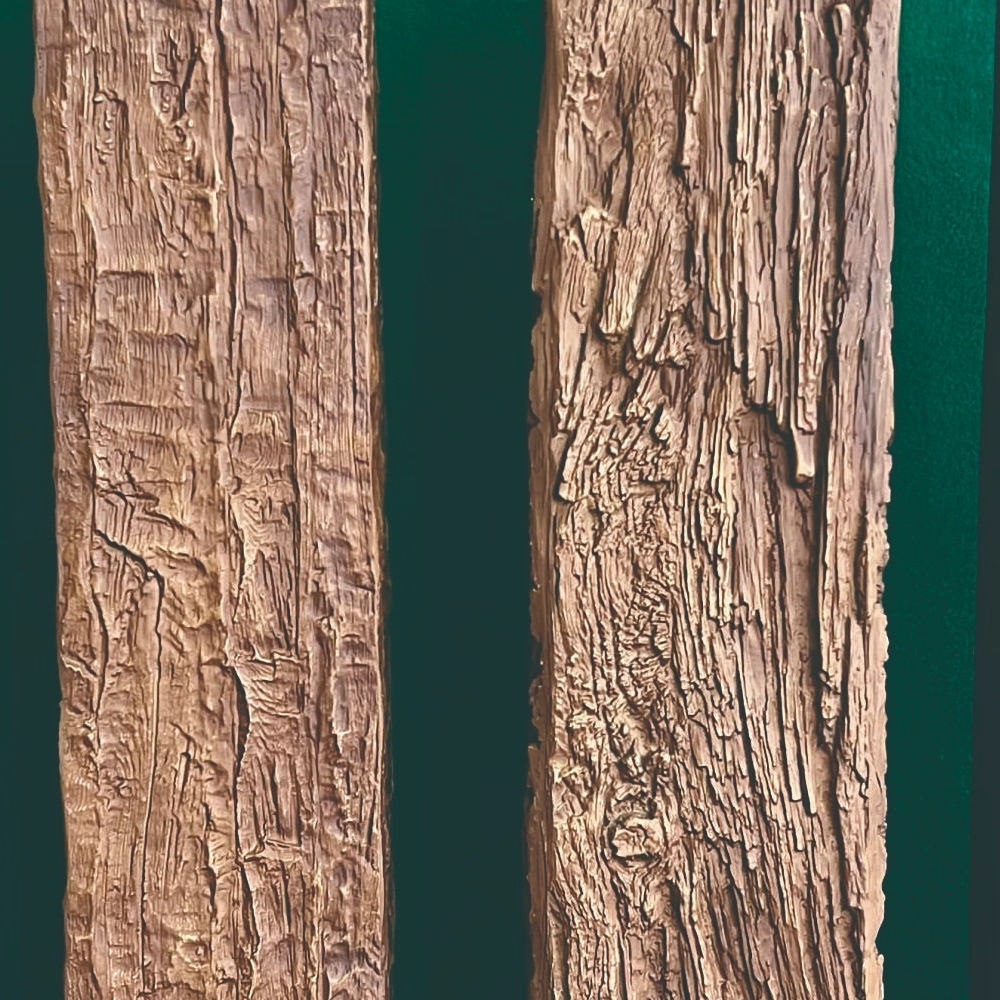
New Construction Moisture Timeline Management
Construction moisture creates temporary high-humidity conditions even in normally dry climates. Concrete curing, drywall compound drying, and paint application release substantial water vapor into enclosed spaces before mechanical HVAC systems operate continuously. This construction moisture creates a trap for materials installed during building phases.
Timber beams installed during this construction-moisture period absorb water vapor, reaching 14-18% moisture content even in arid climates. As buildings dry out over subsequent months, beams release moisture and shrink, creating gaps and movement that appear as construction defects. Builders face warranty disputes about beam quality when the actual problem involves wood's natural response to construction moisture followed by occupancy drying.
Polyurethane beam installation timing becomes flexible rather than critical. Install beams during framing, during drywall, or during final trim—moisture conditions during installation don't affect long-term performance. This flexibility simplifies construction scheduling and prevents the delayed beam installation that pushes project completion dates when timing coordination fails. Contractors appreciate this scheduling flexibility, particularly when multiple trades converge during finish phases and critical-path timing determines project success.
Construction damage resistance provides additional installation-phase advantages. Paint overspray, drywall dust, and incidental impact during subsequent construction wipes clean or touches up easily on polyurethane surfaces. Wood beams installed early in construction often require refinishing before project completion due to construction damage accumulation. This damage and refinishing cycle adds cost and schedule time that PU beams avoid entirely.
Specification Guidance for Moisture-Prone Applications
Architects and builders specifying beams for humid or moisture-challenged environments should consider several technical factors beyond general moisture resistance.
Surface sealing enhances moisture protection, though polyurethane's inherent moisture resistance provides baseline performance. Factory-applied polyurethane topcoats create non-porous surfaces preventing even surface moisture absorption. These sealed surfaces clean more easily and maintain appearance longer in high-humidity environments. Specify factory sealing rather than field-applied finishes for consistent quality and immediate moisture protection upon installation.
Adhesive selection affects moisture-zone installations. Some construction adhesives lose bond strength in persistently humid conditions. Polyurethane-based construction adhesives provide superior moisture resistance and bond strength maintenance compared to latex-based products. Specify adhesive types explicitly in installation guidelines—many contractors default to familiar products not optimized for humid-environment applications.
Ventilation requirements don't change for polyurethane beams, but moisture-resistant beams enable designs timber couldn't support. Covered outdoor spaces with open-air exposure previously required either no beams or expensive maintenance-intensive timber. PU beams enable full architectural detailing in these transitional indoor-outdoor spaces without moisture performance concerns. This design freedom creates value particularly in resort, hospitality, and high-end residential markets where indoor-outdoor living represents premium features.
End-cap and joint detailing requires attention even with moisture-proof materials. While beams themselves resist moisture, connection points and substrate materials may not. Design details that direct water away from horizontal surfaces and prevent standing water contact protect surrounding materials even when beams themselves remain unaffected. These standard moisture-control details apply regardless of beam material but bear mention for complete moisture-management strategies.
Cost-Benefit Analysis in Moisture-Challenged Markets
Material cost comparison shows polyurethane beams commanding modest premiums over timber—typically 20-30% higher upfront cost. In moisture-challenged environments, lifecycle cost analysis reveals dramatic PU advantages.
Maintenance cost avoidance represents the largest economic benefit. Timber beams in coastal or humid climates require refinishing every 3-5 years at $150-300 per beam including access, preparation, and refinishing labor. Six beams over 15 years equals $5,400-10,800 in maintenance expense. Polyurethane beams require only periodic dusting—essentially zero maintenance cost. This $5,400-10,800 difference dwarfs upfront material cost differentials.
Warranty claim prevention provides quantifiable savings. Builders working in humid markets report 5-8% callback rates on timber beam installations versus 0.5-1% on PU beams. Each callback averages $400-600 in labor, materials, and overhead. On projects installing beams in 50 homes annually, timber generates 12-24 callbacks ($4,800-14,400) versus 1-3 PU callbacks ($400-1,800). This $4,400-12,600 annual difference exceeds any material cost premium while protecting builder reputation and reducing warranty expense.
Resale value protection benefits homeowners in moisture-challenged markets. Homes with timber beams showing moisture-related warping or gaps appraise lower and sell slower than comparable homes with beams maintaining original appearance. Real estate agents in coastal markets specifically inquire about beam material, knowing PU indicates lower future maintenance. This marketability advantage benefits builders during spec home sales and homeowners during future resales.
Installation Best Practices for Humid Environments
While polyurethane's moisture immunity provides inherent advantages, installation practices optimize long-term performance in humid applications.
Substrate preparation ensures maximum adhesive contact. Humid environments sometimes create chalky or powdery drywall surfaces as moisture migrates through wall assemblies. Clean and prime these surfaces before adhesive application, ensuring strong bonds that moisture won't compromise. This preparation takes minutes but prevents adhesive failures that create reinstallation costs.
Adhesive application patterns should provide continuous coverage rather than intermittent beads in humid environments. Full-coverage adhesive creates moisture barriers preventing any moisture infiltration behind beams. While PU beams resist moisture regardless, full adhesive coverage protects substrate materials and prevents the capillary moisture movement that can occur in air gaps behind beams.
Temporary bracing during adhesive cure prevents any settling or shifting that could create future problems. Although PU beams weigh significantly less than timber, proper bracing ensures beams remain exactly positioned during the 24-hour adhesive cure period. This attention during installation prevents callback situations from minor settling visible only after months in place.
Joint planning in long-span applications should incorporate expansion gaps even though PU doesn't require them structurally. Other building materials in the assembly—framing, drywall, siding—do expand and contract. Providing minor gaps in beam layouts accommodates this building-wide movement without creating stress concentrations at beam connections. Standard 1/8-inch gaps provide adequate allowance without visual impact.
Conclusion
Moisture-proof polyurethane faux wood beams solve persistent problems timber cannot address in coastal, humid-climate, and moisture-challenged interior environments. Material chemistry creating closed-cell structure provides inherent moisture immunity and dimensional stability across humidity ranges wood simply cannot match. Coastal applications benefit from salt resistance and storm resilience. High-humidity interiors including pool enclosures and luxury bathrooms maintain beam integrity indefinitely without the maintenance and replacement cycles wood requires. New construction moisture timeline flexibility simplifies scheduling while preventing the shrinkage-related gaps timber installations generate as buildings dry out. Specification considerations including surface sealing and adhesive selection optimize performance in demanding applications. Lifecycle cost analysis reveals dramatic advantages when maintenance avoidance and warranty claim prevention factor into economic evaluation. For builders working in moisture-challenged markets, polyurethane faux wood beams represent not optional upgrades but essential material selections that prevent problems, reduce long-term costs, and deliver the permanent architectural quality that sustains builder reputation and homeowner satisfaction.
Technical References
ASTM standards cited in every specification
Test Data
Lab results from internal testing program
Updated 2026
Reviewed against current product specs