
The architect's question during product specification cut to the essential decision every beam project faces: "Why should we choose faux beams over real wood?" My answer couldn't rely on generalities—he needed specific performance comparisons, cost analyses, and application guidance. That conversation evolved into the systematic comparison matrix I now use when helping clients understand material options. No single material proves universally superior—each excels in specific applications while proving poorly suited to others. Understanding these performance profiles allows matching materials to project requirements rather than defaulting to familiar options or chasing lowest first-cost.
This comprehensive comparison evaluates dimensional lumber, engineered timber products, and polyurethane faux beams across critical decision criteria. Use this framework to guide specification decisions based on your project's specific priorities and constraints.
Structural Capacity and Load-Bearing Performance
Dimensional Lumber: Provides genuine structural capacity determined by species, grade, and dimensions. Douglas Fir Select Structural 6x10 beam can span 12-15 feet carrying typical residential floor loads. Structural capacity represents dimensional lumber's primary advantage—when load-bearing members are needed, solid timber delivers verified engineered performance. However, capacity variability from natural growth characteristics creates uncertainty requiring conservative design factors.
Engineered Timber: Glulam beams, LVL, and PSL products offer superior and more consistent structural performance than dimensional lumber. Manufacturing processes eliminate natural defects and orient grain for optimal strength. A 5.125x12 glulam beam might span 20+ feet with loads that would require 8x14 dimensional lumber—substantial savings in material depth and weight. Engineered products provide predictable capacity that architects can design against with confidence unavailable from natural timber.
Faux Beams: Zero structural capacity—purely decorative elements supporting only their own 1-4 pound per foot weight. This fundamental limitation eliminates faux beams from any application requiring load-bearing function. However, this same characteristic liberates design from structural constraints—dimensions, positions, and configurations can follow pure aesthetic logic without engineering approval. When decorative rather than structural function defines requirements, this "limitation" becomes freedom.
Verdict: Structural applications require dimensional lumber or engineered timber. Decorative applications gain design freedom from faux beam's non-structural nature. No amount of polyurethane technology creates structural capacity—understand and respect this absolute distinction.
Material Cost Comparison
Dimensional Lumber: Regional and species-dependent pricing ranges $8-25 per linear foot for common decorative sizes (6x6 to 10x12). Western species (Douglas Fir, Hem-Fir) cost less than premium hardwoods (oak, walnut). Prices fluctuate dramatically with market conditions—recent years saw swings from $12 to $35 per foot for identical products. Availability challenges during building booms create supply uncertainty beyond price volatility.
Engineered Timber: Premium pricing reflecting manufacturing investment—typically 150-300% of equivalent dimensional lumber costs. A glulam beam costing $40 per foot competes against $15 dimensional lumber on first-cost basis. However, engineering efficiency often reduces overall costs since smaller engineered members achieve performance requiring larger solid timber—the system cost comparison can favor engineered products despite higher material cost per foot.
Faux Beams: Mid-range pricing typically $15-35 per linear foot for standard residential products, with custom or commercial grade reaching $50-80 per foot. This positions faux beams between commodity dimensional lumber and premium engineered products. However, hollow construction means much larger faux beams (10x12, 12x14) cost only modestly more than smaller sizes—unlike solid materials where cost scales dramatically with cross-section.
Verdict: Commodity dimensional lumber offers lowest first-cost for basic applications. Faux beams compete favorably when comparing equivalent appearance impact since larger hollow sections cost less than solid timber achieving similar visual weight. Engineered timber premium justifies only when structural performance demands it.
Installation Labor and Complexity
Dimensional Lumber: Heavy material requires multiple installers or lifting equipment. An 8x10 beam at 20 feet weighs 200+ pounds—two-person lift at minimum, preferably three or equipment. Installation complexity includes precise structural connections, potential for splits during fastening, and difficulty making field modifications. Cutting, drilling, and notching solid timber requires heavy-duty tools and significant labor time. Installation typically runs $8-15 per linear foot labor depending on access and complexity.
Engineered Timber: Similar weight and handling challenges to dimensional lumber—structural connection requirements, precision positioning, and specialized fastening. Some engineered products (PSL particularly) resist splitting better than solid timber, simplifying fastener installation. However, most engineered products cannot be extensively modified in field—cutting or notching voids engineering approvals. Installation labor comparable to dimensional lumber at $8-15 per foot.
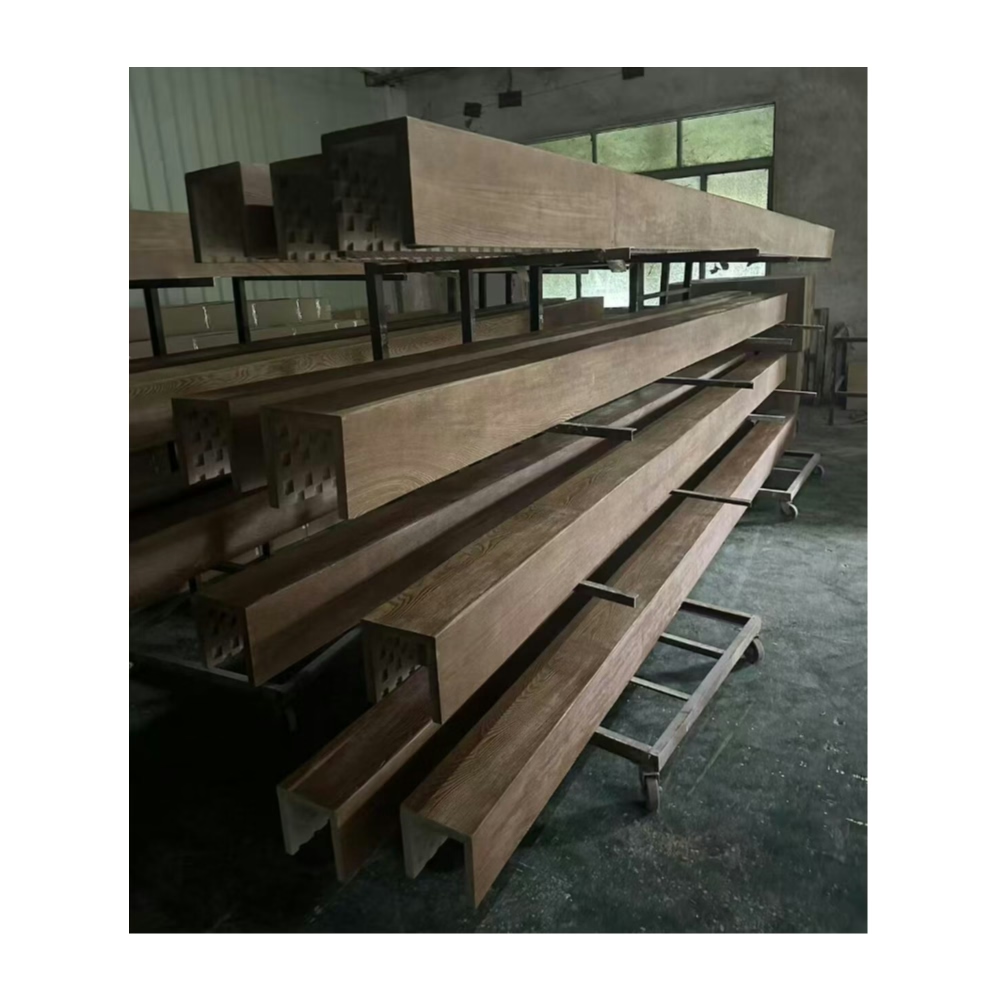
Faux Beams: Lightweight (1-4 pounds per foot) allows single-person handling for most sizes. Installation uses adhesive and light mechanical fasteners requiring only standard carpentry tools. Cutting and fitting uses handsaws or standard power tools—no specialized equipment needed. The simplified installation typically runs $5-8 per linear foot—40-50% less than solid materials despite requiring similar skill and time due to lower physical demands. DIY-friendly for homeowners with basic skills.
Verdict: Faux beam installation advantages compound in difficult-access situations—high ceilings, finished spaces, or tight renovation conditions. Weight and tool requirements make solid materials progressively more difficult as access challenges increase, while faux beams maintain consistent installation efficiency regardless of conditions.
Moisture Performance and Dimensional Stability
Dimensional Lumber: Hygroscopic nature means continuous moisture absorption and release creating dimensional changes. Typical 6-8% seasonal moisture content variation causes 1/4 to 3/8 inch width change in 8-10 inch beams—enough to open joints, stress finishes, and create visual warping. Wet locations or high humidity accelerate rot and decay requiring treatment and maintenance. Even kiln-dried lumber continues moving throughout its service life as humidity varies seasonally.
Engineered Timber: Improved but not eliminated moisture sensitivity. Manufacturing processes and adhesives create more stable products than solid timber, but fundamental hygroscopic character remains. Moisture exposure can delaminate glue joints in glulam or LVL products—catastrophic failures in extreme cases. Most engineered products require protection from weather and sustained moisture exposure. Generally performs better than solid wood but still vulnerable to moisture damage.
Faux Beams: Essentially immune to moisture effects. Closed-cell polyurethane absorbs virtually no water, maintains constant dimensions regardless of humidity, and supports no biological growth. This immunity makes faux beams ideal for humid climates, coastal installations, and covered outdoor applications where solid materials reliably fail. The only moisture consideration involves substrate and mounting—beams themselves remain unaffected but must attach to adequately dry and stable surfaces.
Verdict: Any application with moisture exposure, high humidity, or poor climate control favors faux beams dramatically. Solid materials require maintenance, treatment, and eventual replacement that polyurethane immunity eliminates. In controlled interior applications, moisture concerns diminish but never disappear entirely—seasonal HVAC cycling creates conditions where dimensional lumber still moves noticeably.
Maintenance Requirements and Lifecycle Durability
Dimensional Lumber: Requires periodic refinishing to maintain appearance—typically every 5-10 years for interior applications, 3-5 years for covered outdoor. Surface checking, grain raising, and finish wear degrade appearance demanding sanding and recoating. Unfinished beams accumulate dust in grain pores requiring aggressive cleaning. Total lifecycle maintenance costs over 25 years can equal or exceed initial material costs. Rot, insect, and structural degradation create replacement needs in challenging environments.
Engineered Timber: Similar maintenance requirements to dimensional lumber since exposed surfaces remain wood despite engineered construction. Finish maintenance, cleaning, and periodic inspection for delamination or damage follow comparable schedules. Structural engineered products often receive paint or protective coatings requiring more frequent maintenance than natural wood finishes. Lifecycle costs parallel dimensional lumber though engineered products may offer superior structural durability.
Faux Beams: Essentially maintenance-free beyond occasional dusting or washing. No refinishing, no treatment, no structural deterioration. Finishes remain stable for decades without care that wood demands. Cleaning uses mild soap and water—no special treatments needed. Over 25-year lifecycles, maintenance cost approaches zero compared to thousands of dollars for solid materials. This operational cost advantage often justifies higher initial investment through eliminated recurring expenses.
Verdict: Maintenance elimination represents one of faux beams' most compelling economic advantages. In commercial applications where maintenance requires business disruption, access equipment, and labor, the operational savings dwarf material cost differences. Residential applications benefit equally—homeowners avoid the ongoing attention solid materials demand indefinitely.
Aesthetic Authenticity and Design Flexibility
Dimensional Lumber: Genuine wood character—grain, color variation, and authentic material presence—appeals to those valuing material authenticity philosophically. Natural imperfections and organic irregularity create character that perfect manufacturing cannot replicate. However, design constraints from material properties limit dimensions, lengths, and configurations to what timber can physically provide. The authentic material experience represents dimensional lumber's core aesthetic advantage.
Engineered Timber: Visually identical to dimensional lumber when finished since exposed surfaces remain wood veneer or lumber laminations. However, engineered products often show more uniform, less characterful appearance than solid timber—grain patterns more regular, color more consistent. Some designers and clients perceive this uniformity negatively as "too perfect" or "fake-looking" despite being actual wood. Others appreciate the consistency as quality control superior to natural variability.
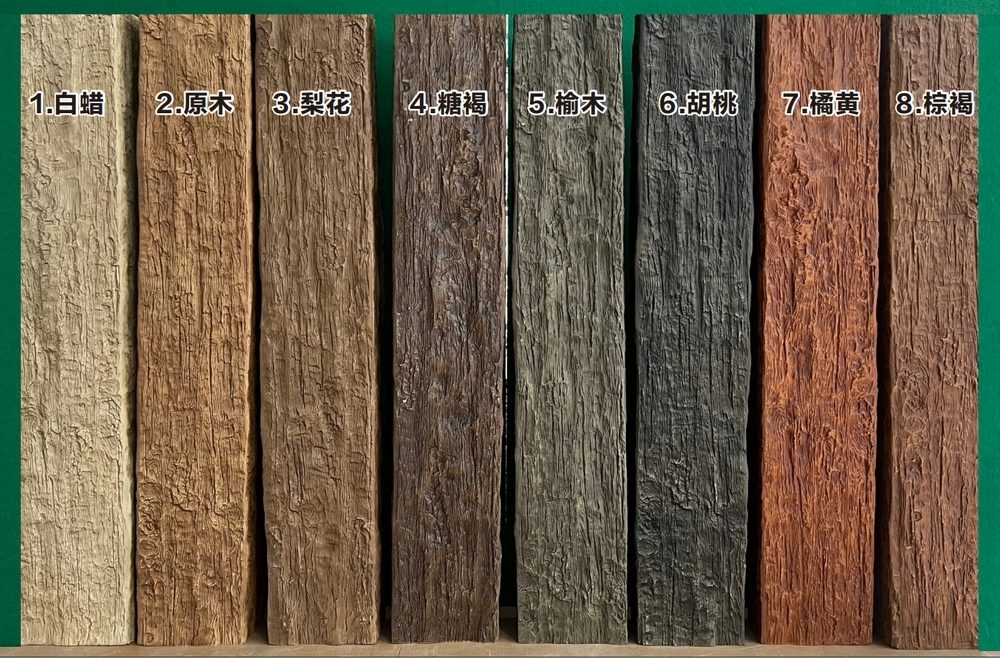
Faux Beams: High-quality products achieve visual replication that few people can distinguish from solid timber at normal viewing distances. However, close inspection reveals synthetic nature—something purists may object to philosophically even when visual appearance satisfies. The design freedom faux beams enable—massive dimensions, curved forms, complex layouts—allows aesthetic impacts impossible with solid materials. This capability advantage outweighs authenticity concerns for designers prioritizing visual result over material purity.
Verdict: Material authenticity matters to some clients at visceral level that practical arguments cannot overcome—they want "real wood" regardless of performance or cost comparisons. Others care only about appearance and performance, making faux beams perfectly acceptable. Understanding client values allows appropriate specification rather than imposing designer preferences about material authenticity.
Environmental and Sustainability Considerations
Dimensional Lumber: Renewable resource from sustainably-managed forests stores biogenic carbon captured during tree growth. FSC and SFI certification programs document sustainable forestry practices. However, logging impacts ecosystems, transportation consumes energy, and disposal through burning or landfilling releases stored carbon. Life Cycle Assessment (LCA) studies show wood products generally favorable environmental profiles compared to high-embodied-energy alternatives.
Engineered Timber: Similar sustainability to dimensional lumber since primary material remains wood, though adhesives and manufacturing energy add environmental impact. Efficiency advantages—using smaller, faster-growing trees engineered into high-performance products—can improve sustainability versus old-growth solid timber. Certification programs extend to engineered products ensuring sustainable sourcing. Generally considered environmentally responsible choices when properly sourced and specified.
Faux Beams: Petroleum-based polyurethane involves fossil fuel extraction, chemical processing, and manufacturing energy creating higher embodied carbon than wood products. However, extreme longevity and maintenance elimination prevent recurring environmental impacts from refinishing chemicals, replacement materials, and disposal. Lifecycle analyses comparing disposable timber (replaced 2-3 times over 50 years) versus durable polyurethane (lasting 50+ years) show more complex trade-offs than material-origin analysis alone suggests. Recycling challenges at end-of-life create disposal concerns.
Verdict: No clear environmental winner—trade-offs between renewable but shorter-lived wood versus durable but petroleum-based polyurethane depend on system boundaries and values weighting. Clients prioritizing renewable materials favor timber; those emphasizing longevity and eliminated maintenance impacts may view faux beams favorably. Honest assessment acknowledges complexity rather than claiming false environmental superiority.
Fire Performance and Code Compliance
Dimensional Lumber: Combustible material with predictable fire performance—ignites at 500-700°F, chars at measurable rates allowing engineering of fire-resistance. Heavy timber construction (members 8x8 and larger) receives favorable code treatment recognizing that large sections maintain structural capacity during fires better than smaller members. Flame-spread ratings typically Class C (76-200) without treatment, Class B (26-75) with fire retardant treatment. Acceptable for most residential applications; commercial uses may require treatment or sprinkler protection.
Engineered Timber: Fire performance depends on product type and manufacturing. Glulam behaves similarly to heavy timber with favorable code treatment. LVL and PSL products with thinner laminations may not qualify for heavy timber classification. Adhesives in engineered products can affect fire performance—some degrade faster than solid wood while others improve resistance. Generally requires documentation of fire testing for commercial applications where dimensional lumber might rely on standard wood performance data.
Faux Beams: Polyurethane foam combustibility requires flame-retardant formulations for code compliance. Quality products achieve Class A flame spread (0-25) and smoke development ratings suitable for commercial occupancies. However, achieving these ratings requires proper formulation—not all products meet Class A standards. Require documented test results per ASTM E84 confirming ratings rather than accepting manufacturer claims. Non-structural nature means fire-damaged beams pose falling hazards but not structural collapse risks—important distinction in safety assessment.
Verdict: Fire performance proves adequate across all materials when properly specified. Heavy timber dimensional lumber offers inherent favorable performance. Faux beams require specifying proper fire-rated products and verifying ratings through documentation. None represents inherently dangerous choice when appropriate products install correctly per codes.
Decision Framework: Matching Materials to Applications
Choose dimensional lumber when: genuine structural capacity required, material authenticity holds philosophical importance, budget constraints dominate and conditions suit timber (controlled interior, maintainable), or building codes or preservation standards mandate solid wood materials.
Choose engineered timber when: structural performance exceeds dimensional lumber capabilities, long clear spans or heavy loads demand efficiency, design requires predictable performance without natural material variability, or structural engineering specifically requires or recommends.
Choose faux beams when: decorative function without structural requirements, moisture exposure or climate extremes threaten solid materials, installation access or weight limitations challenge solid material handling, maintenance elimination provides economic or operational advantages, or design freedom requires dimensions or configurations solid materials cannot provide.

No material proves universally superior—each excels in applications matching its performance profile while proving inappropriate for others. Sophisticated specification considers project-specific requirements, client priorities, and lifecycle implications rather than defaulting to familiar materials or chasing lowest initial cost. Understanding these material differences allows informed decisions that match physical properties, economic realities, and performance expectations to specific project conditions—the definition of good design thinking that looks beyond surface characteristics to functional fitness for intended purpose.
Technical References
ASTM standards cited in every specification
Test Data
Lab results from internal testing program
Updated 2026
Reviewed against current product specs