
General contractors manage complex material procurement across dozens of trades and hundreds of product categories. Success depends on supplier relationships that deliver three non-negotiable requirements: custom specifications matching architectural intent, competitive pricing protecting project margins, and delivery reliability keeping construction schedules intact. PU faux ceiling beam suppliers serving professional contractors must excel across all three dimensions while providing technical support and quality consistency across multiple projects. Understanding how professional-grade suppliers operate—their customization capabilities, pricing structures, lead time management, and quality control systems—helps contractors evaluate potential partners and build supply relationships supporting long-term business success.
Custom Sizing Capabilities and Specification Matching
Stock-dimension limitations force design compromises contractors can't always accept. Client expectations, architectural plans, and existing structural conditions demand beams sized precisely for specific applications. Professional suppliers accommodate these requirements through flexible manufacturing that adjusts to project needs rather than forcing projects to adapt to inventory constraints.
Length customization addresses ceiling span variations project-to-project. Commercial spaces might require 24-foot beams spanning open floor plans. Residential great rooms need 18-foot-6-inch beams matching exact ceiling dimensions. Historic renovations demand 11-foot beams fitting between existing structural members. Capable suppliers manufacture any length between 6 and 26 feet without premium charges for non-standard sizes. This flexibility eliminates field splicing that creates visible seams contractors must defend against change orders and payment disputes.
Cross-section dimensions determine visual proportion and structural concealment capability. Standard 6x6, 8x8, and 6x10 profiles address common needs, but projects frequently specify non-standard dimensions. A 7x12 beam creates specific visual weight against 12-foot ceilings. A 5x8 profile provides subtle ceiling detail without overwhelming compact spaces. Custom cross-sections require tooling investment, but minimum orders typically start at 200-300 linear feet—quantities most commercial projects and multi-unit residential developments easily exceed.
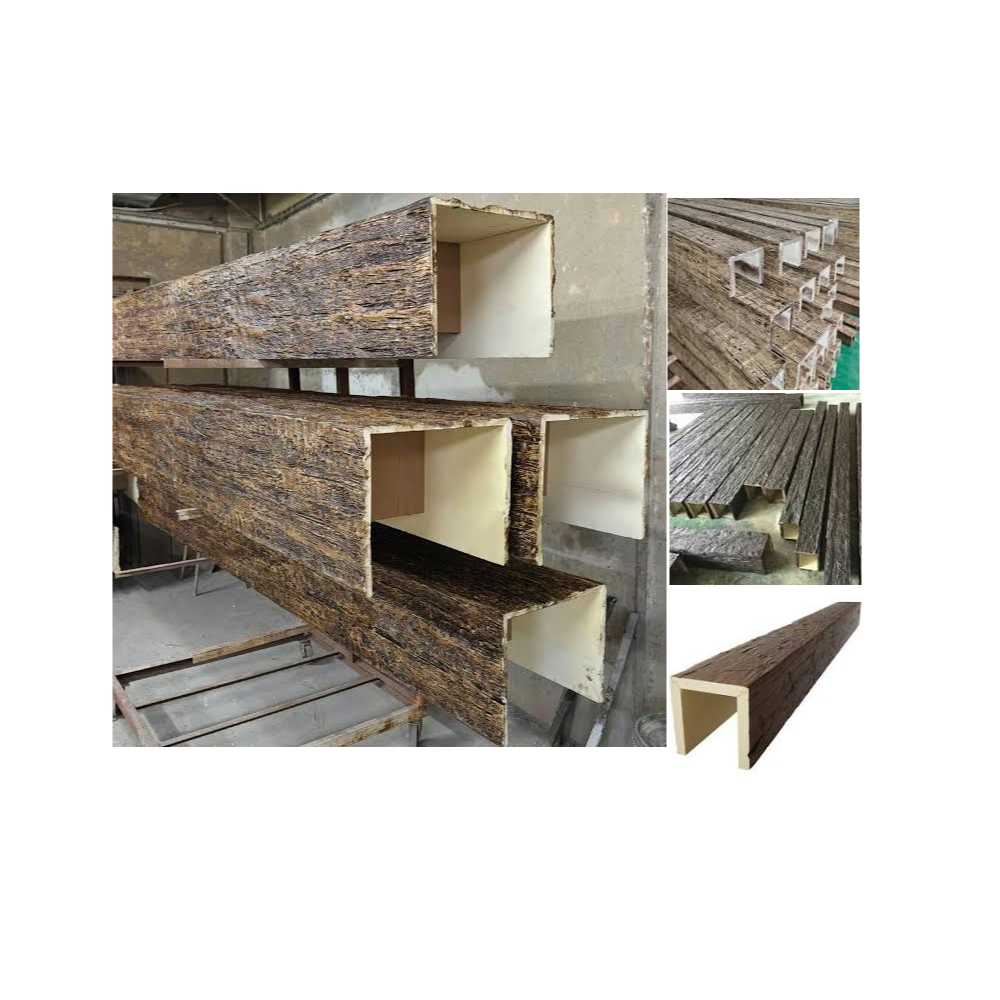
Profile configuration separates three-sided U-channel beams from four-sided box beams. U-channels slip over existing structural members—steel I-beams, glulam headers, wood joists—concealing them entirely. Interior dimensions must match structural members being covered. Box beams mount to flat ceiling surfaces as decorative elements without covering structural components. Confusing these configurations during ordering creates unusable materials and project delays. Competent suppliers clarify application during specification review, preventing costly errors before production begins.
Hollow versus solid construction affects application suitability and pricing. Hollow beams weigh 40-60% less than solid versions, simplifying installation and reducing adhesive requirements. They accommodate structural member concealment and work well for standard decorative applications. Solid beams provide greater rigidity for applications where beams cantilever beyond support points or require fastener attachments at non-end locations. Solid construction costs 30-40% more due to material volume and weight, justifying specification only where structural requirements demand it.
Texture Options and Visual Authenticity
Surface texture creates visual character distinguishing architectural styles and quality levels. Contractors working across project types—contemporary commercial, rustic residential, traditional hospitality—need suppliers offering texture variety without requiring different vendors for each style.
Smooth contemporary textures minimize grain relief for modern aesthetics. Subtle grain definition provides wood character without heavy shadow lines or distressed appearance. These textures suit urban lofts, modern office buildings, and contemporary residential projects where clean lines dominate design intent. Surface finish remains lightly textured rather than completely smooth—minimal texture maintains hand-crafted appearance while supporting modern design vocabulary.
Hand-hewn rustic textures show tool marks replicating timber shaped by historical methods. Adze cuts, chisel marks, and irregular surfaces create depth and shadow that photographs dramatically and satisfies clients seeking authentic rustic character. Mountain lodges, hunting cabins, rustic restaurants, and farmhouse-style residential projects specify these textures extensively. The appearance suggests reclaimed timber without the structural issues, insect concerns, and supply unpredictability actual reclaimed wood presents.
Sawn textures display circular saw or band saw marks with relatively uniform surfaces. This middle-ground texture works across multiple styles—not as refined as smooth contemporary, not as aggressive as hand-hewn rustic. Sawn textures suit traditional residential, casual commercial, and transitional design projects where texture adds interest without dominating the overall aesthetic. Many contractors default to sawn texture for spec homes and standard commercial work, reserving smooth or hand-hewn specifications for projects with explicit style requirements.
Distressed and aged textures add checking, corner wear, wormholes, and surface irregularities suggesting century-old timber. These treatments appeal to historic renovation projects, Spanish Colonial residential, and upscale hospitality developments where age character communicates authenticity and quality. Surface distressing happens during molding rather than through hand-work after demolding—textures replicate naturally-aged wood consistently across production runs without hand-finishing expense.
Color Customization and Matching Services
Standard stain libraries address common needs—walnut, oak, grey, espresso, weathered barn wood—shipping without color matching delays. Projects requiring integration with existing finishes or brand-specific colors need custom matching services professional suppliers provide.
Physical sample submission drives accurate color matching. Send 2x2 inch samples of target finishes—flooring scraps, cabinet door samples, millwork pieces, or properly-executed stain samples on appropriate wood species. Suppliers photograph samples under controlled lighting, formulate stain blends duplicating the target, and apply test samples returning to contractors for approval. This process adds 10-14 days to lead time but ensures color integration with surrounding finishes.
Digital color specification using coordinates or formulas provides another matching avenue but with limitations. RAL codes, Pantone numbers, or custom stain formulas work when projects involve manufactured finishes with documented color specifications. Natural wood tones vary too much for coordinate-based specification—a walnut sample from one contractor won't match another's walnut reference without physical sample comparison. Digital specification works for solid colors and manufactured finishes, less reliably for wood-tone replication.
Batch consistency across production runs matters intensely for projects installing beams across multiple phases separated by months. Suppliers maintain stain formulation records ensuring perfect color replication between orders. Request color certifications or quality control documentation demonstrating batch consistency capabilities. Inconsistent color between early-phase and late-phase installations creates visible discontinuity that clients notice immediately and contractors must remediate expensively.
Sample programs let contractors evaluate materials before project commitment. Request 12-inch beam sections in proposed sizes, textures, and colors. Physical samples go to design meetings, get photographed in project spaces, and serve as field references during installation. This verification prevents specification errors and client expectation misalignment that change orders and payment disputes generate.
Pricing Structure and Volume Economics
Contractor pricing balances project budgets against supplier profitability requirements. Understanding pricing mechanisms helps contractors negotiate effectively and structure orders maximizing value.
Base pricing reflects material costs, production labor, overhead allocation, and profit margin. Smaller orders (100-200 linear feet) carry full overhead allocation resulting in higher per-foot pricing. Volume orders spreading overhead across larger quantities access lower pricing tiers. Price breaks typically occur at 500, 1,000, and 2,000+ linear feet thresholds. Multi-project consolidation helps smaller contractors access volume pricing—combining orders from three concurrent projects totaling 1,200 feet captures better pricing than three separate 400-foot orders.
Customization premiums apply to specifications requiring non-standard tooling or processes. Custom cross-sections add $0.50-2.00 per linear foot depending on complexity and order volume. Custom color matching typically adds flat fees ($200-500) covering lab work and sample production, with minimal per-unit impact on larger orders. Rush production compressing normal 3-4 week lead times to 10-14 days carries 15-25% premium pricing. Understanding these cost drivers guides specification decisions balancing custom requirements against budget constraints.
Payment terms affect project cash flow management. First-time orders typically require 50% deposit at placement and 50% before shipment. Established contractors with payment history negotiate 30% deposits and net-30 payment on balance. Large contractors with strong financials sometimes arrange net-60 terms or progress billing matching construction draw schedules. These payment structures affect working capital requirements and financing costs contractors must factor into project budgeting.
Freight and logistics add substantial costs contractors must anticipate. LTL (less than truckload) shipments under 1,000 linear feet might cost $400-800 depending on destination. Full truckload shipments of 2,000-3,000 linear feet reduce per-foot freight expense to $0.15-0.30. International container shipments from overseas manufacturers capture lowest freight rates but require customs clearance and longer lead times. Geography matters—West Coast projects importing from China pay less freight than East Coast destinations requiring cross-country transport after port entry.

Lead Time Management and Delivery Reliability
Construction schedules depend on material availability at precise project phases. Beam delivery delays ripple through subsequent trades—drywall, paint, millwork—pushing completion dates and generating liquidated damages exposure. Reliable suppliers manage lead times systematically and communicate proactively when challenges arise.
Standard lead times for stock profiles in common colors run 10-14 business days from order to shipment. Custom colors add 7-10 days for sample approval cycles. Custom profiles requiring new tooling extend to 4-6 weeks covering mold fabrication and first-article production. Understanding these timelines helps contractors integrate beam procurement into construction schedules—ordering when foundations pour or framing begins ensures material arrives during interior finish phases.
Production scheduling transparency prevents surprises. Competent suppliers provide order confirmations documenting specifications, pricing, lead time, and delivery expectations. Production updates at molding, finishing, and shipping milestones keep contractors informed of progress and potential delays. This communication enables proactive schedule adjustment when delivery delays occur rather than discovering missing materials when installers arrive on site.
Expedited production options address unforeseen schedule compression or late-stage specification decisions. Rush services compressing timelines to 10-14 days carry premium pricing but prevent schedule delays that generate far larger costs through trade coordination failures and liquidated damages. Reserve expedited services for genuine emergencies rather than routine practice—rushed production increases error risk and strains supplier relationships through disrupted production scheduling.
Delivery coordination matches job-site readiness and material staging capabilities. Suppliers shipping FOB (freight on board) release responsibility when materials load onto carrier. Contractors arrange shipping and handle carrier coordination. Suppliers offering delivered pricing manage freight and coordinate delivery timing matching contractor requirements. Large deliveries require access for full-size trucks, off-loading equipment, and secure storage protecting materials until installation. Communicate site conditions and constraints during order placement, preventing delivery failures from access issues suppliers could have planned around.
Quality Control and Specification Compliance
Material quality consistency prevents installation problems and callback expenses. Professional suppliers implement quality systems ensuring delivered materials match specifications and perform as expected.
Dimensional accuracy verification catches production errors before shipping. Beams should measure within 1/8 inch of specified dimensions—tighter tolerance for critical applications, acceptable range for standard work. Length accuracy prevents gap appearance at wall connections. Cross-section accuracy ensures U-channel beams fit structural members being concealed. Width and height accuracy maintains visual proportion across all beams in multi-beam installations. Reputable suppliers measure production output before packaging, rejecting out-of-tolerance pieces.
Surface finish inspection identifies texture inconsistencies, color variation, and physical damage. Texture should replicate approved samples without missing detail or over-exaggerated relief. Color should match approved standards within acceptable tolerance ranges—typically Delta E values under 2.0 for critical work, under 3.0 for standard applications. Surface damage from demolding, handling, or finishing processes gets caught and corrected before packaging. This pre-shipment inspection prevents delivery of defective materials that create installation delays and project disputes.
Packaging quality protects materials during shipping and handling. Beams wrapped individually or in small bundles prevent surface contact damage during transport. Palletization with corner protection and strapping maintains bundle integrity through multiple handling events. Moisture barriers prevent weather exposure damage during outdoor storage or uncovered transport. Inadequate packaging causing shipping damage creates liability disputes between contractors, suppliers, and carriers—proper packaging from the outset prevents these problems.
Documentation packages support building department approval and installer guidance. Fire ratings, structural certifications, VOC test results, and installation guidelines should ship with materials or deliver electronically before installation begins. These documents satisfy inspector questions and guide installers unfamiliar with polyurethane beam installation. Suppliers providing complete documentation demonstrate professionalism and reduce contractor support burden.
Technical Support and Installation Assistance
Material suppliers are knowledge resources beyond product providers. Technical support helps contractors solve application challenges and avoid installation errors that generate callbacks and warranty claims.
Application engineering guidance addresses unusual installations or challenging conditions. Beams in high-humidity environments, exterior protected locations, or over structural members with unusual geometry benefit from manufacturer technical review. Experienced suppliers recommend adhesive types, surface preparation methods, and installation techniques optimized for specific conditions. This guidance prevents trial-and-error approaches that waste time and materials while risking installation failures.
Installation training for contractor crews improves execution consistency and reduces error rates. Suppliers offering on-site or video training help crews understand material handling, cutting techniques, adhesive application, positioning, and bracing. Trained crews install faster, waste less material, and generate fewer callbacks—advantages justifying supplier selection even at modest price premiums over low-cost alternatives providing no support.
Problem resolution assistance helps when installations encounter unexpected conditions or material performance questions. Responsive suppliers troubleshoot issues through phone consultation, photographic review, or site visits when necessary. This support speeds problem resolution while maintaining contractor-client relationships that could otherwise deteriorate when material issues arise.
Warranty administration determines how material defects get resolved. Clear warranty terms—coverage period, excluded conditions, claims process—prevent disputes when problems occur. Responsive warranty service replaces defective materials quickly and fairly, minimizing contractor schedule impacts and preventing client disputes from escalating. Suppliers avoiding or disputing legitimate warranty claims cost contractors far more than any purchase price differences through remediation expense and damaged client relationships.
Supplier Evaluation and Relationship Development
Not all beam suppliers deliver equivalent capability and reliability. Contractors evaluating potential suppliers should investigate several dimensions before committing to orders or developing strategic relationships.
Production capacity determines whether suppliers can support contractor volume growth. Single production line operations struggle meeting surge demand when multiple projects accelerate simultaneously. Multi-line facilities flex to accommodate peak periods without lead time extension. Ask about production capacity, typical lead times during peak seasons, and how suppliers prioritize orders during capacity constraints.
Reference customers provide insight into operational reliability. Request contacts among contractors executing similar project types and volumes. Questions about order accuracy, delivery reliability, quality consistency, warranty responsiveness, and technical support reveal performance beyond sales promises. Suppliers confident in their performance provide references readily; hesitation suggests performance problems they're concealing.
Financial stability affects long-term relationship viability. Suppliers experiencing cash flow problems might extend lead times, reduce quality control, or fail to honor warranties to preserve working capital. While contractors can't demand financial statements, observable indicators—facility condition, employee turnover, service degradation—suggest financial stress warranting supplier diversification reducing dependency risk.
Communication responsiveness indicates service priority and operational capability. Suppliers answering questions promptly, providing detailed quotes, and proactively updating order status demonstrate customer focus. Those taking days to respond, providing vague information, or going silent after order placement create communication friction adding project risk. Evaluate communication capability during initial inquiries—if simple questions generate poor communication, complex orders will create frustration.
Strategic Sourcing and Multi-Project Planning
Contractors executing multiple concurrent projects or maintaining consistent annual volume benefit from strategic sourcing approaches beyond transactional purchasing.
Annual volume agreements secure preferential pricing and priority scheduling. Commit to 3,000-5,000 linear feet annually across all projects in exchange for tier-one pricing and guaranteed lead times. Manufacturers value predictable volume, offering economics and service levels unavailable to spot-market buyers. These agreements don't require single large orders—they aggregate purchases over 12 months across multiple projects.
Inventory consignment arrangements reduce contractor working capital requirements for high-volume specifications. Suppliers maintain stock of contractor's most common profiles and colors, shipping immediately when projects need material. Contractors avoid inventory carrying costs and cash deployment before installation timing. This works best for contractors with predictable, recurring specifications where suppliers can forecast demand and justify inventory investment.
Exclusive profile development creates product differentiation competitors can't replicate. Invest $5,000-8,000 in custom tooling for proprietary beam profiles used exclusively in your projects. Suppliers maintain molds but agree not to sell those profiles to competitors within defined markets. This signature element becomes recognizable contractor branding distinguishing your work in competitive markets.
Collaborative specification development improves project outcomes and cost efficiency. Engage suppliers during design development rather than after plans finalize. Suppliers suggest standard profiles accommodating design intent without custom tooling cost. They recommend texture and color combinations proven successful in similar applications. This early collaboration prevents specification errors generating change orders and identifies cost-saving approaches without compromising architectural quality.
Conclusion
Professional PU faux ceiling beam suppliers serving contractors provide comprehensive capabilities beyond simple material sales. Custom sizing accommodates exact project specifications without forcing design compromises. Texture variety and color customization services enable authentic visual integration across diverse project styles. Transparent pricing structures and volume economics reward strategic sourcing while maintaining project margin requirements. Lead time management and delivery reliability keep construction schedules intact, preventing the costly delays that material shortfalls generate. Quality control systems and specification compliance documentation ensure delivered materials perform as expected and satisfy building department requirements. Technical support and installation assistance help contractors execute successful installations even in challenging applications. Supplier evaluation across production capacity, reference validation, and communication responsiveness identifies reliable partners supporting long-term contractor success. Strategic sourcing through volume agreements, inventory consignment, and collaborative specification development amplifies these advantages, transforming supplier relationships from transactional purchasing into competitive advantages that differentiate contractor capabilities and protect project profitability in competitive construction markets.
Technical References
ASTM standards cited in every specification
Test Data
Lab results from internal testing program
Updated 2026
Reviewed against current product specs