Beginner Guide: Can I Install Faux Wood Beams Without Professional Help?
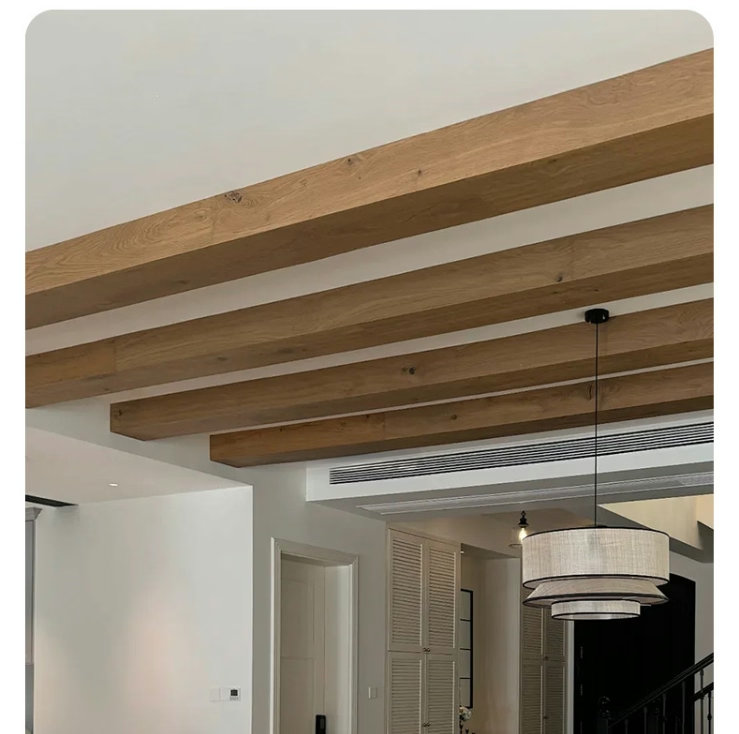
The short answer: absolutely. Installing polyurethane faux wood beams ranks among the most accessible home improvement projects that non-professionals can successfully complete, producing results comparable to professional millwork installation. Understanding what the process involves helps you decide whether to proceed independently or engage contractors for specific aspects.
Several factors work in the DIY installer's favor. Polyurethane faux beams weigh substantially less than authentic timber—typically 80% lighter—meaning that mounting hardware handles beam weight comfortably without requiring structural engineering assessment or specialized support systems. Single-person installation becomes feasible for most beam sizes where professional crews would otherwise be necessary.
Standard ceiling construction typically accommodates faux beam mounting without modification. Most residential and commercial buildings feature ceiling joists or structural members spaced at regular intervals that align with faux beam mounting bracket requirements. The brackets included with faux beam kits distribute weight across multiple attachment points, preventing stress concentration that might damage ceiling surfaces.
Basic tools suffice for the installation. Stud finders, levels, drills, and standard hand tools handle virtually all mounting requirements. No specialized equipment, chemical materials, or complex procedures are involved. The learning curve concentrates on accurate measurement and careful bracket positioning—skills that transfer across numerous home improvement applications.
Time requirements vary with project scope. A single-room installation with four to six beams typically completes within one to two days, including preparation and finishing. Larger projects or multiple rooms expand time proportionally. The work rate remains consistent regardless of experience level—patience compensates for technique refinement that professionals develop over many installations.
Potential complications merit acknowledgment. Cathedral ceilings with vaulted geometry require more complex planning. Extremely long beam spans may need splicing considerations. Electrical fixture relocation sometimes proves necessary. These situations remain solvable by DIYers but benefit from additional planning or consultation.

Technical References
ASTM standards cited in every specification
Test Data
Lab results from internal testing program
Updated 2026
Reviewed against current product specs