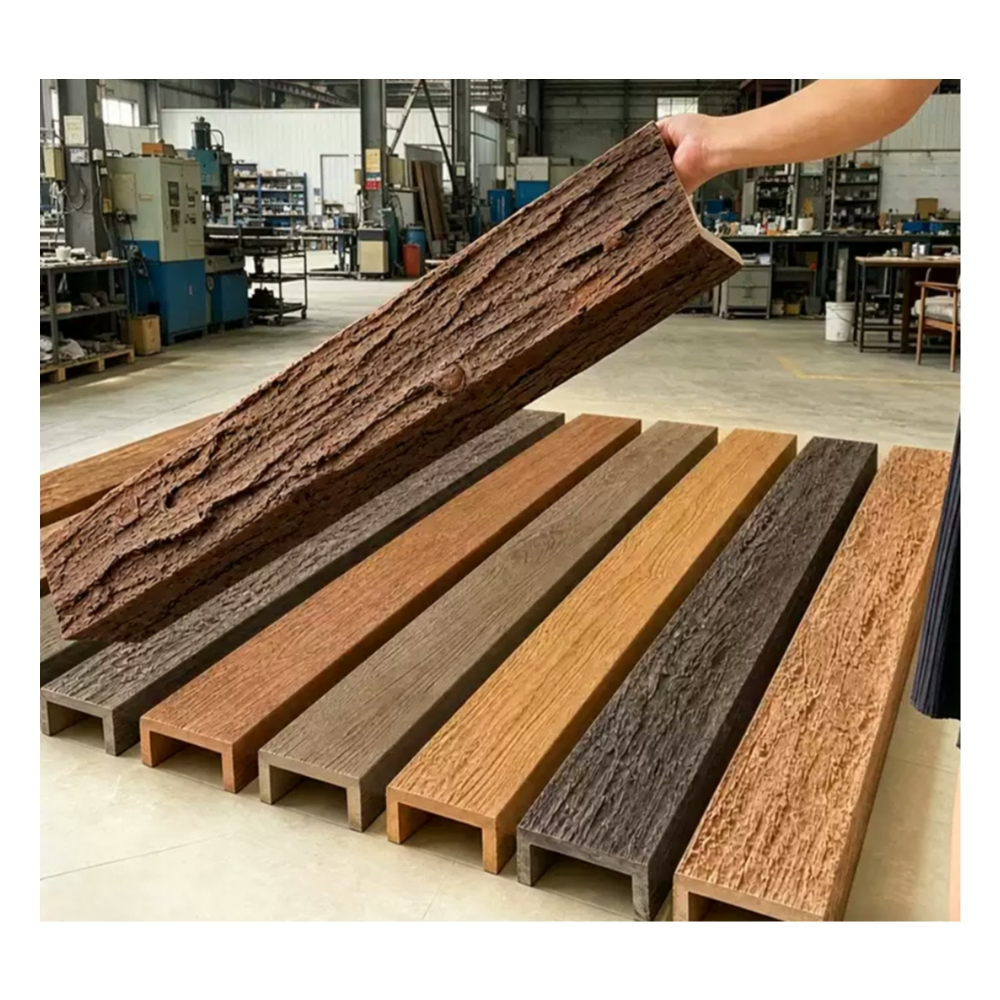
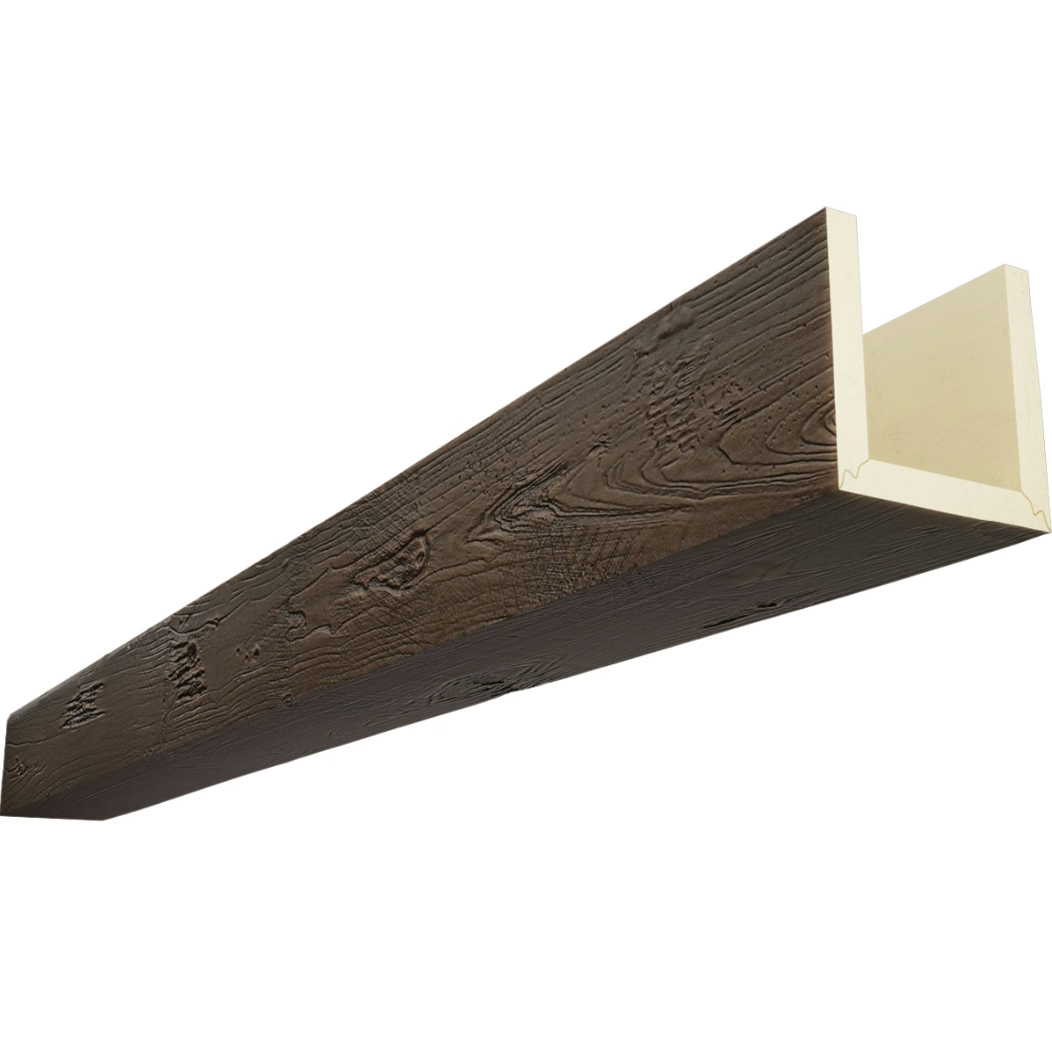
Artisan Decorative PU Faux Beams | Bulk Supply for Renovation Contractors
Renovation contractors handling projects in older homes with artisan character encounter specific beam supply needs. New artisan decorative beams may need to match retained original beams, work with substrate variations common in older construction, and integrate with existing decorative elements. The bulk supply relationship for renovation contractors needs to support these specifics.
This is how artisan decorative polyurethane faux beams work for renovation contractors in bulk, what the field measurement considerations are, and how the supply pattern operates.
Why artisan decorative beams fit renovation projects
Artisan decorative beams serve renovation projects in several ways:
Matching existing character
Renovation projects often need to match existing character:
- Original beams with artisan character need to be matched.
- New decorative elements need to blend with retained elements.
- The renovation maintains the home's character.
Matching existing character preserves the home's value.
Adding character to renovations
Renovations often add character where none existed:
- Adding beams to rooms that didn't originally have them.
- Creating decorative focal points in updated spaces.
- Differentiating renovated areas from retained areas.
Adding character supports the renovation's design intent.
Working with existing constraints
Renovations work with existing constraints:
- Existing ceiling heights.
- Existing structural elements.
- Existing substrates.
Artisan decorative beams work within these constraints.
Quality investment
Renovation projects often include quality investments:
- Artisan decorative beams represent quality investment.
- The investment supports the home's updated value.
- Long-term durability matches renovation scope.
Quality investment supports renovation value.
Field measurement in renovation projects
For renovation projects, field measurement has specific considerations:
When to measure
Field measurements should be taken at:
- After demolition is complete. To see the actual conditions.
- After any structural work is complete. Before finish installation.
- After framing modifications are complete. To see the actual install conditions.
These timing points ensure measurements reflect actual conditions.
What to measure
Field measurements should include:
- Beam lengths at each location.
- Beam depth of field available.
- Substrate identification.
- Cleat locations with substrate documentation.
- Field conditions affecting installation.
Comprehensive measurements prevent order errors.
Substrate variation
Renovation projects encounter varied substrates:
- Original wood framing.
- Plaster and lath.
- Modern drywall.
- Metal framing (in previously renovated areas).
- Concrete or masonry.
Each substrate requires different cleat specifications.
Existing element integration
Field measurements should account for:
- Existing beams that new beams align with.
- Original decorative elements.
- Arches or openings that affect layout.
- HVAC, lighting, or other elements.
Comprehensive measurement supports accurate integration.
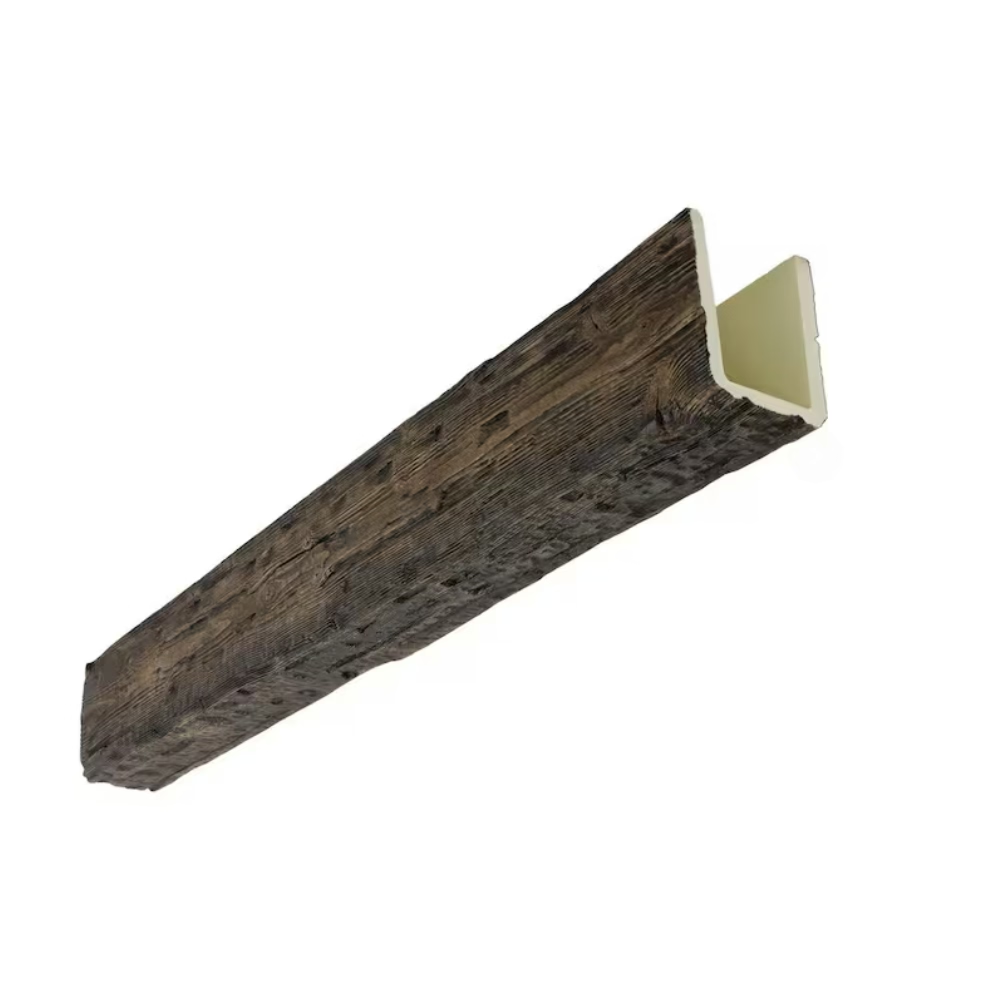
Matching new beams to existing elements
For renovation projects, matching new beams to existing elements requires:
Color matching
Match the new beam color to existing elements:
- Reference sample from existing beam.
- Color formula developed to match.
- Multiple iteration cycles for accurate match.
- May require matching aged or weathered appearance.
Color matching often requires more iteration than new construction.
Texture matching
Match the new beam texture to existing:
- Identify the existing texture type.
- Develop a texture that matches.
- Sample iteration for accuracy.
Texture matching is critical for visual cohesion.
Profile matching
Match the new beam profile to existing:
- Measure existing beam's cross-section.
- Identify profile characteristics.
- Develop a matching or similar profile.
Profile matching supports visual cohesion.
Aging or weathering matching
Match the weathering or aging effects:
- Patina or aging on existing beams.
- Sun exposure effects on exposed beams.
- Color shifts from years of exposure.
Weathering effects require skilled finish application.
Bulk supply patterns for renovation contractors
For renovation contractors, bulk supply typically follows:
Standing specifications
The contractor establishes standing specifications:
- Common artisan decorative profiles used across renovation projects.
- Standard color and finish palettes.
- Standard cleat hardware for common substrates.
- Standard documentation.
Standing specs cover most projects.
Volume tiers
The contractor negotiates volume tiers:
- Tier 1: 500 to 1,500 linear feet annually.
- Tier 2: 1,500 to 3,000 linear feet annually.
- Tier 3: 3,000+ linear feet annually.
Volume tiers reflect the contractor's annual renovation work.
Order pattern
The contractor's order pattern includes:
- Many small to medium orders (renovation projects vary).
- Field measurement-driven specifications.
- Orders with shorter lead times than new construction.
- Orders with frequent deviations from standing specs.
The pattern requires the supplier to handle varied orders efficiently.
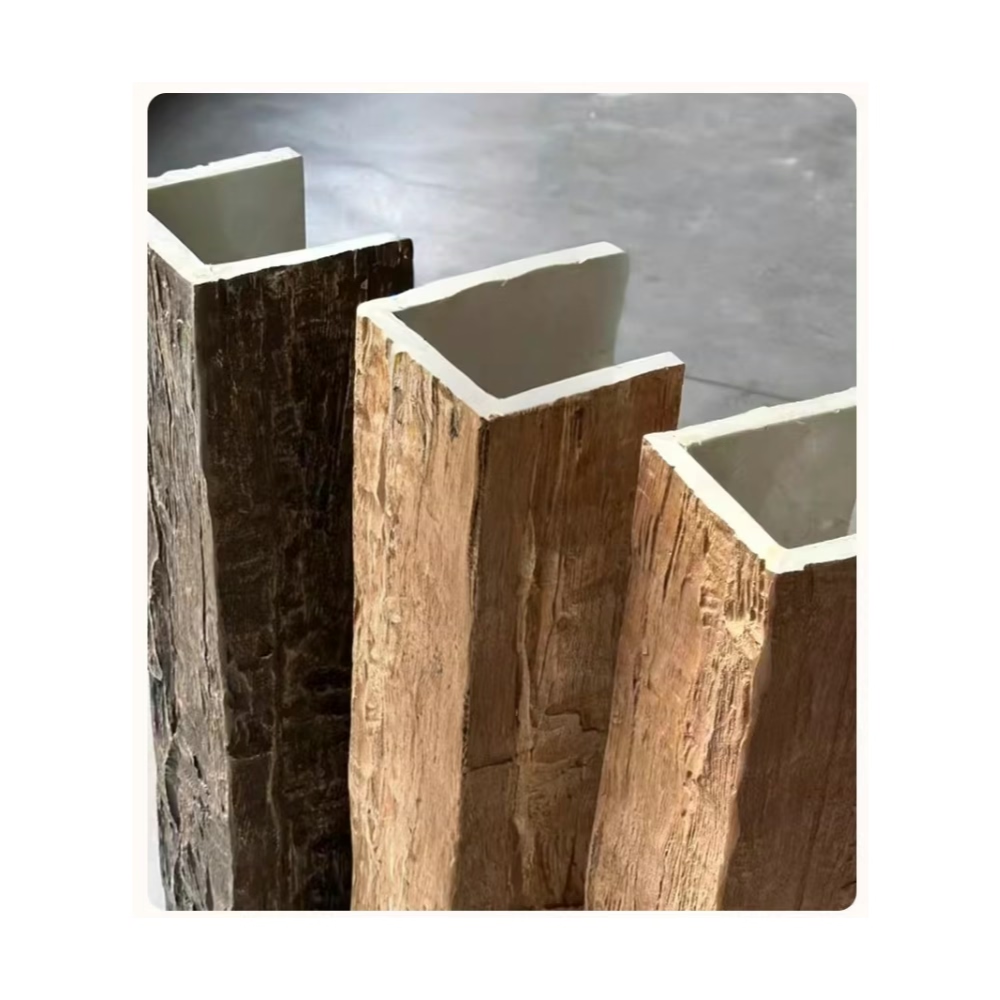
Substrate considerations for renovation projects
For renovation projects, substrate variation requires careful cleat specification:
Plaster and lath
Common in pre-1960 homes:
- Toggle bolts or specialized plaster anchors.
- Reduced load rating compared to wood framing.
- Pre-drilling required to avoid cracking.
Original wood framing
Common in older homes with exposed structure:
- Direct mounting to joists or beams.
- Highest load capacity.
- May require inspection for soundness.
Mixed substrate
Common in partially renovated homes:
- Original plaster in some areas.
- Modern drywall in others.
- Requires substrate-specific cleat specifications.
The cleat specification must match each location's actual substrate.
Pricing for renovation contractor bulk supply
Pricing for renovation contractor bulk supply typically includes:
- Per-piece pricing by length with volume discounts.
- Color and texture matching fees for matching to existing elements.
- Reduced setup fees for deviations against standing specs.
- Replacement beam pricing consistent with original orders.
For typical renovation projects with 100 to 300 linear feet of artisan decorative beams, project cost is $5,000 to $20,000 including installation.
Common pitfalls in renovation artisan decorative projects
A few issues that come up often enough to flag:
- Insufficient matching to existing elements. New beams that don't match existing woodwork.
- Wrong cleat for substrate. Standard cleats inadequate for plaster or other renovation substrates.
- Insufficient field measurement. Beams ordered on incorrect measurements don't fit.
- Slow replacement beam availability. Damaged beams without fast replacement.
- Inadequate documentation for occupied-space work. Documentation that doesn't address occupied-space concerns.
How renovation contractors evaluate artisan decorative suppliers
For renovation contractors evaluating suppliers for artisan decorative beams:
- Matching capability. The supplier has experience matching existing elements.
- Substrate expertise. The supplier has experience with varied renovation substrates.
- Field measurement support. The supplier provides guidance on measurement protocols.
- Lead time reliability. The supplier meets tight renovation timelines.
- References. The supplier has done comparable renovation artisan work.
Artisan decorative polyurethane faux beams bulk supply for renovation contractors is a category where the matching capability, the substrate expertise, and the field measurement support all need to align. The right supplier produces artisan decorative beams that blend with existing elements and work within renovation constraints. The wrong one produces beams that stand out as new construction in an older home.
Technical References
ASTM standards cited in every specification
Test Data
Lab results from internal testing program
Updated 2026
Reviewed against current product specs