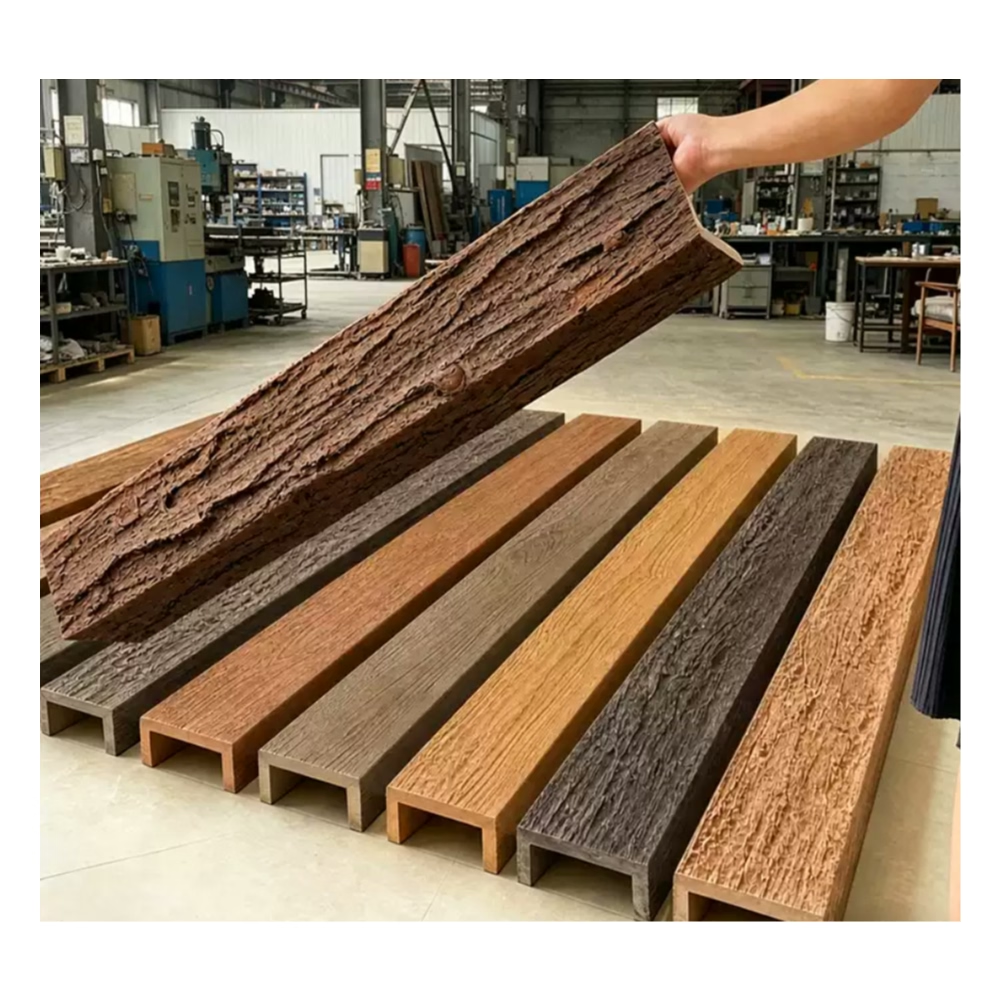
Artisan Faux Ceiling Beams | Factory Direct Wholesale for Home Developers
A home developer's ceiling beam decision isn't really about beams—it's about how beams affect the per-home cost structure, the design center offering, and the absorption pace of the development. Get the beam program right, and the development absorbs faster at a slightly higher margin. Get it wrong, and you either overpay for an upgrade that doesn't move homes, or you under-spec a feature that the market expects.
This is the developer's actual calculus, walked through the way a developer thinks about it.
The cost-per-home math
For a home developer building 50 to 300 homes in a development, the beam program is one line item among many. The relevant math:
- Beam cost per home. A typical home might have 25 to 60 linear feet of ceiling beam, depending on the floorplan. At $14 to $25 per linear foot for stock artisan faux beams, that's $350 to $1,500 in beam material per home.
- Install cost per home. Install labor is typically $8 to $15 per linear foot, depending on the ceiling complexity and the regional labor market. That's another $200 to $900 per home.
- Total beam cost per home. $550 to $2,400, depending on the floorplan and the beam specification.
For a 150-home development at the middle of that range, the total beam program is $80,000 to $360,000. That's a real line item, but it's a fraction of the total development cost.
The developer's question isn't "can we afford beams" but "do beams pay back in absorption pace and margin."
How beams affect absorption pace
Homes with ceiling beams as a standard feature (included in the base price) tend to absorb faster than homes without, in markets where the design vocabulary includes beams. The acceleration isn't dramatic—typically 5 to 15 percent faster absorption—but it's measurable.
In markets where the design vocabulary doesn't include beams—some urban infill, some mid-century modern developments—beams as a standard feature may not move the needle. The developer should know the local market before committing to beams as standard.
Beams as an upgrade option (offered through the design center) have a different dynamic. The uptake rate depends on the price point and the visibility of the upgrade. A $2,400 beam upgrade on a $400,000 home is a different value proposition than the same upgrade on a $900,000 home.
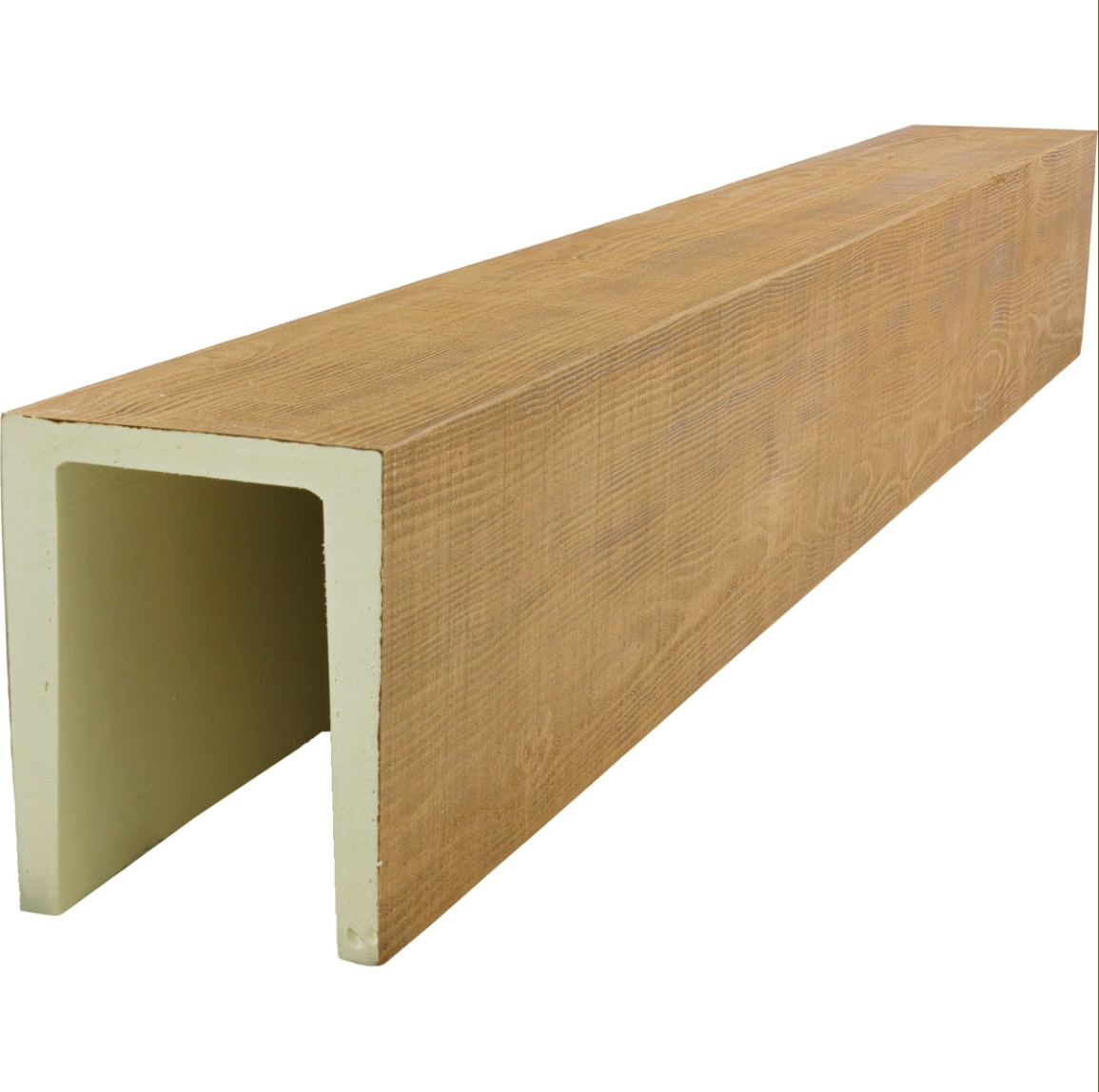
Design center upgrade economics
For most developments, ceiling beams are offered as a design center upgrade rather than a standard feature. The developer's economics:
- Upgrade price to the buyer. Typically $2,500 to $6,500 for a beam package on a single floorplan, depending on the scope.
- Cost to the developer. $1,200 to $2,800 for the same package (material + install + design center overhead).
- Margin on the upgrade. 40 to 60 percent gross margin, which is healthy for a design center upgrade.
- Uptake rate. 15 to 35 percent of buyers in the development select the upgrade, depending on the market and the visibility of the upgrade in the model home.
For a 150-home development with 25 percent uptake at a $4,500 upgrade price and $2,000 cost, the upgrade program generates $168,750 in gross profit ($67,500 margin after cost). That's a meaningful number, and it doesn't require any additional sales effort—the buyers select it through the design center process.
The risk is in the upgrade pricing. If the developer prices the upgrade too high, uptake drops below 10 percent and the program doesn't generate enough volume to justify the design center slot. If priced too low, the margin erodes and the upgrade becomes a loss leader.
Standard vs upgrade: the developer's decision
The decision to include beams as a standard feature or as an upgrade depends on the development's positioning:
- Luxury development ($700K+ per home). Beams are often standard in the primary living areas, with upgrades for additional rooms or premium beam specifications. The buyer expects beams at this price point.
- Move-up development ($400K to $700K). Beams are typically an upgrade, with the base home having a simpler ceiling treatment. Uptake rates are higher in this segment when the model home clearly shows the upgrade.
- Entry-level or first-time buyer development (under $400K). Beams are rare. The buyer is more focused on functional space than on aesthetic upgrades.
For most production home developers, the move-up segment is where the beam upgrade program works best. The buyer has the budget for the upgrade and the design sensibility to appreciate it.
Factory-direct wholesale economics for developers
For a developer building 50 to 300 homes, factory-direct wholesale pricing on the beam program produces meaningful savings:
- Per-piece pricing. Factory-direct is typically 15 to 30 percent below distributor pricing. On a $1,500 per-home beam cost, that's $225 to $450 per home in savings.
- Custom color and profile development. The factory-direct relationship allows the developer to develop a custom color or profile that's exclusive to the development. This becomes a design center differentiator.
- Phased production. The factory produces beams in waves aligned to the construction schedule, with the developer not having to warehouse finished product.
- Replacement stock held at the factory. The factory holds 5 to 10 percent attic stock for the duration of the development, ready to ship replacements within 5 to 10 business days.
For a 150-home development, the total savings from factory-direct vs distributor pricing is $33,750 to $67,500. That's a meaningful number, and it's also a reason to invest in the factory-direct relationship.
How developers structure the factory relationship
A typical developer-factory relationship for a beam program:
- Initial consultation and specification development. The developer's design team works with the factory to specify the beam profile, color, and finish for the development. This typically takes 4 to 8 weeks.
- Sample production and approval. The factory produces sample beams with the specified color and finish. The developer, the design team, and sometimes the sales team all review and approve.
- Production mold preparation. If the profile is custom or partial-custom, the factory prepares the production mold. Lead time is 4 to 6 weeks for a new mold, less for a modification to an existing mold.
- First production run. The factory produces the first wave of beams, typically covering 15 to 25 homes. The developer's construction team installs these as the model homes and the first few production homes.
- Adjustments based on the first run. The developer reviews the first run with the factory, and minor adjustments are made to color, finish, or texture. This is normal and expected.
- Steady-state production. The factory produces beams in waves aligned to the construction schedule, typically 10 to 20 homes per wave, with reorder lead time of 7 to 14 days.
- End-of-development closeout. The factory produces final replacement beams, and any remaining attic stock is reconciled.
The total relationship duration is typically 18 to 36 months, depending on the development size. For a developer running multiple developments, the relationship often continues across developments with modified specifications.
The artisan specification decision
Within the developer context, "artisan" faux beams typically means:
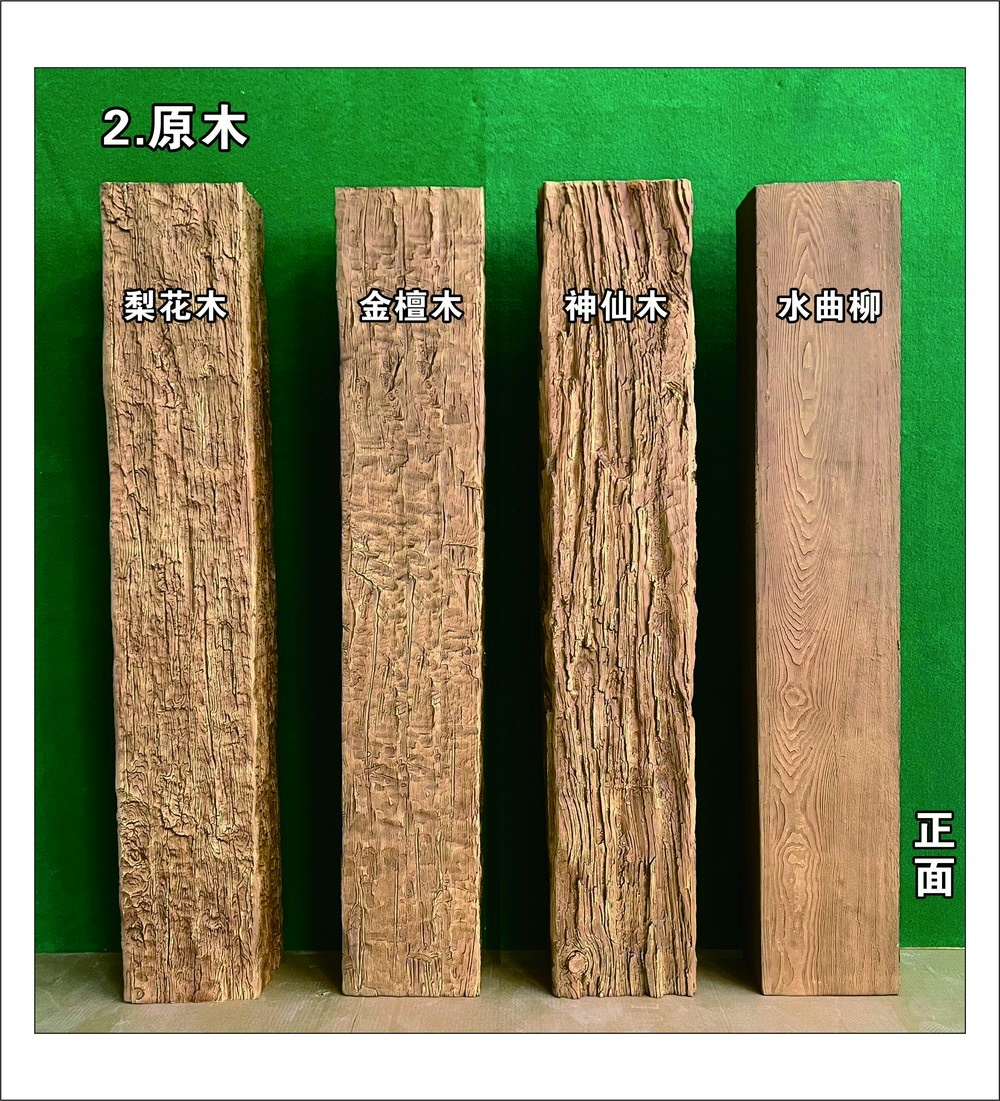
- Hand-detailed texture variation across the run.
- Higher-density polyurethane (200+ kg/m³).
- Multi-step factory finish with hand-applied color variation.
- Tighter color and dimension tolerance.
The artisan specification adds 30 to 60 percent to the per-piece beam cost. For a developer, the question is whether the artisan specification moves more buyers through the design center.
In most move-up developments, the answer is yes. Buyers at this price point can tell the difference between a stock beam and an artisan beam, and the upgrade uptake is higher with the artisan specification. The incremental margin on the upgrade covers the incremental cost.
In entry-level developments, the artisan specification doesn't pencil out. The buyers can't tell the difference, and the cost is better spent on other features.
What developers get wrong about beam programs
A few patterns that show up across enough developments to be worth flagging:
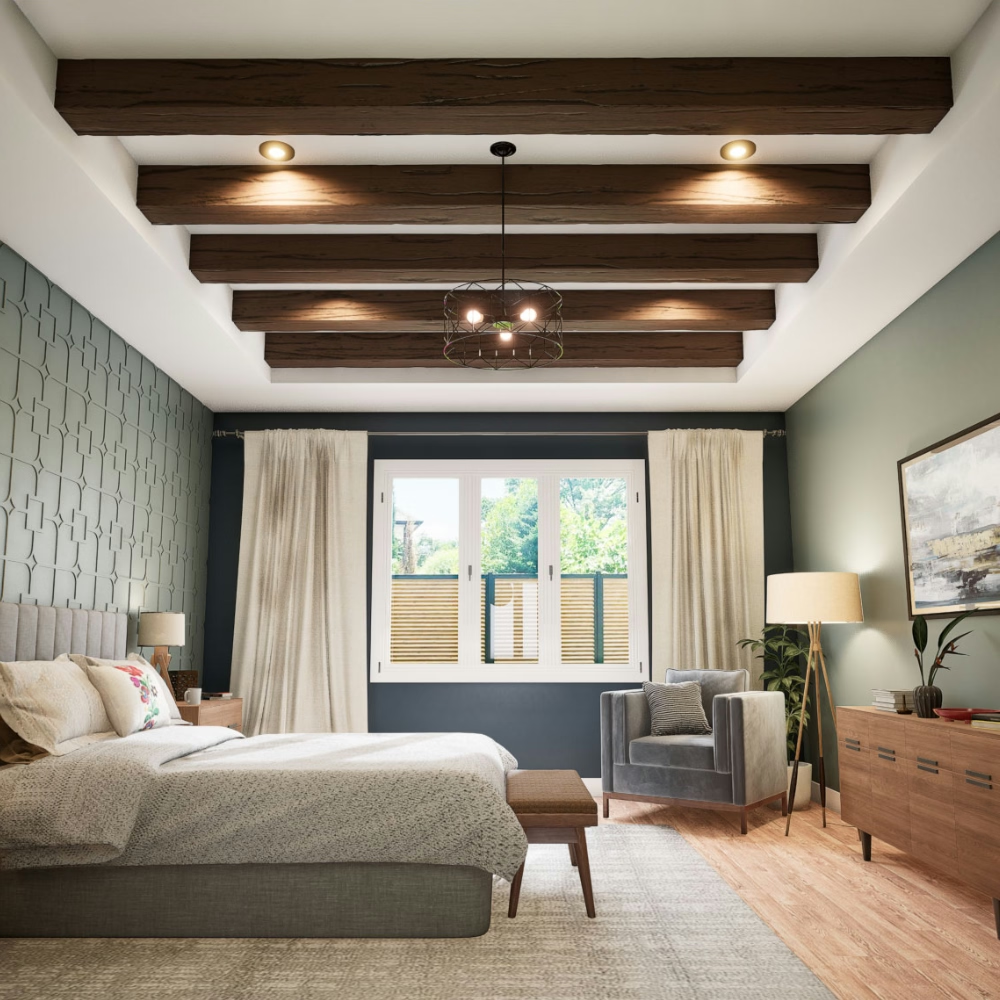
- Specifying beams in rooms where they don't make sense. A beam in a hallway ceiling or a small bedroom ceiling reads as decoration rather than architecture. Beams work in primary living areas, kitchens, master bedrooms, and studies. They don't work in secondary spaces.
- Under-engineering the cleat hardware. Polyurethane beams are lighter than timber, but they still need proper cleat support. Developers who skimp on cleat hardware end up with beams that sag or shift over time.
- Inconsistent color across production waves. The factory should hold a master color reference for the duration of the development. Developers who don't confirm this end up with homes in the later production waves that have visibly different beam color from the homes in the early waves.
- Ignoring the design center display. The model home's beam display should match the upgrade specification exactly. Buyers who see one thing in the model and get something subtly different in their home are disappointed, even if the difference is minor.
The right developer-factory relationship treats the beam program as a long-term procurement and design partnership, not a transactional purchase. The savings and the quality both compound over the duration of the development.
Technical References
ASTM standards cited in every specification
Test Data
Lab results from internal testing program
Updated 2026
Reviewed against current product specs