Bulk Polyurethane Faux Ceiling Beams | Supplier for New Construction
Looking at the bulk beam supply chain from the supplier's side—what builders actually order, how the order patterns flow through the year, and what the supplier needs to do to serve the new construction segment well.
This is a different angle from the builder's or contractor's perspective. It's about what the supplier sees, what drives the supplier's planning, and how the supplier-builder relationship develops over time.
What builders actually order from bulk suppliers
Across a typical year, a bulk beam supplier serving the new construction segment sees these order patterns:
Profile mix
- 60 to 70 percent of orders use stock or modified stock profiles. These are the workhorses of the supplier's mold library—proven profiles that work across many builders' portfolios.
- 20 to 30 percent of orders use partial-custom profiles. Builders who want distinctive looks but don't want to invest in full custom mold development.
- 5 to 10 percent of orders use full-custom profiles. Builders with distinctive design vocabularies who have invested in custom mold development.
The profile mix is what drives the supplier's mold library investment. Stock profiles need to be maintained; custom profiles need to be stored and reactivated for reorders.
Length mix
- 40 to 50 percent of beams are in the 8 to 14 foot range. Standard lengths that work for most rooms.
- 30 to 40 percent of beams are in the 4 to 8 foot range. Shorter beams for kitchens, hallways, smaller rooms.
- 10 to 20 percent of beams are in the 14 to 22 foot range. Long-span beams for great rooms and large living areas.
- 2 to 5 percent of beams are over 22 feet. Very long spans with field joints.
The length mix affects the supplier's production scheduling, with longer beams requiring more handling time and special packaging.
Color mix
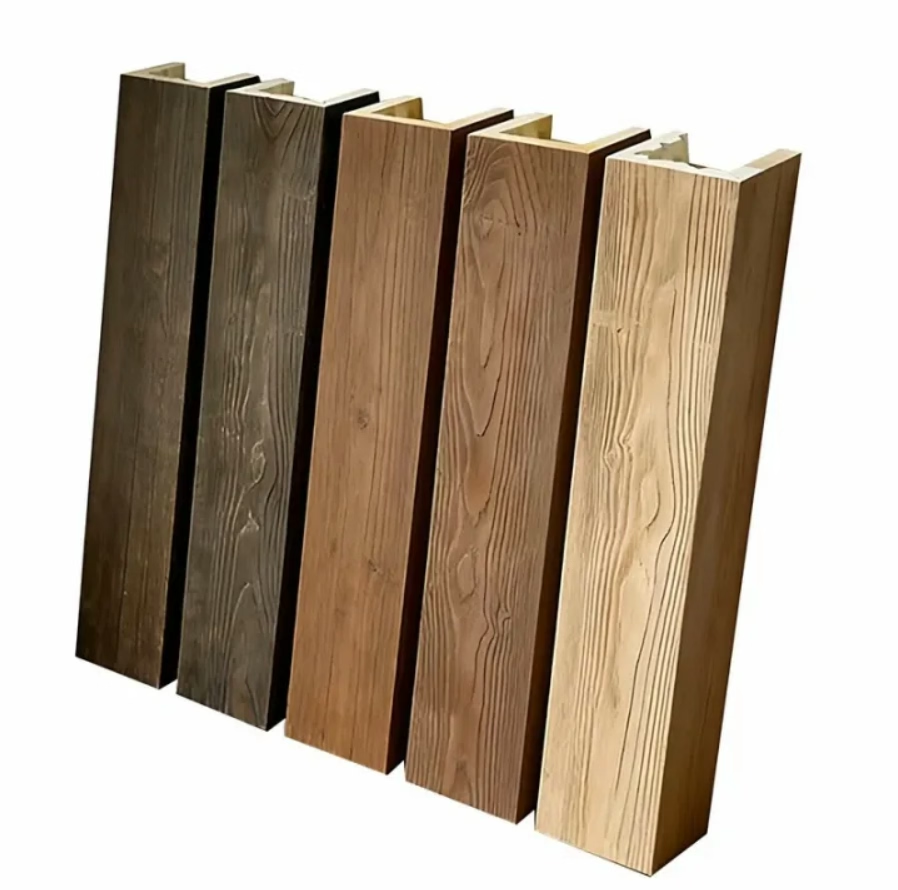
- 50 to 60 percent of orders use stock colors. Standard factory colors that work across many builders.
- 30 to 40 percent of orders use custom-matched colors. Builders with specific design palettes.
- 5 to 10 percent of orders use multi-color or complex finishes. Premium projects with layered color specifications.
The color mix drives the supplier's color library investment and colorist staffing.
Texture mix
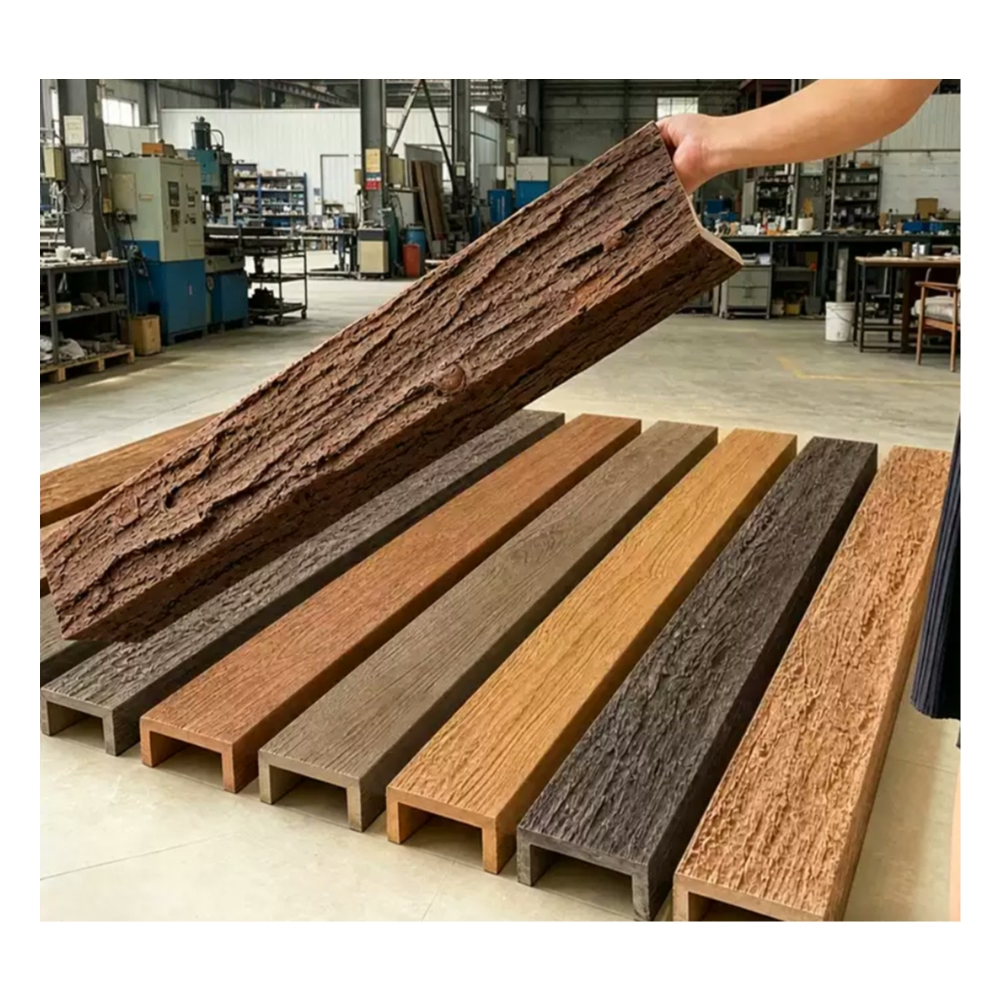
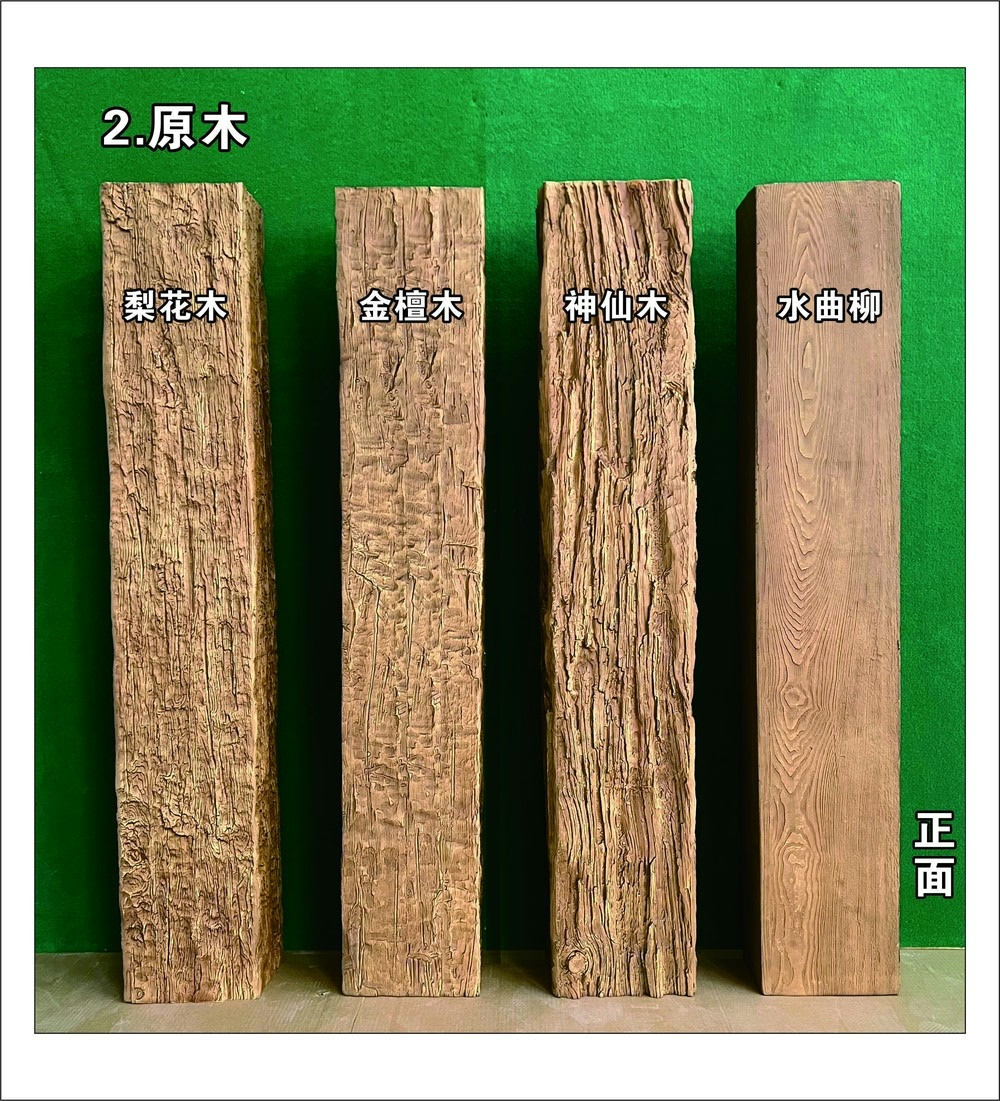
- 40 to 50 percent rough-sawn or hand-hewn. Most popular for craftsman, farmhouse, Spanish, and rustic styles.
- 20 to 30 percent smooth or lightly planed. For modern, contemporary, and traditional styles.
- 15 to 25 percent specialty textures. For specific regional or stylistic traditions.
- 5 to 10 percent custom-developed textures. For distinctive projects.
The texture mix drives the supplier's mold library and texture development capability.
How orders flow through the year
The supplier sees seasonal and project-driven variation in order flow:
Seasonal patterns
- Spring (March to May): Peak order volume as builders start new construction phases.
- Summer (June to August): Continued strong volume, especially for production builders.
- Fall (September to November): Order volume tapers as builders finish construction phases.
- Winter (December to February): Lowest order volume, but with high-value custom orders.
The seasonal patterns affect the supplier's production staffing and capacity planning.
Project-driven patterns
- New development launches: Concentrated order volume as a developer starts a new project.
- Model home construction: Initial order for the model, followed by production home orders.
- Phase completions: End-of-phase orders for replacement stock or final touches.
The project-driven patterns are more variable than seasonal patterns but represent larger individual orders.
Mid-project changes
A significant portion of orders (20 to 30 percent) involve mid-project changes:
- Profile changes after the original spec.
- Color adjustments after the first install.
- Length changes based on field measurements.
- Quantity adjustments based on project evolution.
The mid-project changes require the supplier to be flexible and responsive.
What suppliers need to do well
For a supplier serving the bulk new construction segment well, several capabilities matter:
Mold library maintenance
The supplier's mold library needs active maintenance:
- Regular inspection of mold condition.
- Replacement of molds at defined intervals.
- Storage of custom molds for reorders.
- Documentation of mold specifications.
A supplier with a poorly maintained mold library produces inconsistent results as molds degrade.
Color library management
The supplier's color library needs active management:
- Master reference samples for each color in active use.
- Periodic refresh of references (every 12 to 24 months).
- Color drift monitoring across production runs.
- Documentation of color formulas.
A supplier with a well-managed color library produces consistent colors across orders.
Production capacity flexibility
The supplier needs production capacity that can flex with demand:
- Sufficient mold stations for parallel production.
- Sufficient curing space for the production volume.
- Sufficient finishing capacity for the order mix.
- Sufficient packaging capacity for the order volume.
A supplier with inflexible capacity produces bottlenecks during peak demand periods.
Logistics capability
The supplier needs logistics capability that supports new construction projects:
- Phased delivery aligned to construction schedules.
- Multiple delivery locations across the supplier's market area.
- Inside delivery capability for some projects.
- Coordination with construction site access requirements.
A supplier with weak logistics capability creates friction at delivery.
Communication quality
The supplier needs strong communication with builders:
- Quick response to RFQs.
- Clear quote documentation.
- Proactive communication about production status.
- Coordination with multiple concurrent projects.
A supplier with weak communication creates project delays.
How supplier-builder relationships develop
For a bulk beam supplier, relationships with builders typically develop through stages:
Transactional relationship (Year 1)
- Individual orders with project-by-project negotiation.
- No standing specifications.
- Standard pricing.
- Limited customization.
The transactional relationship works for builders who order infrequently or have inconsistent specifications.
Recurring relationship (Year 2)
- Multiple orders per year with the same supplier.
- Some standing specifications developing.
- Modest pricing improvements based on volume.
- Increased customization comfort.
The recurring relationship develops when the supplier meets the builder's needs consistently.
Partnership relationship (Year 3+)
- Regular orders against documented standing specifications.
- Tiered pricing based on annual volume.
- Priority production scheduling.
- Joint problem-solving on unusual projects.
The partnership relationship produces the most value for both sides.

What suppliers get wrong about serving new construction
A few issues that come up often enough to flag:
- Treating all orders the same. Stock and custom orders have different requirements. A supplier that treats them the same produces friction on custom orders.
- Not maintaining the mold library. Molds degrade over time. A supplier that doesn't replace molds produces inconsistent results.
- Letting color drift. Color drift across production runs is a common quality issue. Suppliers who don't monitor and correct drift produce visible variation.
- Inflexible production scheduling. Peak demand periods require flexible scheduling. A supplier with rigid scheduling loses orders during peak periods.
- Poor communication. Slow response to RFQs, late notice of production issues, and unclear quote documentation create friction.
- Inadequate documentation. Builders need documentation for their projects. Suppliers who can't provide the right documentation lose commercial and code-sensitive projects.
How builders evaluate bulk suppliers
For builders evaluating bulk beam suppliers, the criteria include:
- Quality consistency across orders. Same profile, color, and finish across multiple orders.
- Lead time reliability. Promised dates met.
- Pricing competitiveness. Per-piece pricing that reflects the builder's volume.
- Communication quality. Quick, clear, proactive communication.
- Documentation depth. Data sheets, color references, install guides, and project-specific documentation as needed.
- Replacement terms. Quick turnaround on replacement beams.
The supplier's compounding benefit
For a supplier with strong builder relationships, the benefits compound over time:
- Year 1: The supplier is learning the builder's patterns.
- Year 2: The supplier is producing efficiently against documented specifications.
- Year 3+: The supplier has operational rhythms that produce consistent quality at competitive cost.
The compounding benefit is what makes builder-supplier relationships worth investing in for both sides.
Bulk polyurethane faux ceiling beams for new construction, from the supplier's perspective, are a category where the operational capabilities, the relationship management, and the production quality all need to align. The right supplier produces beams that meet builders' needs consistently across many projects. The wrong supplier produces friction at every project.
Technical References
ASTM standards cited in every specification
Test Data
Lab results from internal testing program
Updated 2026
Reviewed against current product specs