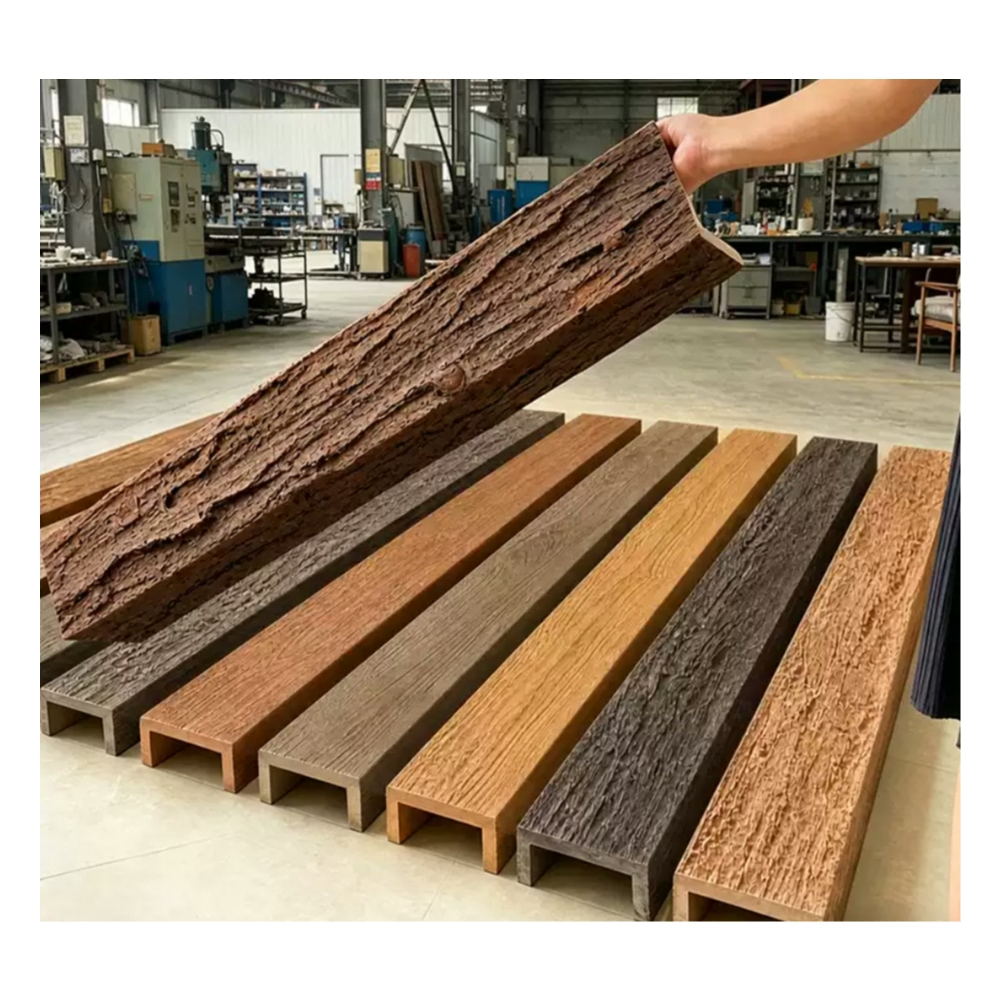
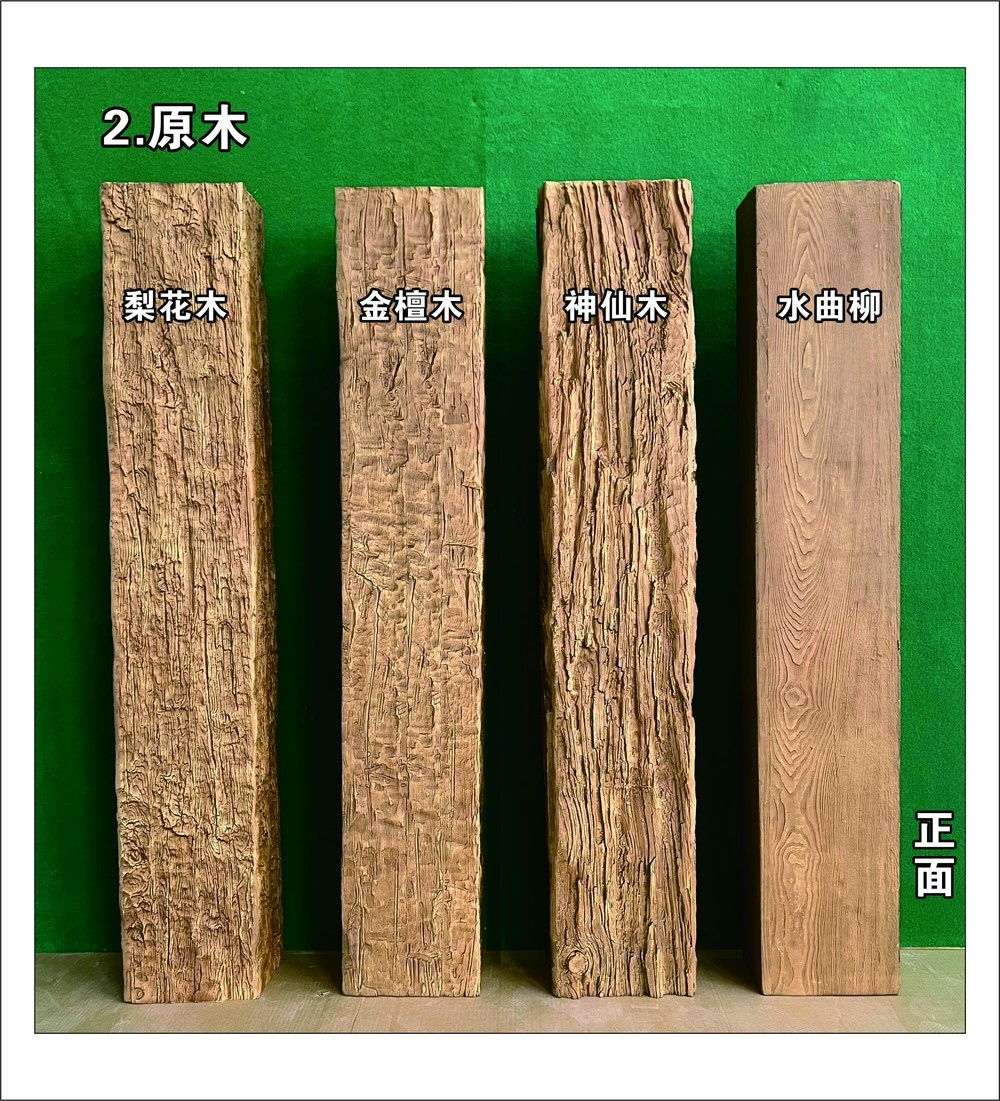
Bulk PU Faux Beams | Cost-effective Solution for Builders & Contractors
"Cost-effective" is a claim that requires unpacking for bulk polyurethane faux beams. The sticker price is one component, but the total cost of ownership—material, labor, install, maintenance, replacement over the building's life—tells a more complete story. For builders and contractors, understanding what cost-effectiveness actually means helps procurement decisions that maximize value.
This is what cost-effectiveness means in practice for bulk PU faux beams, how to analyze total cost of ownership, and what procurement patterns maximize value.
The components of cost-effectiveness
Cost-effectiveness for faux beams includes several components:
Initial material cost
The per-piece pricing for the beam itself:
- Stock profile: $10 to $18 per linear foot.
- Modified stock profile: $15 to $25 per linear foot.
- Custom profile: $25 to $40+ per linear foot.
- Volume discounts applied at tier thresholds.
Material cost is the visible price.
Freight cost
The cost to transport beams from the factory to the project site:
- Domestic freight: $0.50 to $2.00 per linear foot, depending on distance and volume.
- International freight: Higher, but with longer lead times.
- Multiple delivery waves may incur multiple freight charges.
Freight is a meaningful component of total cost.
Install labor cost
The labor cost to install the beams:
- Two-person crew for typical residential beams.
- 15 to 30 minutes per beam for standard installations.
- Labor rate: $40 to $80 per hour per person.
- Labor cost per beam: $20 to $80.
Install labor is a significant component of total cost.
Structural support cost
Any structural support needed for the beam installation:
- New cleats per beam location: $5 to $20 per cleat.
- Blocking in the ceiling: $20 to $100 per location.
- Reinforced mounting for seismic or commercial: Additional cost.
Structural support cost varies by project.
Finish maintenance cost
Maintenance required over the beam's life:
- Cleaning: Minimal for most polyurethane beams.
- Refinishing: Typically not required for 15 to 25 years.
- Repair: Minor repairs for damage, typically $50 to $200 per repair.
Maintenance cost is low for polyurethane.
Replacement cost
The cost to replace beams if needed:
- Damaged-in-install replacement: Per-piece pricing, possibly with setup fees.
- End-of-life replacement: Full per-piece pricing for new beams.
- Replacement typically rare with polyurethane.
Replacement cost is infrequent but should be considered.
Total cost of ownership comparison
Comparing polyurethane to solid wood for total cost of ownership:
Year 1 to 5
Polyurethane:
- Material: $15 per linear foot.
- Freight: $1 per linear foot.
- Install labor: $40 per beam (assuming 8-foot beam, 20 minutes at $60/hour).
- Structural support: $10 per cleat, 2 cleats per beam = $20.
- Total Year 1: Approximately $25 per linear foot installed.
Solid wood:
- Material: $50 per linear foot.
- Freight: $2 per linear foot.
- Install labor: $100 per beam (heavier, more complex install).
- Structural support: $40 (often requires engineered support).
- Total Year 1: Approximately $70 per linear foot installed.
Year 1 cost: Polyurethane is approximately 35 percent less than solid wood.
Year 5 to 15
Polyurethane:
- No maintenance required.
- No replacement expected.
- Total Years 5 to 15: $0.
Solid wood:
- Possible refinishing: $10 to $20 per linear foot.
- Possible repairs: $5 to $15 per linear foot.
- Possible replacement of severely warped beams: $50+ per linear foot.
- Total Years 5 to 15: $15 to $35 per linear foot on average.
Cumulative cost: Polyurethane remains 35 to 45 percent less than solid wood.
Year 15 to 30
Polyurethane:
- Possible refinishing: $10 to $20 per linear foot.
- Total Years 15 to 30: $10 to $20 per linear foot on average.
Solid wood:
- Likely refinishing: $15 to $25 per linear foot.
- Likely repairs: $10 to $20 per linear foot.
- Possible replacement of failed beams: $50+ per linear foot for some beams.
- Total Years 15 to 30: $25 to $95 per linear foot on average.
Cumulative cost: Polyurethane remains 40 to 60 percent less than solid wood.
Total 30-year cost
Polyurethane:
- Year 1: $25 per linear foot.
- Years 5 to 30: $15 per linear foot.
- Total: $40 per linear foot.
Solid wood:
- Year 1: $70 per linear foot.
- Years 5 to 30: $50 per linear foot.
- Total: $120 per linear foot.
30-year cost: Polyurethane is approximately 65 percent less than solid wood.
Comparison to other materials
Similar comparisons to MDF, plaster, and metal beams:
MDF
- Initial cost: Lower than solid wood, similar to polyurethane.
- Maintenance: Higher due to moisture sensitivity.
- Replacement: Likely within 10 to 20 years.
- 30-year cost: Similar to or higher than polyurethane.
Plaster
- Initial cost: Higher than polyurethane.
- Maintenance: Moderate.
- Replacement: Possible after 20 to 30 years.
- 30-year cost: Higher than polyurethane.
Metal
- Initial cost: Higher than polyurethane.
- Maintenance: Low.
- Replacement: Rare but expensive.
- 30-year cost: Higher than polyurethane for non-structural applications.
Polyurethane is generally the most cost-effective option for non-structural decorative beam applications.
How to maximize cost-effectiveness
For builders and contractors looking to maximize the cost-effectiveness of bulk polyurethane faux beam orders:
Volume commitment
The single most impactful factor:
- Commit to a high enough volume to reach tier pricing.
- Aggregate volume across multiple projects.
- Plan purchases to reach tier thresholds.
Volume commitment drives the largest pricing discounts.
Standing specifications
Develop and maintain standing specifications:
- Reduce setup fees for deviations.
- Reduce color match fees for reorders.
- Streamline the order process.
Standing specifications reduce per-order overhead.
Optimize lead time utilization
Use the factory's lead time to optimize construction scheduling:
- Plan beam orders to arrive when needed.
- Avoid rush orders that incur premiums.
- Use phased delivery to align with construction phases.
Optimized lead time utilization avoids rush premiums.
Reduce install labor
Take advantage of the easy install advantages:
- Train crews on the cleat system.
- Use two-person crews for typical installs.
- Standardize installation practices across projects.
Reduced install labor multiplies the cost-effectiveness benefit.
Minimize replacement and repair
Protect against damage and reduce replacement costs:
- Handle beams carefully during transport and install.
- Protect beams during on-site storage.
- Hold replacement stock at the factory for fast recovery.
Damage prevention reduces replacement costs.
Total cost communication
Communicate the total cost story to clients and stakeholders:
- Initial cost vs lifecycle cost.
- Maintenance and replacement considerations.
- Quality and aesthetic benefits.
Total cost communication supports value-based pricing.
Cost-effectiveness for different project types
The cost-effectiveness benefit varies by project type:
Production home building
- Per-piece savings compound across many homes.
- Volume discounts maximize.
- Standardized installation reduces labor.
- Highest cost-effectiveness benefit.
Custom home building
- Per-project savings less but still meaningful.
- Volume across multiple projects adds up.
- Premium specifications supported by bulk pricing.
- Significant cost-effectiveness benefit.
Renovation
- Per-project savings meaningful but smaller.
- Field measurement and substrate variation may add cost.
- Tight timelines may require rush orders.
- Moderate cost-effectiveness benefit.
Commercial
- Per-piece savings meaningful at scale.
- Documentation costs may add to total cost.
- Faster lead times may require rush orders.
- Moderate to significant cost-effectiveness benefit.
Multi-family
- Per-piece savings compound across many units.
- Volume discounts maximize.
- Standardized installation reduces labor.
- High cost-effectiveness benefit.
The cost-effectiveness benefit varies by segment but is meaningful across all segments.
Common cost-effectiveness pitfalls
A few issues that come up often enough to flag:
- Focusing only on sticker price. Not considering total cost of ownership.
- Choosing the cheapest supplier. Hidden costs may exceed the sticker price savings.
- Insufficient volume commitment. Missing out on tier discounts.
- Rush orders as standard practice. Rush premiums add significant cost.
- Damage during install. Replacement costs add to the total.
How builders evaluate cost-effectiveness
For builders evaluating cost-effectiveness of bulk polyurethane faux beam orders:
- Total cost of ownership analysis. Initial cost, install, maintenance, replacement.
- Volume tier pricing. Pricing at the builder's expected volume.
- Standing spec discounts. Reduced fees for deviations against standing specs.
- Lead time utilization. Ability to use standard lead times.
- Quality consistency. Avoiding replacement from quality issues.
- Replacement terms. Fast replacement at consistent pricing.
Bulk polyurethane faux beams cost-effective solution for builders and contractors is a category where the total cost of ownership, the volume commitment, and the operational patterns all need to align. The right combination produces meaningful cost savings across many projects. The wrong combination produces sticker price savings that don't translate to total cost savings.
Technical References
ASTM standards cited in every specification
Test Data
Lab results from internal testing program
Updated 2026
Reviewed against current product specs