Custom Artisan Faux Beams | Bulk Purchase Tips for Home Developers
Home developers buying custom artisan faux beams in bulk face a different decision than custom home builders. The developer is buying for a development—often 50 to 300 homes—not for a single home. The bulk purchase has to align with the development's economics, design center strategy, and construction schedule. Getting the bulk purchase right compounds across the development; getting it wrong compounds too.
This is how home developers should approach bulk custom artisan beam purchases, with specific tips on timing, negotiation, and strategy.
Tip 1: Lock the spec early in the development design phase
For a home developer, the custom artisan beam specification should be locked during the development's design phase, not during construction:
- Design phase timing: 6 to 12 months before construction starts.
- Why: Custom profile mold development, custom color matching, and factory coordination all take time. Locking the spec early allows the factory to develop the production capabilities before the first homes start.
Developers who wait until the model home is being built to specify the artisan beams end up with the factory scrambling to catch up, which leads to compromises on the specification or delays in the first wave of homes.
Tip 2: Negotiate pricing tiers based on the full development projection
Developers should negotiate pricing tiers based on the full development projection, not just the first phase:
- First phase volume: Often 20 to 40 homes.
- Full development projection: 50 to 300 homes.
- Annual volume: Based on the absorption pace.
The factory's pricing improves significantly at higher volume tiers. Negotiating the full development projection gives the developer access to better pricing across the entire development.
For a 150-home development, the developer should commit to 2,000 to 5,000 linear feet of annual beam volume, with the actual volume depending on the floorplan mix.
Tip 3: Build a standing specification that survives the development
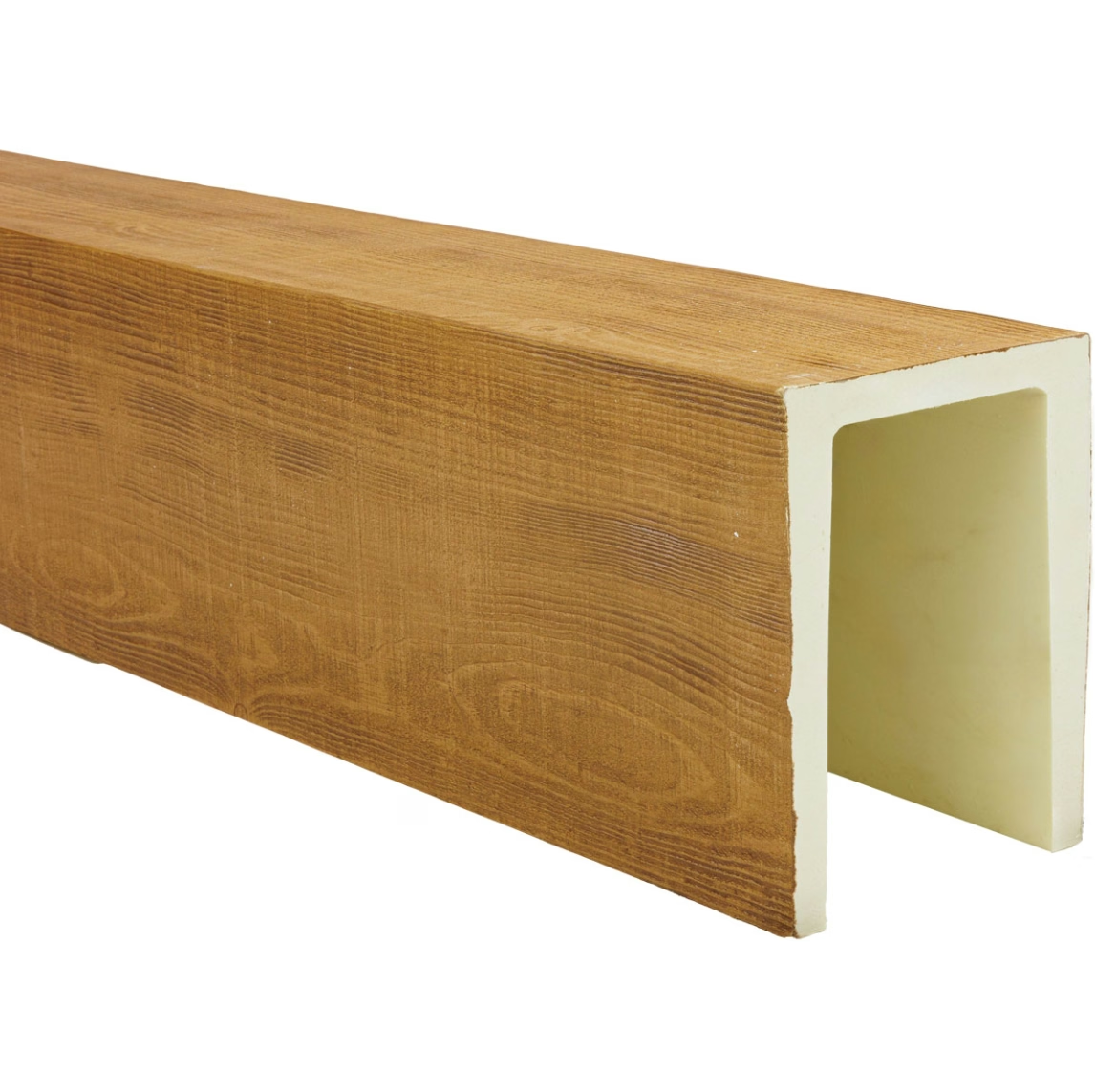
Developers should build a standing specification that stays consistent across the development:
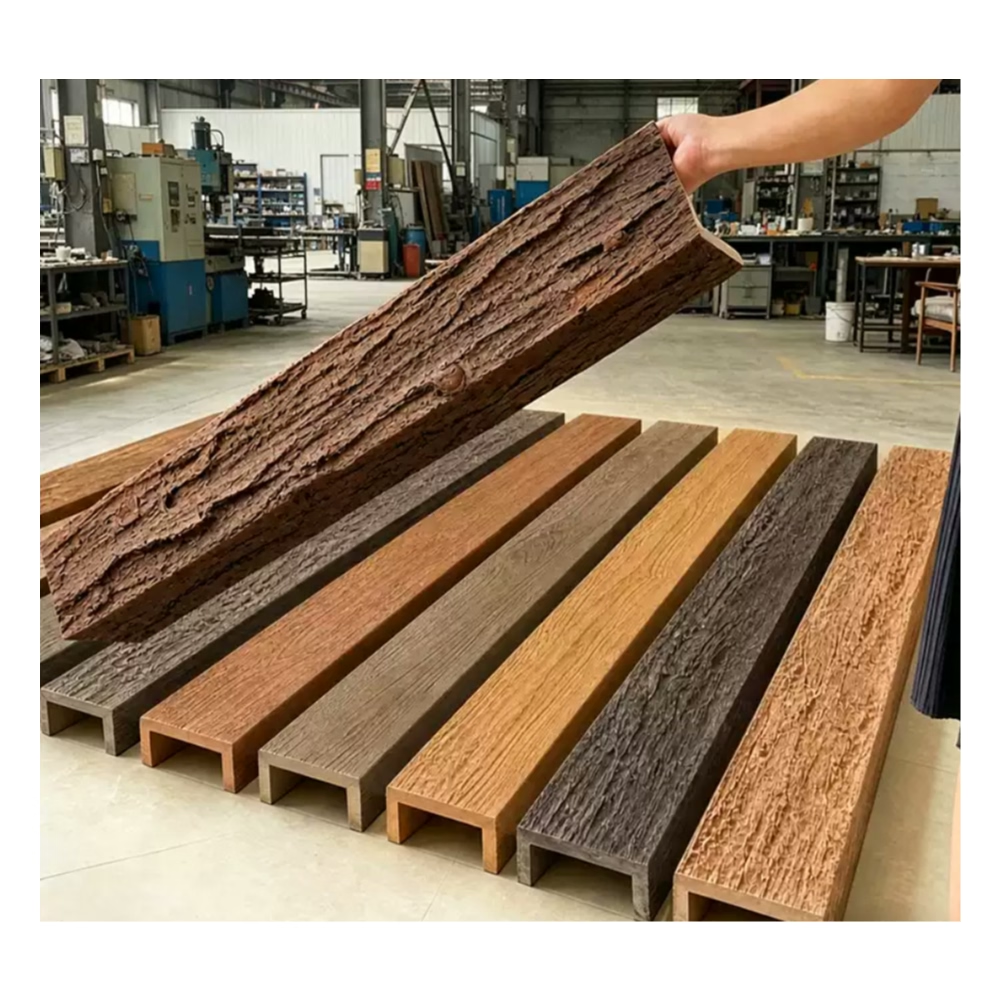
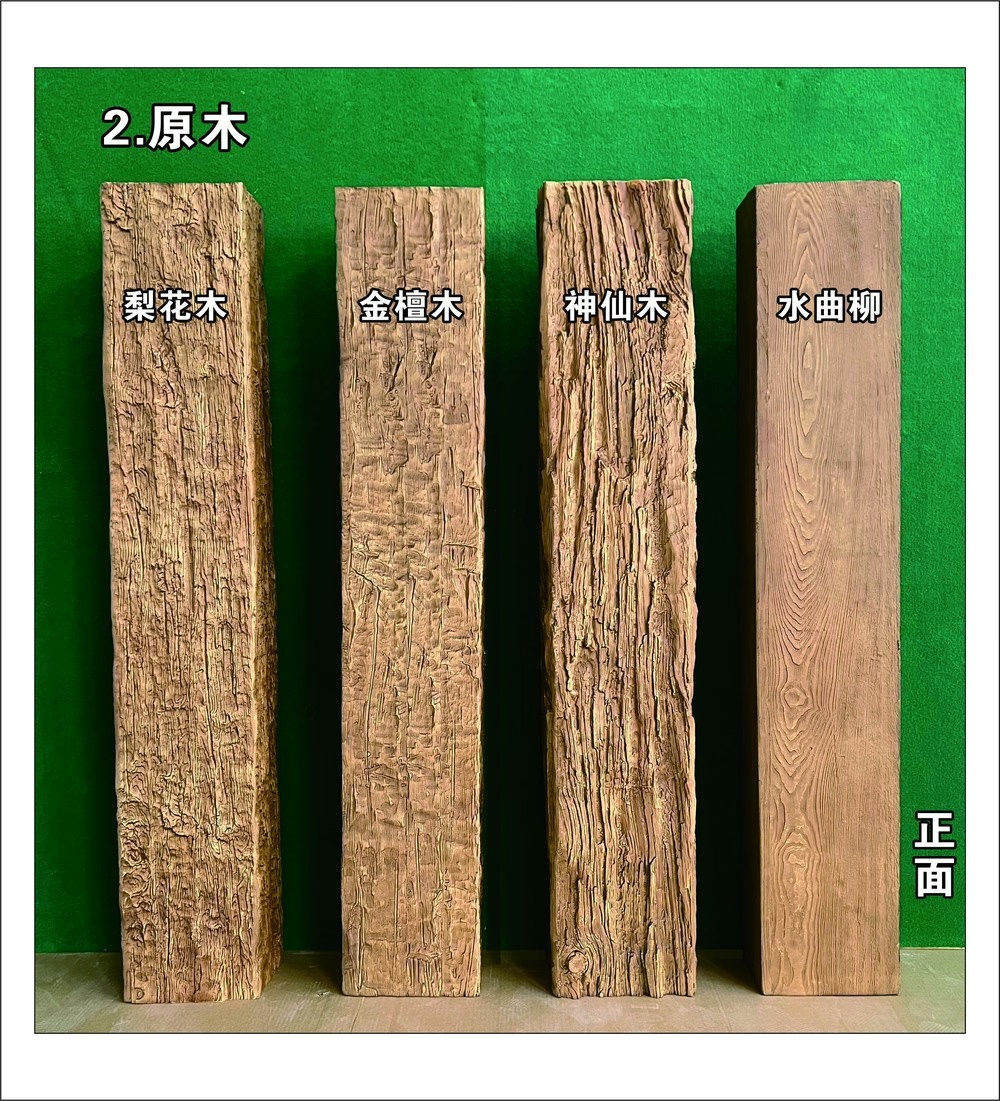
- Profile, texture, color, finish.
- Coordinating elements.
- Documentation packages.
- Replacement stock terms.
A consistent standing specification produces consistent quality across homes in the development. Buyers in the early phases and buyers in the late phases get beams that look the same.
For developers who allow the beam specification to drift over the development, the result is visible inconsistency between homes—different beam colors, slightly different profiles, sometimes different finishes. Buyers notice, and resale values reflect it.
Tip 4: Use the model home as the design center reference
The model home's beam installation is the design center reference for the upgrade:
- Buyers see the model home first. The beam upgrade is visible in the model, and the upgrade decision is anchored against what the buyer saw.
- The upgrade specification must match the model. Any drift between the model home beams and the upgrade beams breaks the design center promise.
For developers, the factory should produce the model home beams and the upgrade beams against the same specification. The model home is the reference, and the upgrade beams are matched to it.
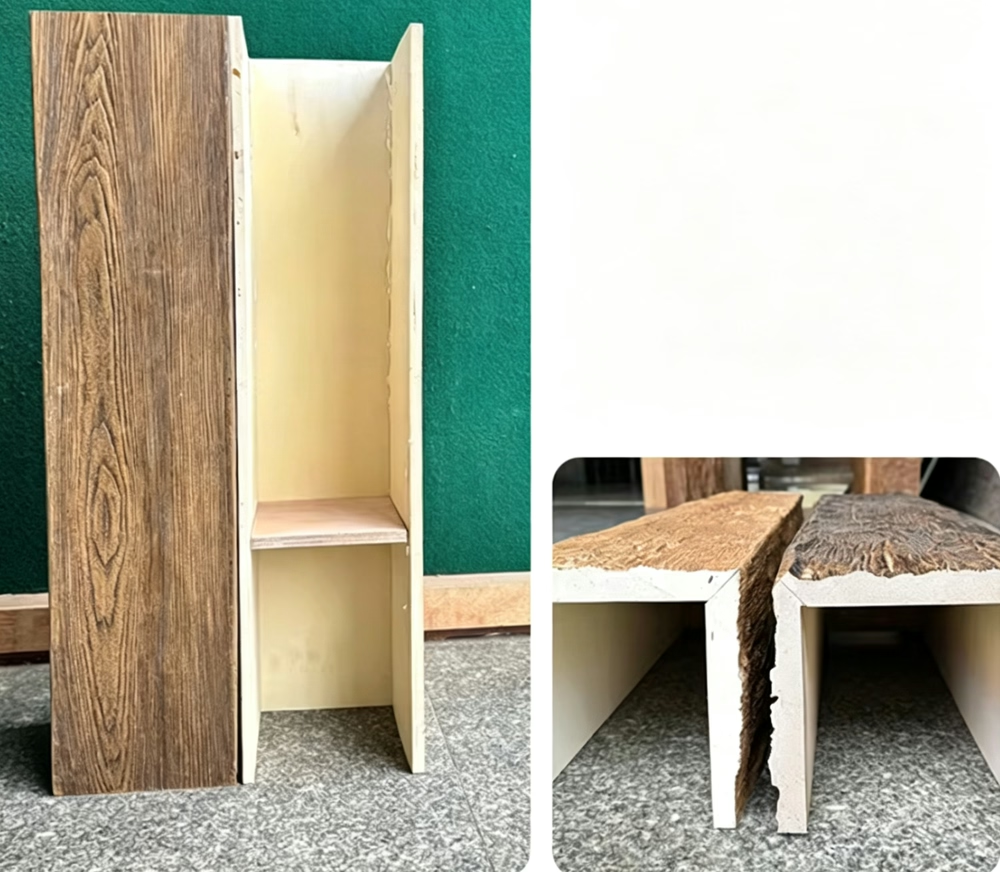
Tip 5: Negotiate the cleat hardware into the bulk order
Cleat hardware is often overlooked in bulk beam orders. Developers should include cleat hardware in the bulk order:
- Per-beam cleats: Sized and specified for the beam profile and the project's substrate.
- Bulk cleat pricing: Lower per-cleat cost when ordered with the beams.
- Cleat inventory: Held at the factory or on-site for the construction crew.
Cleats ordered separately from the beams often arrive late, which delays the install. Cleats included in the bulk order arrive with the beams.
Tip 6: Plan phased delivery to match construction phases
Developers should plan phased delivery to match construction phases:
- First wave: Model home plus first 5 to 10 production homes.
- Subsequent waves: 5 to 15 homes per wave, aligned to the construction schedule.
- Final wave: Last 5 to 10 homes, plus replacement stock.
The factory produces each wave on a 3 to 4 week lead time. The developer's construction team coordinates the wave timing with the framing and drywall completion of each phase.
Developers who order all beams at once for the full development end up with on-site storage problems and breakage. Phased delivery keeps the beams in active production and active install.
Tip 7: Hold replacement stock at the factory for the development duration
Developers should hold replacement stock at the factory for the development duration:
- Replacement percentage: 5 to 10 percent of the development's beam volume.
- Replacement lead time: 5 to 10 business days from request.
- Replacement duration: Until the last home is closed and the warranty period expires (often 12 to 24 months after the last home closes).
Holding replacement stock at the factory is cheaper than warehousing it on-site and ensures replacement beams match the original production runs.
Tip 8: Negotiate color drift correction into the standing specification
Color drift is a real risk across a long development. The factory's process may drift over time—slight color shifts, slight texture variation, slight finish changes. Developers should negotiate color drift correction into the standing specification:
- Acceptable color tolerance: Defined quantitatively (e.g., plus or minus 5 percent tonal variation).
- Drift monitoring: Factory reports color drift measurements across production waves.
- Correction procedures: If drift exceeds tolerance, factory adjusts the production formula.
Developers who don't address color drift up front end up with homes in the late production waves that have visibly different beams from the early waves. The fix is in the standing specification.
Tip 9: Use the design center to drive upgrade uptake
For developers offering the beam upgrade through the design center, the upgrade presentation matters:
- Visibility in the model home. The beams are visible and well-lit in the model.
- Design center materials. Sample chips, photographs, descriptions that help buyers understand the upgrade.
- Pricing psychology. The upgrade price should be significant enough to feel premium but not so high that uptake drops below 15 percent.
The design center upgrade can be a major revenue source for the development. The right presentation drives uptake; the wrong one produces low uptake and low margin.
Tip 10: Document the bulk purchase terms for the development team
The bulk purchase terms should be documented for the development team:
- Procurement manager: Manages the relationship with the factory, places reorders, handles quality issues.
- Construction manager: Coordinates beam delivery with construction phases.
- Sales team: Communicates the upgrade to buyers.
- Warranty manager: Handles replacement requests during the warranty period.
A clear division of responsibilities prevents gaps in the procurement process. Developers who leave the bulk purchase terms undocumented end up with inconsistent execution across the development.
Common pitfalls in bulk custom artisan beam purchases
A few issues that come up often enough to flag:
- Locking the spec too late. Specifying beams during construction rather than during design. The factory can't develop custom capabilities in time.
- Negotiating only first-phase pricing. Missing the opportunity for better pricing on the full development projection.
- Allowing spec drift over the development. Producing visible inconsistency between early and late homes.
- Skipping cleat hardware in the bulk order. Cleats arriving late and delaying the install.
- Ordering all beams at once rather than phased. Creating on-site storage and breakage problems.
- Not holding replacement stock. Replacement beams taking 15 to 25 business days instead of 5 to 10.
Bulk custom artisan beam purchases for home developers are a category where the right procurement strategy compounds across the development. Developers who approach the bulk purchase with discipline get better pricing, more consistent quality, and fewer operational issues. Developers who treat it as a transactional purchase miss out on the compounding benefits.
Technical References
ASTM standards cited in every specification
Test Data
Lab results from internal testing program
Updated 2026
Reviewed against current product specs