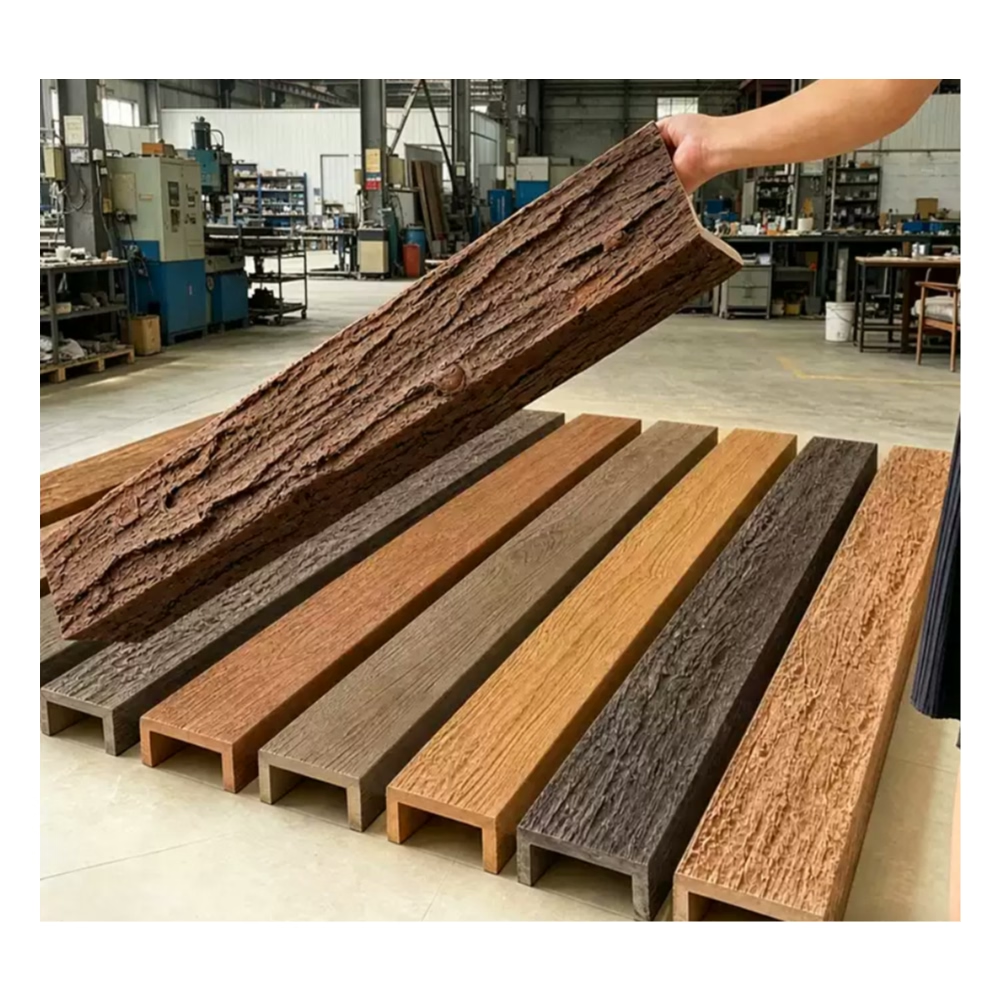
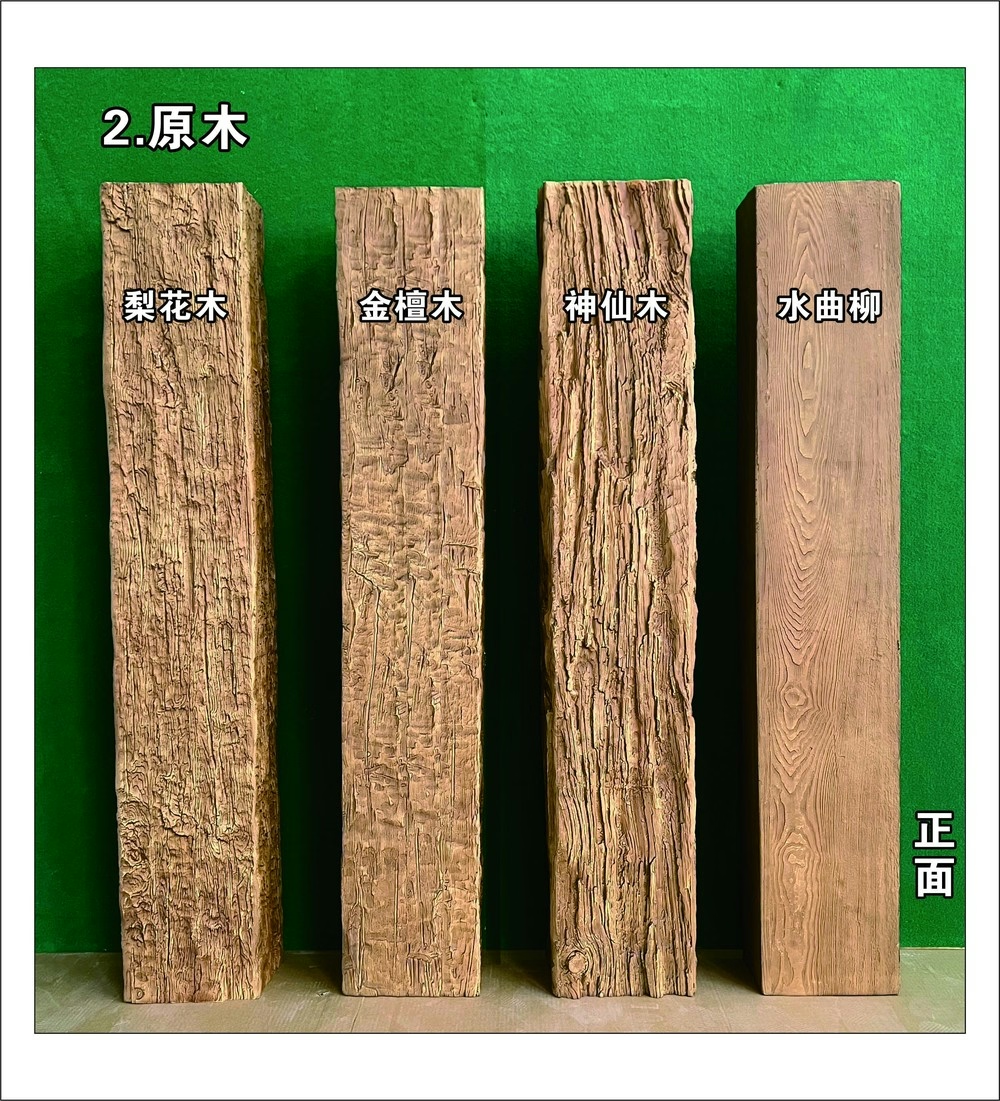
Custom Profile PU Faux Beams | Factory for Hotel & Resort Projects
Hotel and resort projects often use custom profile polyurethane faux beams as brand-distinctive elements. The beam profile becomes part of the hotel brand's visual identity, appearing in lobbies, restaurants, common areas, and sometimes guest rooms across multiple properties. The factory relationship that produces and maintains these custom profiles is a long-term strategic asset for the hotel brand.
This is how hotel and resort projects use custom profile beams, how the brand standard development works, and what the factory relationship looks like.
Why custom profiles for hotel and resort projects
Several factors drive hotel and resort brands to invest in custom beam profiles:
Brand differentiation
Hotel brands compete on visual identity:
- The lobby, restaurant, and common area design defines the brand experience.
- Distinctive architectural elements differentiate the brand from competitors.
- Custom beam profiles are part of the brand's visual vocabulary.
A custom beam profile becomes recognizable as part of the brand.
Consistency across properties
Hotel brands maintain consistency across all properties:
- The brand standard applies to every location.
- Custom profiles ensure no competitor can replicate the exact look.
- The brand experience is consistent regardless of location.
The consistency is what makes the brand work.
Designer-driven specifications
Hotel and resort projects typically involve interior designers or design firms:
- The designer specifies the beam profile as part of the overall design.
- The designer may develop the profile with the factory's input.
- The designer's specification becomes part of the brand standard.
The designer relationship is central to the profile development.
Guest experience
Hotels and resorts compete on guest experience:
- The visual environment contributes to perceived quality.
- Distinctive beam profiles add character to common areas.
- The brand experience justifies premium pricing.
The beam profile contributes to the guest's experience of the brand.
How custom profile development works for hotel and resort projects
The custom profile development process for hotel and resort projects typically follows:
Brand standard development
The hotel brand and the factory develop the brand standard:
- Reference images and design intent documentation.
- Initial profile sketches and concept exploration.
- Refinement through multiple iterations.
- Final brand standard specification with cross-section drawings.
The brand standard development takes 8 to 16 weeks.
Wood master and mold production
The factory produces the wood master and production mold:
- Wood master creation (hand-carved or CNC-carved).
- Quality inspection of the wood master.
- Production mold pouring.
- Mold testing and approval.
The mold production takes 4 to 6 weeks after wood master approval.
Sample production
The factory produces samples for the brand's approval:
- Sample beams with the brand's color and finish.
- Multiple samples showing variation across the production.
- Coordination with the brand's designer.
Sample production takes 1 to 2 weeks after mold completion.
Brand approval
The brand approves the samples:
- Profile, color, and finish verified.
- Reference samples held for production.
- Brand standard specification finalized.
Brand approval typically requires 1 to 3 review cycles.
Initial production
The factory produces the first project's beams:
- Per the project's specific quantities and lengths.
- With phased delivery aligned to construction schedule.
- With replacement stock held for the project.
Initial production takes 3 to 5 weeks after approval.
Ongoing production
For subsequent projects, the factory:
- Produces against the maintained brand standard.
- Maintains color and texture consistency.
- Holds replacement stock for ongoing projects.
The mold is maintained for the brand's active use.
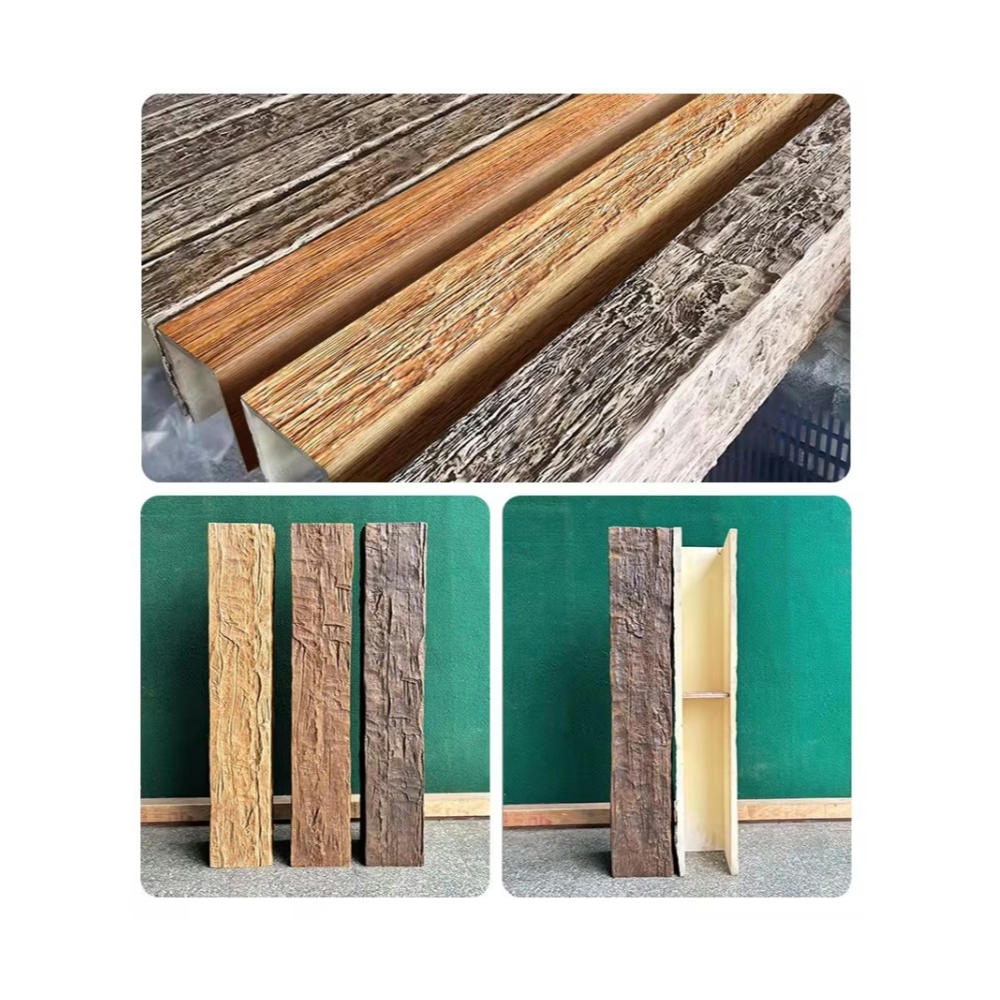
Brand standard maintenance
For hotel and resort brands, the factory maintains the brand standard over years:
Master reference samples
The factory holds master reference samples:
- Color formula reference.
- Texture reference sample.
- Finish reference sample.
- Photographed reference documentation.
The master references are refreshed periodically (every 12 to 24 months).
Mold maintenance
The factory maintains the production mold:
- Regular inspection for wear or damage.
- Replacement molds produced when needed.
- Storage in controlled conditions.
Mold maintenance ensures long-term consistency.
Color drift monitoring
The factory monitors color drift across production batches:
- Quantitative color measurement against the master reference.
- Tolerance specifications (typically Delta E less than 1.0).
- Correction procedures if drift exceeds tolerance.
Color drift monitoring prevents visible variation between production batches.
Texture consistency
The factory maintains texture consistency:
- Mold condition monitoring.
- Production process documentation.
- Quality inspection of finished beams.
Texture consistency ensures the brand look is maintained.
FF&E schedules and beam procurement
For hotel and resort projects, beams are typically part of the FF&E (Furniture, Fixtures, and Equipment) schedule:
FF&E procurement timeline
The FF&E procurement timeline for hotel projects:
- 12 to 18 months before opening: Design development and brand standard finalization.
- 9 to 12 months before opening: FF&E specifications and supplier selection.
- 6 to 9 months before opening: Production and delivery.
- 3 to 6 months before opening: Installation and punch list.
Beam procurement aligns with this FF&E timeline.
Per-project coordination
For each hotel or resort project:
- The project's interior designer coordinates with the factory.
- The project's FF&E manager handles procurement and delivery.
- The project's general contractor coordinates installation.
- The brand's design team ensures brand standard compliance.
The coordination involves multiple stakeholders.
Multi-property coordination
For hotel brands with multiple projects:
- The brand's FF&E team coordinates across properties.
- Production scheduling balances multiple project timelines.
- Quality consistency is maintained across all properties.
The multi-property coordination requires operational discipline.
Documentation for hotel and resort projects
Hotel and resort projects require comprehensive documentation:
Brand standard documentation
- Cross-section drawings with all dimensions.
- Color formula with reference samples.
- Finish specification with sheen and weathering effects.
- Texture reference samples.
- Quality standards.
Project-specific documentation
- Per-project beam layout drawings.
- Per-project quantities and lengths.
- Per-project delivery schedule.
- Per-project installation documentation.
Code compliance documentation
- Fire rating certificates.
- VOC emissions certification.
- Sound transmission data (where applicable).
- Seismic documentation (in seismic zones).
- Care and maintenance guides.
The documentation supports the brand's quality standards and the project's code compliance.
Pricing for hotel and resort custom profile projects
Pricing for hotel and resort custom profile projects typically includes:
Custom profile development
- Brand standard development: $5,000 to $15,000 (one-time).
- Wood master and mold production: $4,000 to $10,000 (one-time).
- Sample production: Often included in development fee.
Per-piece pricing
- Custom profile per-piece pricing: 40 to 80 percent above stock pricing.
- Tier discounts at hotel chain volumes.
- Setup fees waived for reorders against the brand standard.
Documentation
Often included in per-piece pricing for standard documentation. Project-specific documentation may carry additional fees.
Replacement stock
5 to 10 percent of project quantity held at the factory. Replacement beam pricing consistent with original orders.
Common pitfalls in hotel and resort custom profile projects
A few issues that come up often enough to flag:
- Brand standard drift. Color or texture drift over time breaks the brand consistency.
- Insufficient documentation. Gaps in brand standard or project-specific documentation.
- Inconsistent quality across properties. Visible variation between hotel locations.
- Slow replacement beam availability. Damaged beams without fast replacement delay the project.
- Inadequate mold maintenance. Mold degradation over time produces inconsistent results.
How hotel and resort brands evaluate factories for custom profile work
For hotel and resort brands evaluating factories:
- Custom profile capability. The factory has done comparable hotel/resort projects.
- Brand standard maintenance. The factory maintains brand standards over years.
- Multi-property coordination. The factory handles concurrent properties.
- Documentation depth. The factory provides comprehensive documentation.
- References. The factory has done comparable hotel/resort projects.
Custom profile polyurethane faux beams factory for hotel and resort projects is a category where the brand standard development, the multi-property coordination, and the documentation depth all need to align. The right factory produces beams that become long-term brand assets. The wrong one produces profiles that don't quite work as brand-distinctive elements.
Technical References
ASTM standards cited in every specification
Test Data
Lab results from internal testing program
Updated 2026
Reviewed against current product specs