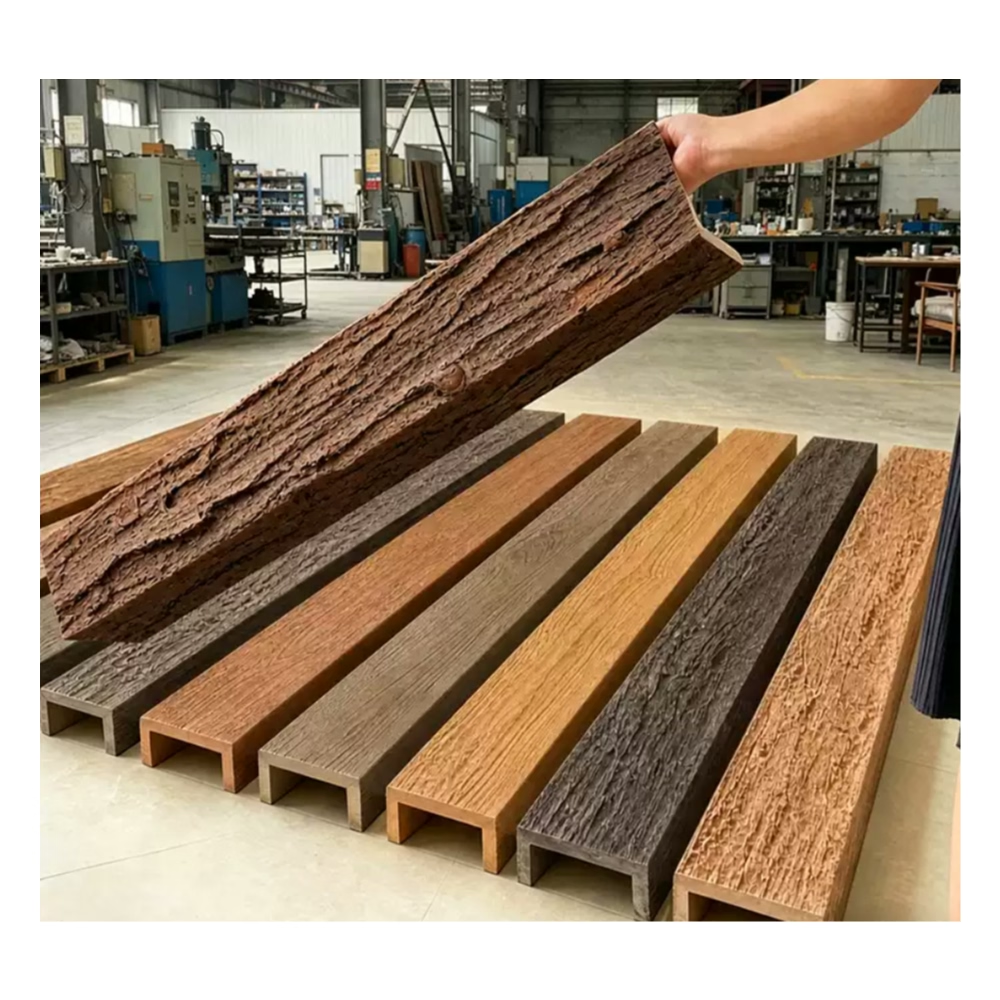
Custom Size Decorative Faux Beams | Bulk Supply for Construction Firms
Construction firms running multiple projects per year—general contractors, design-build firms, large renovation companies—have a beam procurement pattern that's different from one-off custom home work. The firm is buying for many projects simultaneously, with each project having its own specifications. The bulk supply relationship has to accommodate project-specific variations while still producing the pricing and consistency benefits of a multi-project program.
This is what that bulk supply structure looks like, how custom size work flows through it, and what construction firms get wrong.
The construction firm's beam procurement pattern
A construction firm running 10 to 30 projects per year has a beam procurement pattern that includes:
- Standing specifications. A few profile, color, and finish combinations that work across most of the firm's projects. These become the firm's "standard" beam specifications.
- Project-specific deviations. Each project has unique elements—different room dimensions, different design vocabulary, different finishing palette. The standing spec is the starting point, but each project has deviations.
- Mixed order patterns. Some projects order 6 to 12 beams; others order 30 to 60. The procurement system has to handle both small and large orders at consistent pricing.
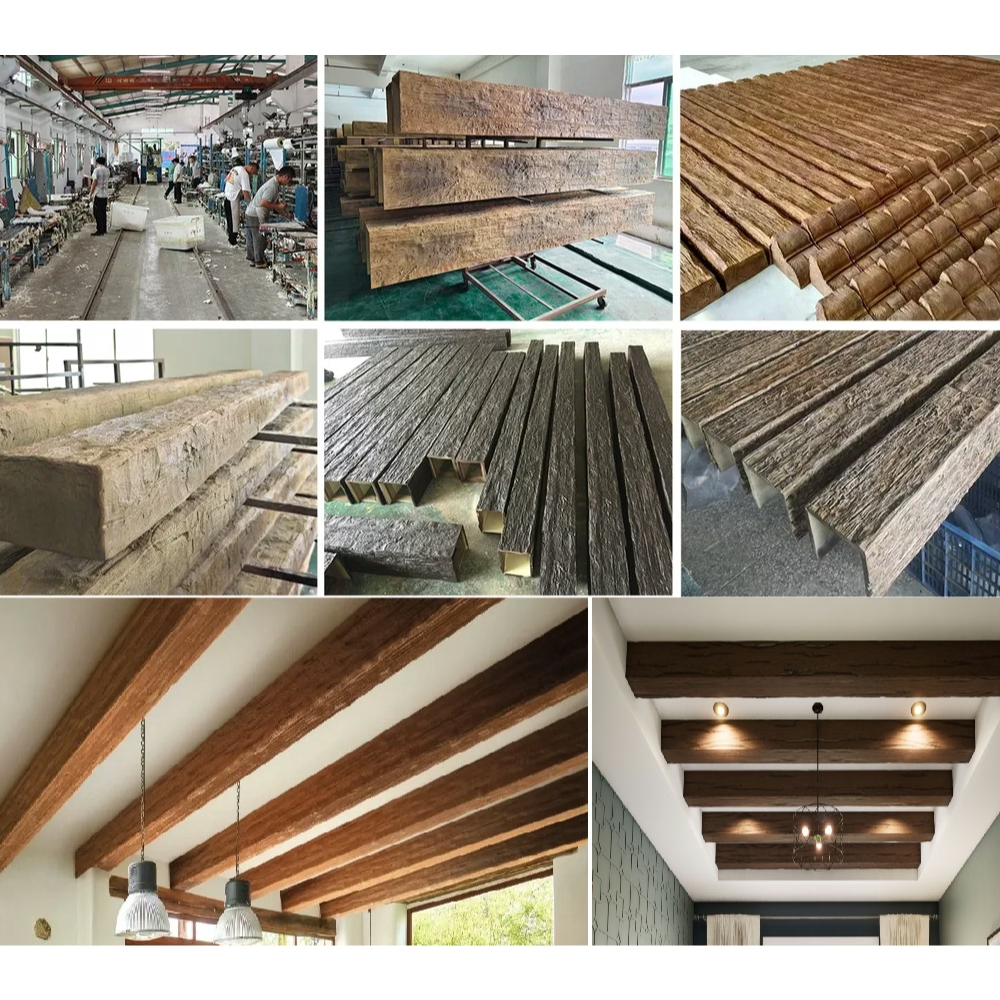
For the factory supplying the firm, this pattern is ideal for production planning. The factory knows the standing specs and can hold molds, color references, and finish specifications in active status. Project-specific deviations are layered onto the standing specs without requiring fresh setup.
How standing specifications work
A standing specification for a construction firm typically includes:
Profile specifications
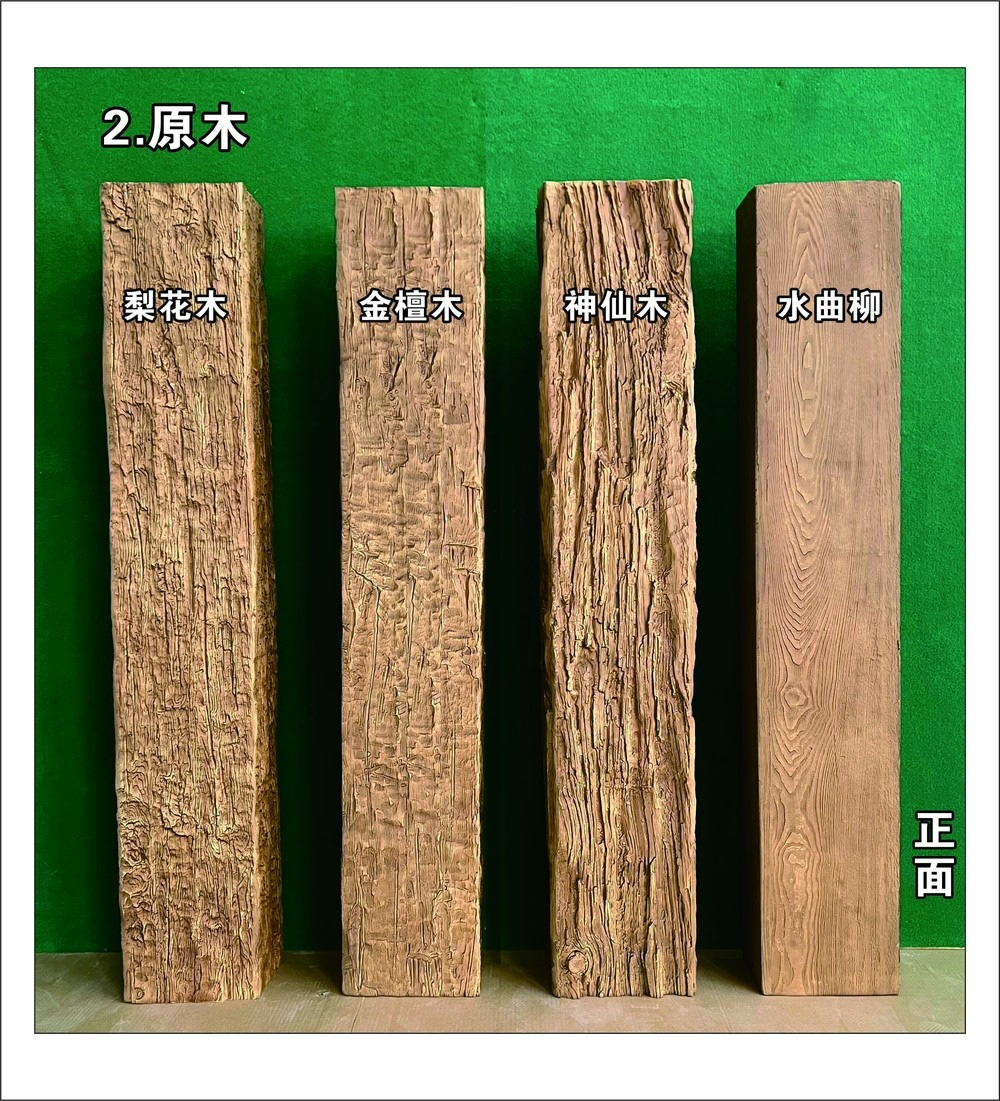
The firm selects 3 to 5 stock or modified-stock profiles that work across most of its projects. For each profile:
- Cross-section dimensions.
- Texture reference.
- Mold status (stock, modified, or custom).
- Minimum order quantity.
The factory holds molds for the firm's profiles in active status. Reorder lead time against these molds is 5 to 10 business days, faster than the first-order lead time of 15 to 25 business days.
Color specifications
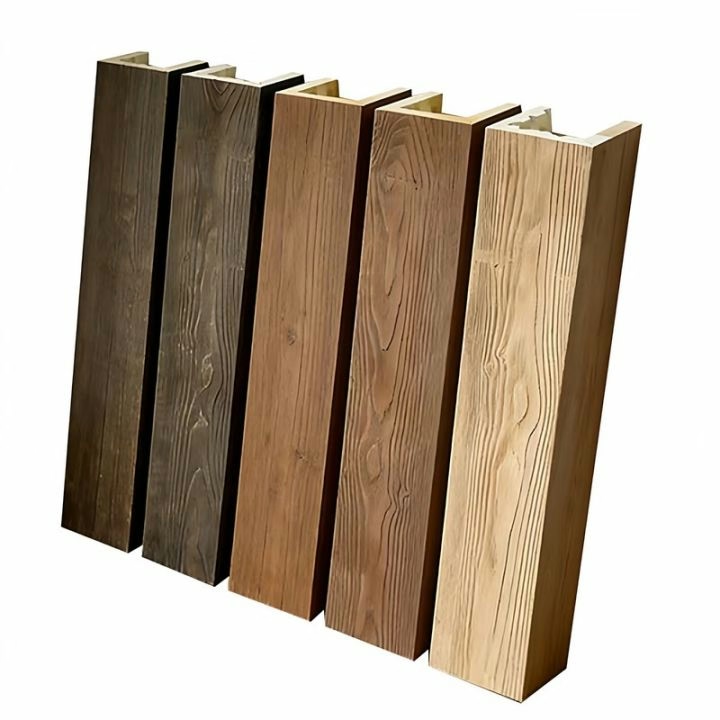
The firm selects 2 to 4 stock or custom colors that work across most projects. For each color:
- Color formula or reference number.
- Master reference sample held at the factory.
- Sheen specification (matte, satin, gloss).
- Multi-tone variation specification.
The factory's colorist holds the master references and matches every production batch against them. Color drift is monitored and corrected if it exceeds the agreed tolerance.
Finish specifications
The firm specifies the finish chemistry and weathering effects that apply across projects:
- Finish type (water-based acrylic, water-based polyurethane, solvent-based polyurethane).
- Weathering effects (chalk wash, paint traces, hand-rubbed aging, etc.).
- UV resistance rating (interior-only, exterior-rated, full exterior).
- Cleanability specification.
For most construction firms, the standing finish specifications are simpler than the standing profile and color specifications. Most projects use the same finish chemistry, with weathering variations applied on a project-by-project basis.
How project-specific deviations work
Within a standing specification framework, each project has deviations. The deviation types:
Length deviations
Each project has beam lengths specific to the project's dimensions. The standing spec is for the cross-section, texture, color, and finish; the length is determined per project.
For construction firms, the length deviation is the most common. Each project's beams are cut to the project's dimensions, with the factory producing the cut and the firm providing the field measurements.
Profile deviations
Some projects call for a different profile than the standing spec—either a different cross-section, a different texture, or a different edge treatment. The factory handles this as a deviation:
- For modified stock profiles: 1 to 2 weeks additional lead time, no mold cost.
- For partial-custom profiles: 2 to 4 weeks additional lead time, modest mold modification fee.
- For full-custom profiles: 6 to 10 weeks additional lead time, full mold cost.
For most construction firms, profile deviations are infrequent. The standing specs cover most projects.
Color deviations
Some projects call for a custom color that doesn't match the standing specs. The factory handles this as a deviation:
- For close-to-stock colors: 1 to 2 weeks additional lead time, modest color match fee.
- For significantly custom colors: 2 to 4 weeks additional lead time, full color match fee.
For most construction firms, color deviations are also infrequent. The standing colors cover most projects.
Finish deviations
Some projects call for a finish variation—more weathering, different sheen, or special effects. The factory handles this as a project-specific finish:
- Standard variations: 1 to 2 weeks additional lead time.
- Complex variations: 2 to 4 weeks additional lead time.
For construction firms running diverse projects, finish deviations are more common than profile or color deviations.
The procurement rhythm
For a construction firm running 10 to 30 projects per year, the procurement rhythm includes:
Quarterly planning
Every quarter, the firm's project managers review the upcoming projects and identify beam needs. This planning includes:
- Projects starting in the next quarter.
- Beam specifications for each project.
- Estimated quantities and lengths.
- Critical path timing for beam delivery.
The factory receives the quarterly planning summary and uses it to plan production capacity.
Monthly ordering
Each month, the firm's purchasing manager places orders for the next 4 to 8 weeks of projects. The order includes:
- Beam specifications (referencing standing specs or specifying deviations).
- Lengths and quantities.
- Delivery dates and locations.
- Any documentation requirements.
The factory processes the orders and confirms production schedules.
Continuous communication
Between monthly orders, the firm's purchasing manager and the factory's project coordinator communicate continuously:
- Project changes that affect beam specifications.
- Field measurement updates.
- Delivery timing adjustments.
- Replacement or addition requests.
This continuous communication is what keeps the procurement rhythm working. The factory can adapt to project changes without disrupting production.
Bulk pricing structure
For a construction firm with 1,000+ linear feet of annual beam volume, the bulk pricing structure includes:
- Tiered per-piece pricing. Discounts at 1,000, 3,000, and 6,000+ linear feet annually.
- Waived or reduced setup fees. For deviations that don't require new molds, the setup fees are often waived at certain volume thresholds.
- Color match fee structure. The firm pays the color match fee once per color, not per order. Subsequent orders against the same color don't trigger a new fee.
- Freight allowance. The factory covers a portion of freight costs, with the firm paying the remainder.
The total bulk pricing benefit is typically 20 to 35 percent below piece-by-piece procurement. For a firm doing 30 projects per year with $50,000 in annual beam spend, the bulk savings are $10,000 to $17,500.
What construction firms get wrong
A few patterns that come up often enough to flag:
- Not establishing standing specifications. Firms that treat each project as a fresh specification miss out on the consistency and pricing benefits of standing specs.
- Failing to communicate deviations clearly. Project-specific deviations need to be clearly documented. A vague deviation leads to a beam that doesn't match the project's needs.
- Letting field measurements slip. The beam order should be based on field measurements, not plan dimensions. Firms that skip this step end up with beams that don't fit.
- Not planning ahead. Beams have lead times. Firms that don't plan 4 to 8 weeks ahead end up with beams that arrive late.
- Treating the factory relationship as transactional. The relationship works best as a long-term procurement partnership. Firms that shop each order miss out on the compounding benefits.
Custom size decorative faux beams for construction firms are a category where the procurement structure matters as much as the product. The right relationship produces consistent quality at predictable costs across many projects. The wrong relationship produces a series of one-off orders with unpredictable outcomes.
Technical References
ASTM standards cited in every specification
Test Data
Lab results from internal testing program
Updated 2026
Reviewed against current product specs