The interior designer's vision for the mountain estate required ceiling beams that exactly matched the home's imported European oak flooring—a specific plank-sawn texture with pronounced cathedral grain and subtle saw marks that standard beam offerings couldn't replicate. She'd already walked away from two suppliers who insisted their "rustic oak" texture was close enough. When I asked if perfect matching was possible, her expression shifted from skepticism to hope: "Can you actually do that?" Understanding custom texture matching capabilities—what's achievable, what it costs, and how the process works—opened design possibilities she'd assumed were impossible.
Custom texture development represents the intersection of artistry and manufacturing, where skilled technicians translate reference materials into mold masters that production processes can replicate. This capability transforms faux beams from commodity products into bespoke architectural elements that integrate seamlessly with unique design schemes. Knowing when custom textures justify their costs and how to manage the development process helps designers deliver cohesive interiors without compromise.
Understanding Standard vs. Custom Textures
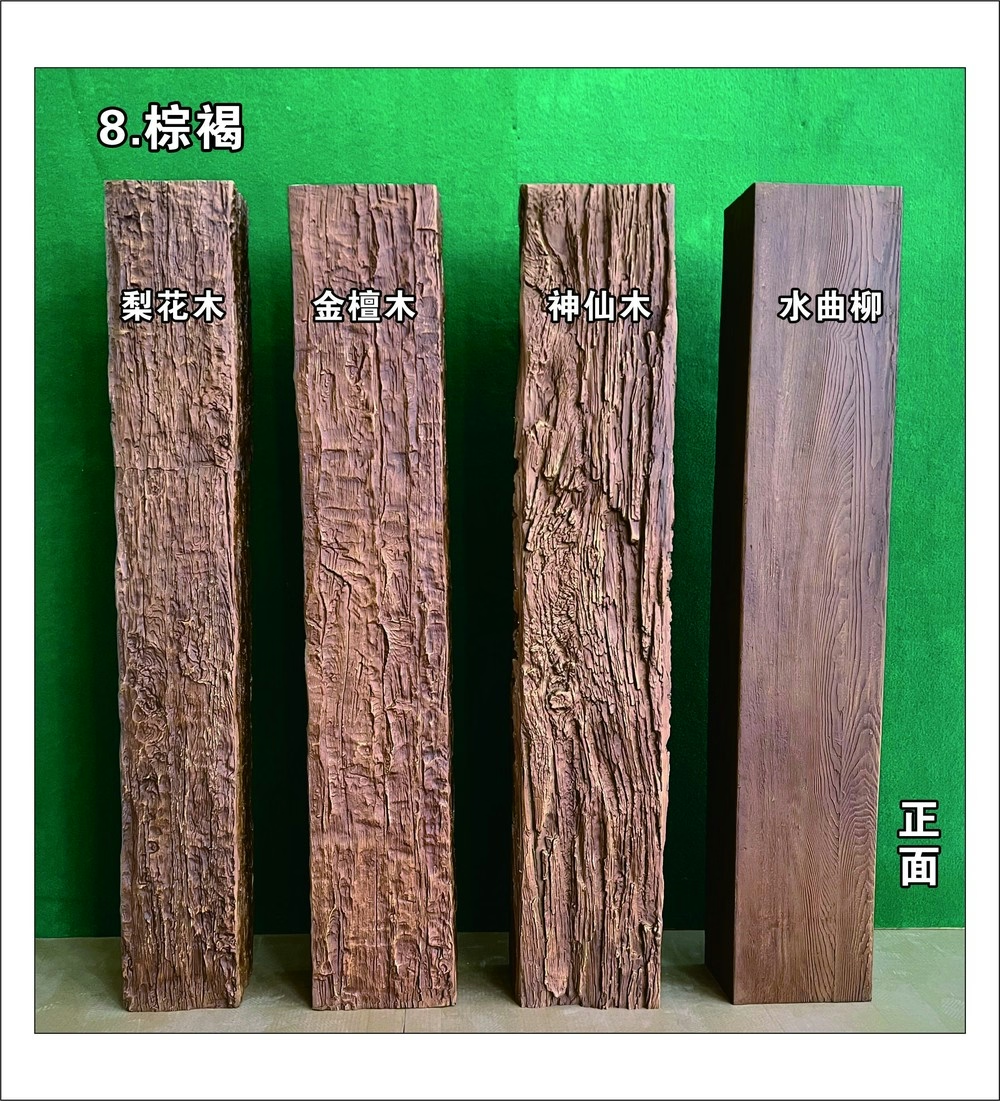
Standard beam textures reflect manufacturers' assumptions about market preferences—typically including hand-hewn rough surfaces, smooth planed finishes, and moderately distressed character beams that suit traditional residential applications. These textures work well for projects where beams function as standalone design elements without requiring coordination with specific existing materials.
The limitation of standard textures emerges when projects demand precise matching to actual wood elements—floors, cabinetry, millwork, or furniture. Real wood exhibits infinite variation in grain patterns, saw marks, distressing characteristics, and surface treatments that standard beam textures can only approximate broadly. A floor's quarter-sawn white oak with straight grain and flake figure looks nothing like rotary-cut red oak with wide cathedral patterns, yet both might be offered under generic "oak texture" descriptions in standard product lines.
Historic restoration projects particularly struggle with standard textures. Original timber in 19th-century buildings shows pit-saw marks, adze texture, or specific milling characteristics that modern standard textures don't replicate. Using generic beams in these settings creates jarring anachronism that undermines restoration authenticity. Custom texture development matching original timber details allows seamless integration of new elements with historic fabric.
High-end residential and boutique commercial projects increasingly expect material coordination that exceeds standard product capabilities. When cabinetry, ceiling beams, door casings, and wall paneling all feature the same wood species and finish treatment, the cohesive result elevates perceived quality dramatically. Achieving this coordination requires custom texture development since off-the-shelf components from different manufacturers never match perfectly.
The Custom Texture Development Process
Custom texture creation begins with reference materials—physical samples of the wood character you need beams to match. Ideal references include actual pieces of the target wood: floor planks, cabinet door samples, or timber off-cuts. Photographs help but prove inadequate alone since lighting, camera settings, and printing introduce variables that obscure critical texture details. Physical samples allow artisans to feel surface relief depth, measure feature spacing, and examine details under varied lighting that photographs cannot convey.
The sample evaluation identifies key characteristics requiring replication: grain pattern spacing and depth, saw mark frequency and profile, distressing elements like worm holes or checking, and surface sheen level. Experienced texture artists distinguish between features worth replicating and minute details that wouldn't register at typical viewing distances. This judgment prevents over-detailing that wastes time and money capturing features invisible to end users.
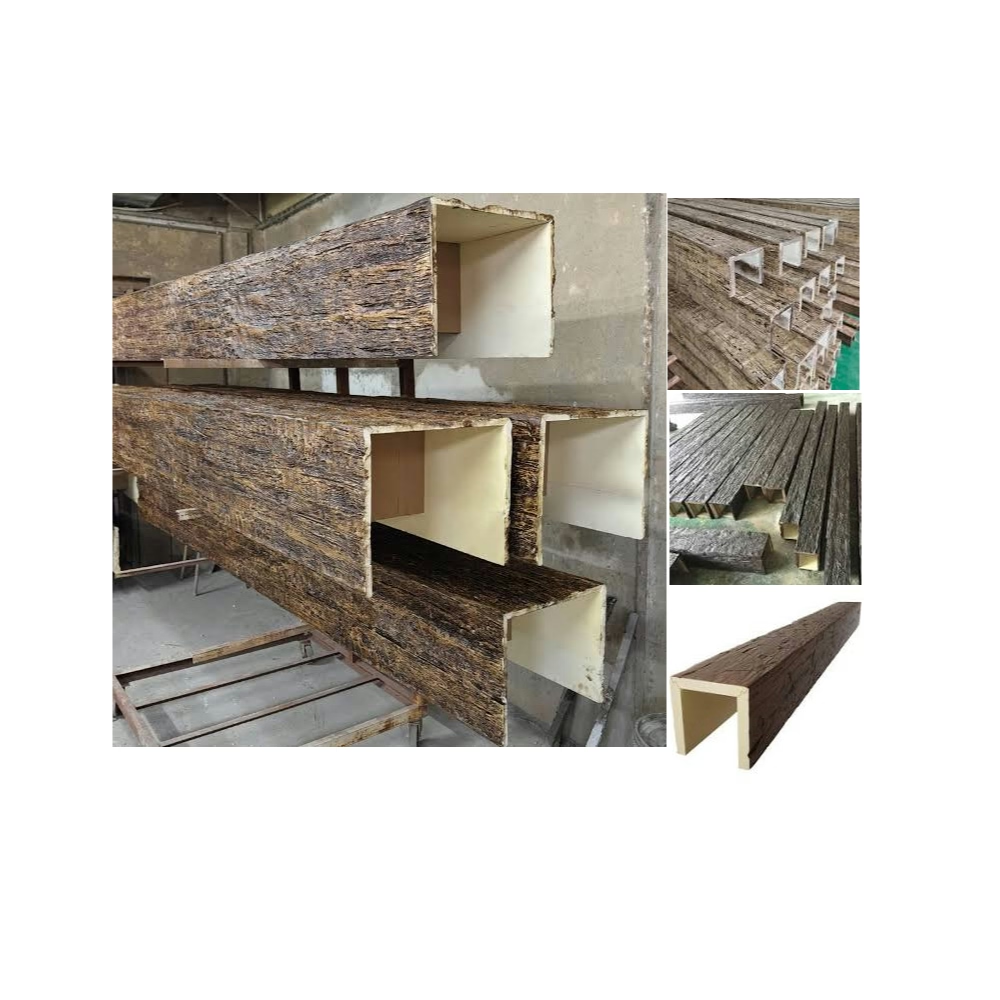
Master pattern creation forms the core technical challenge. Artists sculpt texture into master blocks using various tools—rotary carving equipment for grain lines, specialized gouges for distress marks, and manual working to create organic irregularity that avoids repetitive patterning. The master might be sculpted clay, carved high-density foam, or built-up layers of various materials depending on texture complexity and production volume planned. Multiple iterations often occur as artists refine patterns toward the reference standard.
The mold-making process captures the master pattern in production tooling—typically silicone rubber molds for smaller quantities or rigid molds for higher volumes. Mold quality directly determines production beam consistency, with properly engineered molds maintaining detail through hundreds of casting cycles while inferior molds degrade rapidly. The investment in quality tooling justifies itself through reliable production and reduced rejection rates from poor texture transfer.
Sample approval represents the critical gate before committing to full production. Manufacturers cast beams using the new texture and finish them to specified color, then submit samples for client approval. This verification prevents discovering after full production that some texture aspect doesn't achieve desired results. Multiple sample iterations sometimes occur before approval, particularly on projects where matching standards are exacting.
Cost Structures and Project Economics
Custom texture development typically costs $3,000-12,000 depending on complexity and production volume planned. Simple textures adapting existing patterns require minimal sculpting time and lower investment. Complex textures requiring extensive artist time and multiple iteration cycles cost more. Production volume factors significantly—large orders amortize tooling costs across many units while small runs bear full tooling burden on limited quantity.
The minimum order quantities for custom texture projects typically range from 500 to 2,000 linear feet depending on manufacturer capability and texture complexity. Smaller specialized fabricators may accommodate lower volumes at higher per-unit costs. Large commodity producers often decline custom work below their minimum thresholds entirely, making manufacturer selection critical to project feasibility.
Lead time for custom texture projects extends significantly beyond standard products—typically 6-12 weeks from sample approval through first production shipments. The timeline includes master creation (2-4 weeks), mold fabrication (1-2 weeks), sample production and approval (1-2 weeks), and production scheduling (2-4 weeks). Tight construction schedules requiring quick turnaround may force accepting standard textures or facing delays impacting overall project completion.
The value proposition for custom textures depends heavily on project scope and quality positioning. In ultra-luxury residential where material coordination defines quality perception, custom texture investment proves easily justified. In spec-grade commercial where speed and cost dominate decisions, standard textures usually make more sense unless brand requirements mandate specific matches. Projects in the middle must evaluate whether texture customization delivers client-visible value worth the incremental investment.
Coordination with Other Custom Elements
Color matching must occur alongside texture development since texture and color interact to create final appearance. Provide finish samples matching target color along with texture references. The relationship between raised and recessed texture areas—whether grain valleys appear darker from shadowing or lighter from exposed raw wood—affects color formulation significantly. Manufacturers experienced in custom work understand these interactions and can produce samples accounting for texture-color relationships.
Beam sizing coordination with standard millwork dimensions helps maintain architectural consistency beyond just surface appearance. If window casings use 6-inch reveals, specifying 6-inch beam widths creates dimensional harmony that reinforces the texture matching. When all elements share both surface character and dimensional logic, the integration appears more complete than texture matching alone achieves.
The production batch coordination becomes important on large projects using custom textures. If the project requires 2,000 linear feet delivered across four shipments as construction progresses, ensuring all batches maintain consistent texture quality prevents the multi-batch color consistency challenges described elsewhere from extending to texture variation as well. Established manufacturers maintain master molds and production protocols preventing batch-to-batch texture drift.
Applications Where Custom Textures Deliver Maximum Value
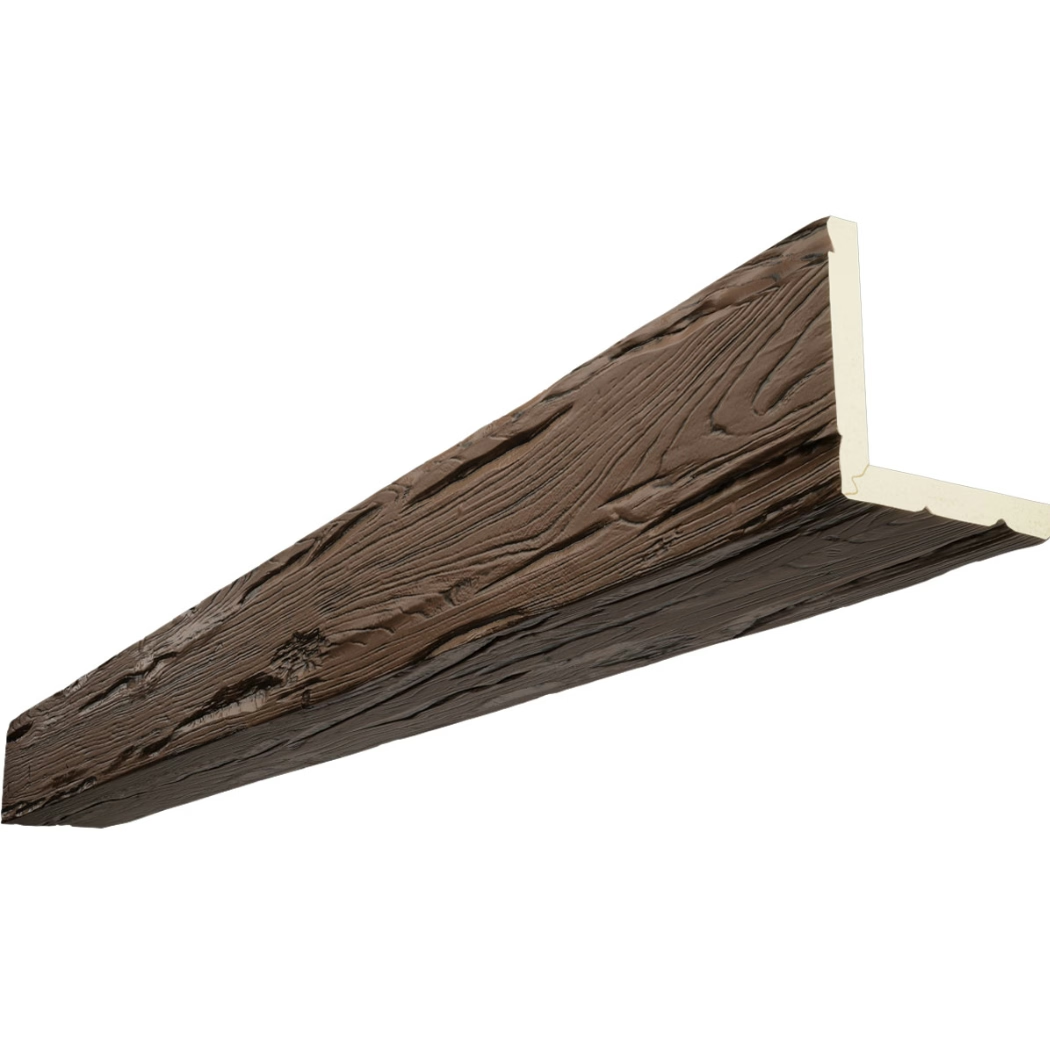
Historic renovation projects restoring period-appropriate character benefit enormously from custom texture development. Matching original hand-hewn beams allows replacing deteriorated sections seamlessly or adding beams to new additions that must blend with original construction. The authenticity custom textures enable satisfies preservation standards while solving practical problems that salvaged timber cannot address economically.
Restaurant and hospitality chains developing signature design aesthetics use custom textures to create brand-distinctive environments impossible to replicate by competitors shopping standard product catalogs. A restaurant concept might commission custom timber texture specific to their brand, then specify it across all locations to build recognition. This brand-building strategy justifies texture development investment through the marketing value distinctive environments create.
Luxury residential projects where interior designers control the entire material palette benefit from texture coordination that extends beyond beams to comprehensive millwork packages. Kitchen cabinetry, bathroom vanities, bedroom built-ins, and ceiling beams all featuring matched wood character create cohesion that elevates perceived quality more than any single high-end finish element could accomplish alone.
Film and theatrical set design requiring historically accurate or fantasy environments uses custom textures to establish visual worlds that wouldn't be possible with standard architectural products. Period films set in specific eras need timber textures authentic to construction methods of those times. Fantasy projects need invented textures that appear organic but don't exist in nature. Custom texture capabilities serve these specialized markets where standard products fundamentally cannot.
Managing Client Expectations and Communication
Sample approval protocols should establish clear standards before production begins. Define what constitutes acceptable variation from reference materials, understanding that handcrafted appearance includes organic irregularity that perfect mechanical replication would actually undermine. Overly rigid matching expectations can create approval gridlock where samples never quite satisfy impossible standards.
Documentation throughout development protects all parties from misunderstandings. Photograph reference materials alongside developing samples, maintaining records showing evolution from initial master through approved samples to production pieces. This documentation proves invaluable if questions arise about whether production matches approved samples or if years later someone needs to match the custom texture for an addition or renovation.
Budget contingencies for potential additional sampling or minor tooling modifications prevents change-order conflicts mid-project. While manufacturers strive for first-sample approval, complex textures sometimes require revision. Building 10-15% contingency into custom texture budgets accommodates these iterations without triggering disputes or compromising schedules when additional development proves necessary.
The long-term value of custom texture investment includes future availability. Once manufacturers develop custom textures and maintain master molds, future orders for matching material can occur at standard-product pricing without repeating development costs. For phased projects or future additions, this means texture investment pays forward beyond the initial installation.

Custom texture matching transforms faux beams from generic substitutes into precisely coordinated architectural elements that integrate seamlessly with surrounding materials. Understanding development processes, cost structures, and application scenarios where custom work delivers clear value allows designers to deploy this capability strategically—achieving material continuity that standard products cannot approach while managing budgets and schedules realistically. The question isn't whether custom textures cost more—they always do—but whether the integration they enable delivers value worth that investment in your specific project context.
Technical References
ASTM standards cited in every specification
Test Data
Lab results from internal testing program
Updated 2026
Reviewed against current product specs