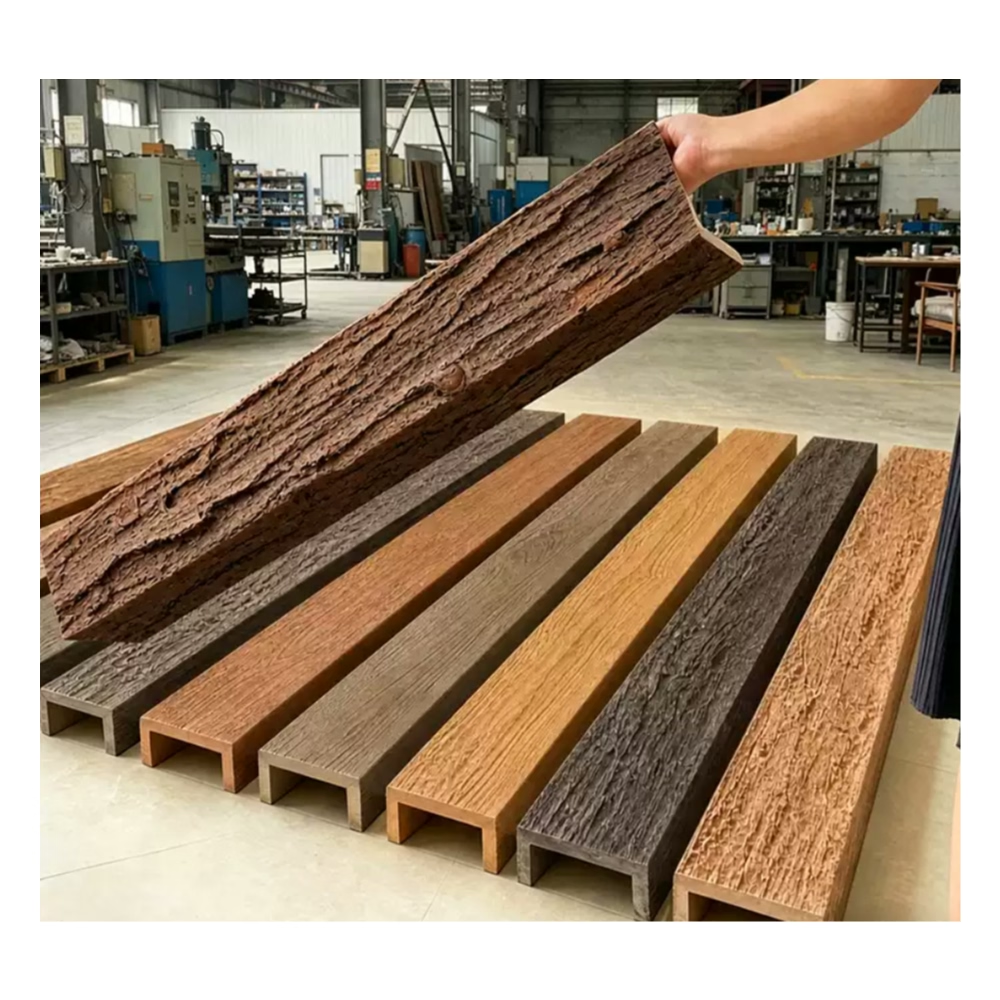
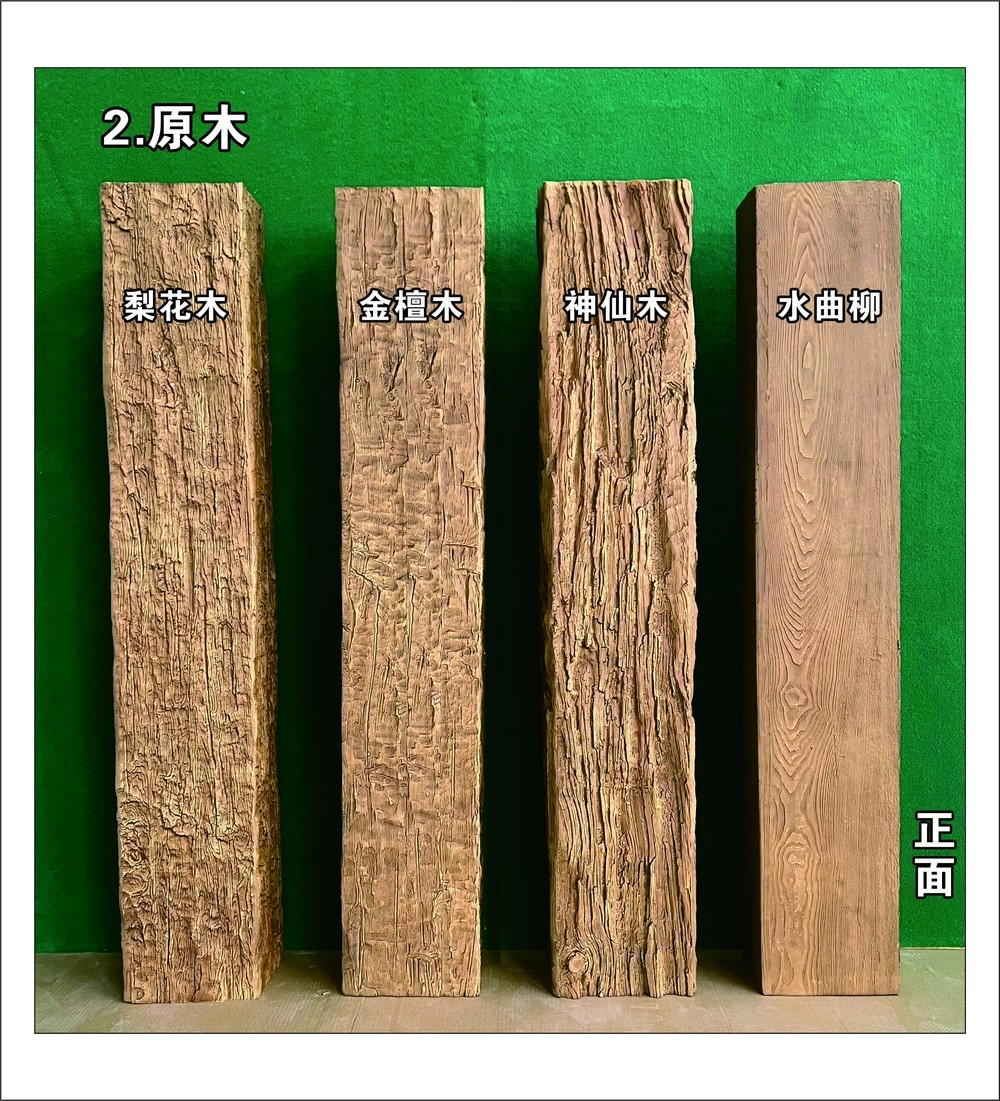
Decorative Faux Wood Beams | Bulk Supply for Custom Home Developers
Custom home developers operate between production home builders and one-off custom home architects. They build multiple homes per year, often in a planned community or scattered lot setting, with each home customized to the buyer's preferences through a design center process. Decorative faux wood beams are one of the more popular options in this model, with bulk supply patterns that reflect the semi-custom nature of the business.
This is how custom home developers use decorative faux wood beams, how the design center and options catalog work, and what the bulk supply pattern looks like.
What custom home developers do
Custom home developers occupy a specific segment of the residential construction market:
Business model
Custom home developers typically:
- Build 20 to 100 homes per year.
- Operate in planned communities or on scattered lots.
- Offer base floorplans with buyer-driven customization.
- Use design centers to present options and upgrades.
- Allow buyers to modify floorplans within defined parameters.
This is distinct from production home builders (high volume, limited customization) and one-off custom home architects (low volume, unlimited customization).
Buyer profile
The buyer profile for custom home developer projects typically includes:
- Move-up buyers who want more customization than production builders offer.
- Empty nesters downsizing but wanting quality finishes.
- Relocation buyers wanting a specific community or location.
- Buyers wanting architectural styles that production builders don't offer.
The buyers value customization but want the cost efficiency of a developer-built home.
Beam specification pattern
For custom home developers, the beam specification pattern includes:
- Standard beam offerings in the design center.
- Upgrade options for premium beam specifications.
- Lot-specific or floorplan-specific beam layouts.
- Coordination with other design center selections (flooring, cabinetry, etc.).
The pattern is more varied than production builders but more standardized than one-off custom homes.
How the design center beam offering works
The design center is the buyer-facing presentation of options:
Beam profile options
The developer typically offers 3 to 5 beam profile options:
- Stock profiles from the factory's standard library.
- Profiles that work with the developer's most popular floorplans.
- Profiles that complement the developer's architectural styles.
The profiles are presented with samples, photographs, and installed examples in the model homes.
Beam finish options
The developer typically offers 3 to 5 finish options:
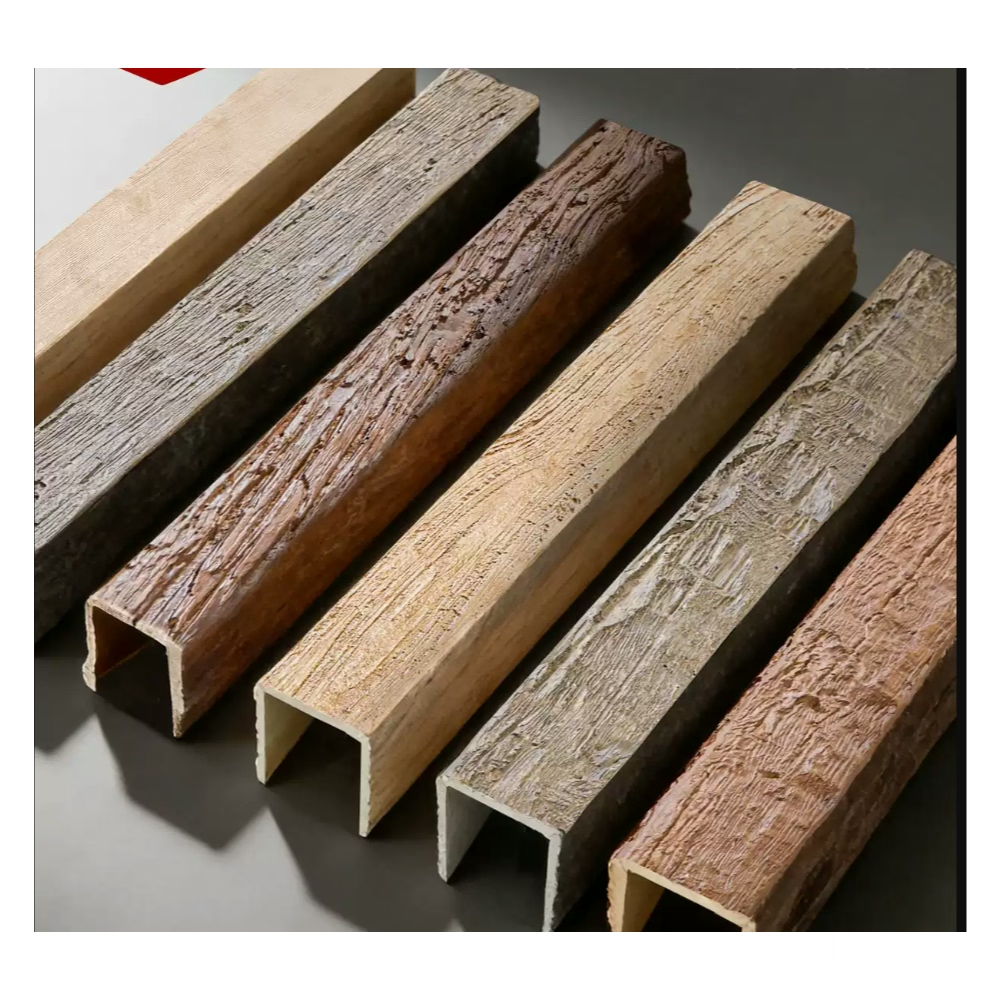
- Stock colors that match popular flooring and cabinetry options.
- Multi-tone finishes with hand-applied variation.
- Optional weathering effects.
- Optional premium finishes for upgrade tiers.
The finishes are presented with sample chips and installed examples.
Beam layout options
The developer offers beam layouts as part of the floorplan options:
- Standard layouts for each floorplan.
- Optional layouts for specific rooms (great room, master bedroom, etc.).
- Premium layouts for upgraded floorplans.
The layouts are presented in the design center with floorplan diagrams.
Pricing tiers
The design center beam offering typically includes:
- Standard tier: Stock profile, stock color, standard layout. Often included in the base price or at modest upgrade cost.
- Premium tier: Modified profile, custom color, premium layout. Significant upgrade.
- Luxury tier: Custom profile, custom color, custom layout. Highest upgrade tier.
The pricing tiers allow buyers to choose their level of customization.
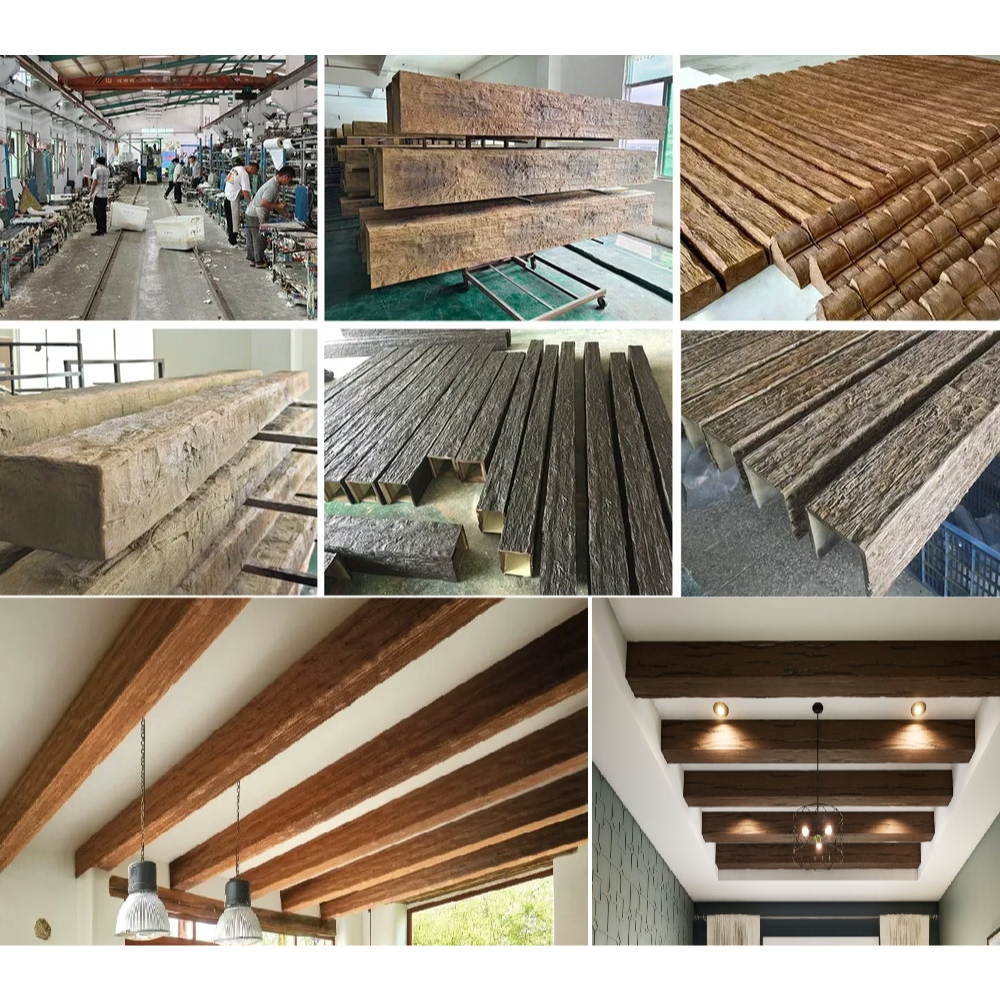
How bulk supply works for custom home developers
For a custom home developer running 20 to 100 homes per year, the bulk supply pattern includes:
Annual commitment
The developer commits to an annual beam volume with the factory:
- Volume ranges from 1,500 to 6,000+ linear feet annually.
- The volume covers standard tier, premium tier, and luxury tier offerings.
- The commitment supports the factory's production planning.
The developer gets volume pricing in return for the commitment.
Standing specifications
The developer establishes standing specifications for each tier:
- Standard tier specifications (profile, color, finish).
- Premium tier specifications.
- Luxury tier specifications.
The standing specs cover most orders, with deviations handled separately.
Design center coordination
The factory coordinates with the developer's design center:
- Sample production for the design center displays.
- Photography for the design center materials.
- Brochure content for the design center materials.
- Training for the design center staff on beam specifications.
The factory's involvement in the design center supports the developer's sales process.
Per-home order processing
For each home, the developer's purchasing manager places an order:
- Reference to the standing specification for the chosen tier.
- Specific lengths and quantities for the home's floorplan and chosen layout.
- Delivery date aligned to the construction schedule.
- Any deviations from the standing spec documented.
The factory processes the order and produces the beams.
Phased delivery
The factory delivers beams in waves aligned to the construction schedule:
- Each wave covers a defined number of homes.
- Lead time for each wave: 10 to 20 business days.
- Replacement stock held at the factory.
Phased delivery keeps the developer's construction on schedule.
Quality consistency
The factory maintains quality consistency across the developer's homes:
- Master reference samples held for each tier.
- Color drift monitoring across production waves.
- Texture consistency across orders.
- Dimension tolerance within agreed limits.
Consistency is what makes the developer's portfolio look coherent.
What custom home developers need from beam suppliers
For a custom home developer running a beam offering through the design center, several supplier capabilities matter:
Design center support
The supplier should support the developer's design center process:
- Sample production for displays.
- Photography for marketing materials.
- Staff training on beam specifications.
- Coordination with the developer's marketing team.
Tier consistency
The supplier should maintain consistent quality across tiers:
- Standard tier: reliable quality for the developer's base offering.
- Premium tier: enhanced quality with custom specifications.
- Luxury tier: highest quality with full customization.
Each tier should meet the developer's expectations for that price point.
Flexibility for buyer changes
The supplier should accommodate buyer-driven changes:
- Late changes to the beam specification (within production window).
- Tier upgrades mid-construction.
- Layout adjustments based on field conditions.
Flexibility is important because buyers change their minds.
Phased delivery reliability
The supplier should deliver reliably per the construction schedule:
- Lead time commitments met consistently.
- Replacement beams available within 5 to 10 business days.
- Coordination with the developer's construction managers.
Reliable delivery keeps the developer's construction on schedule.
Pricing for custom home developer bulk supply
Pricing for custom home developer bulk supply typically includes:
- Per-piece pricing by length. Tier discounts at 1,500, 3,000, and 6,000+ linear feet annually.
- Setup fees for deviations. Reduced or waived for deviations against the standing spec.
- Color match fees. Applied per color, with subsequent reorders at no charge.
- Documentation package. Often included in the per-piece pricing.
- Design center support. Sometimes included, sometimes charged separately.
For a developer doing 50 homes per year with average 30 linear feet of beam per home, the annual beam spend is $30,000 to $90,000 depending on the tier mix.
Common pitfalls in custom home developer beam programs
A few issues that come up often enough to flag:
- Insufficient tier differentiation. Standard and premium tiers that look the same confuse buyers.
- Inconsistent quality across waves. Production drift produces visible variation between homes.
- Inflexibility on buyer changes. Strict spec adherence that doesn't accommodate reasonable buyer requests.
- Late delivery on phased orders. Construction delays from beam delivery misses.
- Replacement beam delays. Damaged beams without fast replacement create buyer dissatisfaction.
How custom home developers evaluate beam suppliers
For developers evaluating beam suppliers, the criteria include:
- Design center support capability. The supplier should be able to support the design center process.
- Tier consistency. The supplier should maintain consistent quality across tiers.
- Flexibility for buyer changes. The supplier should accommodate reasonable mid-order changes.
- Phased delivery reliability. The supplier should deliver reliably per the construction schedule.
- References. The supplier should have done comparable custom home developer projects.
Decorative faux wood beams bulk supply for custom home developers is a category where the design center support, the tier consistency, and the operational flexibility all need to align. The right supplier produces beams that support the developer's sales process and meet buyer expectations. The wrong one produces friction at the design center and in the field.
Technical References
ASTM standards cited in every specification
Test Data
Lab results from internal testing program
Updated 2026
Reviewed against current product specs