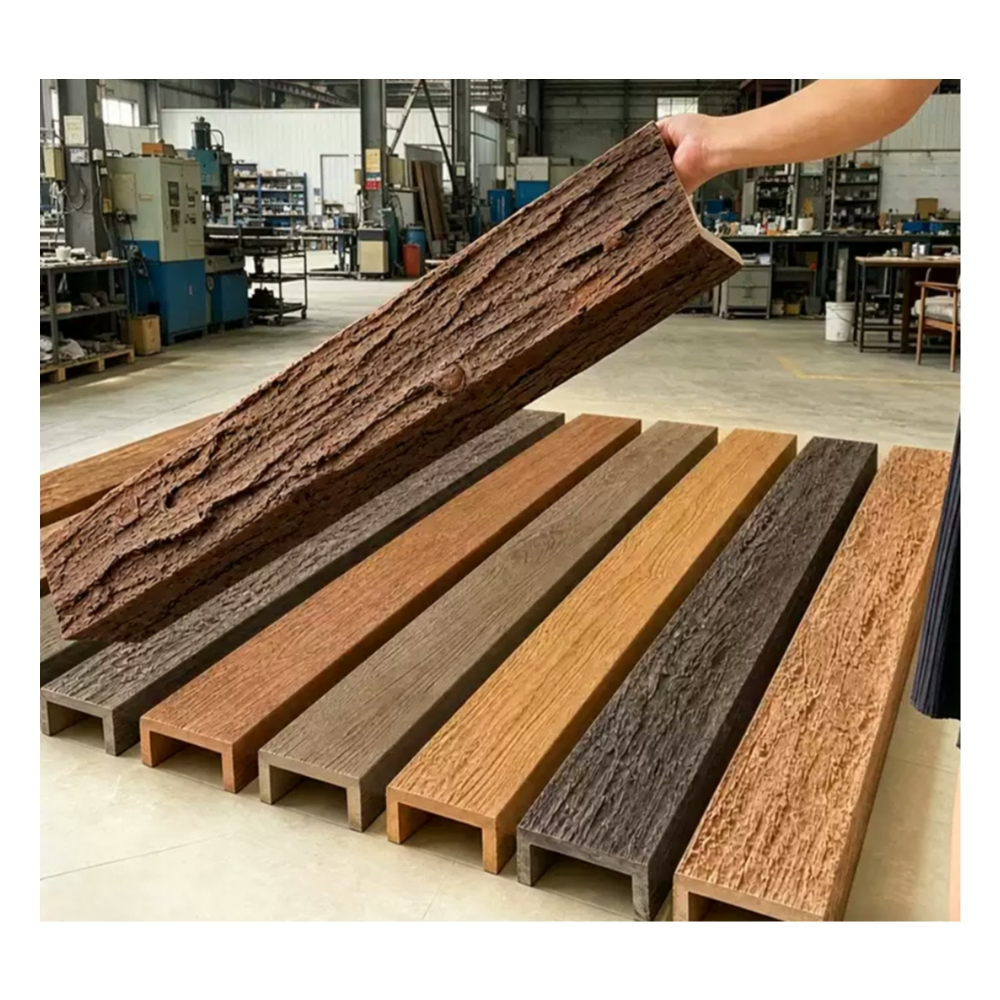
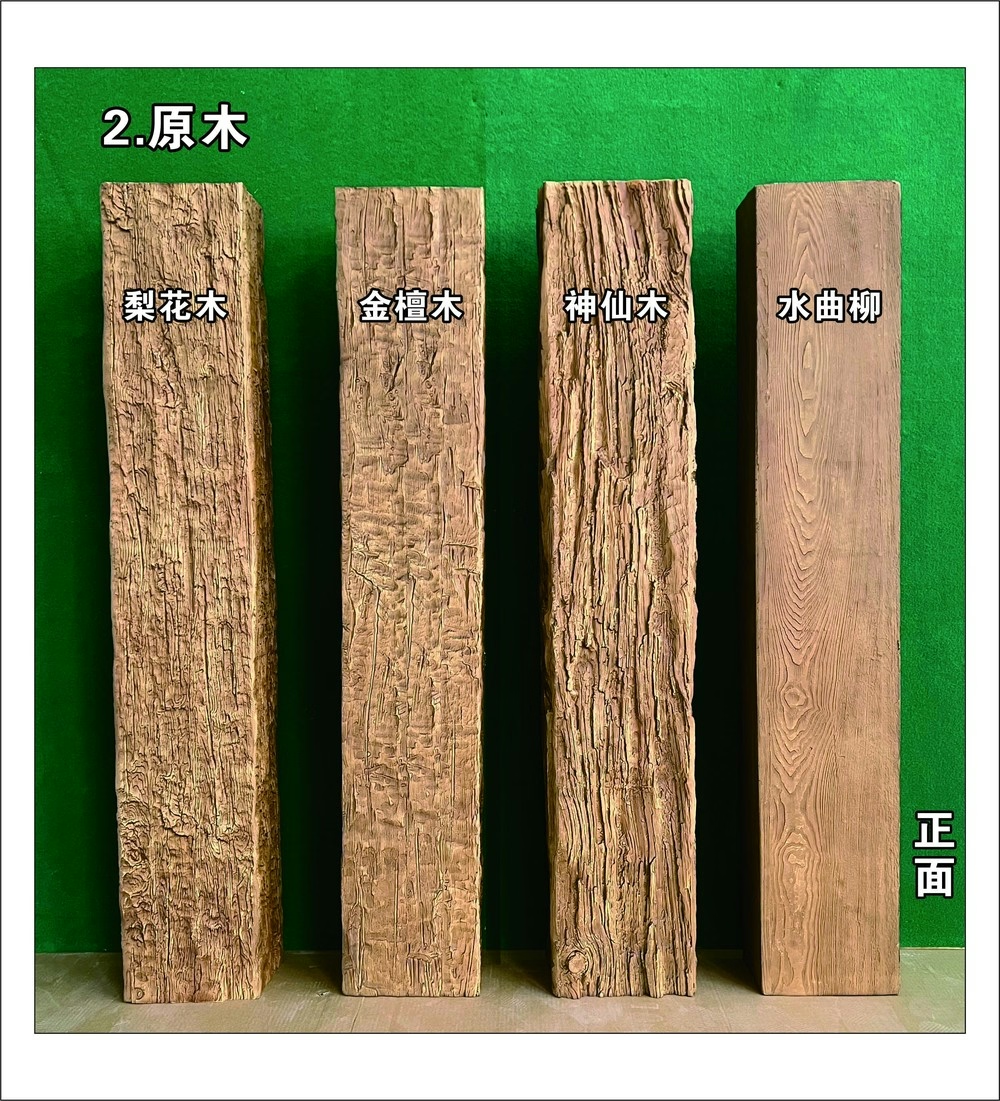
Decorative Polyurethane Faux Beams | Bulk for Hotel Interior Decoration
Hotel interior decoration involves beam specifications that residential projects don't encounter. The hotel brand typically has a design standard that applies across properties, the beam installation often happens in operating hotels, and the documentation has to support hospitality-specific code requirements. Decorative polyurethane beams work well for hotel programs when the supplier relationship is structured to support brand consistency, multi-property coordination, and operational realities.
This is what hotel interior decoration beam programs look like, how the supplier relationship works, and what hotel brand operators should know.
Hotel brand standard considerations
Most hotel brands maintain design standards that apply across all properties:
- Standard ceiling designs. Beam layouts, profiles, colors, and finishes defined per brand.
- Standard documentation. Fire rating, VOC emissions, cleat specifications, all aligned with brand requirements.
- Standard suppliers. Approved beam suppliers who can meet the brand's specifications consistently.
For a beam supplier serving hotel brands, maintaining the brand standard across multiple properties is the central capability. Drift from the standard breaks the brand promise and creates inconsistency between properties.
What brand standard maintenance requires
For a supplier maintaining hotel brand standards:
- Master reference samples for each brand's standard palette. Held at the supplier indefinitely.
- Mold status for each brand's standard profiles. Maintained in active production status.
- Documentation packages for each brand. Updated as the brand's requirements evolve.
- Production process documented. Every production run is matched against the master reference.
A supplier who can't maintain these standards loses the brand's business.
Multi-property coordination
Hotel chains often have multiple properties in development or renovation at any time. The beam supplier needs to coordinate:
- Phased production across properties. Different properties have different construction schedules.
- Consistent quality across properties. The beam at the new property must match the beam at the established property.
- Logistics across multiple locations. Each property has different delivery requirements.
- Project management across multiple projects. Multiple project managers coordinating the same brand.
Multi-property coordination is a significant operational capability. A supplier that handles one property well may struggle with three or four simultaneous properties.
How multi-property programs typically work
For a hotel chain with multiple properties:
- Annual planning. The chain's design team and the supplier's account manager plan the year's beam needs across all properties.
- Property-specific orders. Each property has its own order, but the orders reference the brand standard specifications.
- Phased production. The supplier produces for multiple properties concurrently, allocating capacity across them.
- Quality consistency. The supplier's QC team ensures every property's beams match the brand standard.
This structure requires operational discipline and strong project management.
Fast-turnaround reorders
Hotel renovation and refresh programs often require fast beam reorders:
- Property refresh. Updating a property's beams to match current brand standards.
- Damage replacement. Replacing beams damaged by guests, weather, or maintenance.
- Expansion or modification. Adding beams to a property as part of expansion or renovation.
For these situations, the supplier needs to support fast turnaround—often 5 to 10 business days for reorders against existing brand standard specifications.
A supplier who can only support 15 to 25 business day lead times creates operational problems for the hotel chain.
Documentation for hospitality
Hotel projects require comprehensive documentation:
- Fire rating. ASTM E84 Class A or B for most hotel applications. The brand standard typically specifies the rating.
- VOC emissions. GREENGUARD or similar certification for indoor air quality.
- Cleat specifications. With engineering data, especially for properties in seismic zones.
- Care and maintenance. Specific to the brand's housekeeping and maintenance procedures.
- Warranty. Aligned with the brand's warranty terms.
The documentation package is typically standardized per brand, with property-specific elements (delivery date, property address, etc.) added as needed.
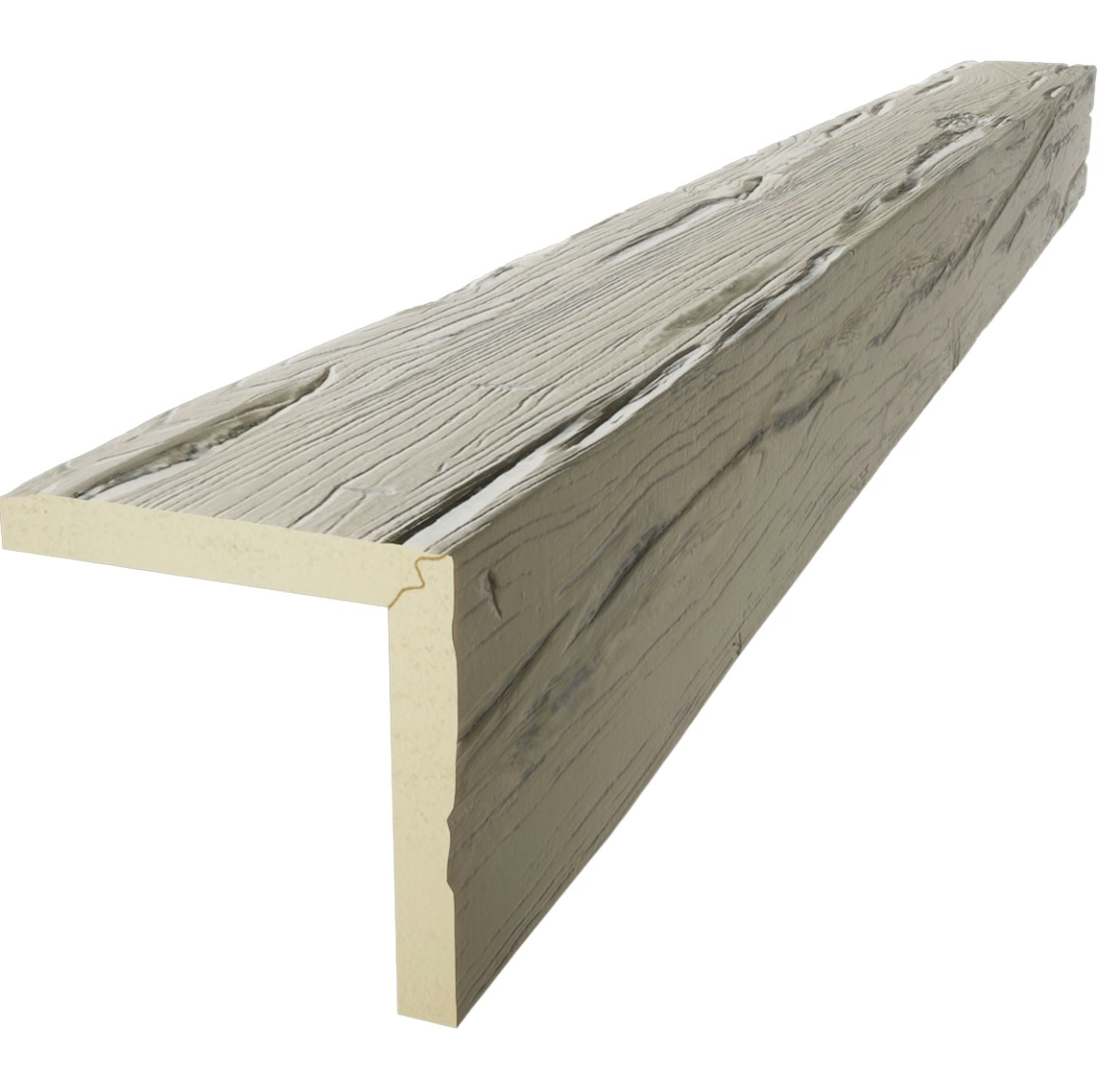
How decorative polyurethane beams work for hotel programs
Decorative polyurethane beams are well-suited to hotel programs for several reasons:
Consistent quality
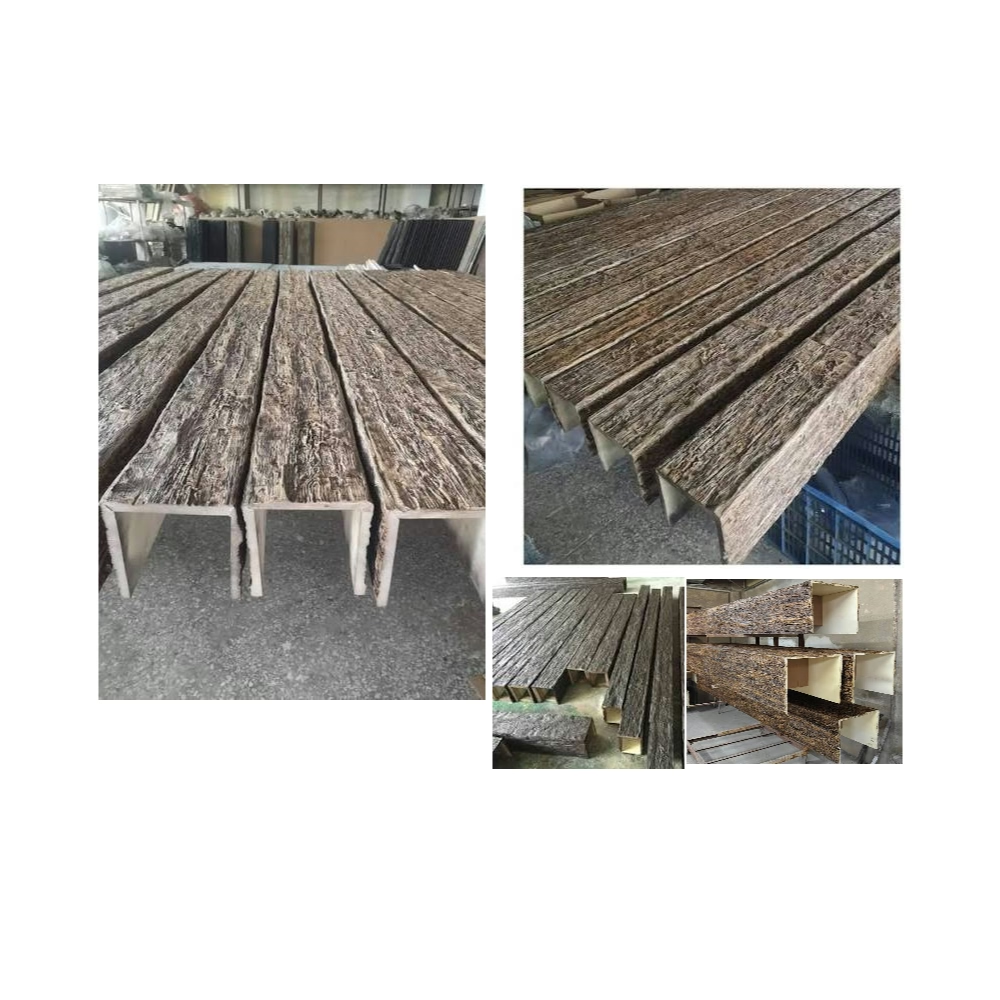
Factory production produces consistent quality across beams and across orders. Hotel brands need this consistency to maintain their brand standard.
Customization within the brand standard
The brand standard allows for some property-specific customization—color tone adjustments, profile modifications for specific properties—while maintaining the core look. Polyurethane factories can accommodate these customizations within the brand standard framework.
Lightweight handling
Hotel renovation often happens in occupied properties. Lightweight polyurethane beams can be installed without disturbing guests significantly, particularly compared to timber beams.
Code compliance
Polyurethane beams with proper documentation meet hospitality code requirements—fire rating, VOC emissions, seismic where applicable.
Lead time
Polyurethane production lead times are shorter than timber, important for hotel projects with tight renovation windows.
Bulk order structure for hotel programs
For a hotel chain's bulk beam program, the order structure typically includes:
Master service agreement
The chain and the supplier establish a master service agreement:
- Brand standard specifications.
- Pricing for the term of the agreement.
- Quality standards.
- Delivery terms.
- Replacement terms.
- Documentation standards.
The master agreement covers multiple properties and multiple years.
Per-property purchase orders
Each property generates purchase orders against the master agreement:
- Specific quantities and lengths.
- Delivery date and location.
- Property-specific documentation.
- Any property-specific deviations from the brand standard.
The purchase orders are processed under the master agreement's terms.
Quarterly business reviews
The chain and the supplier conduct quarterly reviews:
- Order volume tracking.
- Quality consistency review.
- Pricing review.
- Operational improvements.
- Upcoming property needs.
The quarterly reviews maintain the relationship and identify issues early.
Pricing for hotel programs
Hotel program pricing typically includes:
- Per-piece pricing by length. Tier discounts at 50, 100, 250, and 500 piece quantities.
- Brand standard pricing. Set in the master service agreement, often with annual adjustments.
- Multi-property pricing. Additional discount for chain-wide volume commitments.
- Setup fees. Reduced or waived for reorders against brand standards.
- Documentation package. Often included in the per-piece pricing.
For a hotel property with 100 to 500 linear feet of beam, total beam cost is typically $3,000 to $20,000, depending on the specification.
Common pitfalls in hotel beam programs
A few issues that come up often enough to flag:
- Brand standard drift. The supplier's brand standard samples drift from the original over time. The fix is regular reference sample refresh.
- Inconsistent quality across properties. Different production runs produce slightly different results. The fix is consistent production processes and quality control.
- Slow reorders. The supplier's standard lead time is too long for the hotel's operational needs. The fix is negotiated faster lead times for standing spec reorders.
- Documentation gaps. The supplier's documentation doesn't meet the hotel's brand requirements. The fix is standardized documentation packages per brand.
- Multi-property coordination failures. The supplier struggles with concurrent properties. The fix is dedicated project management for the chain's account.
How hotels evaluate beam suppliers
For hotel brands evaluating decorative polyurethane beam suppliers, the criteria include:
- Brand standard maintenance capability. The supplier can maintain consistent quality across multiple properties over years.
- Multi-property coordination. The supplier has the operational capability to handle concurrent properties.
- Fast-turnaround reorder capability. The supplier can support reorders within 5 to 10 business days.
- Documentation depth. The supplier provides comprehensive documentation per the brand's requirements.
- Reference track record. The supplier has done comparable hotel programs.
- Service level. The supplier provides dedicated account management for the chain.
Decorative polyurethane beams for hotel interior decoration are a bulk order category where the brand standard maintenance, multi-property coordination, and fast-turnaround capability matter as much as the product quality. The right supplier produces beams that maintain the brand across all properties. The wrong one produces inconsistency that breaks the brand promise.
Technical References
ASTM standards cited in every specification
Test Data
Lab results from internal testing program
Updated 2026
Reviewed against current product specs