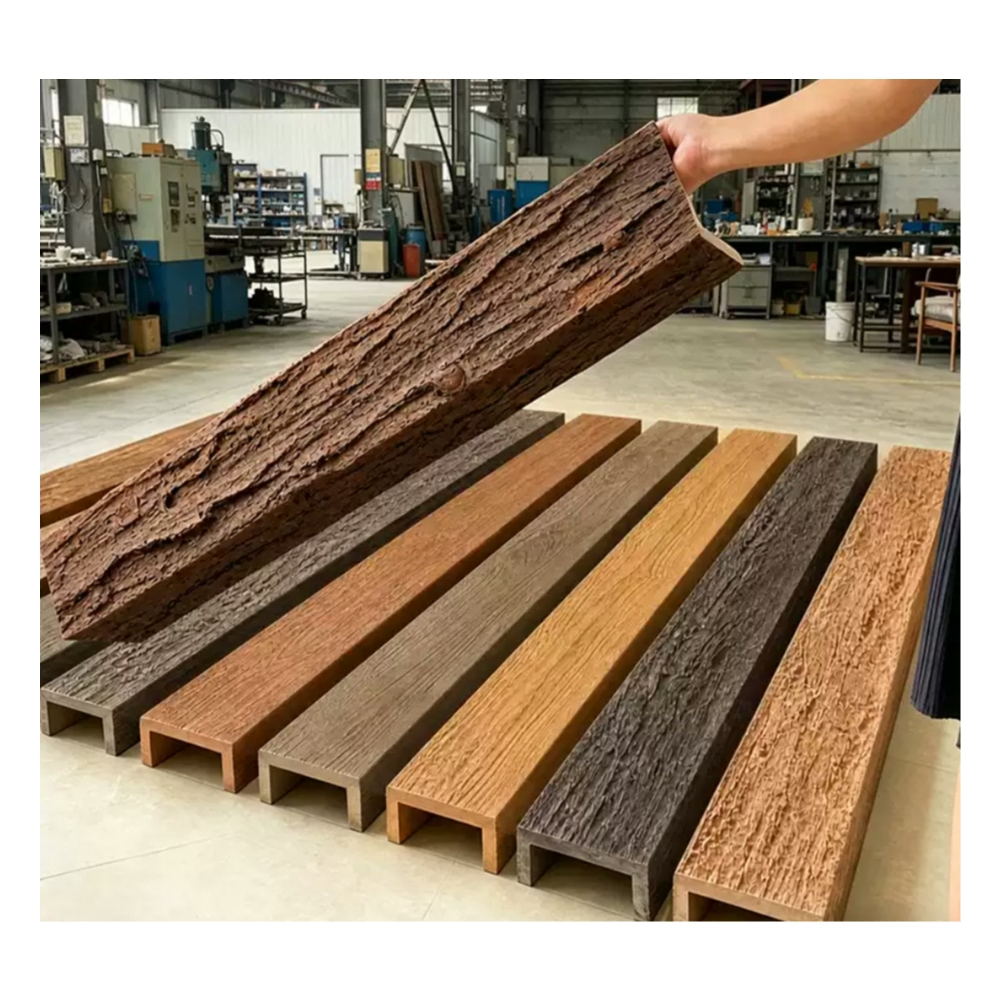
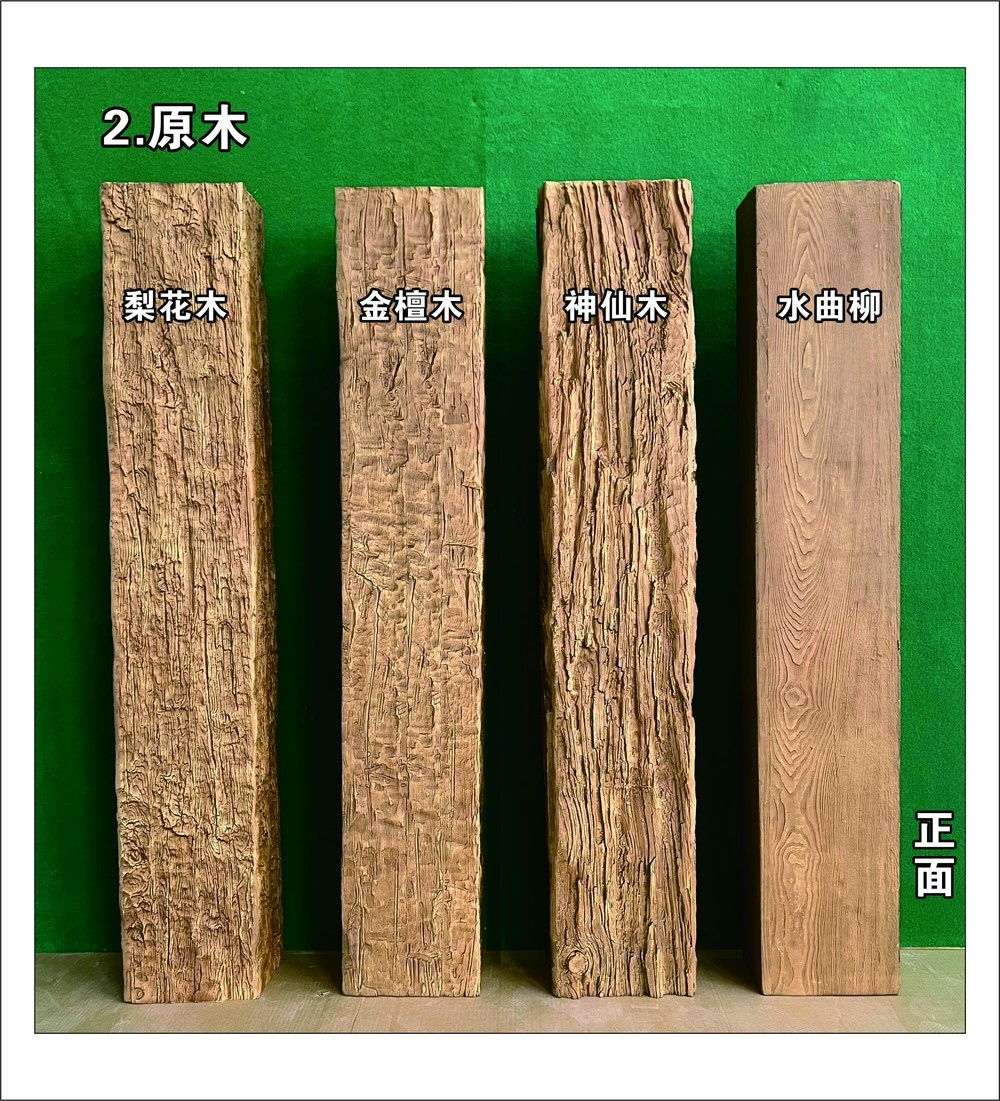
Easy Install PU Faux Ceiling Beams | Bulk Supply for Builders
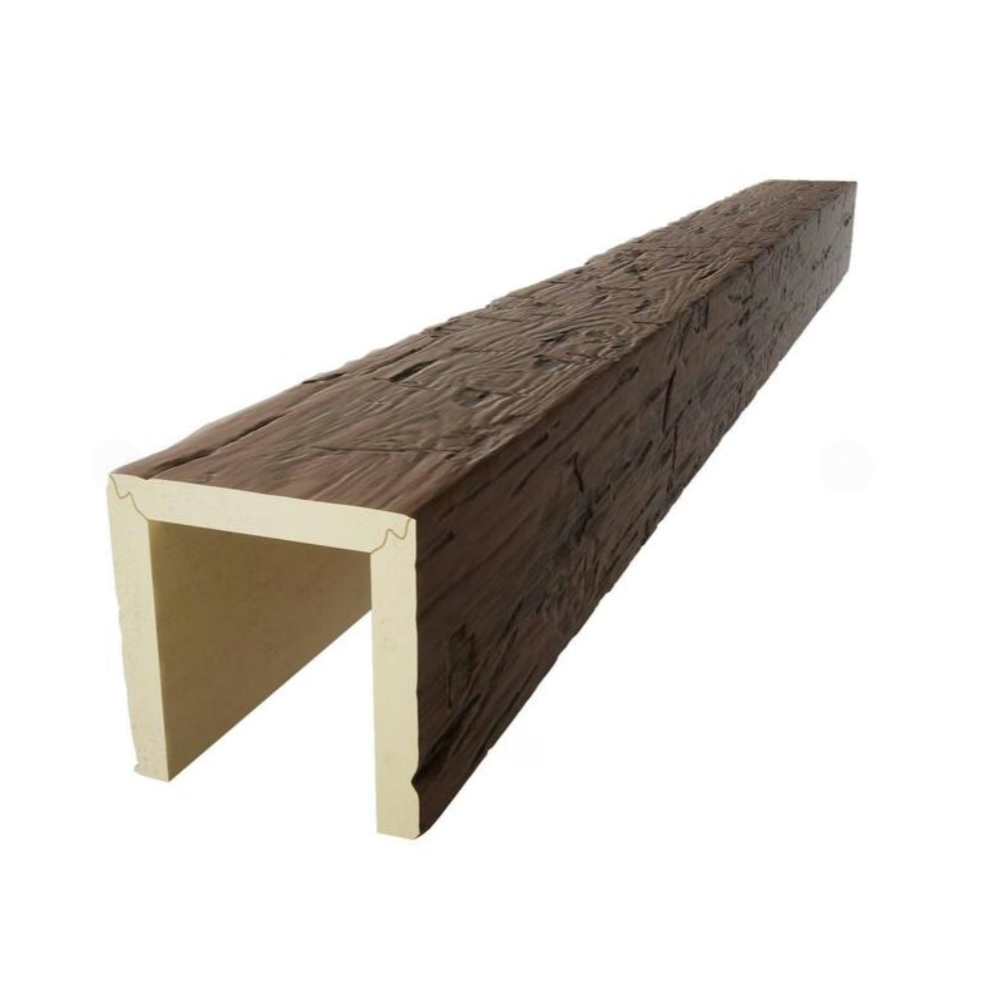
The "easy install" claim for polyurethane faux beams is real, but the operational details matter. For builders running multiple projects per year with crews who install beams across different floorplans and different home types, the install advantages translate into specific operational metrics: time per beam, crew size required, error rates, and rework frequency. Understanding these metrics helps builders structure bulk supply for maximum install efficiency.
This is how the easy install advantages work in practice, what the bulk supply structure looks like for builders optimizing install speed, and what the field results typically show.
What "easy install" actually means in field terms
For a builder's install crew, "easy install" translates to specific operational advantages:
Time per beam
A typical install time for a polyurethane faux ceiling beam with a good cleat system:
- Two-person crew, standard beam (8 to 14 feet): 15 to 30 minutes per beam.
- Two-person crew, longer beam (14 to 20 feet): 25 to 45 minutes per beam.
- Two-person crew, beam with field joint (20+ feet): 45 to 90 minutes per beam.
For comparison, a comparable timber beam install typically takes 90 to 240 minutes per beam with a 4 to 6 person crew. The PU beam install is 3 to 8 times faster.
Crew size required
A two-person crew can install most polyurethane beams:
- Two-person crew: Standard for beams up to 20 feet, including most residential projects.
- Three-person crew: Useful for very long beams (over 20 feet) or beams at high ceiling locations.
- Larger crew: Rarely needed for polyurethane beams.
Timber beams typically require 4 to 6 person crews even for shorter beams, with crane or lift support for longer beams.
Tools required
Standard carpentry tools are sufficient:
- Drill with appropriate bits.
- Level (4-foot level for cleats, laser level for layout).
- Stud finder (for cleat location verification).
- Socket wrench or impact driver.
- Tape measure, pencil, chalk line.
- Safety equipment (gloves, eye protection, hard hat if overhead work).
Timber beams may require specialized tools—saws for cutting, cranes for lifting, mortising tools for joinery.
Substrate requirements
The cleat system accommodates most substrates:
- Drywall with wood framing (most common): standard lag screws.
- Plaster and lath: toggle bolts or specialized anchors.
- Concrete or masonry: expansion or chemical anchors.
- Steel framing: self-tapping screws or welded cleats.
The cleat specification is per substrate; the beam mount itself is consistent.
Field error tolerance
Polyurethane beams tolerate minor field errors better than timber:
- Slight cleat misalignment can be adjusted within the cleat tolerance.
- The beam can be removed and remounted without damage.
- Field cuts for fit adjustments are straightforward (polyurethane cuts with standard woodworking tools).
Timber beams are less forgiving—mistakes in cleat placement or field cuts can ruin the beam.
Crew training for easy install
For builders running multiple projects, crew training on the easy install system produces significant productivity gains:
Initial training
The initial crew training typically covers:
- Cleat system overview and components.
- Layout and measurement procedures.
- Cleat mounting per substrate type.
- Beam lift and positioning techniques.
- Beam securing and adjustment.
- Joint finishing (for field joints).
- Quality checks.
The initial training takes 2 to 4 hours, with hands-on practice.
Ongoing training
For crews installing beams regularly:
- Refresher training every 6 to 12 months.
- Updates when the cleat system or beam design changes.
- Cross-training between crew members to avoid key-person dependency.
The ongoing training keeps the crew proficient.
Time study and benchmarking
Builders running many projects often do time studies to benchmark install performance:
- Time per beam by length.
- Time per beam by crew composition.
- Error rates and rework frequency.
- Material waste per project.
The time studies identify training needs, process improvements, and crew performance variations.
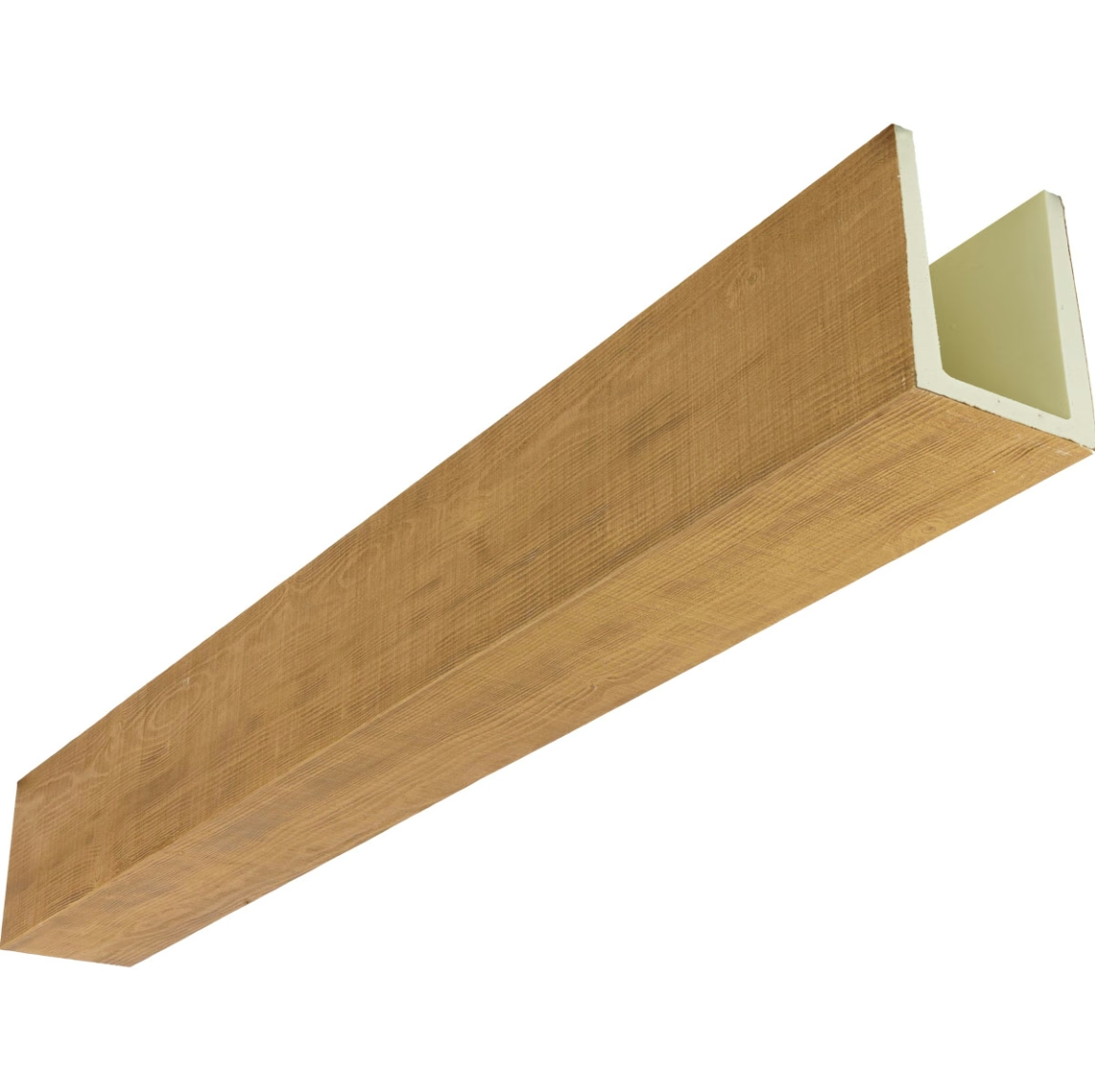
How easy install benefits builder economics
For builders, the easy install advantages translate directly into project economics:
Labor cost reduction
Labor cost per beam with PU vs timber:
- PU beam, 12 feet, two-person crew, 25 minutes: Labor cost approximately $25 to $50 per beam (depending on crew rates).
- Timber beam, 12 feet, four-person crew, 120 minutes: Labor cost approximately $240 to $480 per beam.
The PU beam saves $200 to $400 in labor per beam. For a 30-beam project, the savings are $6,000 to $12,000.
Crew productivity
A PU beam install crew can typically complete 8 to 12 beams per day. A timber beam install crew typically completes 2 to 4 beams per day.
For builders running multiple projects per year, the crew productivity difference means the same crew can handle 2 to 3 times more beam installation projects.
Reduced equipment requirements
PU beam installs require standard tools only. Timber beam installs may require:
- Crane or lift rental.
- Specialized cutting tools.
- Mortising or joinery tools.
- Additional safety equipment.
The reduced equipment requirement lowers project costs and simplifies logistics.
Faster project completion
The cumulative time savings from faster beam installation translates to faster project completion:
- A 30-beam PU beam project takes 3 to 4 days for beam installation.
- A 30-beam timber beam project takes 8 to 15 days for beam installation.
The 5 to 11 day project time savings allow builders to move to the next phase or the next project sooner.
Lower insurance and liability
PU beam installs have lower injury risk than timber beam installs:
- Lighter loads reduce lifting injuries.
- No crane operations reduce equipment-related risks.
- Standard tools reduce specialized-equipment risks.
The lower injury risk translates to lower insurance costs and fewer workers' compensation claims.
How bulk supply supports easy install
For builders running multiple projects, bulk supply structures that support easy install include:
Standardized cleat hardware
Builders specify standardized cleat hardware across projects:
- Same cleat type per substrate.
- Same fastener specifications per substrate.
- Bulk cleat ordering at consistent pricing.
Standardized cleats reduce crew confusion and inventory complexity.
Replacement beam availability
Damaged-in-install beams are replaced quickly:
- 5 to 10 business day replacement lead time.
- Same per-piece pricing as original order.
- No setup fees for standing spec replacements.
Fast replacement keeps projects on schedule despite occasional damage.
Consistent quality across batches
Bulk supply with consistent quality means:
- Crews learn the install patterns once and apply them across projects.
- No project-specific adjustments for quality variations.
- Predictable install times across projects.
Consistent quality produces consistent productivity.
Documentation per project
Documentation packages per project include:
- Install guides specific to the project's beam type.
- Cleat specifications per substrate.
- Field measurement protocols.
- Quality checklists.
The documentation supports crew training and quality consistency.
Common pitfalls in easy install programs
A few issues that come up often enough to flag:
- Insufficient crew training. Crews without proper training take longer and make more errors.
- Wrong cleat for substrate. The cleat specified for drywall doesn't work on plaster or concrete.
- Inadequate layout verification. Cleats mounted in the wrong position require remounting.
- No field measurement protocols. Beams ordered on plan dimensions don't fit the actual space.
- Replacement beam delays. Damaged beams without replacement availability delay the project.
How to optimize easy install for builders
For builders looking to maximize the easy install advantages:
- Standardize cleat hardware across projects. Reduces crew confusion.
- Train crews thoroughly. Faster install with fewer errors.
- Establish field measurement protocols. Accurate beam dimensions.
- Maintain replacement stock availability. Fast recovery from damage.
- Document install times and error rates. Continuous improvement.
Easy install polyurethane faux ceiling beams for builders is a category where the operational details, the crew training, and the bulk supply structure all need to align. The right combination produces fast, consistent installs across multiple projects. The wrong combination produces friction at every install.
Technical References
ASTM standards cited in every specification
Test Data
Lab results from internal testing program
Updated 2026
Reviewed against current product specs