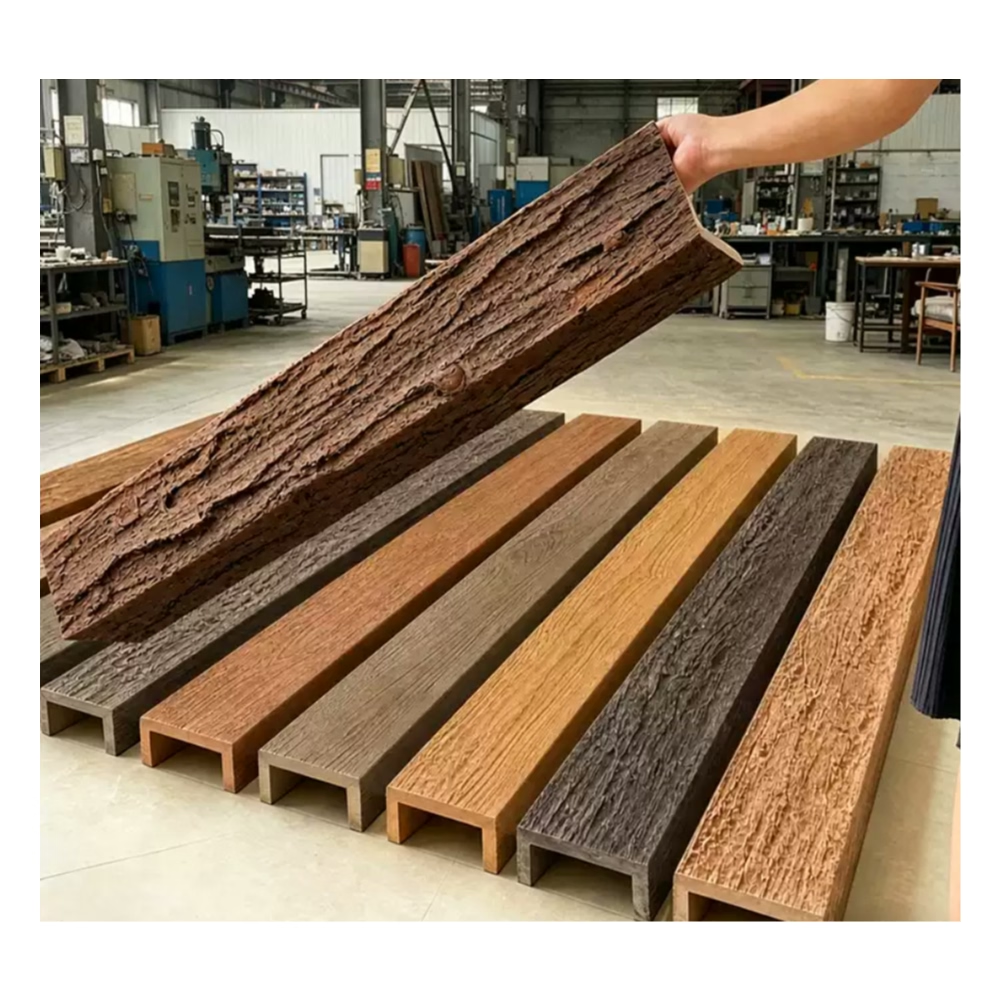
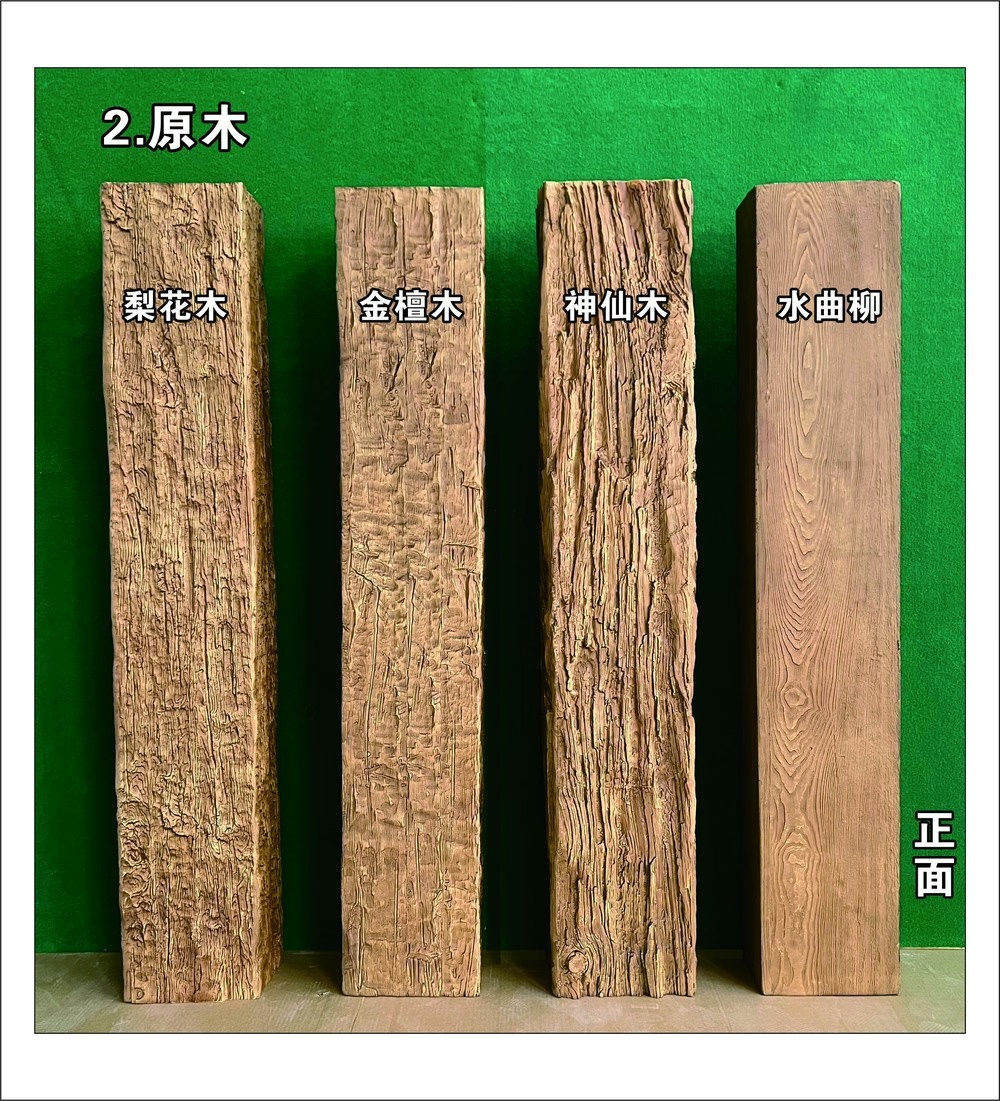
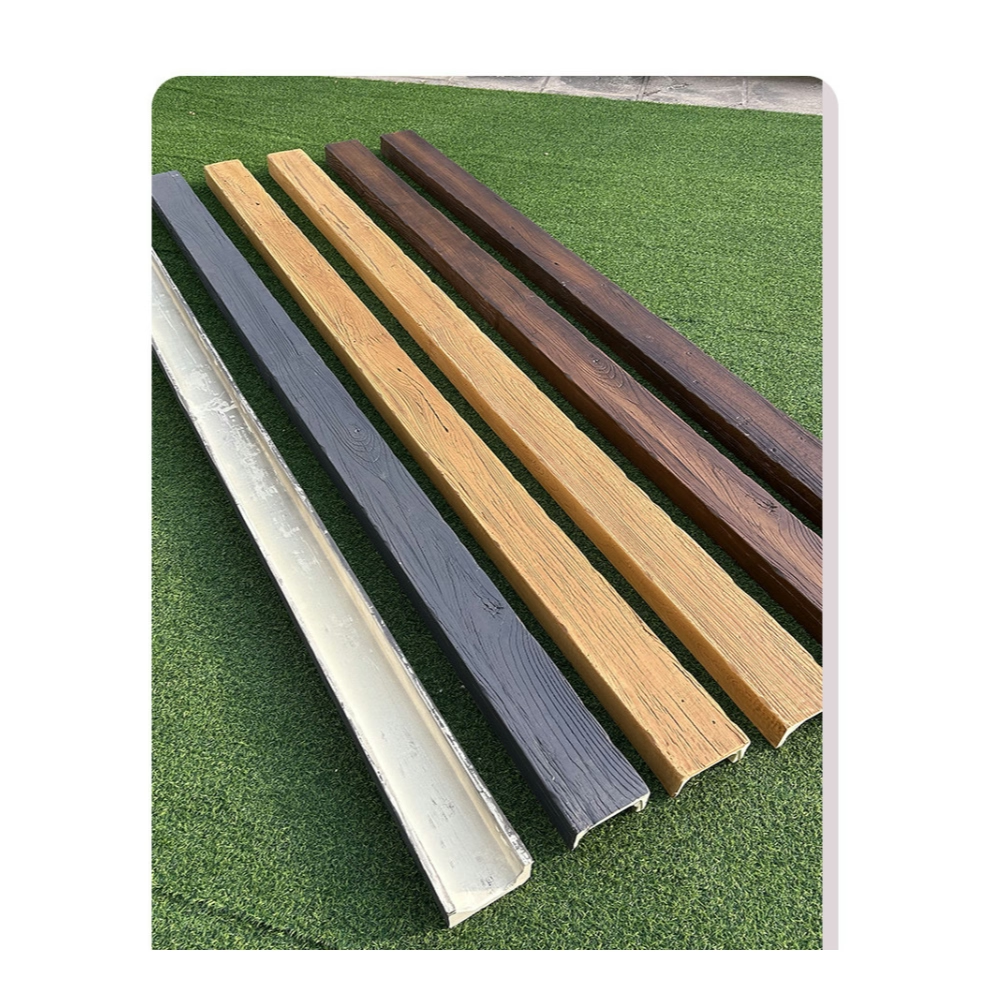
Factory Direct PU Faux Beams | Bulk Orders for Residential & Commercial
A factory direct polyurethane faux beam program that serves both residential and commercial bulk orders has different operational requirements than one serving a single segment. The dual capability requires parallel production workflows, different documentation packages, varied communication protocols, and pricing structures that accommodate both patterns.
This is what a dual-segment factory direct program looks like, how the operational capabilities need to be structured, and how the program scales across both segments.
Why dual-segment programs are common
Several factors drive factories to serve both residential and commercial segments:
Production smoothing
Residential and commercial projects have different demand patterns:
- Residential demand is steady, with seasonal variation.
- Commercial demand is project-driven, with lumpy volumes.
A factory serving both segments smooths production by filling residential capacity with commercial projects during residential lulls, and vice versa.
Operational learning
Residential and commercial projects have different requirements:
- Residential focuses on aesthetic specifications and customization.
- Commercial focuses on code compliance, documentation, and speed.
Serving both segments builds operational capabilities that neither segment alone develops.
Revenue diversification
A factory dependent on a single segment is vulnerable to that segment's downturn. Dual-segment factories have more stable revenue across market cycles.
Customer relationships
Builders and contractors often do both residential and commercial work. A factory that serves both segments can be the single source for all of a customer's projects.
Operational capabilities for dual-segment programs
A factory serving both residential and commercial segments needs parallel capabilities:
Residential capabilities
- Custom profile development (for distinctive homes).
- Custom color matching (for designer-driven specifications).
- Premium finish options (multi-tone, hand-applied).
- Project-by-project sample production.
- Designer relationship management.
Commercial capabilities
- Fire rating documentation (ASTM E84, Euroclass).
- VOC emissions certification (GREENGUARD, CDPH).
- Cleat specifications with engineering data.
- Seismic documentation (in seismic zones).
- Faster lead times for occupied-space work.
Shared capabilities
Both segments benefit from:
- Mold library maintenance.
- Color library management.
- Production capacity flexibility.
- Logistics capability.
- Communication quality.
The shared capabilities are the foundation; the segment-specific capabilities are layered on top.
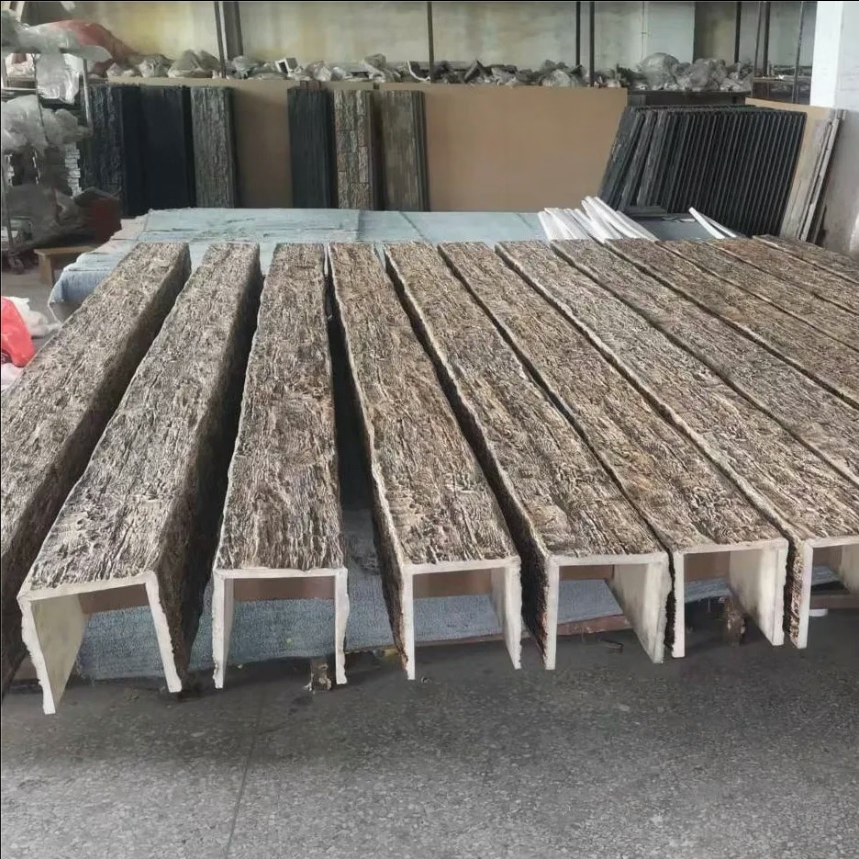
How the dual program operates
For a factory serving both segments, the operational pattern includes:
Separate project coordination teams
Most dual-segment factories maintain separate project coordination teams:
- Residential team: focuses on residential projects, designer relationships, custom work.
- Commercial team: focuses on commercial projects, code compliance, documentation.
The teams share operational infrastructure (mold library, color library, production capacity) but have different priorities and service standards.
Unified production capacity
The factory's production capacity serves both segments:
- Mold stations can produce either residential or commercial beams based on the order mix.
- Curing space is allocated based on the production schedule.
- Finishing capacity is allocated based on the order mix.
The production scheduling team balances the two segments to optimize capacity utilization.
Different documentation templates
The factory maintains different documentation templates for each segment:
- Residential documentation: density data, care guide, warranty.
- Commercial documentation: fire rating, VOC certification, cleat specs, seismic docs.
- Project-specific documentation: tailored to the project's requirements.
The documentation team produces the appropriate package for each order.
Different communication protocols
The communication protocols differ between segments:
- Residential: more iteration, sample approval cycles, designer involvement.
- Commercial: faster turnaround, code compliance focus, contractor involvement.
The factory's commercial team adapts to each segment's communication style.
Pricing structure for dual-segment programs
The pricing structure for a dual-segment program typically includes:
Per-piece pricing by length
Standard tier pricing by length, applicable to both segments. The same beam at the same length has the same base price regardless of segment.
Segment-specific surcharges
Certain features carry segment-specific surcharges:
- Commercial fire rating: 10 to 20 percent surcharge.
- Commercial VOC certification: included in fire rating surcharge.
- Residential custom color matching: $200 to $600 per color.
- Residential custom profile: $3,000 to $8,000 per profile.
These surcharges reflect the additional costs of segment-specific capabilities.
Volume tiers
Volume tiers apply across both segments:
- Combined residential and commercial volume.
- Annual commitment across both segments.
- Tier discounts applied to total volume.
For a customer with both residential and commercial projects, the combined volume drives the tier discount.
Setup fee structure
Setup fees differ by segment:
- Residential: per-project setup fees for custom work.
- Commercial: per-project setup fees for documentation and compliance.
- Standing specifications: setup fees waived or amortized across multiple projects.
The setup fee structure reflects the different operational requirements.
How customers engage with dual-segment factories
For builders, contractors, or developers with both residential and commercial projects, engaging a dual-segment factory involves:
Single point of contact
Most dual-segment factories assign a single primary contact who coordinates across both segments:
- The contact knows the customer's residential and commercial projects.
- The contact coordinates with the residential and commercial teams internally.
- The contact provides consistent communication across project types.
Unified account management
The customer's account is managed across both segments:
- Combined volume tracking.
- Combined pricing tier calculation.
- Combined relationship management.
The unified account management simplifies the customer's procurement.
Separate project execution
Despite the unified account management, projects execute through the appropriate segment team:
- Residential projects through the residential team.
- Commercial projects through the commercial team.
- Documentation and pricing per segment requirements.
The execution reflects the different operational requirements.
Benefits of dual-segment factories
For customers with both residential and commercial projects, dual-segment factories offer several benefits:
Single source
One factory for both project types simplifies procurement:
- One relationship to manage.
- One pricing structure to understand.
- One quality standard to evaluate.
Cross-segment learning
The factory's cross-segment experience benefits both project types:
- Residential aesthetic capabilities applied to commercial projects when appropriate.
- Commercial documentation rigor applied to residential projects when needed.
Operational efficiency
The factory's production smoothing produces operational efficiency:
- Faster lead times through better capacity utilization.
- More consistent quality through continuous production.
- Better pricing through volume aggregation.
Relationship continuity
The customer-factory relationship continues across project types:
- A residential builder who takes on a commercial project doesn't have to find a new factory.
- A commercial contractor who takes on a residential project doesn't have to start over.
Common pitfalls in dual-segment factory programs
A few issues that come up often enough to flag:
- Treating both segments the same. Different operational requirements need different approaches.
- Underinvesting in segment-specific capabilities. A factory that tries to serve both segments with a single capability set fails at one or both.
- Inconsistent pricing across segments. Customers notice if pricing for similar products differs unexpectedly between segments.
- Poor coordination between residential and commercial teams. Customers who work with both teams experience inconsistency if the teams don't coordinate.
- Letting one segment starve the other. Production capacity allocation needs active management to keep both segments served.
How to evaluate a dual-segment factory
For customers evaluating a dual-segment factory, the evaluation criteria include:
- Residential track record. References and sample work from residential projects.
- Commercial track record. References and documentation from commercial projects.
- Coordination between teams. How well the residential and commercial teams work together.
- Documentation depth for both segments. Adequate documentation for both project types.
- Pricing consistency. Pricing that's consistent across segments for similar products.
Factory direct polyurethane faux beams for residential and commercial bulk orders are a category where the dual-segment operational capabilities, the cross-segment coordination, and the unified customer relationship all matter. The right factory serves both segments efficiently with consistent quality. The wrong one produces friction at the segment boundaries.
Technical References
ASTM standards cited in every specification
Test Data
Lab results from internal testing program
Updated 2026
Reviewed against current product specs