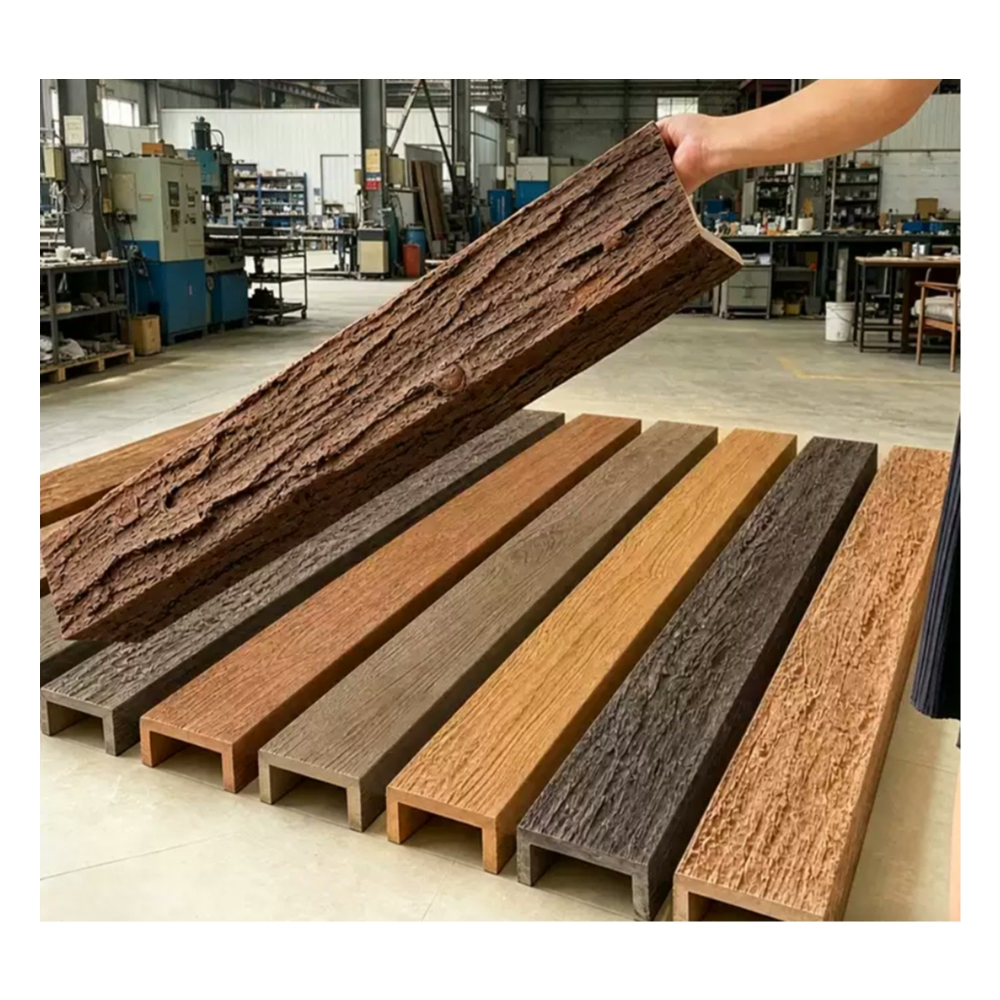
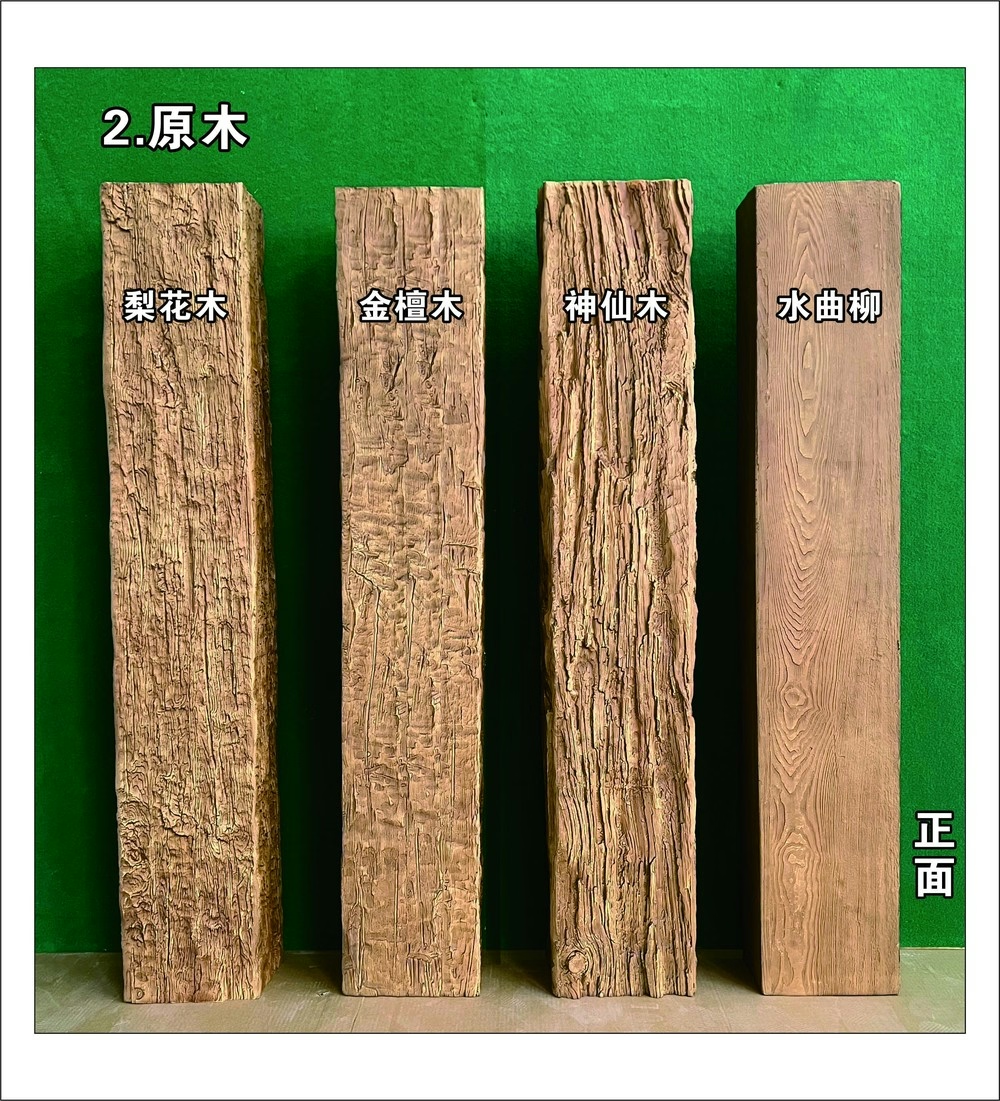
Faux Beams for Interior Renovation | Bulk Orders for Construction Contractors
Construction contractors running interior renovation projects have a different relationship with faux beams than production builders. Each project is unique, the existing conditions vary, field measurements drive the specifications, and lead times need to fit renovation schedules. Bulk orders from a faux beam supplier can work well for construction contractors when the operational pattern matches the renovation workflow.
This is how construction contractors handle bulk faux beam orders for interior renovation, what the operational patterns look like, and how to make the relationship work.
What interior renovation projects involve
Interior renovation projects have specific characteristics:
Varied project types
Construction contractors handle a wide range of interior renovation projects:
- Kitchen renovations.
- Bathroom renovations.
- Master suite renovations.
- Living room and dining room renovations.
- Basement renovations.
- Addition renovations that include interior beam work.
- Whole-home renovations.
Each project type has different beam requirements.
Existing condition variation
Interior renovation projects encounter varied existing conditions:
- Different ceiling structures (drywall, plaster, exposed structure).
- Different substrates (wood joists, metal framing, concrete).
- Different existing conditions (intact, modified, damaged).
- Different access constraints (furnished, occupied, restricted).
The existing conditions affect the beam specification and installation.
Field measurement dependency
Renovation beam orders depend on field measurements:
- Plan dimensions often don't match existing conditions.
- Field measurements taken at framing completion are critical.
- The renovation contractor's project manager handles measurements.
The field measurement dependency is a defining characteristic of renovation work.
Tight timelines
Renovation projects have tight timelines:
- Kitchen renovations: 4 to 8 weeks total.
- Bathroom renovations: 3 to 6 weeks.
- Living space renovations: 4 to 8 weeks.
- Whole-home renovations: 12 to 24 weeks.
Beam lead times need to fit these timelines.
How bulk orders work for renovation projects
For construction contractors running renovation projects, bulk orders typically follow:
Standing specifications
The contractor establishes standing specifications for typical renovation work:
- Common profiles used across renovation projects.
- Standard colors and finishes.
- Standard cleat hardware for common substrates.
- Standard documentation.
Standing specs cover most orders.
Volume tiers
The contractor negotiates volume tiers:
- Tier 1: 500 to 1,500 linear feet annually.
- Tier 2: 1,500 to 3,000 linear feet annually.
- Tier 3: 3,000+ linear feet annually.
The volume tiers reflect the contractor's annual beam spend across all projects.
Order pattern
The contractor's order pattern includes:
- Many small to medium orders (4 to 15 beams per order).
- Orders placed based on field measurements.
- Orders with shorter lead times than production builders.
- Orders with frequent deviations from standing specs (custom lengths, custom colors).
The pattern requires the supplier to handle varied orders at consistent pricing.
Pricing structure
Pricing for renovation contractor bulk orders typically includes:
- Per-piece pricing by length with volume discounts.
- Reduced setup fees for deviations against standing specs.
- Color match fees applied once per color, not per order.
- Replacement beam pricing consistent with original orders.
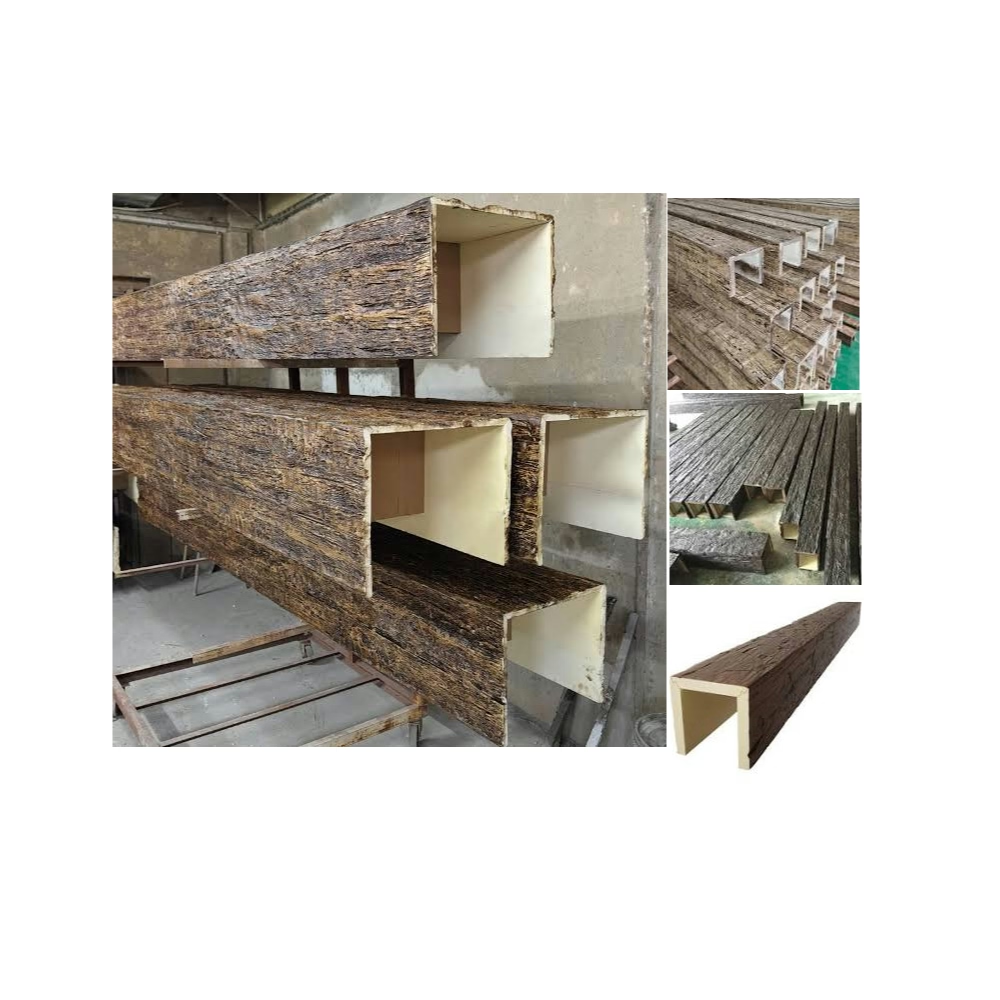
Field measurement protocols
For renovation projects, field measurement protocols are critical:
When to measure
Field measurements should be taken at framing completion:
- After the existing ceiling is opened (if applicable).
- After any framing modifications are complete.
- Before the drywall or other ceiling finish is installed.
Measurements taken earlier or later may not reflect the actual installation conditions.
How to measure
Field measurements should include:
- Beam length at each location.
- Substrate identification (drywall, plaster, exposed joist, etc.).
- Substrate condition (intact, modified, damaged).
- Any field conditions affecting installation (HVAC, lighting, blocking).
Comprehensive measurements support accurate beam orders.
What to specify
The beam order should include:
- Specific lengths for each beam.
- Cleat specification per substrate.
- Any custom features (field joint, custom color, etc.).
- Delivery date aligned to construction schedule.
Clear specifications prevent order errors.
Common measurement errors
Common measurement errors to avoid:
- Measuring before framing is complete.
- Rounding to nominal dimensions.
- Not accounting for field conditions.
- Not identifying substrate variation.
Each error can produce beams that don't fit the actual conditions.
Substrate variation handling
Renovation projects encounter varied substrates that affect cleat specifications:
Drywall on wood framing
The most common substrate in renovation:
- Standard cleats with lag screws into joists.
- Verify joist location with stud finder.
- Use blocking if joists aren't at the planned cleat locations.
Plaster and lath
Common in pre-1960 homes:
- Toggle bolts or specialized plaster anchors.
- Reduced load rating compared to wood framing.
- Pre-drilling required to avoid cracking the plaster.
Drywall on metal framing
Common in some commercial renovations:
- Self-tapping screws into metal studs.
- Verify stud gauge and spacing.
- May require additional blocking.
Exposed structure
Common in basement renovations or industrial-style renovations:
- Direct mounting to joists or beams.
- Highest load capacity.
- May allow for different cleat designs.
Concrete or masonry
Common in some specific renovation types:
- Expansion or chemical anchors.
- Pre-drilling with masonry bit.
- Higher load capacity but more installation effort.
The cleat specification should match the actual substrate.
Lead time management
For renovation projects, lead time management is critical:
Standard lead times
- Standing spec orders: 5 to 15 business days.
- Deviations from standing spec: 10 to 20 business days.
- Custom work: 15 to 25 business days.
These are typical ranges; specific suppliers may have different lead times.
Rush orders
For tight timelines, rush orders may be available:
- Premium pricing for rush service.
- Expedited production scheduling.
- Typical rush lead time: 5 to 10 business days.
Rush orders should be planned for, not relied upon as standard practice.
Field measurement to order timing
The timing between field measurement and order placement is critical:
- Measure at framing completion.
- Place order within 1 to 3 days of measurement.
- Build in lead time for the supplier.
Delays between measurement and order can add 1 to 2 weeks to the project timeline.
Construction schedule alignment
The beam delivery should align with the construction phase that requires the beams:
- Beams delivered before the ceiling finish is complete.
- Beams installed after the ceiling finish but before other trades disturb the area.
The supplier's delivery timing should support the construction sequence.
Common pitfalls in renovation bulk beam orders
A few issues that come up often enough to flag:
- Field measurement errors. Beams ordered on incorrect measurements don't fit.
- Wrong cleat for substrate. Standard cleats inadequate for plaster or concrete.
- Insufficient lead time. Tight renovation timelines require fast beam turnaround.
- Inadequate substrate verification. Cleats mounted into inadequate structure.
- Replacement beam delays. Damaged beams without fast replacement delay the project.
How construction contractors evaluate renovation beam suppliers
For construction contractors evaluating renovation beam suppliers:
- Field measurement support. The supplier provides guidance on field measurement.
- Substrate expertise. The supplier has experience with varied renovation substrates.
- Lead time reliability. The supplier meets tight renovation timelines.
- Replacement beam speed. The supplier supports fast replacement.
- Standing spec flexibility. The supplier accommodates varied specifications.
- References. The supplier has done comparable renovation work.
Bulk order patterns that work
For construction contractors, bulk order patterns that work include:
Regular ordering cadence
- Weekly or bi-weekly order placement.
- Field measurements drive the order timing.
- Standing specs cover most orders.
Per-project documentation
- Project-specific documentation packages.
- Per-project cleat specifications.
- Per-project delivery documentation.
Volume aggregation
- Annual volume commitment for tier pricing.
- Per-project pricing consistent with tier.
- Replacement beam pricing consistent with tier.
Communication responsiveness
- Quick response to RFQs.
- Proactive communication about production status.
- Issue resolution within hours.
The bulk order pattern should support the contractor's renovation workflow.
Faux beams for interior renovation bulk orders for construction contractors is a category where the field measurement protocols, the substrate variation handling, and the lead time management all need to align. The right supplier produces beams that support tight renovation timelines. The wrong one produces friction at every project.
Technical References
ASTM standards cited in every specification
Test Data
Lab results from internal testing program
Updated 2026
Reviewed against current product specs