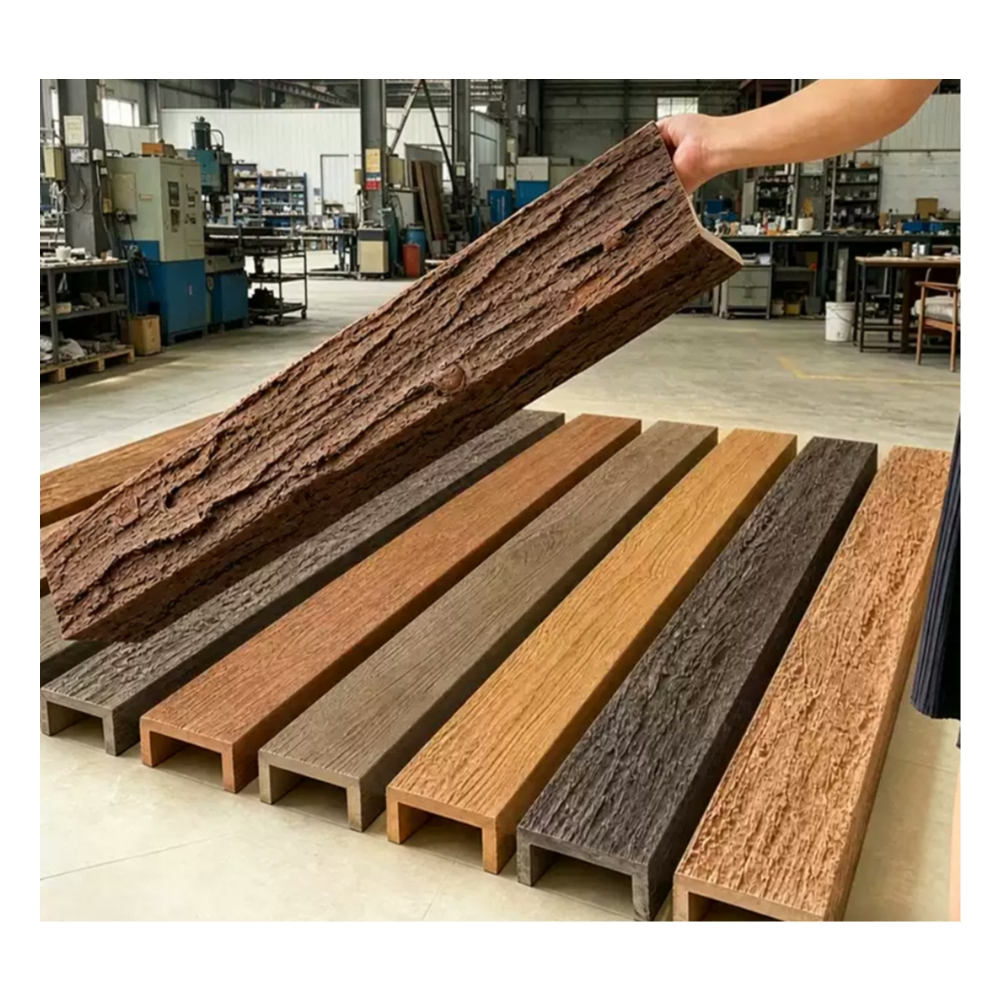
Faux Beams for Multi-family Homes | Bulk Supply Guide for Developers
Multi-family home developers—apartment buildings, condominiums, townhome developments—have specific bulk supply needs that differ from single-family custom home developers. The development scale, code compliance requirements, unit-by-unit ordering pattern, and brand standard maintenance all affect the supplier relationship. Understanding these specifics helps multi-family developers structure efficient bulk supply programs.
This is what multi-family home developers need from faux beam bulk supply, how the ordering and delivery pattern works, and what makes the supplier relationship successful.
What multi-family developments require
Multi-family developments have specific characteristics:
Development scale
Multi-family development projects typically involve:
- Apartment buildings: 20 to 200+ units.
- Condominium buildings: 15 to 100+ units.
- Townhome developments: 20 to 100+ homes.
- Mixed-use developments with residential units.
The scale is substantial.
Beam volume per unit
Multi-family units have varied beam requirements:
- Studio apartments: Often minimal or no beams.
- 1-bedroom apartments: 20 to 50 linear feet.
- 2-bedroom apartments: 30 to 80 linear feet.
- 3-bedroom apartments: 50 to 120 linear feet.
- Penthouses: 80 to 200+ linear feet.
- Townhomes: 100 to 300+ linear feet.
- Common areas (lobbies, etc.): Additional volume.
Per-unit beam volume varies by unit type and size.
Development total volume
For a typical multi-family development:
- 50-unit apartment building: 1,500 to 4,000 linear feet.
- 30-unit condominium: 1,000 to 3,000 linear feet.
- 40-townhome development: 4,000 to 12,000 linear feet.
- Mixed-use with 50 residential units: 2,000 to 5,000+ linear feet.
Development totals are substantial.
Why faux beams fit multi-family
Several factors make faux beams appropriate for multi-family:
Code compliance
Multi-family buildings have strict code requirements:
- Fire rating documentation per jurisdiction.
- Sound transmission (STC) ratings for unit-to-unit noise.
- VOC emissions certification.
- ADA compliance for accessible units.
- Sometimes additional certifications for specific building types.
Polyurethane beams can meet these requirements with proper documentation.
Cost efficiency
Multi-family projects operate on tighter margins than luxury residential:
- Per-beam cost affects overall project economics.
- Total cost of ownership matters for property operations.
- Maintenance and replacement costs affect long-term value.
Polyurethane beams offer favorable cost profiles for multi-family.
Consistency across units
Multi-family buyers expect consistency:
- Same beam profile, color, and finish across all units.
- Brand standard for the development.
- Consistency supports resale value.
Polyurethane beams support consistent production at scale.
Construction timeline
Multi-family projects have compressed timelines:
- Apartment buildings: 12 to 24 months total construction.
- Condominiums: 14 to 30 months.
- Townhome developments: 12 to 36 months (phased).
- Phased delivery aligned to construction phases.
Timely beam delivery is essential.
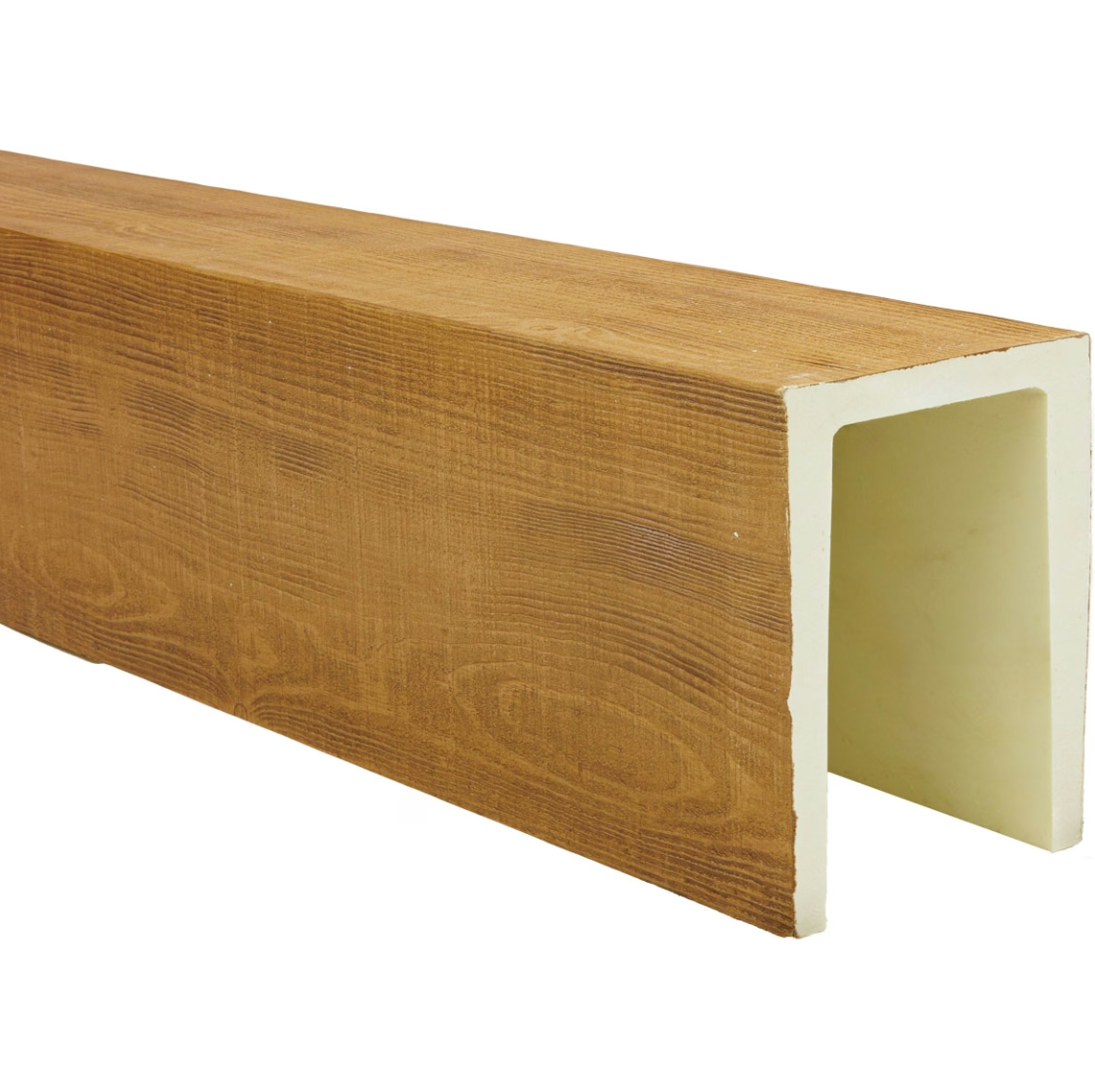
Bulk supply structure for multi-family
For multi-family developers, bulk supply typically includes:
Development-wide specifications
The developer establishes specifications for the entire development:
- Standard profiles for the development's unit types.
- Standard colors and finishes.
- Standard cleat hardware for common substrates.
- Standard documentation packages.
Development-wide specifications cover all units.
Volume tiers
The developer negotiates volume tiers:
- 1,500 to 5,000 linear feet: 10 to 20 percent discount.
- 5,000 to 15,000 linear feet: 20 to 30 percent discount.
- 15,000+ linear feet: 30 to 40 percent discount.
Volume tiers reflect development scale.
Unit-by-unit ordering
Each unit generates a beam order:
- Reference to the development-wide specification.
- Specific quantities per unit type.
- Delivery date per construction phase.
- Documentation per unit.
Unit-by-unit ordering handles the variety.
Phased production and delivery
The factory produces in waves:
- Production waves aligned to construction phases.
- Quality consistency across all waves.
- Replacement stock held at the factory.
- Delivery coordination per phase.
Phased delivery supports construction sequence.
Quality consistency
Quality consistency is critical:
- Master reference samples held per development.
- Color drift monitoring across waves.
- Texture consistency across units.
- Documentation per shipment.
Consistency maintains the development's brand.
Code compliance documentation
For multi-family, code compliance documentation includes:
Fire rating
Fire rating per jurisdiction:
- ASTM E84 Class A or B certification.
- Per beam type and finish.
- Project-specific documentation.
- Test reports from accredited labs.
Fire rating documentation supports permit and inspection.
Sound transmission
For unit-to-unit sound transmission:
- Ceiling assembly STC rating documentation.
- Beam impact on acoustic performance.
- Coordination with acoustic treatment.
- Verification per acoustic engineer.
Acoustic documentation supports multi-family standards.
VOC emissions
VOC emissions certification:
- GREENGUARD or CDPH certification.
- Per beam type and finish.
- Project-specific documentation.
- Verification per jurisdiction requirements.
VOC documentation supports indoor air quality.
ADA compliance
For accessible units:
- Beam heights in accessible routes.
- Beam projections from walls.
- Protruding object requirements.
- Mounting per accessibility guidelines.
ADA documentation supports accessible unit compliance.
Seismic documentation
For seismic zone construction:
- Cleat specifications with seismic rating.
- Beam weight documentation.
- Connection details per seismic requirements.
- Engineered drawings where required.
Seismic documentation supports seismic code compliance.
Acoustic considerations for multi-family
Multi-family construction has specific acoustic concerns:
Sound transmission between units
Beams may affect ceiling assembly STC rating:
- Solid beams can create flanking paths for sound.
- Beam mounting details affect ceiling assembly STC.
- Acoustic treatment may be needed behind or around beams.
The acoustic engineer should review beam specifications.
Sound absorption
Beams affect sound absorption in rooms:
- Beams break up large ceiling surfaces, reducing flutter echo.
- Acoustic panels can integrate with beam design.
- Beam layout affects sound movement through the space.
Acoustic treatment may be part of the design.
Impact noise
For multi-family with upper units:
- Impact noise from upper floors can be significant.
- Beams attached to ceiling structure may transmit vibration.
- Decoupling may be needed for high STC requirements.
The acoustic engineer should specify beam mounting for impact control.
Coordination with acoustic treatment
For projects with acoustic requirements:
- Beams may be designed to integrate with acoustic panels.
- Beam location coordinated with acoustic treatment layout.
- Acoustic engineer and beam supplier coordinate specifications.
This coordination ensures acoustic performance.
Brand standard maintenance
For multi-family developers with consistent branding:
Standard library
The developer maintains a standard library:
- Standard beam profiles for unit types.
- Standard colors and finishes.
- Standard documentation packages.
Standard library supports unit-by-unit ordering.
Master reference samples
The factory holds master reference samples:
- Color formula references.
- Texture reference samples.
- Finish reference samples.
- Photographic documentation.
Reference samples are refreshed periodically.
Color drift monitoring
The factory monitors color drift:
- Quantitative color measurement per batch.
- Tolerance specifications (typically Delta E less than 1.0).
- Correction procedures if drift exceeds tolerance.
Monitoring ensures consistency across the development.
Quality verification
Quality verification per wave:
- Color consistency verification.
- Texture consistency verification.
- Profile consistency verification.
- Documentation per shipment.
Verification maintains brand standard.
Common pitfalls in multi-family bulk supply
A few issues that come up often enough to flag:
- Inconsistent quality across waves. Visible variation between units in the development.
- Insufficient acoustic consideration. Beams reducing the ceiling assembly's STC rating.
- Missing fire rating documentation. Gaps in code compliance documentation.
- Inadequate documentation for unit-by-unit ordering. Documentation not aligned to per-unit needs.
- Slow replacement beam availability. Damaged beams without fast replacement delay unit completion.
Pricing for multi-family bulk supply
Pricing for multi-family bulk supply typically includes:
Per-piece pricing by length
Tier discounts at multi-family volumes:
- 1,500 to 5,000 linear feet: 10 to 20 percent discount.
- 5,000 to 15,000 linear feet: 20 to 30 percent discount.
- 15,000+ linear feet: 30 to 40 percent discount.
Code compliance documentation
Often included in per-piece pricing for standard documentation. Project-specific documentation may carry additional fees.
Unit-by-unit pricing
Each unit's beam pricing is consistent with tier pricing. Setup fees are typically waived for development-wide specifications.
Replacement beam pricing
Same per-piece pricing as original orders, with no setup fees for development-wide specs.
How multi-family developers evaluate suppliers
For multi-family developers evaluating faux beam suppliers:
- Development-wide capability. The supplier maintains consistency across many units.
- Code compliance documentation. The supplier provides comprehensive documentation.
- Acoustic awareness. The supplier understands acoustic considerations for multi-family.
- Phased delivery capability. The supplier produces in waves aligned to construction phases.
- Unit-by-unit ordering. The supplier handles unit-by-unit ordering efficiently.
- References. The supplier has done comparable multi-family projects.
Faux beams for multi-family homes bulk supply for developers is a category where the development-wide consistency, the code compliance documentation, and the acoustic considerations all need to align. The right supplier produces beams that maintain consistency across all units in the development. The wrong one produces visible variation between units that breaks the development's brand.
Technical References
ASTM standards cited in every specification
Test Data
Lab results from internal testing program
Updated 2026
Reviewed against current product specs