Faux Ceiling Beams Manufacturer | Bulk Supply for Renovation Companies
Renovation companies running 30 to 100+ projects per year have beam supply needs that differ from production builders and custom home builders. The renovation pattern involves smaller orders, tighter timelines, more variation per project, and mid-project changes. A manufacturer serving this segment needs operational capabilities that match.
This is how a faux ceiling beam manufacturer structures bulk supply for renovation companies, what the operational capabilities look like, and how the relationship develops.
What renovation companies need from a manufacturer
Renovation companies have specific supply chain needs:
Smaller, more frequent orders
A renovation company running 50+ projects per year places many beam orders:
- 30 to 80+ orders per year.
- 4 to 15 beams per order on average.
- Total annual volume of 800 to 4,000 linear feet.
The order pattern is high-frequency, low-volume compared to production builders.
Tight timelines
Renovation projects have tight timelines:
- Kitchen renovations: 4 to 8 weeks total.
- Bathroom renovations: 3 to 6 weeks.
- Addition renovations: 8 to 16 weeks.
- Whole-home renovations: 12 to 24 weeks.
Beam lead times of 15 to 25 business days are often too long. Renovation projects need 5 to 15 business days for most beams.
Mid-project changes
Renovation projects often change mid-stream:
- Discovery of unexpected conditions.
- Buyer-driven changes.
- Coordination issues with other trades.
- Field measurement variations from plans.
The manufacturer needs to accommodate mid-project changes without canceling and re-placing entire orders.
Field measurement dependency
Renovation beam orders depend on field measurements:
- Existing structures may not match plan dimensions.
- Field conditions may require adjustments to the original spec.
- The renovation contractor measures at framing completion, not before.
The manufacturer needs to support field measurement-driven orders.
Standing specification benefits
Even though each project is unique, renovation companies typically have patterns:
- Common profile choices for typical projects.
- Common color and finish preferences.
- Standard cleat hardware for common substrates.
Standing specifications allow most renovation orders to reference existing specs.
How manufacturers structure bulk supply for renovation
For renovation companies, the manufacturer's bulk supply structure typically includes:
Standing inventory at the factory
Some manufacturers maintain standing inventory for renovation companies:
- Pre-made beams in the renovation company's standard profiles.
- Standard colors and finishes.
- Standard lengths covering the most common ranges.
The renovation company draws from the standing inventory for fast-turnaround needs.
Made-to-order (MTO) for specific projects
For renovation projects that don't fit standing inventory:
- MTO production against the project's specific requirements.
- Lead time of 10 to 20 business days.
- Higher per-piece pricing than standing inventory.
The MTO option covers projects with non-standard requirements.
Tiered pricing structure
Manufacturers typically offer tiered pricing for renovation companies:
- Standing inventory orders: lowest per-piece pricing.
- MTO orders against standing spec: standard per-piece pricing.
- MTO orders with deviations: higher per-piece pricing plus setup fees.
The tiered pricing reflects the factory's setup costs and operational efficiency.
Replacement stock availability
Renovation projects often need replacement beams:
- Damaged-in-install beams.
- Field measurement errors.
- Mid-project specification changes.
The manufacturer should support replacement beams within 5 to 10 business days for standing spec orders.
Communication responsiveness
For renovation companies running many projects, communication responsiveness is critical:
- Quick response to RFQs.
- Proactive updates on production status.
- Issue resolution within hours, not days.
A manufacturer with strong communication supports the renovation company's project management.

Operational capabilities that matter
For renovation companies evaluating manufacturers, several capabilities matter:
Production flexibility
The manufacturer should be able to handle:
- Small orders (4 to 8 beams) without surcharge or with minimal surcharge.
- Mid-order changes without canceling and re-placing.
- Mixed orders (different lengths and specifications) in single transactions.
Production flexibility is what makes the manufacturer's renovation supply work.
Stock profile library
The manufacturer should have a stock profile library that covers:
- Common residential profiles (4 inches by 6 inches to 10 inches by 12 inches).
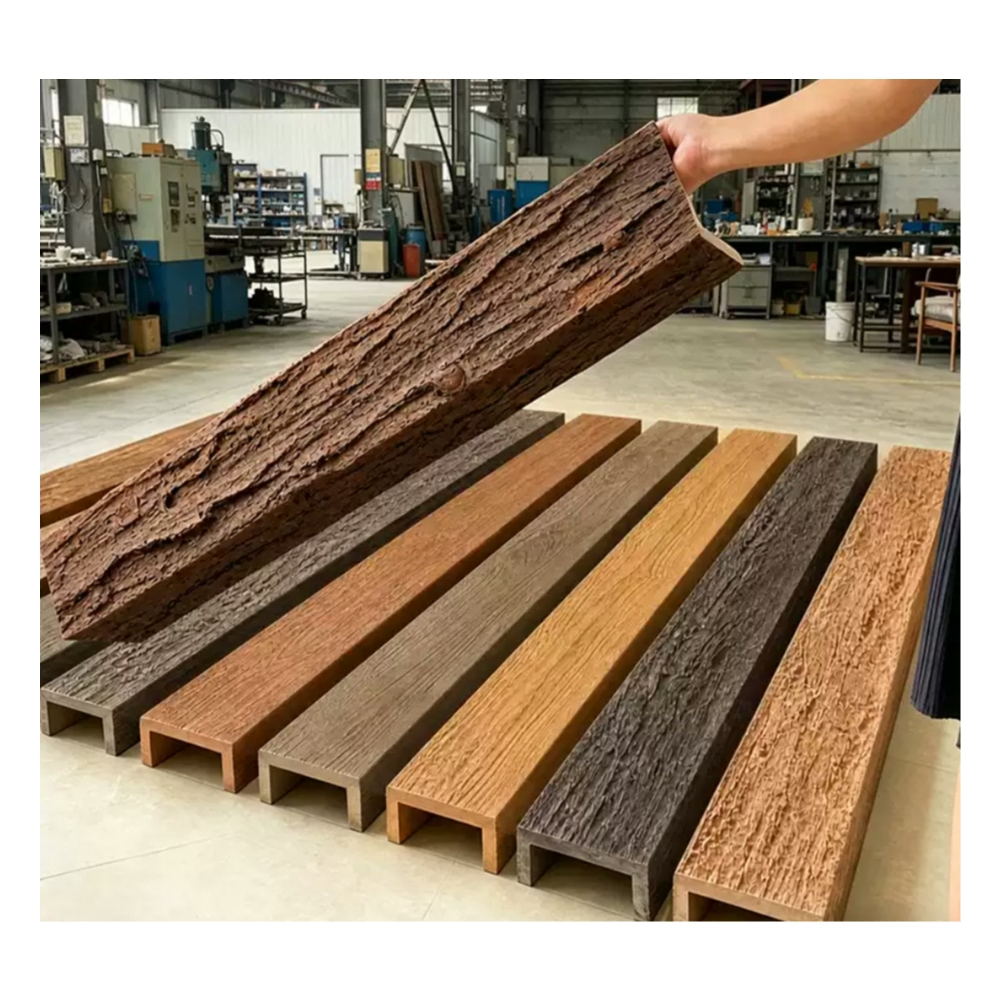
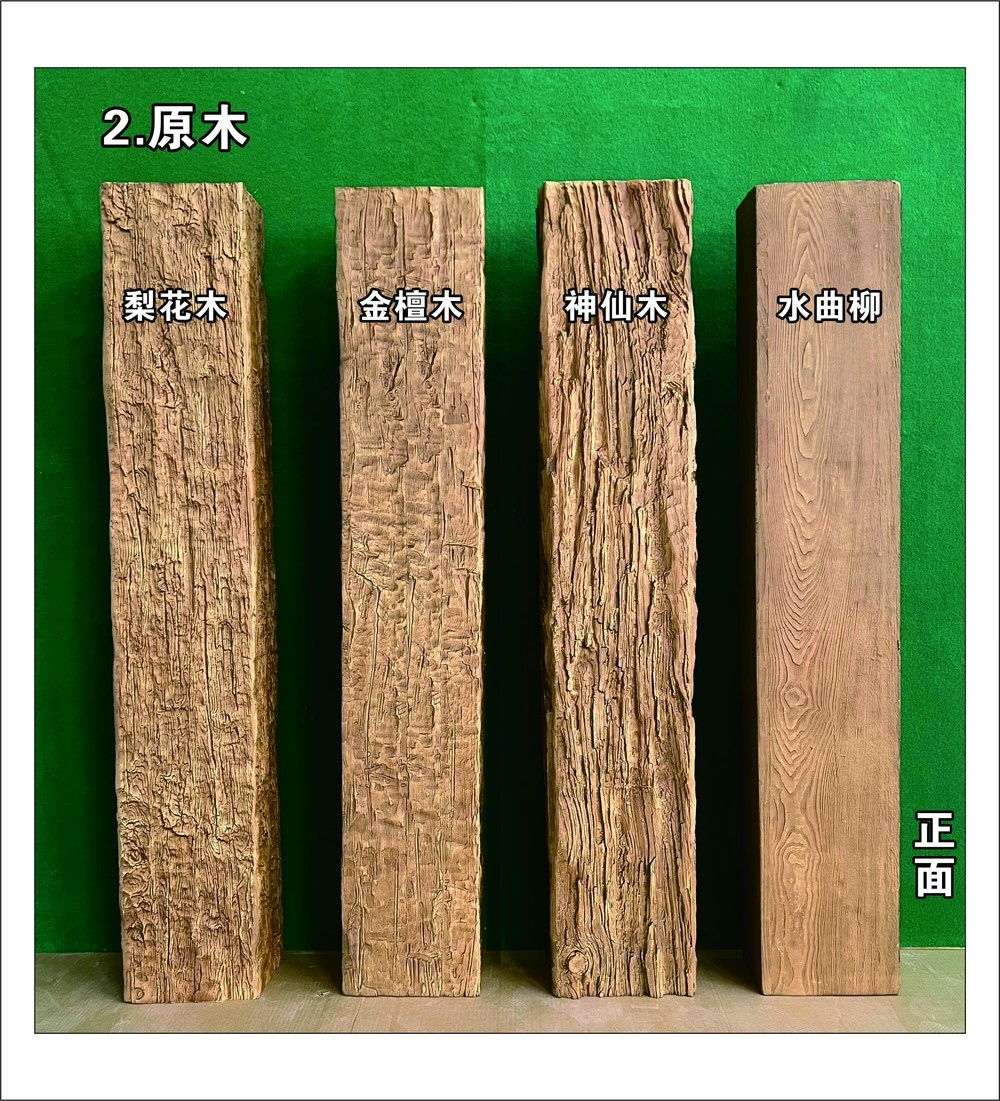
- Common texture options (rough-sawn, smooth, hand-hewn, distressed).
- Common color options (3 to 5 stock colors covering major wood tones).
A diverse stock library reduces the need for custom work.
Color library management
The manufacturer should maintain:
- Master reference samples for stock colors.
- Documentation of color formulas.
- Color drift monitoring for production batches.
Color library management ensures consistency across renovation orders.
Logistics capability
The manufacturer should support:
- Fast-turnaround shipping for urgent orders.
- Multiple delivery locations across the manufacturer's market area.
- Coordination with the renovation company's project schedules.
Logistics capability keeps renovation projects on schedule.
Technical support
The manufacturer should provide:
- Substrate-specific cleat recommendations.
- Field measurement guidance.
- Install support when needed.
Technical support helps renovation contractors handle unexpected conditions.
How renovation companies engage manufacturers
For renovation companies establishing manufacturer relationships, the engagement typically follows:
Initial engagement
The renovation company and manufacturer discuss:
- The renovation company's typical project types.
- Common beam specifications across the renovation company's projects.
- Volume expectations for the relationship.
- Quality requirements and documentation needs.
The initial engagement establishes the foundation for the relationship.
Standing specification development
The renovation company and manufacturer document standing specifications:
- Standard profiles.
- Standard colors and finishes.
- Standard cleat hardware.
- Standard documentation.
Standing specs cover most renovation orders.
Volume agreement
The renovation company commits to an annual volume:
- Tier 1: 500 to 1,500 linear feet annually.
- Tier 2: 1,500 to 3,000 linear feet annually.
- Tier 3: 3,000+ linear feet annually.
The volume commitment supports the manufacturer's production planning.
Operational rhythm
The renovation company and manufacturer establish an operational rhythm:
- Regular order placement.
- Communication cadence.
- Quarterly business reviews.
- Continuous improvement opportunities.
The operational rhythm makes the relationship efficient.
Pricing for renovation bulk supply
Pricing for renovation company bulk supply typically includes:
- Per-piece pricing by length. Tier discounts at volume thresholds.
- Standing inventory pricing. Lower than MTO pricing.
- MTO pricing. Standard per-piece pricing against standing specs.
- Setup fees for deviations. Applied when the order deviates from standing specs.
- Replacement beam pricing. Same as original order, no setup fees.
For a renovation company doing 50+ projects per year with average 6 beams per project, the annual beam spend is $20,000 to $60,000 depending on specifications.
Common pitfalls in renovation manufacturer relationships
A few issues that come up often enough to flag:
- Manufacturer not set up for small orders. Surprises or surcharges on small renovation orders create friction.
- Insufficient stock profile coverage. Renovation orders frequently need profiles not in the manufacturer's library.
- Slow MTO lead times. Renovation projects can't wait 25+ business days for custom work.
- Inadequate replacement beam availability. Damaged beams without fast replacement delay renovation projects.
- Poor communication. Slow response to RFQs creates project management issues.
How renovation companies evaluate manufacturers
For renovation companies evaluating manufacturers, the criteria include:
- Small order capability. The manufacturer handles small orders efficiently.
- Stock profile coverage. The manufacturer's library covers common renovation profiles.
- MTO lead times. The manufacturer's MTO lead times fit renovation timelines.
- Replacement beam speed. The manufacturer supports fast replacement.
- Communication responsiveness. The manufacturer responds quickly to RFQs and questions.
- References. The manufacturer has done comparable renovation work.
Faux ceiling beam manufacturer bulk supply for renovation companies is a category where the operational capabilities, the small order support, and the replacement beam speed all need to align. The right manufacturer produces beams that support renovation project timelines. The wrong one produces friction at every order.
Technical References
ASTM standards cited in every specification
Test Data
Lab results from internal testing program
Updated 2026
Reviewed against current product specs