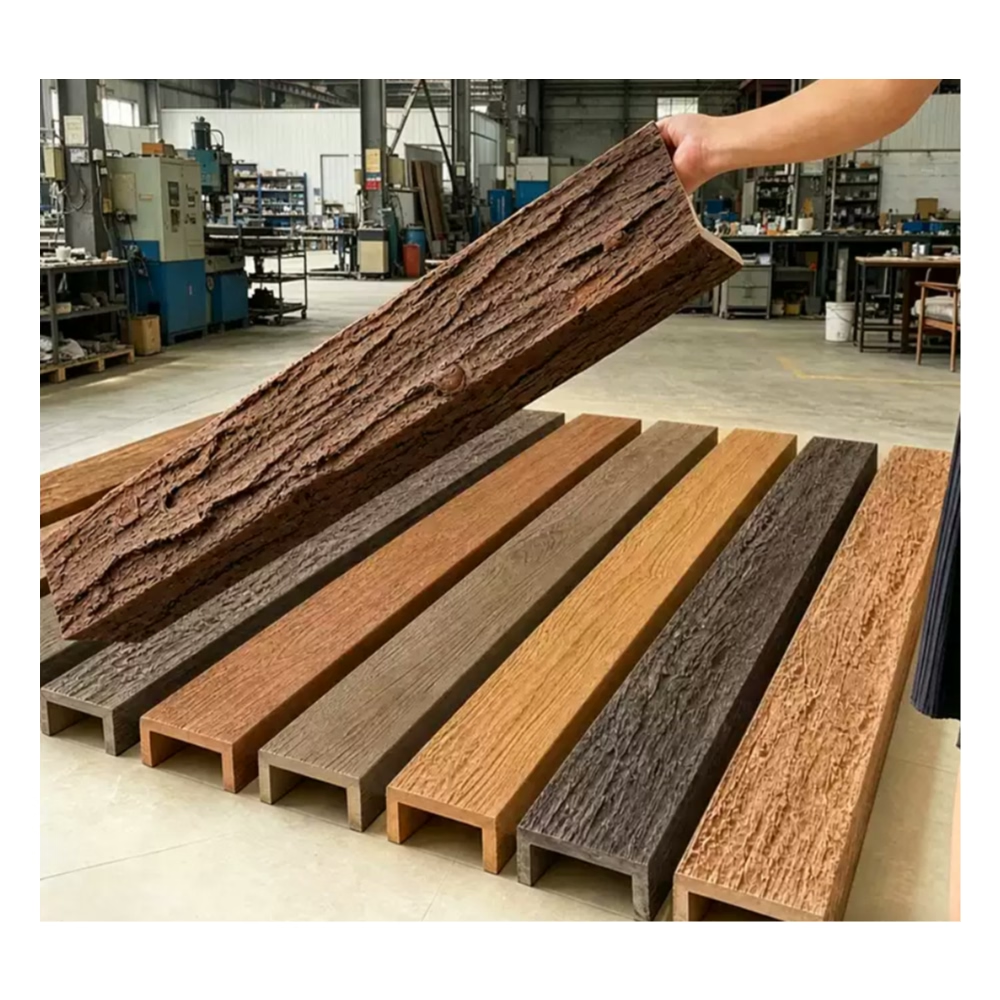
Faux Timber Beams Manufacturer | Custom Profiles for Home Builders
For home builders who want beam profiles that no competitor can easily replicate, custom profile development with a faux timber beam manufacturer is the answer. The process moves from initial inquiry through profile design, sample approval, mold production, and ongoing reorder capability. Understanding each step helps builders plan the timeline and budget correctly.
This is how custom profile development actually works, what the timeline and costs look like, and how builders manage the relationship with the manufacturer.
The custom profile development process
For a home builder engaging a manufacturer on a custom profile project, the process typically follows these stages:
Stage 1: Initial inquiry and feasibility
The builder contacts the manufacturer with the project context:
- The home builder's design intent.
- Reference images or samples of the desired profile.
- Estimated annual volume.
- Timeline for the first production run.
The manufacturer's design team reviews the inquiry:
- Can the profile be produced with polyurethane?
- What mold size and configuration is needed?
- What is the development timeline and cost?
- What is the per-piece production cost at the builder's projected volume?
The feasibility assessment typically takes 1 to 2 weeks. The result is a development proposal with timeline, mold cost, and per-piece pricing.
Stage 2: Profile design
Once the builder commits to the project, the manufacturer's design team develops the profile:
- A wood master is created based on the reference images and the builder's specifications.
- The wood master is hand-detailed or CNC-carved to match the reference.
- The design team works with the builder to refine the profile through drawings and photographs.
The profile design stage typically takes 2 to 4 weeks. The result is a detailed specification with cross-section drawings and a wood master ready for mold production.
Stage 3: Sample production
The manufacturer produces a polyurethane sample from the wood master:
- A small batch (typically 1 to 3 sample beams) is produced.
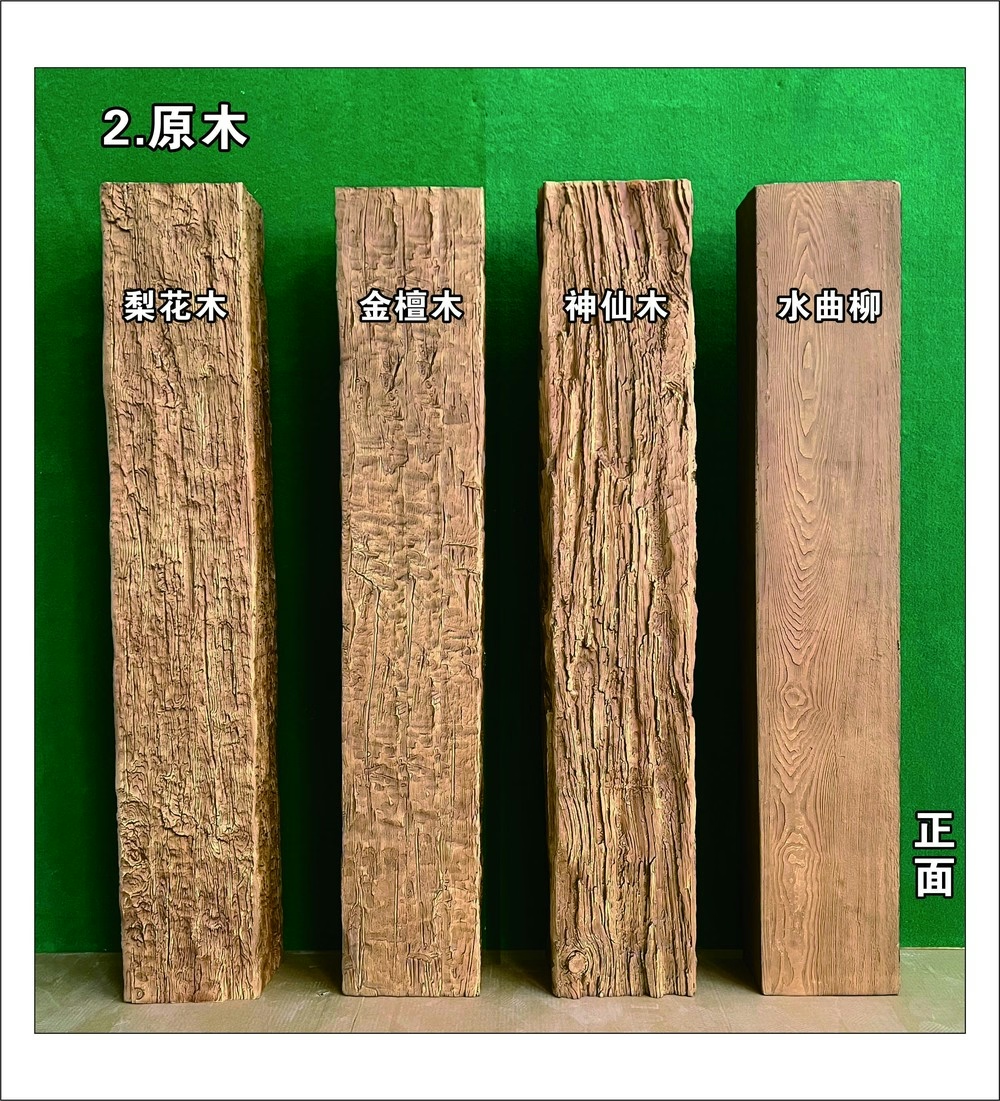
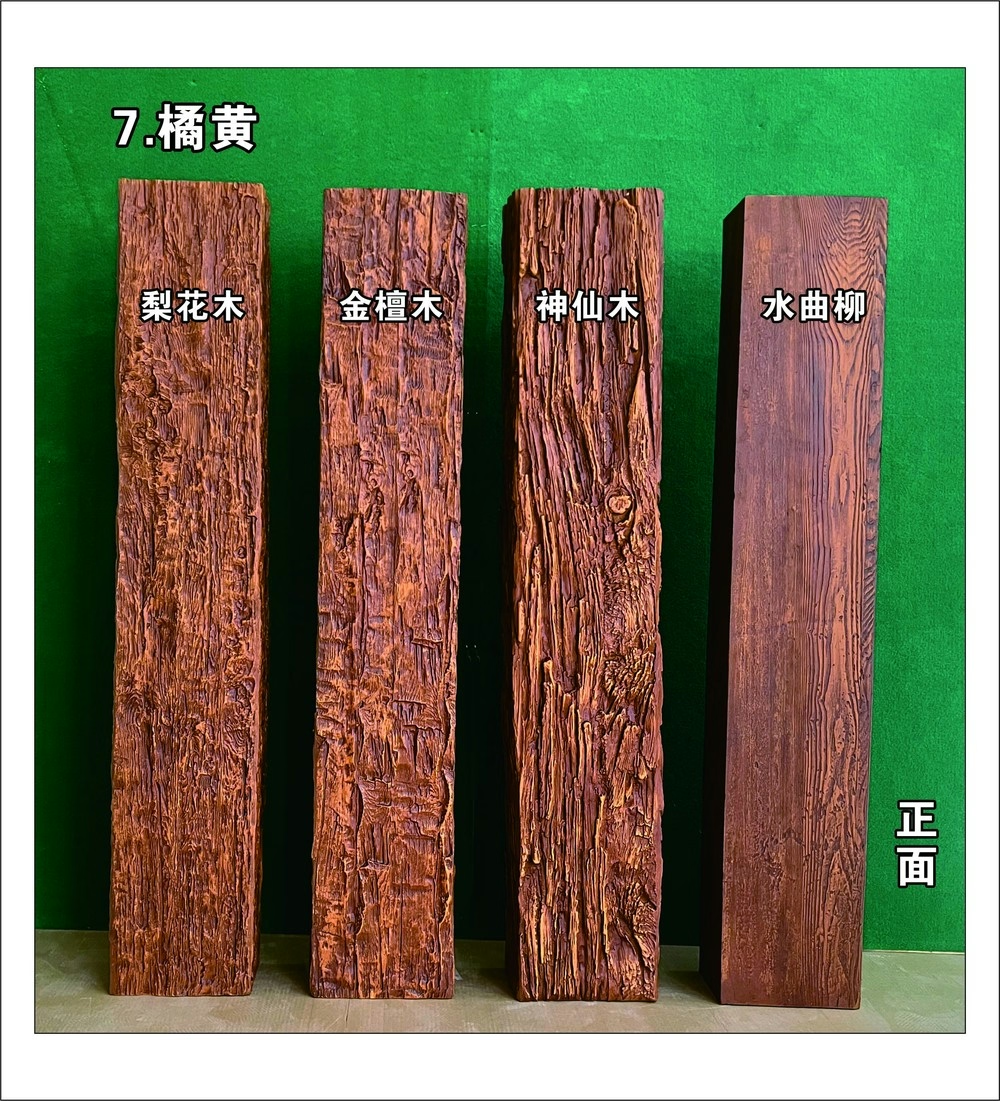
- The samples are finished with the builder's color and finish specification.
- The samples are shipped to the builder for approval.
Sample production takes 1 to 2 weeks after the wood master is finalized. The builder reviews the samples against the design intent and either approves, requests modifications, or rejects.
Stage 4: Iteration
If the builder requests modifications:
- The wood master is adjusted.
- New samples are produced.
- The cycle repeats until the builder approves.
Most custom profile projects require 1 to 3 iteration cycles. Complex profiles may require more.
Stage 5: Mold production
Once the wood master is approved, the manufacturer pours the production mold:
- The polyurethane mold is poured from the wood master.
- The mold is cured and inspected.
- The mold is tested with a small production run.
- The mold is approved for full production.
Mold production takes 2 to 4 weeks after sample approval.
Stage 6: First production run
The manufacturer produces the first production run:
- Quantity based on the builder's first order.
- Production typically takes 3 to 4 weeks.
- Quality inspection during production.
- Packaging and shipping per the builder's timeline.
The first production run typically arrives 4 to 6 weeks after the mold is approved.
Stage 7: Ongoing reorders
The mold is held by the manufacturer for future reorders:
- The builder places reorders against the mold.
- Reorder lead time is typically 2 to 4 weeks (faster than initial production).
- The manufacturer maintains the mold and replaces it if it degrades.
The reorder capability is part of what makes custom profiles a long-term asset for the builder.
Total timeline and cost
For a typical custom profile project:
Timeline
- Feasibility: 1 to 2 weeks.
- Profile design: 2 to 4 weeks.
- Sample production: 1 to 2 weeks.
- Iteration: 1 to 4 weeks (1 to 3 cycles).
- Mold production: 2 to 4 weeks.
- First production run: 3 to 4 weeks.
- Total: 10 to 20 weeks from initial inquiry to first delivery.
For projects with tight timelines, some stages can be compressed, but the total rarely drops below 8 to 12 weeks.
Cost
- Wood master creation: Often included in the mold development fee.
- Mold development: $3,000 to $8,000, depending on profile size and complexity.
- Sample production: Often included in the development fee or charged at cost.
- Per-piece pricing: $20 to $40 per linear foot, depending on profile and finish.
For a builder running 30+ homes per year with the custom profile across the portfolio, the mold cost amortizes to $1 to $3 per linear foot over the first year.
What builders should evaluate before committing
Before committing to a custom profile project, builders should evaluate:
The manufacturer's custom profile capability
Not all faux beam manufacturers do custom profile work. The builder should confirm:
- The manufacturer has a custom profile development process.
- The manufacturer has experience with similar profiles.
- The manufacturer's design team can execute the builder's design intent.
The manufacturer's mold maintenance practices
Custom molds degrade over time. The builder should confirm:
- The manufacturer inspects molds regularly.
- The manufacturer replaces molds at defined intervals.
- The manufacturer maintains mold backups or can recreate the mold if needed.
The manufacturer's reorder process
Reorders against the custom profile should be straightforward. The builder should confirm:
- The reorder lead time.
- The reorder pricing.
- The color consistency across reorders.
The manufacturer's communication quality
Custom profile development requires more communication than stock profile work. The builder should confirm:
- The manufacturer has a design team for custom projects.
- The manufacturer provides regular updates on development progress.
- The manufacturer is responsive to design changes and questions.
Common pitfalls in custom profile development
A few issues that come up often enough to flag:
- Underspecifying the reference. A vague reference ("Spanish Colonial viga") leads to a profile that doesn't match the builder's intent. A specific reference (photographs, drawings, or actual beam samples) is needed.
- Skipping the iteration cycle. Builders who try to rush through sample approval often end up with profiles that don't quite match the design intent.
- Underestimating the timeline. Custom profile development takes 10 to 20 weeks. Builders who don't plan for this timeline end up delaying their projects.
- Not committing to the volume. The mold cost amortizes over the builder's annual volume. Builders who don't commit to using the profile across enough projects pay more per piece than necessary.
- Letting the profile drift over time. If the builder's design intent shifts after the mold is produced, the mold becomes obsolete. The fix is to lock the design intent before the mold is built.
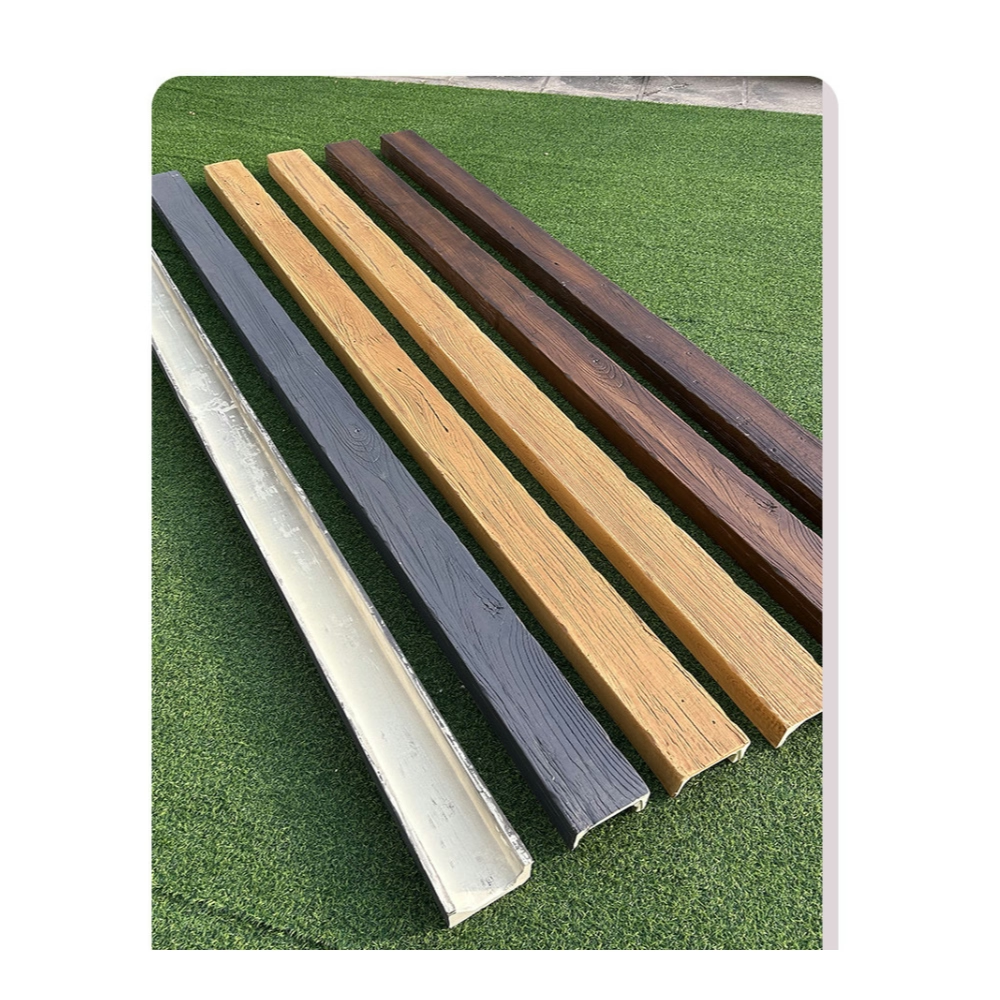
How custom profiles become a builder's competitive advantage
For a home builder, a custom profile becomes a competitive advantage when:
- The profile is recognizable in the builder's portfolio. Buyers see the profile in the model home and recognize it as the builder's signature.
- Competitors can't easily replicate the profile. The custom mold is held by the manufacturer, and exclusivity prevents competitors from using the same profile.
- The profile aligns with the builder's brand. The profile becomes part of the builder's visual identity, reinforcing the brand in marketing materials.
The competitive advantage compounds over time as the builder's portfolio grows and the profile becomes more recognizable.
Working with the manufacturer over time
For a home builder with a custom profile relationship, the ongoing work with the manufacturer includes:
Regular communication
The builder's project managers and the manufacturer's commercial team communicate regularly:
- About upcoming projects and reorder needs.
- About any quality issues or specification changes.
- About new profiles or modifications the builder is considering.
Quarterly reviews
The builder and manufacturer conduct quarterly reviews:
- Volume tracking against annual commitments.
- Quality consistency across recent production runs.
- Pricing tier adjustments based on volume.
- Opportunities for new profile development or modifications.
Profile portfolio expansion
Over time, the builder may add additional custom profiles to the portfolio:
- New profiles for new floorplans or design styles.
- Modified versions of existing profiles for specific applications.
- Coordinating elements (corbels, beam caps) in matching profiles.
Each profile becomes part of the builder's design vocabulary.
Faux timber beam manufacturer custom profiles for home builders are a category where the development process, the manufacturer's capability, and the builder's commitment all need to align. The right combination produces profiles that become long-term assets for the builder's portfolio. The wrong combination produces profiles that don't quite match the design intent or that the builder doesn't use enough to justify the investment.
Technical References
ASTM standards cited in every specification
Test Data
Lab results from internal testing program
Updated 2026
Reviewed against current product specs