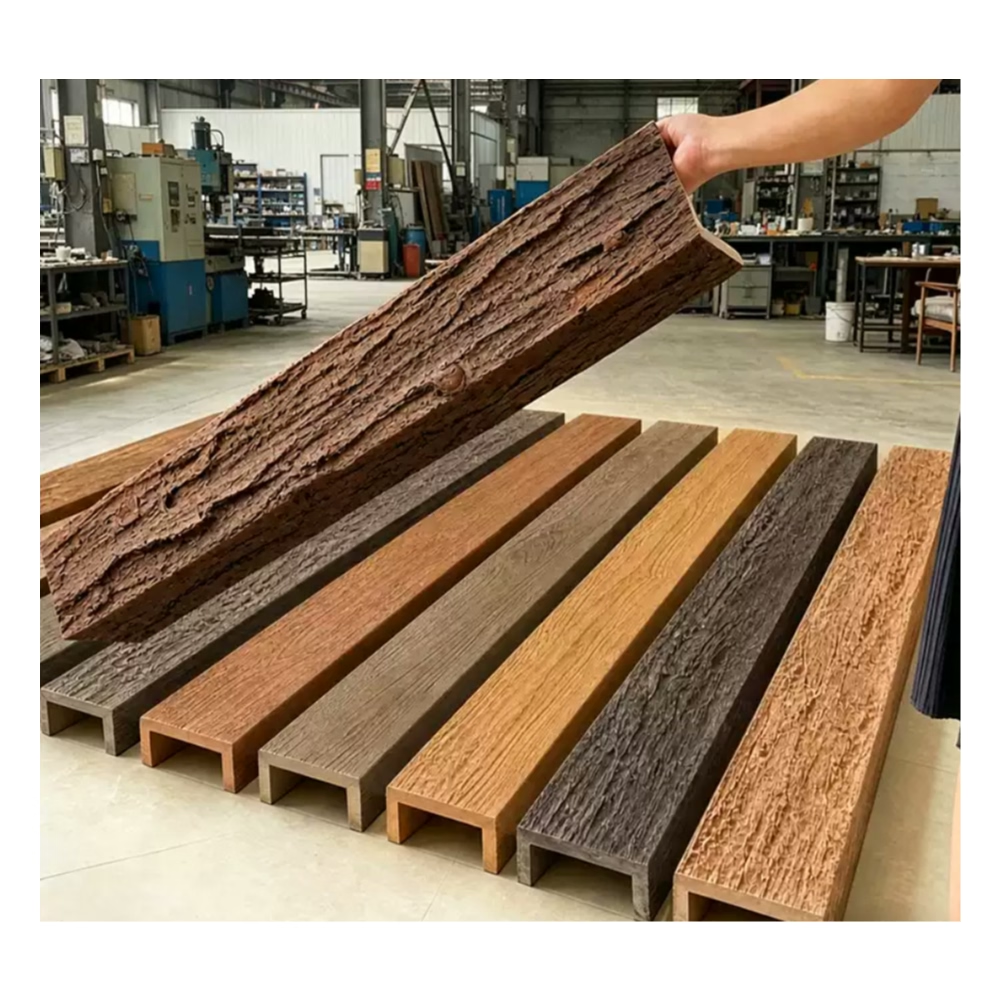
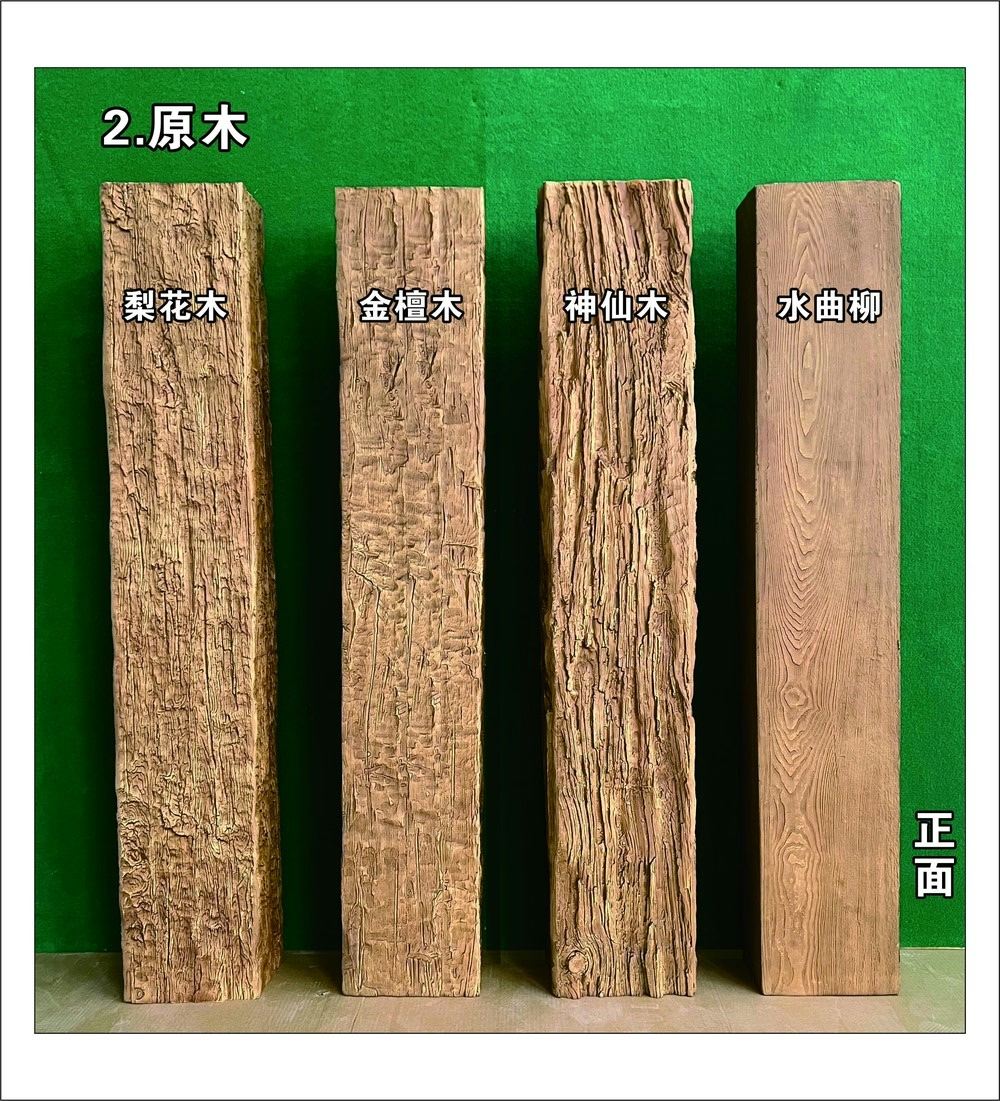
Faux Wood Ceiling Beams Supplier | Bulk Supply to Construction Firms
Construction firms—general contractors, design-build firms, large renovation companies—have specific bulk supply needs that differ from production builders or custom home builders. The construction firm is buying for multiple concurrent projects, each with its own specifications. The supplier relationship has to accommodate that variety while providing the pricing and consistency benefits of a bulk program.
This is how a faux wood ceiling beam supplier structures bulk supply for construction firms, what the order patterns look like, and how the relationship develops.
The construction firm's order pattern
A construction firm running 10 to 30 projects per year has an order pattern that includes:
Project mix
- 40 to 60 percent new construction. Single-family homes, townhomes, small multifamily.
- 30 to 40 percent renovation. Kitchen, bathroom, addition renovations.
- 10 to 20 percent commercial. Small commercial interiors.
Each project type has different beam specifications and timelines.
Specification mix
- 60 to 70 percent standard profiles. Stock or modified stock profiles that work across many projects.
- 20 to 30 percent custom profiles. Specific projects requiring distinctive profiles.
- 5 to 10 percent premium specifications. High-end projects requiring premium finishes.
The specification mix drives the supplier's mold library and customization capability.
Order size mix
- 40 to 50 percent small orders. Renovation and small residential projects.
- 30 to 40 percent medium orders. Standard new construction projects.
- 10 to 20 percent large orders. Larger projects or commercial work.
The mix of order sizes requires the supplier to handle varied order patterns at consistent pricing.
How suppliers structure bulk supply for construction firms
For construction firms running multiple projects, the supplier's bulk supply structure typically includes:
Dedicated account manager
The supplier assigns a dedicated account manager to the construction firm:
- The account manager knows the firm's project patterns.
- The account manager coordinates with the supplier's production team.
- The account manager is the firm's primary contact for orders, changes, and issues.
A dedicated account manager produces better outcomes than a rotating sales contact.
Standing specifications
The firm and the supplier document standing specifications for typical projects:
- Standard profiles (typically 3 to 5 across the firm's typical projects).
- Standard colors and finishes.
- Standard cleat hardware.
- Standard documentation packages.
Standing specs allow most orders to reference existing specifications, without developing new specs each time.
Volume tiers
The firm negotiates volume tiers based on annual beam volume:
- Tier 1: 500 to 1,500 linear feet annually.
- Tier 2: 1,500 to 4,000 linear feet annually.
- Tier 3: 4,000+ linear feet annually.
Each tier carries progressively better pricing.
Pricing structure
The supplier's pricing structure for construction firms typically includes:
- Per-piece pricing by length. Standard tier pricing, applicable to all orders.
- Volume discounts. Applied at the tier thresholds.
- Setup fees for deviations. Reduced or waived for deviations against standing specs.
- Color match fees. Applied per project, with subsequent reorders at no charge.
- Freight. Cost or allowance based on order size and destination.
- Replacement beam pricing. Same as original order, no setup fees for standing specs.
Order flexibility
The supplier accommodates the firm's order flexibility:
- Small orders at consistent per-piece pricing.
- Mid-order changes without canceling and re-placing.
- Mixed orders (beams, coordinating elements, cleats) in single transactions.
- Replacement beams within 5 to 10 business days.
How construction firms evaluate suppliers
For construction firms evaluating faux wood ceiling beam suppliers, the criteria include:
Operational capability
The supplier should have the operational capability to handle the firm's order patterns:
- Multiple concurrent orders.
- Varied specifications.
- Mid-order changes.
- Replacement requests.
- Phased delivery aligned to construction schedules.
Quality consistency
The supplier's quality should be consistent across orders:
- Texture consistency within and across orders.
- Color consistency across orders.
- Dimension tolerance within agreed limits.
Communication quality
Communication is critical for construction firms running multiple projects:
- Quick response to RFQs.
- Clear quote documentation.
- Proactive communication about production status.
- Coordination with multiple project managers.
Documentation depth
The supplier's documentation should support the firm's project mix:
- Residential documentation (density, warranty).
- Commercial documentation (fire rating, VOC).
- Project-specific documentation as needed.
Pricing transparency
The supplier's pricing should be clear and consistent:
- Per-piece pricing by length.
- Setup fees for deviations.
- Freight costs or allowances.
- Replacement beam pricing.
How the supplier-construction firm relationship develops
The relationship between a supplier and a construction firm typically develops through stages:
Transactional stage (Year 1)
- Individual orders with project-by-project negotiation.
- No standing specifications.
- Standard pricing.
- Limited customization.
The transactional stage works for firms just starting with a new supplier.
Recurring stage (Year 2)
- Multiple orders per year with the same supplier.
- Some standing specifications developing.
- Modest pricing improvements based on volume.
- Increased customization comfort.
The recurring stage develops when the supplier meets the firm's needs consistently.
Partnership stage (Year 3+)
- Regular orders against documented standing specifications.
- Tiered pricing based on annual volume.
- Priority production scheduling.
- Joint problem-solving on unusual projects.
The partnership stage produces the most value for both sides.
Common pitfalls in supplier-construction firm relationships
A few issues that come up often enough to flag:
- Treating each order as fresh. Missing the efficiency benefits of standing specs and relationship investment.
- Letting communication lapse. Infrequent communication leads to misunderstandings and missed opportunities.
- Focusing only on price. The cheapest supplier often has hidden costs—longer lead times, weaker documentation, less reliable replacement terms.
- Not providing feedback. Suppliers can't improve without feedback. Firms that don't communicate issues or opportunities miss the chance to improve the relationship.
- Letting the relationship drift. Regular communication and quarterly reviews keep the relationship active.
The compounding benefit
For construction firms with strong supplier relationships, the benefits compound over time:
- Year 1: The supplier is learning the firm's patterns.
- Year 2: The supplier is producing efficiently against documented specifications.
- Year 3+: The firm's procurement is significantly more efficient than competitors. The pricing tier reflects the volume. The supplier prioritizes the firm's orders during peak demand.
The compounding benefit is what makes the relationship worth investing in for both sides.
Faux wood ceiling beam supplier bulk supply for construction firms is a category where the operational capability, the relationship management, and the production quality all need to align. The right supplier produces beams that meet the firm's project needs at consistent quality and predictable cost. The wrong supplier produces friction at every project.
Technical References
ASTM standards cited in every specification
Test Data
Lab results from internal testing program
Updated 2026
Reviewed against current product specs