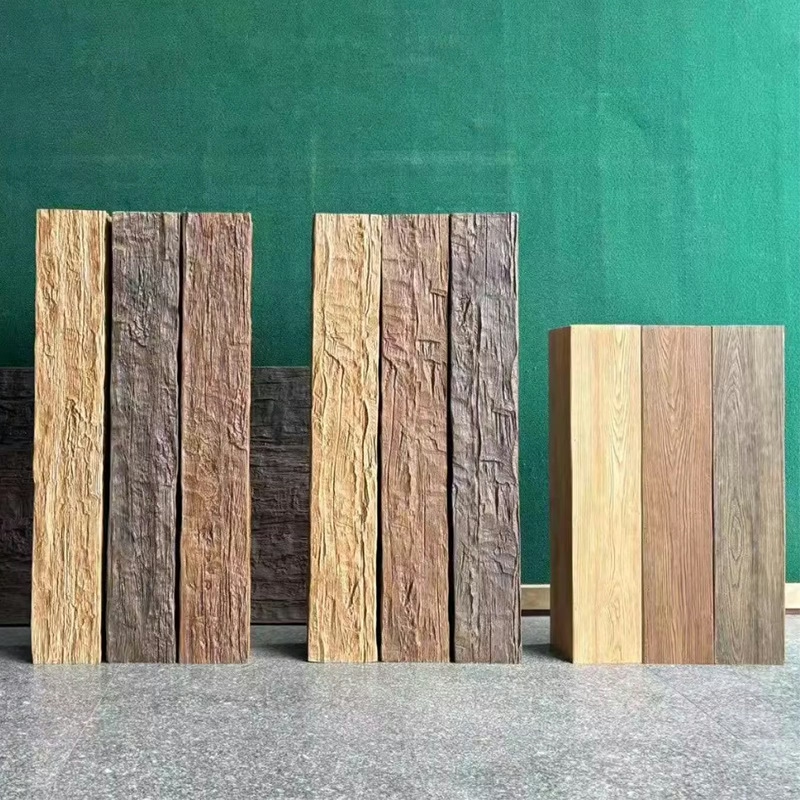
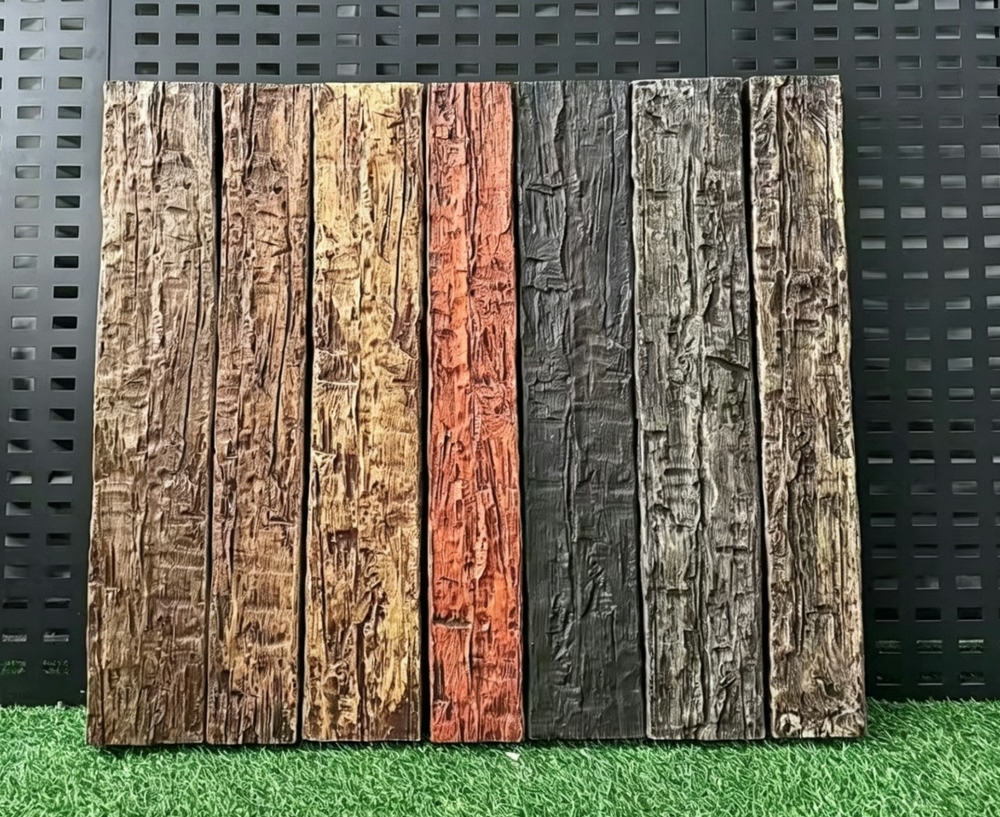
The regional building materials distributor approached me with a business challenge that's become increasingly common: national chain stores were eroding their market share with aggressive pricing on commodity products, and they needed differentiation that would justify their premium positioning. Generic faux beams sourced from overseas offered no competitive advantage—customers could buy identical products online for less. But what if they could offer exclusive products customers couldn't get elsewhere? That question launched a private label program that transformed their beam category from price-competitive commodity to proprietary branded line delivering 45% gross margins instead of 22% on generic products.
Private label manufacturing—also called OEM (Original Equipment Manufacturer) or white-label production—allows distributors, retailers, and other channel partners to develop branded products without operating manufacturing facilities. Understanding how these programs work, what customization options exist, and the business implications of private branding helps companies evaluate whether this strategy fits their market positioning and growth objectives.
Understanding Private Label Manufacturing Models
Pure white-label programs represent the simplest model—manufacturers produce standard products that distributors brand with their own labels and packaging. The products themselves remain identical to what the manufacturer sells under other labels or their own brand. The only customization involves labeling, hangtags, and packaging graphics that establish brand identity without affecting product specifications.
Semi-custom programs add specification variations to white-label branding. Distributors might select from various texture options, color families, or dimensional offerings that differentiate their branded line from standard products others sell. These modifications don't require entirely new tooling or formulations but allow meaningful product distinction. A distributor might offer three proprietary colors not available elsewhere combined with their unique branding creating products genuinely different from competitors.
Fully custom OEM involves developing products specifically for one client's brand, potentially including unique textures, colors, dimensions, or material formulations not offered to other customers. This level of customization delivers maximum differentiation but requires substantial investment in tooling and development. The manufacturer may require exclusivity commitments, minimum order guarantees, or upfront development payments justifying the specialized investment.
Co-development partnerships represent the most integrated relationship where distributor and manufacturer jointly develop new products, sharing development costs and risks in exchange for shared benefits from successful launches. These strategic partnerships typically involve long-term contracts, volume commitments, and sometimes equity investments cementing relationships beyond simple supplier-customer transactions.
Minimum Order Quantities and Economic Thresholds
Entry-level private label programs typically require 5,000-10,000 linear feet minimum orders for basic white-labeling of existing products. This volume justifies custom packaging, label printing, and program setup costs without major manufacturing changes. Distributors moving this volume quarterly can maintain fresh inventory while amortizing setup costs across sufficient volume to remain economically viable.
Semi-custom programs with product modifications generally require 10,000-25,000 linear feet minimums reflecting the additional complexity of managing client-specific specifications through production. Color customization, dimensional variations, or texture selection add changeover time and inventory management overhead that smaller volumes cannot support economically.
Full custom development programs often demand 50,000-100,000 linear feet annual commitments over multi-year contracts. The tooling investment for unique textures—$8,000-15,000—needs amortization across substantial volume. Custom formulation development for specialized performance characteristics might require even greater commitments justifying R&D investment and production complexity.
The volume economics vary by manufacturer size and specialization. Large commodity producers require higher minimums since flexibility costs them production efficiency. Smaller specialized manufacturers accommodate smaller programs but typically at higher per-unit costs. The optimal manufacturer match depends on volume capability, growth trajectory, and quality requirements of the private label program.
Order frequency affects working capital and inventory management. Annual minimums allow large single deliveries reducing shipping costs but creating inventory holding costs. Quarterly deliveries balance cash flow and storage requirements but involve more frequent minimum runs that may carry higher per-unit costs. The optimal frequency depends on the distributor's sales velocity, warehousing capacity, and working capital position.
Customization Options and Brand Differentiation
Packaging design creates immediate brand recognition before customers see products. Custom corrugated boxes, printed poly sleeves, or display-ready packaging positions products as premium compared to generic bulk packaging. The packaging investment typically ranges from $1.50-4.00 per beam depending on materials and printing complexity—meaningful cost but potentially justified by premium pricing branded products command.
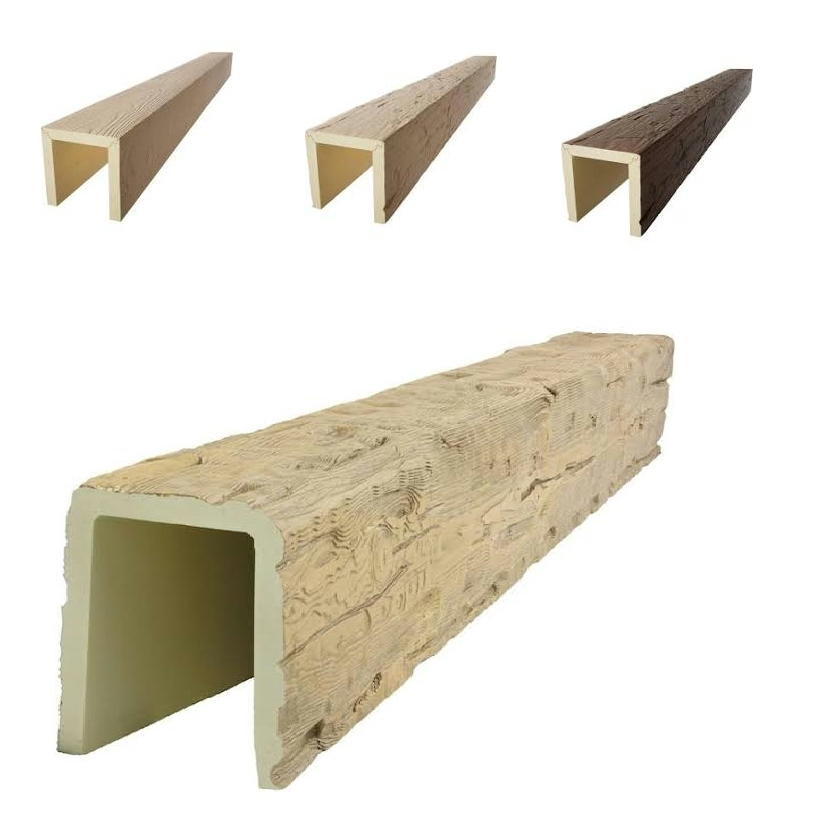
Color customization allows proprietary palettes that differentiate from competitors. Rather than offering generic "rustic oak" or "weathered gray" available from multiple sources, develop signature colors with brand-specific names: "Heritage Walnut," "Coastal Drift," or similar branded identities. The color development cost—typically $500-2,000 per color including sampling—amortizes across volume while creating genuine product distinction.
Dimensional variations provide functional differentiation. If competitors focus on standard 6x6 and 8x8 residential sizes, offering 7x9 or 8x12 dimensions targets markets those competitors serve poorly. The tooling investment for custom dimensions proves substantial but creates defensible product positions once established in market.
Texture exclusivity represents the strongest differentiation—custom textures competitors cannot replicate without similar tooling investment. This differentiation comes at highest development cost ($8,000-15,000) but delivers sustainable advantage. Customers who prefer your unique texture have no substitute options from competitors, creating brand loyalty that price-competitive commodities never achieve.
Performance enhancements through material formulation add functional distinction—perhaps enhanced fire ratings, UV resistance, or impact strength targeting specific applications. These technical differentiators appeal to professional channels where specifications drive purchasing more than retail aesthetics. The development requires manufacturer technical capability and customer volume justifying formulation development investment.
Business Model Economics and Profitability Analysis
The cost structure for private label programs typically includes manufacturer base cost, packaging premium, program setup fees, and higher minimum order requirements. Expect 15-25% price premium over generic products reflecting these additional costs. A generic beam costing $85 might cost $100-110 in private label configuration before any specification customization.
Retail pricing for branded private label products typically targets 40-50% gross margins compared to 20-30% on generic products. The brand equity, exclusive availability, and perceived quality justify premium consumer pricing that generic commodities cannot command. A $100 cost beam might retail at $175-200 branded versus $130-150 for generic equivalents.
The volume threshold where private label economics make sense depends on margin improvement and program costs. If private label adds $15 cost but enables $40 higher selling price, each beam generates $25 additional profit. Amortizing $10,000 annual program costs requires selling 400 beams—likely achievable for established distributors. Below these volumes, generic products may deliver better returns.
Inventory risk increases with private label since branded products have single-channel outlets—if your sales disappoint, the inventory has no alternative distribution path unlike generic products with multi-channel flexibility. Conservative programs start with modest volumes validating demand before scaling. Inventory financing costs and obsolescence risk must factor into economic analysis.
The competitive moat private label creates justifies investment beyond direct profitability calculations. Once customers associate your brand with quality and service, they become less price-sensitive and harder for competitors to capture. This customer loyalty represents strategic value beyond unit economics, particularly in markets where commodity pricing erodes generic product profitability.
Contract Structures and Relationship Management
Exclusivity provisions protect both parties' interests—manufacturers avoid cannibalizing their own branded sales while distributors avoid discovering their products offered elsewhere under different labels. Typical exclusivity grants territorial or channel protection: the distributor gets exclusive rights in their region or customer segment while manufacturer maintains rights in other areas.
Minimum purchase commitments hold distributors accountable for volume projections justifying manufacturer investment in setup and inventory. These commitments typically ramp over time—perhaps 5,000 feet first year, 10,000 second year—allowing market development without impossible early obligations. Failure to meet commitments may trigger penalties or termination rights protecting manufacturer downside.
Pricing structures should account for volume tiers incentivizing growth. Initial pricing might reflect minimum-volume costs, with scheduled discounts as volumes increase rewarding success. This structure aligns manufacturer and distributor interests—both benefit from growth rather than manufacturer capturing all incremental profit as distributor builds the market.
Intellectual property ownership determines who controls custom tooling, colors, and textures developed during the relationship. Distributors funding custom development should own that IP outright or have rights surviving contract termination. Manufacturers funding development typically retain ownership, though distributors might negotiate buyout options allowing them to continue products if they change suppliers.
Quality control processes and dispute resolution mechanisms prevent conflicts that damage relationships. Clear specifications, sampling protocols, and defect resolution procedures reduce ambiguity causing problems. Annual business reviews allow proactive relationship management addressing issues before they escalate to crises requiring legal intervention.
Market Strategy and Brand Development
Target customer definition shapes product specifications and marketing positioning. Are you serving high-end residential designers who value aesthetics and exclusivity? Commercial contractors prioritizing specification compliance and reliability? Big-box retail consumers seeking value? Each segment demands different product attributes, pricing strategies, and marketing messages that private label programs can optimize in ways generic products cannot.
Marketing support programs from manufacturers help distributors succeed. Co-op advertising allowances, display materials, installation training, and technical literature reduce distributor costs while professional materials enhance brand perception. Negotiate these support elements as contract provisions rather than discretionary benefits manufacturers might discontinue.
Digital presence builds brand awareness and drives demand. Dedicated product websites, social media presence, and online purchasing options position private label brands as legitimate entities rather than generic commodity offerings. The digital investment—perhaps $10,000-25,000 for professional development—pays dividends through awareness building impossible with packaging alone.
Installer and designer education programs create product champions who specify your branded products over alternatives. Training events, continuing education credits, and technical support hotlines build relationships translating to loyal specification. Professional channels often prove more profitable than retail where price comparison dominates purchasing.
Success metrics beyond immediate sales measure brand-building progress: market awareness, preference scores, price premium maintenance, customer retention, and competitive win rates. These indicators reveal whether the private label strategy creates sustainable competitive advantages or simply adds cost without strategic benefit.
Risk Mitigation and Exit Strategies
Second-source options reduce dependence on single manufacturers—though exclusivity provisions may prohibit this during contract terms. At contract renewal, consider splitting volume between manufacturers or negotiating tooling ownership allowing supplier changes. This flexibility becomes critical if manufacturer quality declines, pricing becomes uncompetitive, or relationships sour.
Brand valuation matters if you eventually sell your business. A well-established private label line with customer loyalty adds enterprise value beyond generic product distribution rights. Document brand investments, customer data, and competitive positioning evidence supporting valuation claims in acquisition negotiations.
Contract termination provisions should allow transition periods—typically 90-180 days—for inventory disposition and customer migration. Abrupt termination leaving customers without product access damages brand reputation you've built. Negotiate provisions ensuring orderly transitions protecting customer relationships through supplier changes.
The decision to develop private label programs depends on business strategy, competitive environment, and growth ambitions. Commodity businesses satisfied with volume-driven low margins may find private label overhead unjustifiable. Companies differentiating through service, expertise, and customer relationships often find private label strengthens positioning while improving margins that fund continued differentiation.

OEM private label manufacturing offers building product distributors strategic options for differentiation and margin improvement in increasingly commodity markets. Understanding program structures, economic thresholds, and relationship management requirements allows informed decisions about whether private branding fits your competitive strategy. The investment proves substantial but potentially transformative—converting generic commodity offerings into proprietary branded lines that customers value beyond price, strengthening competitive position while improving profitability through sustainable differentiation.
Technical References
ASTM standards cited in every specification
Test Data
Lab results from internal testing program
Updated 2026
Reviewed against current product specs