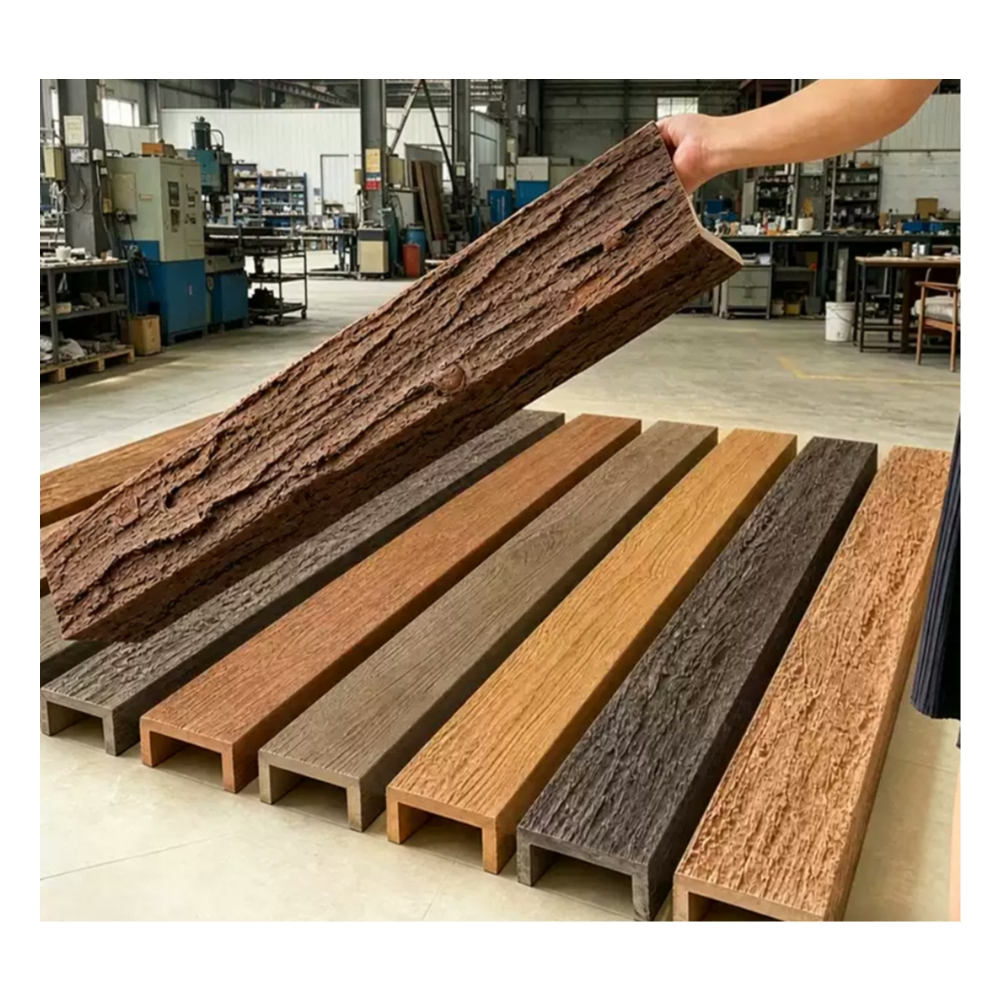
Polyurethane Faux Beams for Interior Renovation | Factory Direct
Renovation contractors are the segment most often underserved by traditional faux beam supply chains. Distributors optimize for new-build volume; renovation work has unpredictable quantities, short lead times, and mid-project changes that the distributor model doesn't handle well. Going factory-direct is one way renovation contractors solve this, and the tradeoffs are real but manageable.
This is what factory-direct supply looks like for renovation work, what changes from the distributor model, and what renovation contractors should know before committing.
Why renovation work is hard for traditional supply chains
Traditional faux beam distributors operate on a model that works well for new construction:
- Stock inventory held in regional warehouses.
- Standard pricing with tier discounts.
- Predictable lead times based on stocked SKUs.
- Order minimums that reflect the distributor's cost structure.
For new construction with consistent floorplans and predictable beam quantities, this model works. The distributor absorbs the inventory risk, the builder gets fast delivery on stock items, and the relationship is straightforward.
For renovation work, this model breaks down:
- Unpredictable quantities. A renovation might need 4 beams for one project and 28 for another. The distributor's pricing tiers may not align with this pattern.
- Mid-project changes. The renovation might discover a problem mid-project that changes the beam spec. The distributor's order process doesn't handle mid-order changes gracefully.
- Short lead times. Renovation timelines are tight. The distributor's lead time might be longer than the renovation's window.
- Field-measurement dependency. Renovation beams often need to be cut to actual field dimensions, not plan dimensions. The distributor's standard SKUs may not match.
Renovation contractors who try to use a distributor's standard supply chain for faux beams often find that the relationship is frustrating—the pricing doesn't fit, the lead times are too long, and the order process doesn't handle changes.
What factory-direct changes for renovation work
Going factory-direct means the renovation contractor is transacting with the manufacturing entity (or with a sales agent who represents it), without a distributor in the middle. The changes:
Pricing transparency
The factory's pricing structure is visible. Per-piece pricing by length, color match fees, mold setup fees, packaging upgrades, freight—all show up as line items, not bundled into a wholesale number. The renovation contractor can see exactly what they're paying for.
For renovation work, this transparency matters because the contractor is often justifying the cost to the homeowner. A clear breakdown of "beam $X, color match $Y, freight $Z" is easier to explain than a bundled wholesale price.
Order flexibility
Factory-direct orders can accommodate the irregular patterns of renovation work:
- Small orders. A 4-beam order is priced reasonably per-piece, without the distributor's minimum-order surcharge.
- Mid-order changes. A color change or length adjustment can be handled without canceling and re-placing the entire order.
- Mixed orders. A renovation might combine beams, coordinating elements, and hardware in one order. The factory handles this without the distributor's SKU restrictions.
For renovation contractors, this flexibility is the single biggest advantage of factory-direct supply.
Communication speed
Factory-direct communication is faster. The renovation contractor is talking to the factory's order desk, not to a distributor's sales rep who has to relay messages. Changes to an order, questions about a specification, or requests for documentation can be handled in hours rather than days.
For renovation work with tight timelines, the communication speed is often the difference between making the schedule and missing it.
Lead time variability
Factory-direct lead times can be shorter or longer than distributor lead times, depending on the situation:
- Stock items: Distributor is usually faster because they have inventory on hand.
- Custom items: Factory-direct is usually faster because there's no distributor step in the middle.
- Specialty items: Factory-direct is much faster because the distributor may not stock the item at all.
For renovation work, which often involves custom or specialty items, factory-direct is usually the faster path overall.
The tradeoffs of factory-direct for renovation
Going factory-direct isn't free. The renovation contractor takes on responsibilities that the distributor would otherwise handle:
Logistics management
The factory produces the beams and loads them at the factory gate. Beyond that, the renovation contractor is arranging freight, scheduling delivery, and managing on-site handling. For a distributor-supplied order, the distributor often handles the freight and delivery scheduling.
For a renovation contractor running 20 to 40 projects per year, this logistics work is significant. The contractor's project manager or purchasing manager needs to absorb it.
Quality control
The factory-direct buyer is the one negotiating the acceptable tolerance, inspecting the delivered beams, and handling replacements for defective product. With a distributor, the distributor's QC team handles this.
For renovation contractors who don't have dedicated QC staff, this is a real burden. The contractor's project manager ends up doing QC work that would otherwise be handled by the distributor.
Payment terms
Factory-direct payment terms are often stricter than distributor terms. Many factories require 30 to 50 percent deposit at order placement, with the balance due before shipment. Distributors typically offer net-30 or net-60 terms.
For renovation contractors with tight cash flow, the stricter payment terms can be a challenge. The contractor has to plan for the deposit at order placement, not at delivery.
Relationship investment
A factory-direct relationship requires more investment from the contractor. The contractor is building a relationship with the factory's commercial team, learning the factory's processes, and developing the kind of trust that makes the relationship work.
For a renovation contractor running 20 to 40 projects per year, the relationship investment is worth it. For a contractor running 5 to 10 projects, the investment may not pay back.
When factory-direct is the right choice for renovation
For renovation contractors, factory-direct supply is the right choice when:
- Annual beam volume justifies the relationship investment. 500+ linear feet annually, ideally 1,000+.
- The contractor has staff to manage logistics and QC. A dedicated project manager or purchasing manager who can absorb the supply chain work.
- The renovation work involves custom or specialty beams. Stock profiles from a distributor may not match the renovation's needs.
- The contractor values pricing transparency. The clear breakdown of costs is worth the logistics burden.
- The contractor is willing to invest in the relationship. Factory-direct works best as a long-term procurement partnership, not a transactional purchase.
For renovation contractors who don't fit these criteria, a distributor relationship is probably the better choice. The distributor's markup is the price of not having to manage the supply chain.
How to start a factory-direct renovation supply relationship
For renovation contractors starting a factory-direct relationship:
- Identify the factory. Look for factories with experience in renovation work, not just new construction. The factory's processes need to accommodate the renovation pattern.
- Establish the order pattern. Share the typical order size, timing, and specification pattern. The factory needs this to plan production.
- Negotiate payment terms. Try to negotiate payment terms that match the contractor's cash flow. Most factories will work with contractors on terms if the annual volume justifies it.
- Set up communication protocols. Primary contact, escalation path, technical specialist access.
- Establish QC procedures. Inspection criteria, replacement procedures, documentation requirements.
With these elements in place, the factory-direct renovation relationship becomes routine. The contractor's per-project procurement becomes faster and more predictable than it was with a distributor.
What factory-direct doesn't fix
A few things that factory-direct doesn't change:
- The fundamental unpredictability of renovation work. Mid-project changes still happen. Field measurement still matters. The contractor still has to adapt.
- The need for field-measurement-based ordering. The factory needs accurate field measurements, not plan dimensions. The contractor's project manager still has to measure at framing completion.
- The requirement for skilled installers. Factory-direct doesn't change the install process. The beams still need to be mounted correctly.
Factory-direct changes the supply chain, not the work itself. The contractor's renovation process still requires field measurements, skilled installers, and mid-project flexibility.
Polyurethane faux beams for interior renovation, factory-direct, are a category where the supply chain choice matters but doesn't change the fundamental work. The right factory relationship makes the supply chain more responsive. The wrong one makes every project harder than it needs to be.
Technical References
ASTM standards cited in every specification
Test Data
Lab results from internal testing program
Updated 2026
Reviewed against current product specs