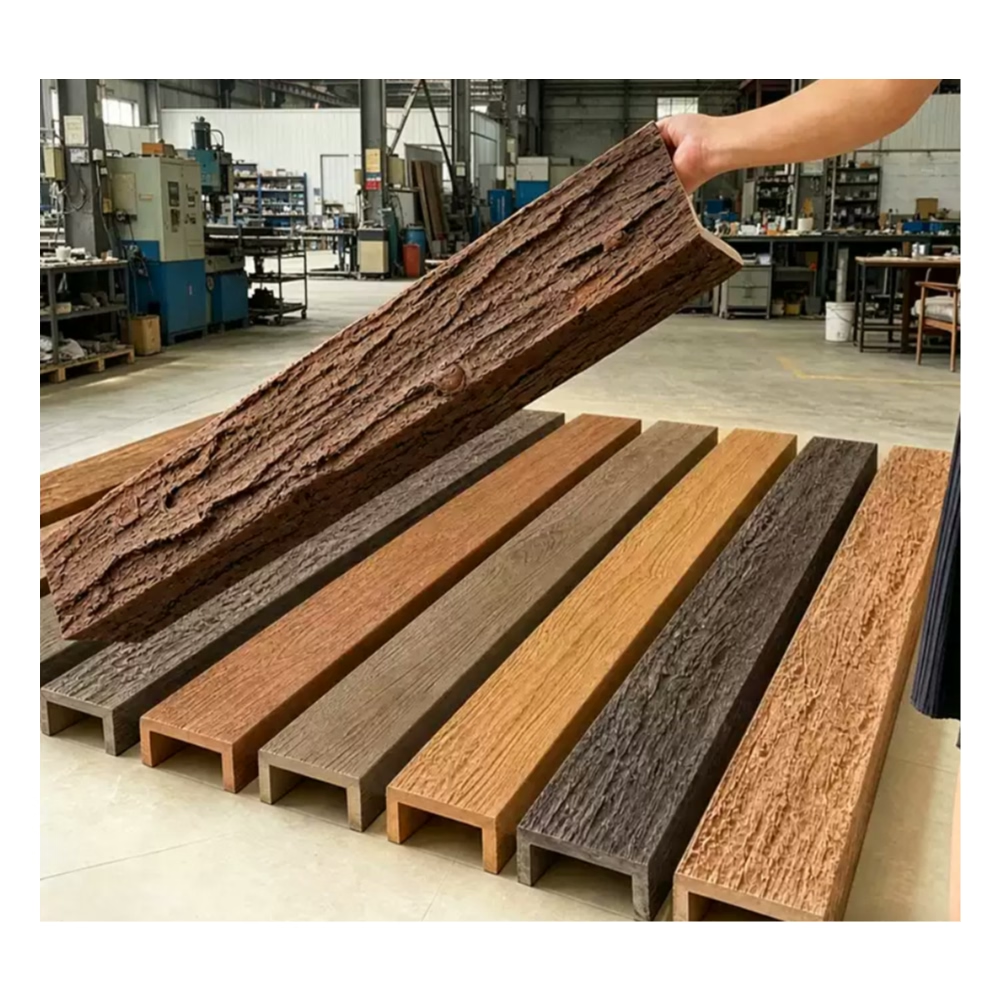
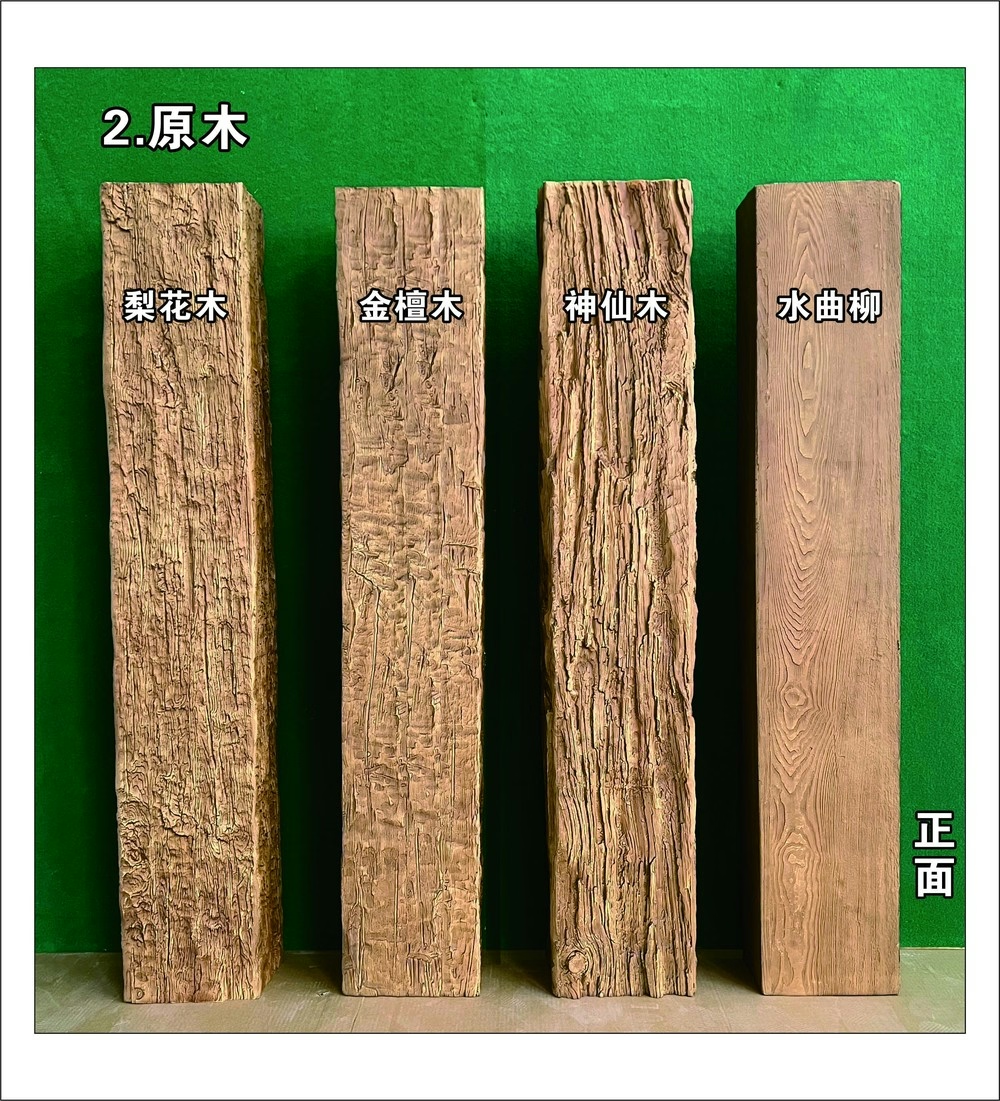
Polyurethane Faux Timber Beams | Bulk for Restaurant & Retail Interiors
Restaurant and retail interior projects have specific beam supply needs that differ from residential work. The projects often involve tight construction timelines (4 to 8 weeks), brand-specific design standards, code compliance for public occupancy, and chain-wide consistency for multi-location brands. Polyurethane faux timber beams work well for these applications when the supplier relationship is structured to support the operational realities.
This is what restaurant and retail interior projects need from polyurethane faux timber beams, what the bulk supply pattern looks like, and how chain buildouts are handled.
What restaurant and retail projects require
Restaurant and retail interior projects have specific characteristics:
Tight timelines
The construction timeline for restaurant and retail projects is typically compressed:
- Restaurant buildout: 4 to 8 weeks total construction.
- Retail store buildout: 4 to 8 weeks.
- Fast-casual restaurant: 3 to 6 weeks.
- Quick-service restaurant refresh: 2 to 4 weeks.
Beam lead times of 15 to 25 business days are too long for most projects. Standing specifications with 5 to 10 business day lead times are needed.
Brand standards
Restaurant and retail brands typically have design standards:
- Standard color and finish palettes.
- Standard beam profiles and cross-sections.
- Standard layouts for typical floorplans.
- Standard documentation for code compliance.
Beam suppliers serving restaurant and retail brands need to maintain these standards consistently across locations.
Code compliance for public occupancy
Restaurants and retail spaces have specific code requirements:
- Fire rating (ASTM E84 Class A or B for most applications).
- VOC emissions (GREENGUARD for some restaurant brands).
- ADA compliance for beam heights.
- Sometimes health department requirements (for restaurant bars or food service areas).
The documentation has to support the local jurisdiction's requirements.
Chain-wide consistency
Restaurant and retail chains operate multiple locations:
- Each location needs beams consistent with the brand standard.
- Variations between locations break the brand promise.
- The supplier maintains the standard across many locations.
For chain supply, consistency across all properties is what makes the supplier valuable.
Phased buildouts
Chains often have phased buildout programs:
- New locations opening throughout the year.
- Existing locations refreshing or renovating.
- Multiple concurrent projects across different markets.
The supplier needs to support phased buildouts with consistent quality.
How beam specifications work for restaurant and retail
For restaurant and retail projects, beam specifications typically include:
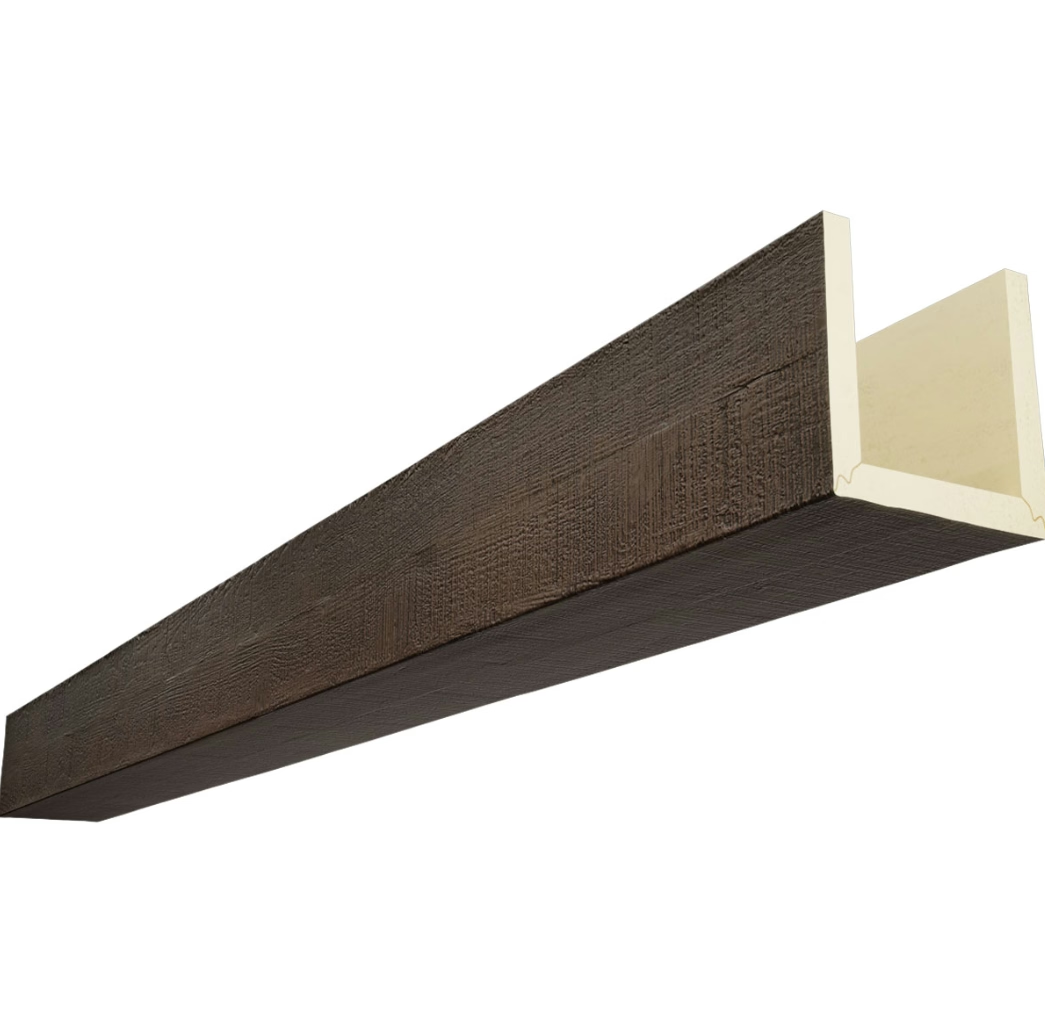
Profile and cross-section
The brand standard specifies the profile and cross-section:
- Common profiles for the brand's aesthetic (modern, rustic, industrial, traditional).
- Cross-section dimensions appropriate for the ceiling height.
- Standard profiles in the supplier's mold library or brand-specific custom profiles.
For brand-specific profiles, the supplier maintains the mold in active status.
Color and finish
The brand standard specifies the color and finish:
- Standard color formulas maintained at the factory.
- Sheen specification (typically satin or matte for restaurant/retail).
- Optional weathering effects for specific brand aesthetics.
Color consistency across locations is critical.
Layout
Each location has a specific layout based on the floorplan:
- Standard beam layout per floorplan type.
- Variations for site-specific conditions.
- Coordination with HVAC, lighting, and other ceiling elements.
The supplier produces per-location beam layouts based on the brand standard.
Documentation
Each location's documentation includes:
- Fire rating certificate.
- VOC emissions certification.
- Cleat specifications.
- Per-location delivery documentation.
The documentation supports code inspection and brand compliance.
Bulk supply patterns for restaurant and retail
For restaurant and retail chains, bulk supply typically follows:
Brand-standard maintenance
The supplier maintains brand standards in active production status:
- Master reference samples for each brand's colors.
- Mold status for each brand's profiles.
- Documentation packages for each brand.
The brand-standard maintenance is the foundation of the relationship.
Master service agreement
The chain and supplier establish a master service agreement:
- Brand standard specifications.
- Pricing for the term of the agreement.
- Quality standards.
- Delivery terms.
- Replacement terms.
- Documentation standards.
The master agreement covers multiple locations and multiple years.
Per-location purchase orders
Each location generates purchase orders:
- Specific quantities and lengths based on the floorplan.
- Delivery date and location.
- Per-location documentation.
- Any deviations from the brand standard.
The purchase orders are processed under the master agreement's terms.
Standing inventory for fast buildouts
For chains with frequent buildouts, the supplier maintains standing inventory:
- Common beam lengths in the brand standard.
- Common profile-color combinations.
- Quick-ship capability for fast buildouts.
Standing inventory reduces lead times from 15+ business days to 5 to 10 business days.
Quality consistency across locations
The supplier's quality system ensures consistency:
- Master reference samples held for each brand.
- Color drift monitoring across production batches.
- Texture consistency across locations.
- Cleat specifications consistent across locations.
Quality consistency is what maintains the brand standard.
Pricing for restaurant and retail bulk supply
Pricing for restaurant and retail bulk supply typically includes:
Per-piece pricing by length
Standard tier pricing by length, applicable to all locations.
Chain volume pricing
For chains with multiple locations annually:
- Volume discounts at chain-wide volume thresholds.
- Tier discounts applied across the chain's total annual volume.
- Multi-year pricing stability for predictable budgeting.
Brand standard pricing
Brand-standard specifications have negotiated pricing:
- Per-piece pricing for each profile-color combination.
- Setup fees waived for standing specs.
- Replacement beam pricing consistent with original orders.
Setup fees for deviations
Deviations from the brand standard (location-specific customizations) carry setup fees:
- Color match fees for non-standard colors.
- Profile modification fees for non-standard profiles.
- Layout adjustment fees if significant.
What restaurant and retail projects need from beam suppliers
For restaurant and retail brands, the beam supplier needs to provide:
Brand standard maintenance capability
The supplier maintains brand standards consistently over years:
- Master reference samples refreshed periodically.
- Mold maintenance to prevent degradation.
- Documentation updated as requirements evolve.
Fast lead times
The supplier supports tight construction timelines:
- 5 to 10 business days for standing spec reorders.
- 10 to 20 business days for deviations.
- Expedited production for emergency needs.
Multi-location coordination
For chains with concurrent buildouts:
- Multiple project coordination.
- Consistent quality across locations.
- Coordinated delivery schedules.
- Standardized documentation per location.
Quality consistency
The supplier's quality is consistent:
- Color consistency within and across locations.
- Texture consistency within and across locations.
- Dimension tolerance within agreed limits.
Communication and project management
For chains with complex project management:
- Dedicated account manager.
- Proactive communication about production and delivery.
- Issue resolution within hours.
Common pitfalls in restaurant and retail beam programs
A few issues that come up often enough to flag:
- Brand standard drift. Color or texture drift over time produces visible inconsistency between locations.
- Slow lead times. Standard 15+ business day lead times are too long for restaurant/retail timelines.
- Inconsistent quality across locations. Different production runs produce slightly different results.
- Insufficient documentation per location. Gaps in code compliance documentation delay inspections.
- Inflexibility for site-specific deviations. Strict spec adherence that doesn't accommodate reasonable location-specific variations.
How restaurant and retail brands evaluate beam suppliers
For restaurant and retail brands evaluating beam suppliers:
- Brand standard maintenance capability. The supplier maintains the brand standard consistently.
- Fast lead times. The supplier supports tight construction timelines.
- Multi-location coordination. The supplier handles concurrent locations.
- Quality consistency. The supplier produces consistent quality across all locations.
- Communication. The supplier provides dedicated account management.
- References. The supplier has done comparable restaurant/retail projects.
Polyurethane faux timber beams bulk for restaurant and retail interiors is a category where the brand standard maintenance, the fast lead times, and the multi-location coordination all need to align. The right supplier produces beams that maintain the brand across all locations. The wrong one produces inconsistency that breaks the brand promise.
Technical References
ASTM standards cited in every specification
Test Data
Lab results from internal testing program
Updated 2026
Reviewed against current product specs