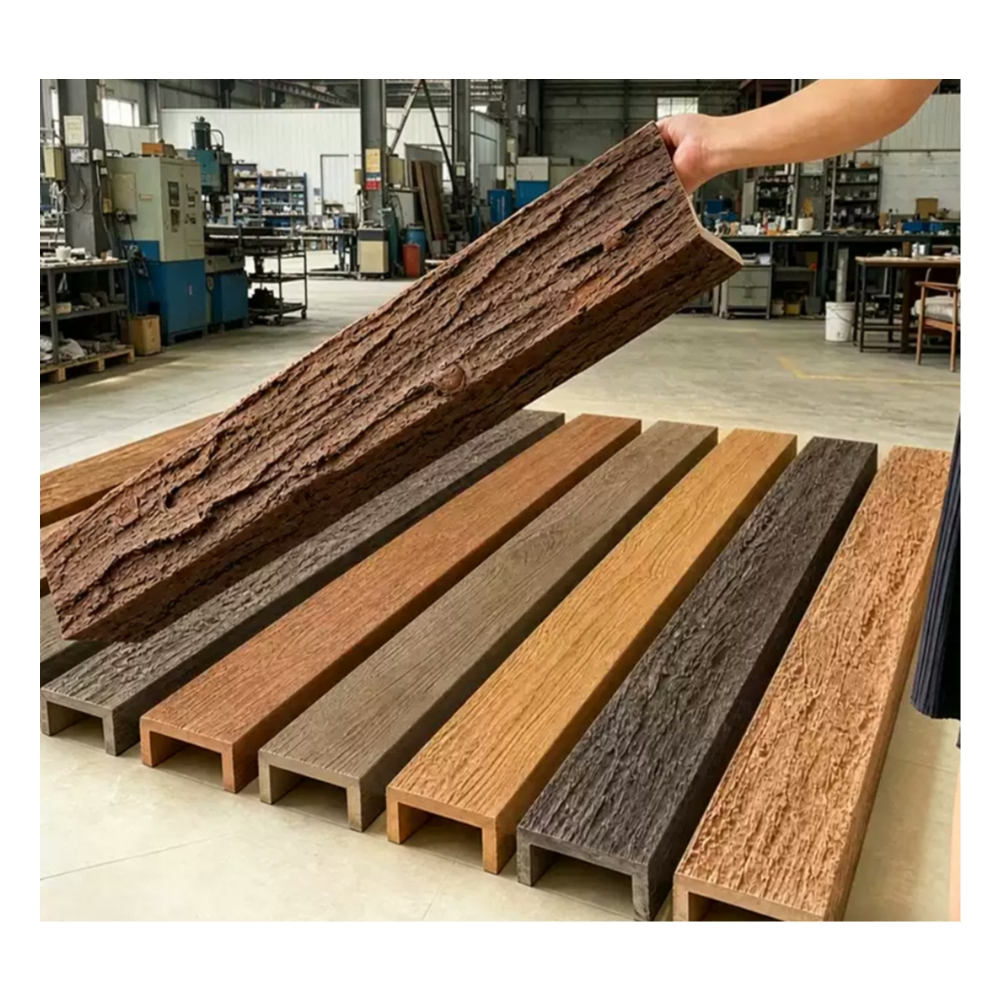
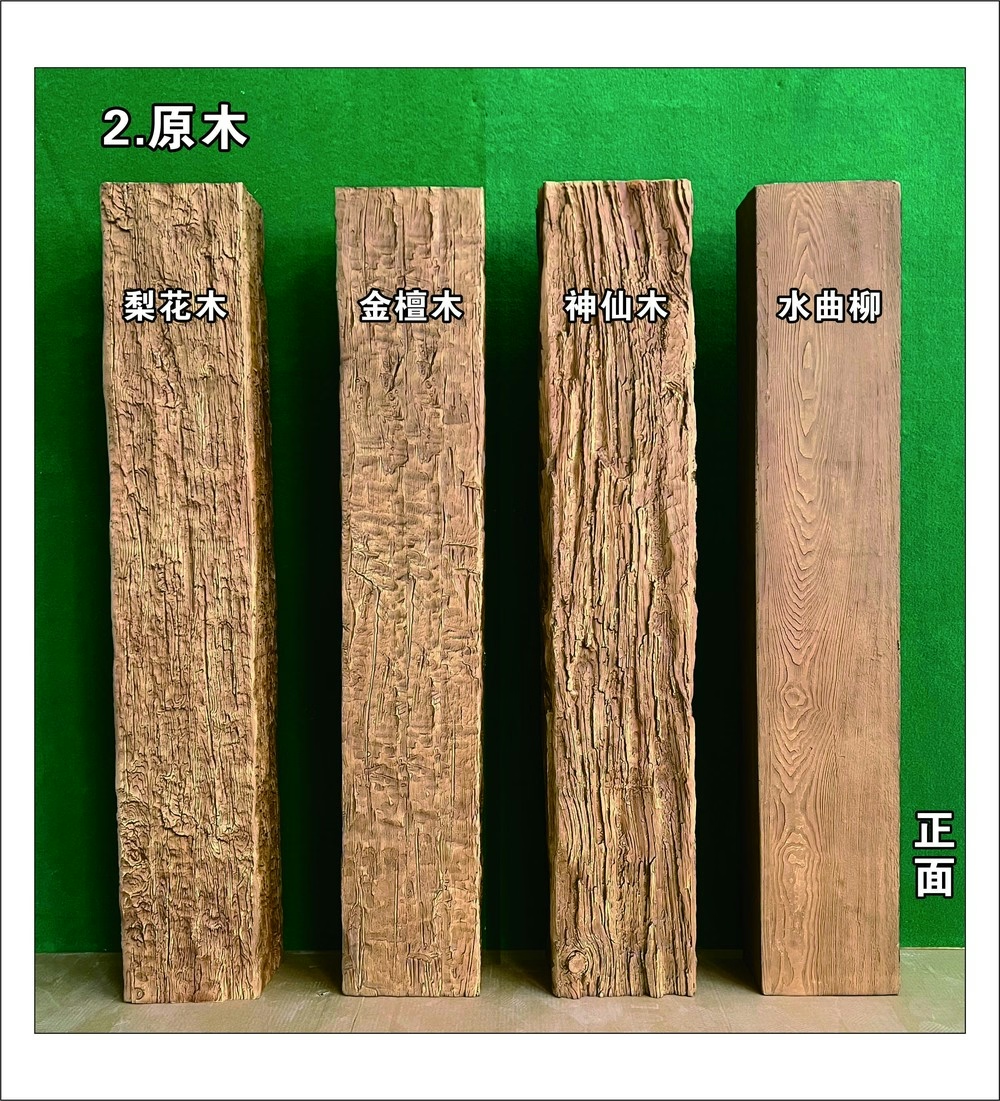
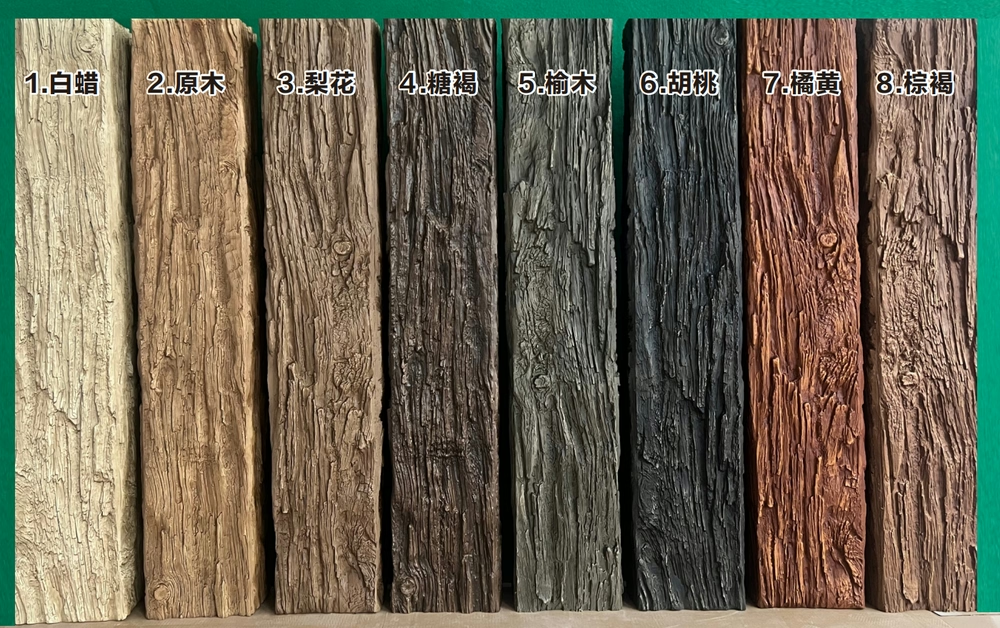
Pre-made PU Faux Ceiling Beams | Bulk for New Home Construction
Most discussion of faux beams focuses on custom work—custom profiles, custom lengths, custom colors. But for production home builders running 30+ homes per year with consistent floorplans, pre-made stock beams often make more sense than custom. The economics favor pre-made when the floorplan repetition is high enough and the design customization is low enough.
This is when pre-made beams work for new home construction, what the economics look like, and how builders structure stock programs.
When pre-made beams are the right choice
Pre-made stock beams are the right choice when:
- The floorplan repetition is high. A builder doing 50+ homes per year across 3 to 5 floorplans has enough repetition that stock beam profiles and lengths work across most homes.
- The design vocabulary is consistent. The builder's brand includes a defined beam aesthetic—Spanish Colonial, modern farmhouse, craftsman—and the stock beams match that aesthetic.
- The customization requirements are minimal. Most homes in the builder's portfolio use the same beam specification, with minor variations per floorplan or per buyer option.
- The lead time matters. Pre-made beams ship faster than custom beams—often 5 to 10 business days vs 15 to 25 for custom.
For production home builders, these conditions are common. The builder's portfolio has enough repetition that stock beams cover most projects.
When pre-made beams are the wrong choice
Pre-made beams are the wrong choice when:
- The floorplan varies significantly. A custom home builder doing 8 to 15 homes per year, each with a different floorplan, doesn't have the repetition for stock beams to work.
- The design vocabulary is diverse. A builder offering multiple architectural styles—Tudor, modern, farmhouse, Mediterranean—across the portfolio can't use stock beams across all styles.
- The customization is significant. Projects with custom profiles, custom colors, or project-specific finishes need custom beams.
- The builder is building a distinctive portfolio. Builders who compete on design distinctiveness can't rely on stock beams that competitors can also buy.
For most custom home builders and design-build firms, pre-made beams are a complement to custom beams, not a replacement.

The economics of pre-made vs custom
For a production home builder doing 50+ homes per year with consistent floorplans, the economics of pre-made beams:
Pre-made beam pricing
Pre-made stock beams typically run $10 to $18 per linear foot for the beam material, depending on the profile, texture, and finish. Add cleat hardware ($1 to $3 per linear foot) and install labor ($6 to $12 per linear foot), and the installed cost is $17 to $33 per linear foot.
Custom beam pricing
Custom beams (custom length, custom color, or custom profile) typically run $14 to $30 per linear foot for the beam material, depending on the customization. Add cleat hardware and install labor, and the installed cost is $21 to $45 per linear foot.
The savings
Pre-made beams save $4 to $12 per linear foot compared to custom beams. For a 96-home development at 30 linear feet of beam per home, the savings are $11,520 to $34,560 across the development.
The savings come from:
- Lower per-piece beam pricing (no custom fees).
- Faster production (no setup time for custom work).
- Less coordination overhead (no spec development per project).
The tradeoffs
Pre-made beams require the builder to accept:
- Standard profile (no project-specific profile development).
- Standard color (no project-specific color match).
- Standard lengths within the stock range (custom lengths may still incur setup fees).
- Limited finish variations.
For builders whose design vocabulary can be expressed in stock profiles and colors, these tradeoffs are acceptable.
How builders structure stock programs
For a production home builder running a stock beam program, the structure typically includes:
Standing inventory at the factory
The builder commits to an annual volume against a standing specification. The factory holds a working inventory of pre-made beams in the builder's specifications:
- Multiple lengths in the builder's standard range.
- Multiple quantities per length based on the builder's floorplan mix.
- Production capacity reserved for re-stocking.
The builder's per-piece pricing reflects the inventory commitment.
Reorder process
When the builder's inventory at the factory drops below a defined threshold, the builder's purchasing manager triggers a reorder. The factory produces the reorder against the existing molds and color references, with lead time of 5 to 10 business days.
The reorder process is routine and predictable. The builder's purchasing manager doesn't have to develop new specs or coordinate with the factory's design team for each reorder.
Custom deviations
Some homes in the builder's portfolio require custom beam work—a longer beam for a specific floorplan, a different color for a specific design option. The builder handles these as deviations:
- The deviation is ordered separately from the standing inventory.
- The factory produces the deviation with the standard 15 to 25 business day lead time.
- The deviation is priced at custom rates.
For most production home builders, deviations are 10 to 25 percent of total beam orders. The rest is standing inventory.
Documentation and replacement
The builder's standing specification includes:
- Documentation packages for code compliance.
- Replacement stock terms.
- Quality control procedures.
These are documented once and applied to all orders against the standing specification.
Inventory turnover math
For a production home builder, the inventory turnover math is what makes the stock program work:
Annual beam volume
A builder doing 60 homes per year with 30 linear feet of beam per home has 1,800 linear feet of annual beam volume. With an average beam length of 12 feet, that's 150 beams per year, or about 13 beams per month.
Factory inventory size
To support 13 beams per month with a 5 to 10 business day lead time, the factory holds 50 to 100 beams in the builder's specifications in inventory at any time. This represents 600 to 1,200 linear feet of standing inventory.
Working capital commitment
At $12 per linear foot for the standing inventory, the working capital commitment is $7,200 to $14,400. The factory typically finances this inventory, with the builder paying for beams as they're shipped.
For the builder, the working capital commitment is minimal—payment happens on shipment, not on inventory production.
Inventory turnover
The standing inventory turns 1.5 to 3 times per year, depending on the builder's consumption rate. Faster turnover means better factory utilization; slower turnover means the factory's working capital is tied up longer.
For a builder with consistent consumption, the turnover is predictable and the factory can plan production accordingly.
Common pitfalls in stock beam programs
A few issues that come up often enough to flag:
- Insufficient floorplan repetition. A builder who thinks they have enough repetition but doesn't will end up with stock beams that don't fit most projects. The fix is to commit to consistent floorplans or to accept more custom work.
- Standing inventory growing beyond the builder's consumption. If the builder's home sales slow, the factory's standing inventory grows. The factory has to either reduce production or absorb the cost. The fix is for the builder to commit to a minimum annual volume.
- Spec drift between standing inventory and deviations. The builder's standing inventory beams and the deviation beams may differ slightly in color or finish. The fix is to maintain consistent specifications across both.
- Quality issues in standing inventory. Pre-made beams held in inventory for 6+ months may show finish degradation, particularly in UV-exposed inventory. The fix is to rotate inventory and limit inventory age.
When to transition from stock to custom
A builder's stock program works until the design vocabulary starts to shift. When the builder introduces a new architectural style, a new floorplan that doesn't fit the standard profiles, or a new design center option that requires custom work, the stock program may need to evolve.
The transition from stock to custom is gradual:
- Add new custom profiles to the standing specifications as the builder's portfolio evolves.
- Reduce the standing inventory of profiles that are no longer used.
- Increase the deviation rate as the builder's projects become more varied.
For a builder whose design vocabulary is stable, the stock program can run for years. For a builder whose vocabulary is evolving, the stock program needs ongoing adjustment.
Pre-made polyurethane faux ceiling beams for new home construction are a category where the production builder's economics favor stock programs when the design vocabulary is stable. The savings are real, and the structure works—as long as the builder commits to the consistency that makes it work.
Technical References
ASTM standards cited in every specification
Test Data
Lab results from internal testing program
Updated 2026
Reviewed against current product specs