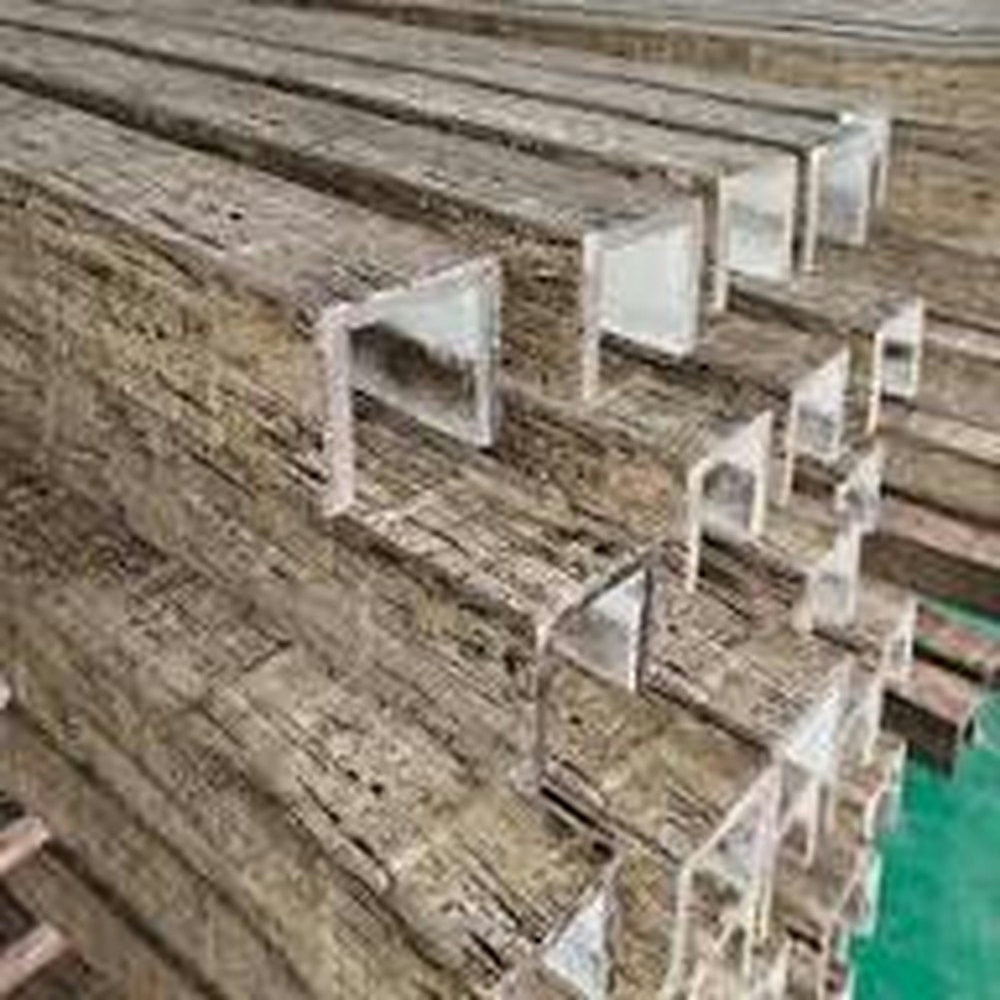
Rustic Artisan Faux Wood Beams | Bulk Supply for Renovation Companies
Renovation work and new build work look similar on paper but operate very differently in practice. A renovation company running 30 to 80 renovation projects per year has supply chain needs that don't fit the standard new-build wholesale model. The beam supplier has to be flexible in ways that production builders don't require, and the renovation company has to structure its procurement to take advantage of that flexibility.
This is what the bulk supply relationship between a renovation company and a faux beam supplier actually looks like, what the renovation side needs from the supplier, and what tends to go wrong.
The fundamental difference: predictability
New build is predictable. The floorplan is fixed, the dimensions are known, the beam spec is finalized months before install. A renovation is unpredictable until the walls are open. The homeowner changes their mind mid-project. The demo reveals a surprise that shifts the beam layout. The "obvious" beam location collides with a duct that wasn't on the original plans.
This unpredictability cascades through the supply chain:
- Beam quantities change. A renovation might start with 8 beams in the spec and end with 12. Or 6. The supplier has to accommodate mid-project quantity changes.
- Beam lengths change. Field measurements at framing completion often differ from the original takeoff. The supplier has to cut to the actual dimensions, not the planned dimensions.
- Beam profiles change. The homeowner sees a beam in someone else's renovation and wants that profile instead of the one originally specified. The supplier has to support a profile change mid-project.
- Lead times compress. The renovation schedule is shorter than new build, and the homeowner wants the project done faster than the contractor's original timeline. The supplier has to support compressed lead times.
A faux beam supplier that operates on a strict new-build model—fixed orders, fixed lead times, fixed profiles—doesn't work for renovation. The renovation company needs a supplier that operates with more flexibility.
Field measurement and tolerance for renovation
For renovation work, field measurement is the source of truth. The contractor measures at framing completion, after any surprises have been revealed, and orders against the actual dimensions.
The supplier's role in this process:
- Accept field measurements as the basis for production. Not as a "we'll adjust if needed" afterthought, but as the actual production spec.
- Tolerate smaller order quantities. A renovation might order 4 to 12 beams. The supplier's per-piece pricing needs to work at that volume, not just at the 50+ piece volumes common in new build.
- Support partial reorders. The renovation might need 4 more beams three months after the original order, in the same profile and color. The supplier needs to support this without a full re-setup fee.
- Provide install support. The renovation's installer may not have worked with the supplier's beams before. The supplier needs to provide install documentation and be available for technical questions.
A supplier that handles renovation well is one that has accepted these requirements as part of their business model, not as exceptions to be tolerated.
The reorder pattern for renovation companies
A renovation company running 30 to 80 projects per year has a reorder pattern that looks different from new build:
- Many small reorders. The average reorder might be 4 to 8 beams, not 20 to 40. The total annual volume is significant, but spread across many small orders.
- Same profile and color across most projects. Most renovation companies settle into a few favorite profiles and colors that they specify repeatedly. The supplier benefits from this consistency.
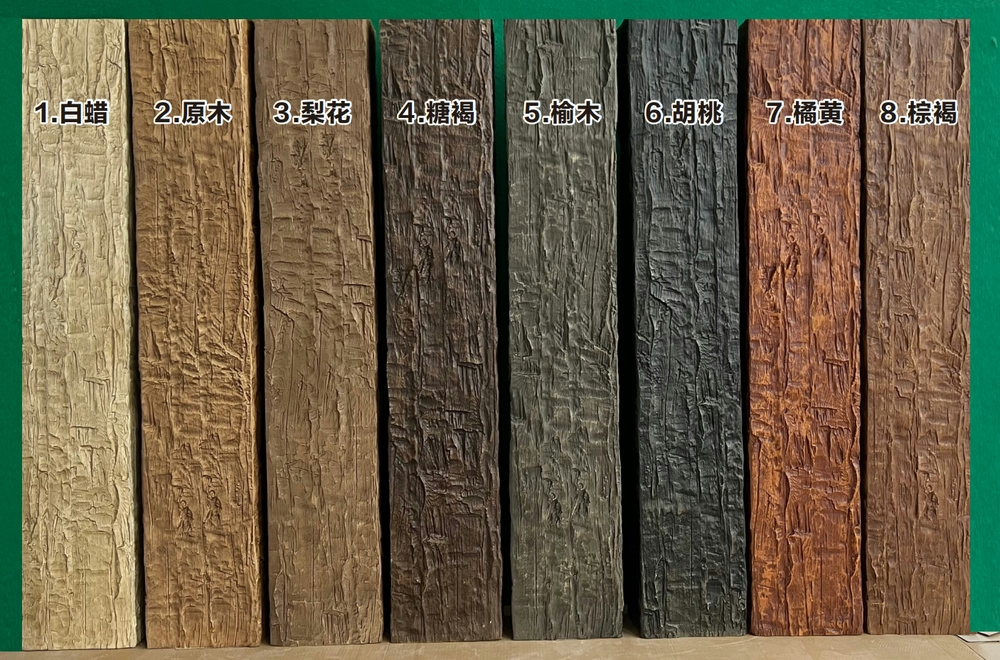
- Frequent color and finish variations. Even with a consistent profile base, individual projects often need slight color variations—a warmer tone for one project, a more weathered finish for another. The supplier needs to handle these variations without resetting the entire color matching process.
- Quick turnaround on reorders. Renovation schedules are tight. A reorder that's promised for "next week" actually needs to arrive in 5 business days.
For the supplier, this pattern is ideal for steady factory utilization but requires a different operational model than large new-build orders.
Pricing structure for renovation companies
For a renovation company doing 30 to 80 projects per year with 4 to 12 beams per project, the pricing structure needs to work at small volumes:
- Per-piece pricing without large-volume discounts. The supplier's price list should have a per-piece price that's reasonable for a 6-beam order, not just for a 50-beam order.
- Setup fees amortized across the relationship. A one-time profile or color match setup fee that's amortized across the annual relationship, not charged per order.
- Tiered pricing that rewards annual commitment. The supplier can offer better per-piece pricing at 100, 200, 500 beams per year, even if individual orders are small.
- No minimum order quantity. A 4-beam order should be priced the same per-piece as a 12-beam order, with no surcharge for being below a minimum.
This pricing structure is more accommodating than new-build pricing, but it's also more profitable for the supplier in the long run because of the steady order flow.

Color and finish consistency across renovation projects
Renovation companies typically want consistent color and finish across their projects, so that a beam installed today matches a beam installed six months ago in a different project. This consistency is part of the renovation company's brand.
The supplier's role:
- Hold master color references for the renovation company. The factory keeps a reference sample for each color the renovation company uses regularly, and matches every order against that reference.
- Provide sample chips for the renovation company's sales team. Small color chips that the sales team can show homeowners during the estimate phase.
- Document color drift and refresh references. Polyurethane color references can drift over time as the factory's materials and processes evolve. The supplier should refresh the master reference every 12 to 24 months.
A renovation company that has a strong color library with its supplier can offer homeowners a faster, more confident color selection process. The supplier benefits from the renovation company's brand consistency.
The install support role
Renovation companies often don't have dedicated beam installers. The same crew that does framing, drywall, and trim may also install the beams, and they may not have extensive experience with the supplier's specific product.
The supplier's install support includes:
- Install documentation specific to the product. Not generic faux beam install instructions, but documentation that covers the supplier's specific cleat hardware, beam weight, and edge handling.
- Cleat hardware supplied with the beam order. The renovation company shouldn't have to source cleats separately. The cleats should arrive with the beams, sized and specified for the project.
- Phone support during install. The supplier's technical team should be available to answer install questions, ideally from someone who has actually installed the product before.
- Field replacement for damaged-in-install beams. A beam that gets damaged during install should be replaceable within 5 to 10 business days, not held until the next bulk order.
This install support is part of what the renovation company pays for in the relationship. A cheaper supplier without install support ends up costing more in crew time and project delays.
Common pitfalls in renovation beam supply
A few issues that come up often enough to flag:
- Ordering on plans instead of field dimensions. The most common renovation beam mistake. The fix is to require field measurement at framing completion, with the order placed after the measurement.
- Underestimating beam quantity changes. The renovation company orders 8 beams based on the original plan. Mid-project, the homeowner adds 4 more. The supplier doesn't have them ready, and the project waits.
- Inconsistent color across reorders. The renovation company orders 6 beams in September and 4 more in December, expecting the same color. The December beams are visibly different. The supplier should have flagged the color drift in advance.
- Wrong cleat hardware for the existing structure. The renovation company installs beams against plaster and lath using cleats rated for drywall. The cleats pull out within a year. The fix is for the supplier to specify cleats based on the existing structure, not just on the beam weight.
How to structure the renovation-company-supplier relationship
For a renovation company looking to establish a strong relationship with a faux beam supplier:
- Start with a single profile and color. Get comfortable with one specification that works across most of the renovation company's projects. Add variations as the relationship matures.
- Establish reorder terms up front. Per-piece pricing, lead time, color consistency, install support—all documented in the supplier agreement.
- Build the annual volume commitment gradually. Most renovation companies underestimate their annual beam volume. Tracking actual volume and committing to it in the supplier agreement improves pricing.
- Hold quarterly reviews. The renovation company and the supplier review the past quarter's orders, any issues, and opportunities to improve. This is how the relationship compounds.
A renovation company with a strong beam supplier relationship runs faster, more predictable projects at better margins than one that treats each beam order as a transactional purchase. The compounding effect over 3 to 5 years is significant.
Rustic artisan faux beams for renovation companies are a category where the supplier's flexibility matters as much as the product quality. The right supplier makes renovation work profitable. The wrong supplier makes every project harder than it needs to be.
Technical References
ASTM standards cited in every specification
Test Data
Lab results from internal testing program
Updated 2026
Reviewed against current product specs