Spanish Decorative Faux Beams | Custom Profiles for General Contractors
General contractors working in Spanish or Mediterranean style markets have a profile problem that most suppliers don't address well. The Spanish style has specific proportion and texture conventions, and the stock profiles available from most factories don't quite match any of them. A general contractor who wants to deliver authentic Spanish style work has three options: use stock profiles that are close but not quite right, commission a custom profile mold, or modify an existing mold to be closer to the target.
This is how each option works in practice, what they cost, and how general contractors use custom profiles strategically.
The Spanish profile problem
Spanish style architecture uses specific beam profiles—vigas, viga latillas, decorative braces, and coordinating elements—that have characteristic proportions and textures. The challenge for a polyurethane factory is that "Spanish style" isn't a single profile; it's a family of profiles that varies by region, era, and architectural sub-style.
A general contractor working on Spanish style projects typically encounters:
- Stock profiles that are close but not exact. Many factories have a "Spanish" or "Mediterranean" category in their mold library. The profiles are Spanish-influenced, but they're genericized—they don't match any specific regional tradition precisely.
- Profiles that are too small. Spanish style beams typically have substantial cross-sections. Many factory stock profiles are undersized for the style.
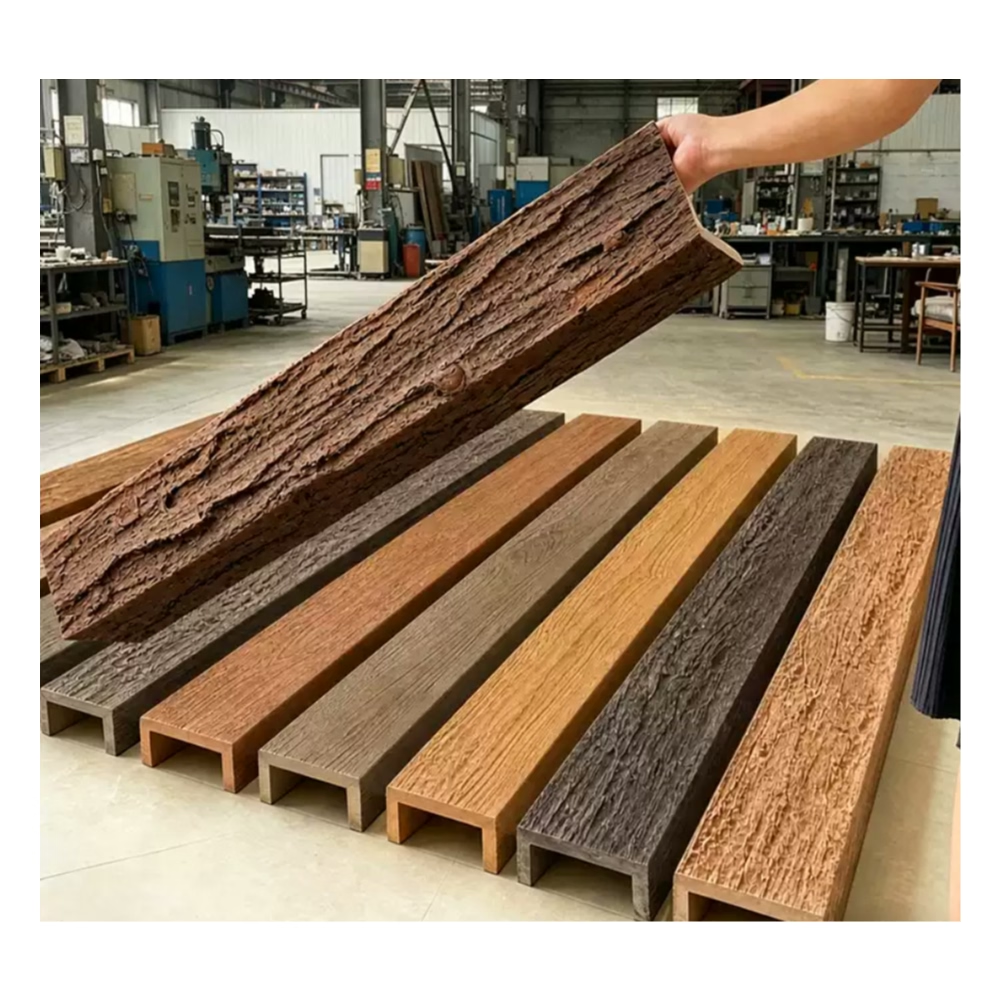
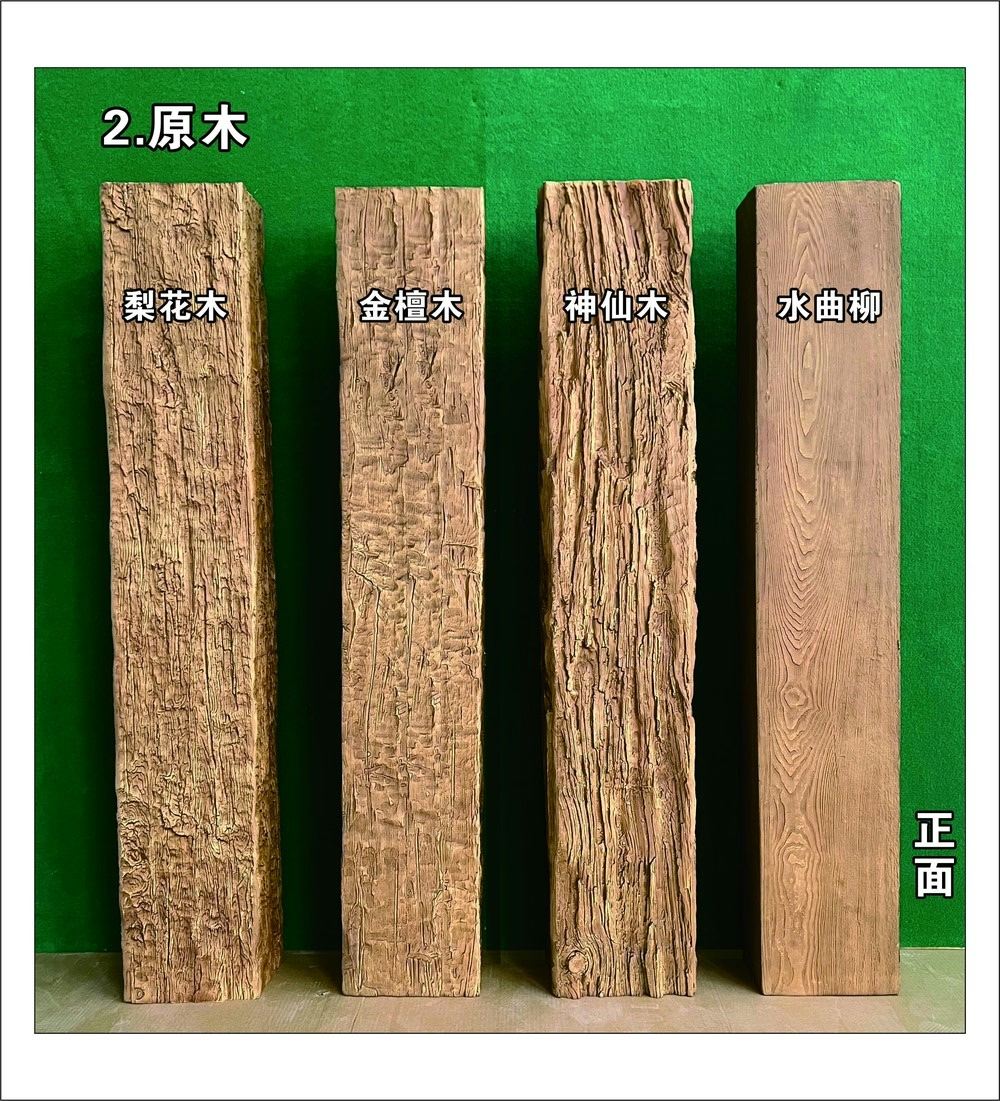
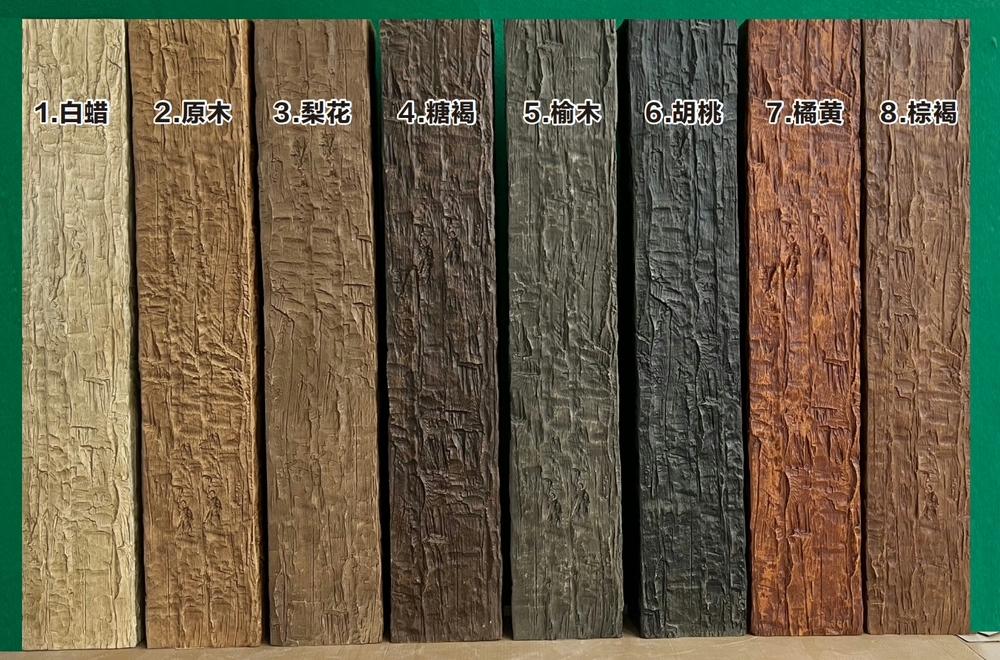
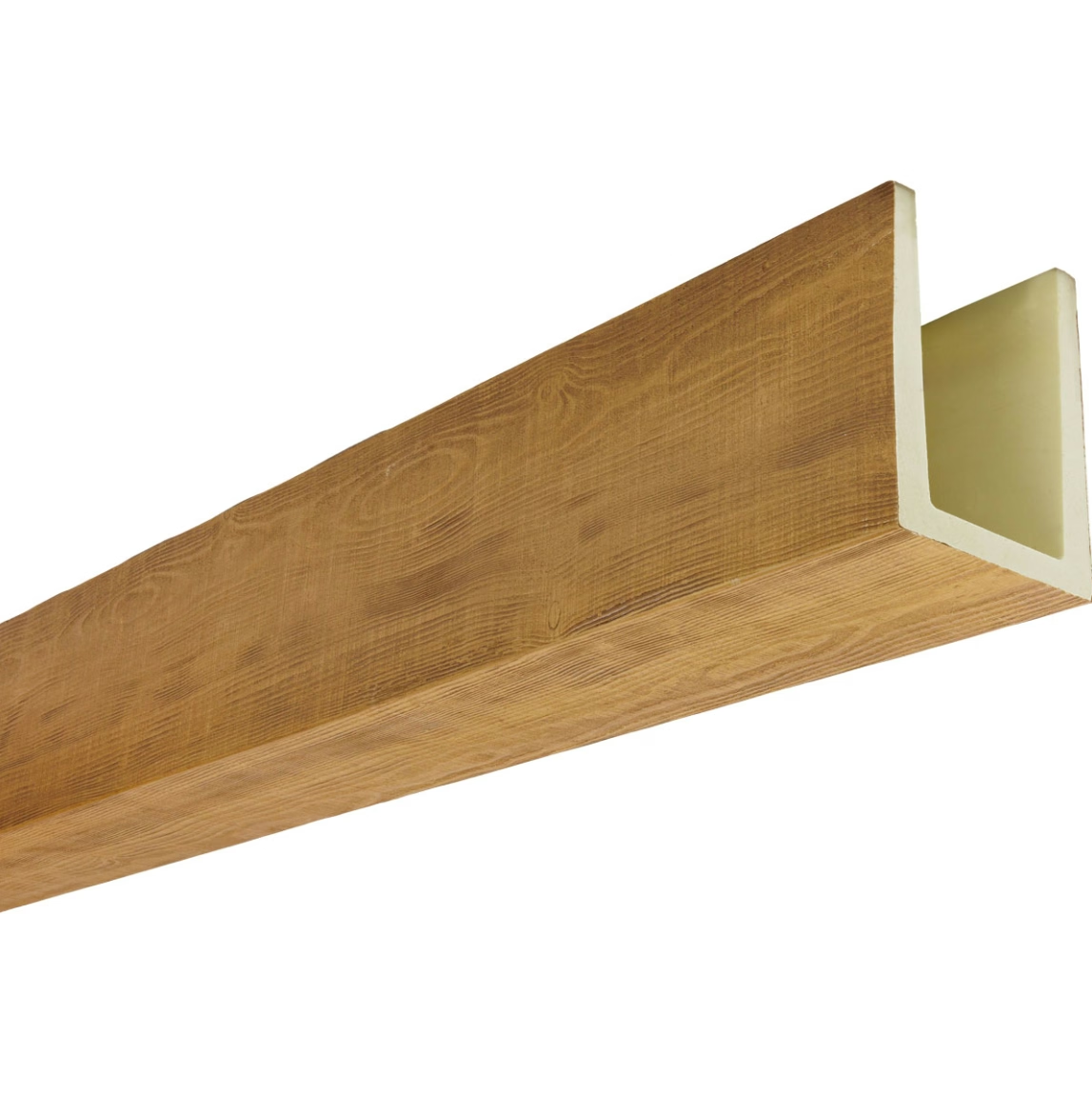
- Profiles with the wrong texture. A smooth or lightly textured profile reads as Mediterranean but not as Spanish. A heavily distressed profile reads as rustic but not as Spanish. The right texture is rough-sawn with hand-hewn accents.
- Profiles that lack the right details. Authentic Spanish style beams often have specific details—chamfered edges, hand-hewn accents, end treatments—that aren't part of generic stock profiles.
A general contractor who wants to deliver authentic Spanish style work has to decide how much customization to invest in.
The three customization tiers
Tier 1: Stock profile with finish customization
The simplest approach. Use a stock profile from the factory's library and customize the color, finish, and end treatment. This is the cheapest path and works for projects where the Spanish style is one element of a broader design rather than the central feature.
Cost premium: 10 to 25 percent over stock.
Lead time: Standard stock lead time plus 1 to 2 weeks for finish customization.
Tier 2: Modified stock profile
The factory takes a stock profile and modifies it—adjusts dimensions, adds hand-carved texture, refines the edge treatment. This produces a profile that reads as more authentically Spanish without the cost of building a new mold.
Cost premium: 25 to 60 percent over stock.
Lead time: 2 to 4 weeks longer than stock, plus 3 to 4 weeks for mold modification.
Minimum order: Usually the same as the stock profile minimum (often 100 to 200 linear feet for the modified profile to amortize the modification cost).
Tier 3: Custom profile mold
The factory builds a new mold from a wood master or a 3D-scanned reference. This produces a profile that's specific to the project or the GC's portfolio.
Cost: $3,000 to $8,000 for mold development, plus per-piece pricing.
Lead time: 6 to 10 weeks for mold development plus production.
Minimum order: 300 to 600 linear feet for the mold cost to amortize reasonably.
Profile ownership and exclusivity
For a general contractor investing in a custom profile mold, the ownership question matters:
- The factory owns the mold in most agreements. The GC has exclusive use of the profile for a defined period (typically 24 to 36 months), but the factory retains physical ownership and can use the mold for other customers after the exclusivity period.
- Exclusivity can be extended or made permanent. Most factories will extend exclusivity in exchange for a usage commitment or an additional fee. Permanent exclusivity (the GC owns the mold or has unlimited exclusive use) costs more.
- Storage and maintenance are typically the factory's responsibility. The factory stores the mold between orders and maintains it. If the mold degrades, the factory replaces it at their cost.
For a GC running Spanish style projects regularly, a 24 to 36 month exclusivity period on a custom profile makes sense. The exclusivity allows the GC to use the profile as a competitive differentiator. After the exclusivity period, the GC can negotiate an extension or move to a new custom profile.
How GCs use custom profiles as a differentiator
A custom Spanish beam profile can be a meaningful competitive advantage for a GC working in Spanish style markets. Three ways GCs use it:
- Marketing differentiation. The GC's portfolio features beam profiles that competitors can't easily replicate. The profile becomes part of the GC's brand identity.
- Architect and designer preference. Architects and designers who work in Spanish style often prefer GCs who can deliver authentic beam profiles. The custom profile attracts higher-end projects.
- Pricing premium. Projects with custom beam profiles can command higher per-project pricing. The custom profile justifies a builder or developer premium that wouldn't apply to a stock-profile project.
The profile pays back over multiple projects. A $5,000 mold cost amortized over 5 to 10 Spanish style projects is $500 to $1,000 per project—a small fraction of the project budget.
When to commit to a custom profile
A custom profile commitment makes sense when:
- The GC has 3 or more Spanish style projects in the pipeline. Below 3 projects, the mold cost doesn't amortize well.
- The projects have consistent design intent. If the projects are all variations on a similar Spanish style, the same custom profile can serve them all. If each project is a different interpretation of Spanish, a stock profile may be more flexible.
- The GC is willing to invest in the relationship with the factory. Custom profile work requires more communication, more sample approval cycles, and more iteration than stock profile work.
- The market rewards the differentiation. In markets where Spanish style projects are common and competitive, the custom profile matters. In markets where Spanish style is rare or where buyers don't pay attention to beam details, the investment may not pay back.
The factory relationship for custom profile work
For a GC doing custom Spanish profile work, the relationship with the factory is closer than a transactional supply relationship:
- The factory's design team is involved early. The GC, the architect, and the factory's design team work together on the profile specification. This often happens 8 to 16 weeks before construction start.
- Multiple sample iterations are normal. The first sample rarely matches the design intent exactly. The GC and architect iterate on the sample, with the factory adjusting the wood master and re-pouring, until the profile reads correctly.
- The profile becomes a documented specification. Once approved, the profile is documented with cross-section drawings, texture reference samples, and color reference samples. This becomes the spec for all future orders against the profile.
- The factory holds the master reference indefinitely. As long as the GC continues to use the profile, the factory keeps the wood master, the production mold, and the color reference in active status.
This relationship takes 6 to 12 months to develop fully. By the second year, the GC's Spanish style projects run faster and more predictably than competitors using stock profiles.
Coordinating custom profiles with coordinating elements
Spanish style beams typically work with coordinating elements—corbels, beam caps, column wraps, fireplace mantels, decorative braces. For a custom profile project, these coordinating elements should match the custom profile in texture, color, and proportion.
Most factories that do custom profile work can also produce custom coordinating elements. The cost is typically per-piece, with no additional mold fee for elements that share the custom profile's texture and finish.
The coordination matters. A custom beam profile with stock coordinating elements reads as inconsistent. A custom beam profile with matching custom coordinating elements reads as a fully designed Spanish style ceiling.
Common pitfalls
A few issues that come up in custom Spanish profile work:
- Specifying the profile by description rather than reference. "Spanish style viga profile" is too vague. The factory needs a specific reference—a photograph of a real beam, a measured drawing, or a hand-carved wood sample.
- Undersizing the cross-section. A 4-inch by 6-inch faux viga reads as decorative trim, not as Spanish architecture. The cross-section needs to be substantial.
- Wrong texture for the regional sub-style. A heavily distressed texture on a California Spanish Colonial beam reads as wrong. A smooth texture on a Mountain West Spanish beam also reads as wrong. The texture needs to match the regional tradition.
- Inconsistent production across orders. The custom profile should be consistent across all orders against the mold. If the factory's process drifts, the GC's projects will have visible variation.
Custom Spanish profiles for general contractors are a category where the right investment pays back over multiple projects. The custom profile becomes a long-term asset for the GC's Spanish style work, not a one-time expense.
Technical References
ASTM standards cited in every specification
Test Data
Lab results from internal testing program
Updated 2026
Reviewed against current product specs