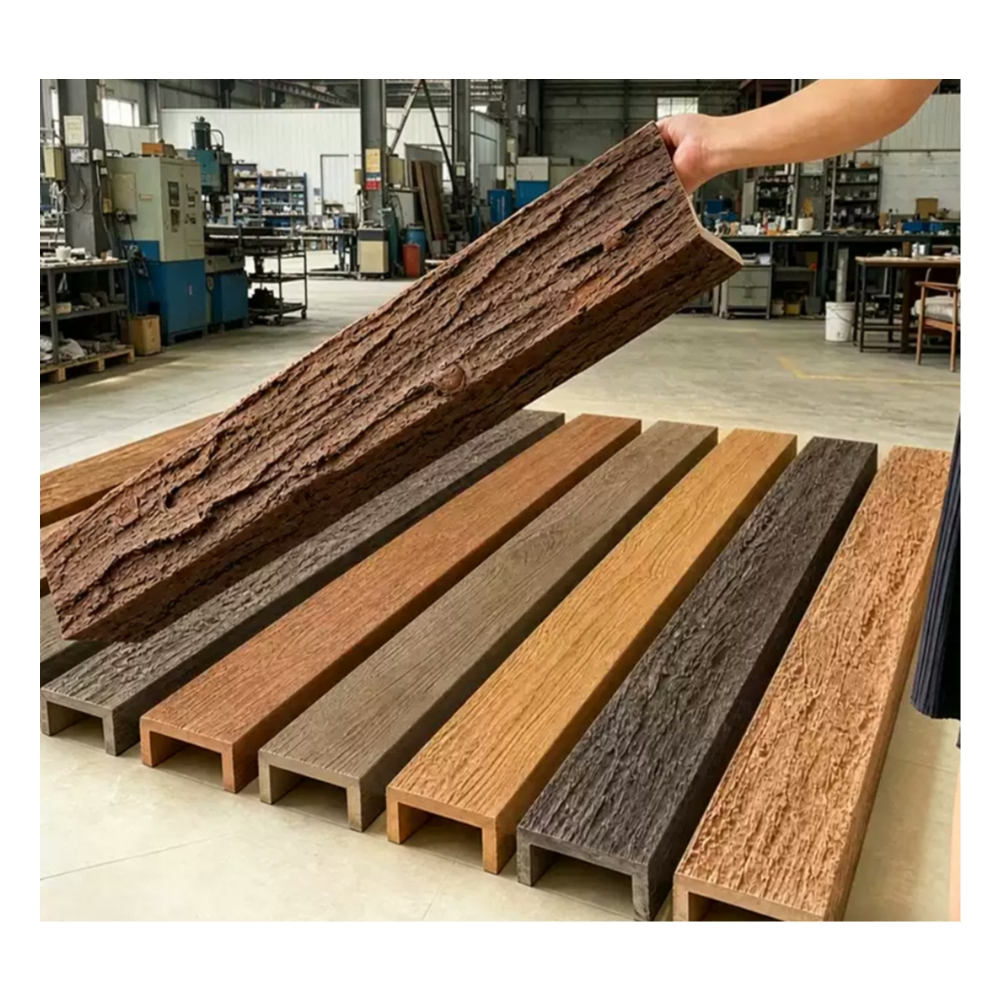
Spanish Faux Wood Ceiling Beams | Factory Bulk Supply for Builders
Builders running Spanish style projects at volume—5 to 30 homes per year with consistent Spanish style specifications—have a factory supply pattern that's different from one-off custom home work. The volume justifies a tighter relationship with the factory, better pricing, and more standardized specifications. The builder's job is to structure the relationship so that the per-project procurement becomes routine rather than a fresh negotiation each time.
This is how that relationship typically works, what triggers reorders, and what builders get wrong.
The builder's typical Spanish style portfolio
A builder running Spanish style projects at volume usually has a portfolio that looks like:
- 3 to 6 floorplans with consistent Spanish style architecture.
- 15 to 60 homes per year across the floorplans.
- 1 to 3 beam specifications that apply across most floorplans, with minor variations.
- A consistent design vocabulary—Spanish Colonial, Mediterranean Revival, or Mission Revival—that defines the builder's brand.
Within this portfolio, the beam specification is usually:
- One or two primary ridge beam profiles at 18 to 28 feet, used in the great room or main living area.
- One or two secondary beam profiles at 12 to 18 feet, used in the kitchen, dining, and master bedroom.
- Coordinating elements like viga latillas (smaller poles), corbels, or beam caps that complete the look.
The builder's factory supply relationship is built around these specifications, with the factory producing against them at volume.
How builders structure the factory relationship
For a builder running 15 to 60 Spanish style homes per year, the factory relationship typically includes:
A standing specification
The builder's beam specification is documented and shared with the factory. This includes:
- Profile drawings with cross-section dimensions.
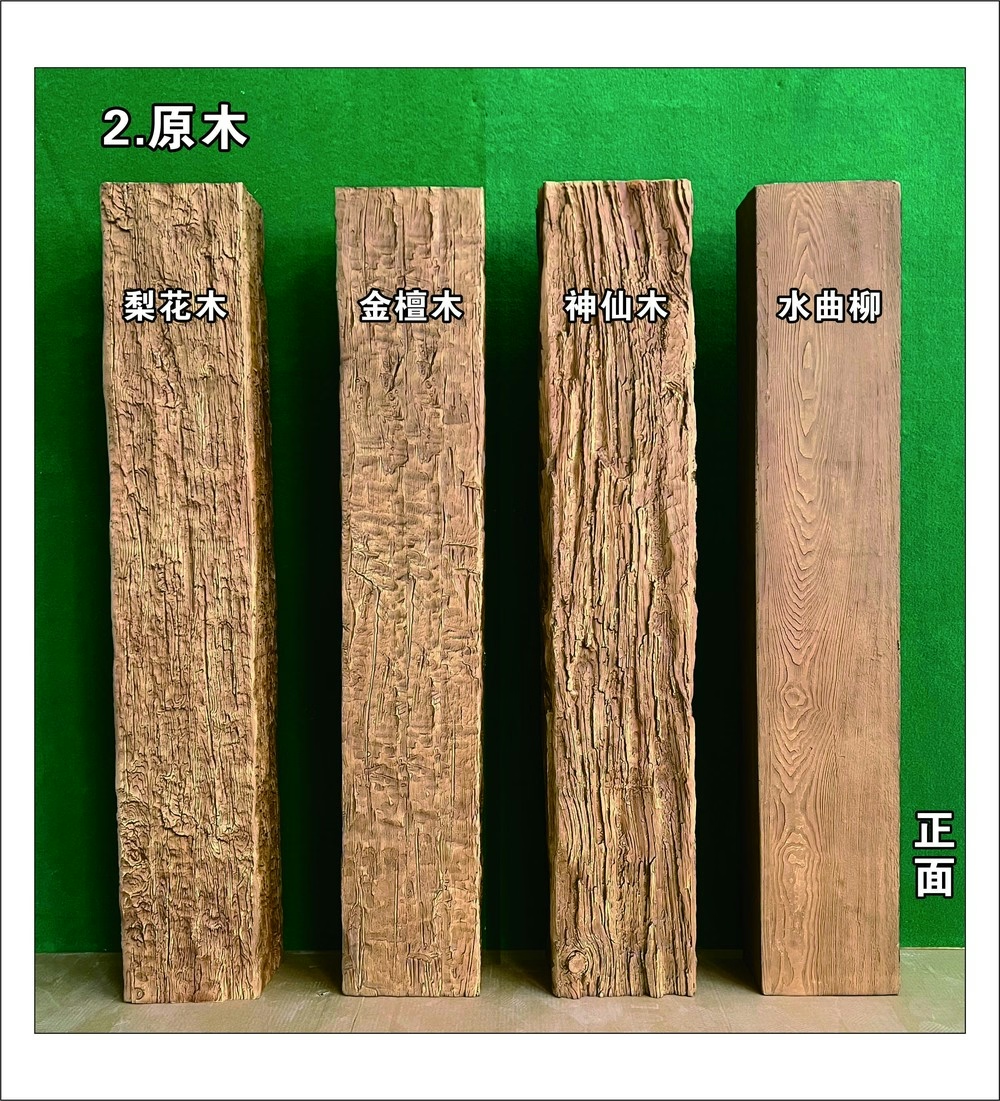
- Texture references (samples or detailed photographs).
- Color references with formula numbers.
- Finish specifications (sheen, weathering effects).
- Coordinating element specifications (corbels, caps, latillas).
This specification is the basis for all orders. New orders don't require fresh spec development—they reference the existing specification with any project-specific modifications.
Volume-based pricing
The builder's annual beam volume supports tiered pricing:
- Annual volume below 1,000 linear feet: Standard pricing.
- Annual volume 1,000 to 3,000 linear feet: 10 to 15 percent discount.
- Annual volume 3,000 to 6,000 linear feet: 15 to 25 percent discount.
- Annual volume above 6,000 linear feet: 25 to 35 percent discount, with negotiated terms.
For a builder doing 30 homes per year with 30 to 50 linear feet of beam per home, the annual volume is 900 to 1,500 linear feet. This is enough to justify the first pricing tier discount.
Phased production and delivery
The builder's construction schedule dictates the production and delivery phasing. Most builders order beams in waves that match the construction phases:
- First wave: 4 to 6 homes worth of beams, delivered at framing completion of the first homes.
- Subsequent waves: 4 to 6 homes worth of beams, delivered every 4 to 8 weeks aligned to the construction schedule.
- Final wave: The last 4 to 6 homes, plus replacement stock.
The factory produces each wave on a 3 to 4 week lead time. The builder's project manager places the reorder 4 to 5 weeks before the next delivery is needed.
Color consistency across production waves
The factory holds a master color reference for the builder's specification. Every production batch is matched against this reference. Color drift is monitored and corrected if it exceeds the agreed tolerance.
For Spanish style work, the color is particularly important. A beam that's slightly off in tone reads as a different wood species, which breaks the visual consistency of the ceiling. The factory's color consistency program is a critical part of the supply relationship.
What triggers reorders
The builder's reorder pattern is usually driven by three factors:
- Construction schedule. The primary trigger. Each construction phase requires a new wave of beams, ordered 4 to 5 weeks before the phase begins.
- Floorplan mix changes. The builder may shift the mix of floorplans being built in response to market demand. If the larger floorplans with more beams are selling faster, the beam volume goes up.
- Design changes. Mid-year, the builder may introduce a design change that affects beam specifications—new color, new finish, new coordinating element. This triggers a spec update and a transition to the new specification.
For most builders, the reorder cadence is predictable enough to plan production 8 to 12 weeks in advance. The factory benefits from this predictability, and the builder benefits from priority production scheduling.
The package pricing model
For builders doing volume Spanish style work, the factory often offers package pricing that bundles beams with coordinating elements:
- Beam package per floorplan. A defined set of beams for each floorplan, with a package price.
- Coordinating elements package. Corbels, caps, latillas, and other elements that complete the look.
- Annual volume rebate. A year-end rebate based on total annual volume, paid as a credit toward the next year's orders.
Package pricing simplifies the builder's procurement. Each floorplan has one beam package, with one price. The builder's estimator knows the package cost without having to quote each beam individually.
For the factory, package pricing locks in volume and simplifies order processing. The trade-off is less flexibility on per-order customization, which is acceptable for production-style Spanish work.
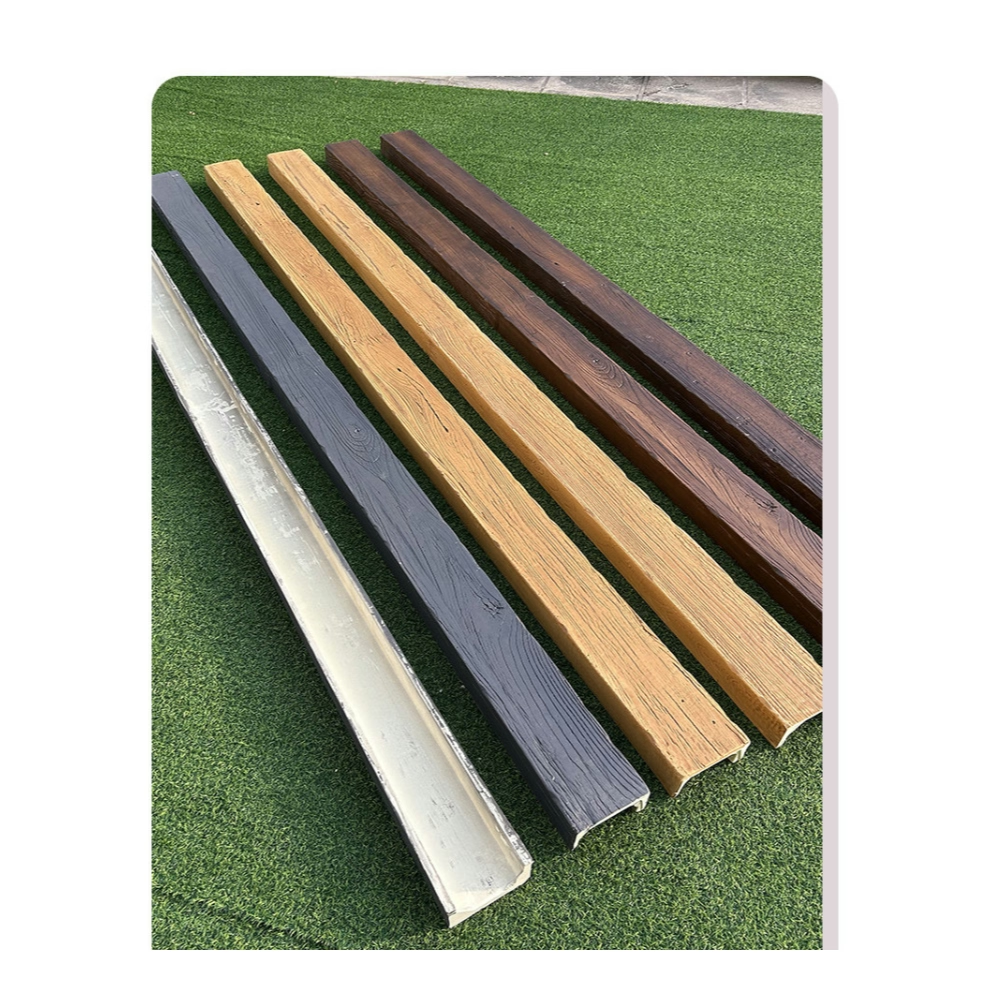
Coordinating elements: corbels, caps, and latillas
Spanish style beams rarely stand alone. The typical ceiling includes:
- Viga latillas. Smaller diameter poles (3 to 5 inches) running perpendicular to the main beams, between them. Often at 12 to 16 inch spacing.
- Corbels. Decorative structural-look elements at beam-to-wall connections.
- Beam caps. Decorative elements at beam-to-beam intersections.
- Column wraps. For columns that intersect with the beam ceiling, polyurethane column wraps in matching color and texture.
For a builder running volume Spanish work, these coordinating elements are usually part of the standing specification. The factory produces them at the same time as the main beams, in matching color and finish.
The cost of coordinating elements is typically 20 to 40 percent of the total beam package cost. For a builder doing volume work, getting the coordinating elements right is as important as getting the main beams right.
Common pitfalls in volume Spanish beam supply
A few issues that come up often enough to flag:
- Spec drift across production waves. The factory's process may drift over time—slight color shifts, slight texture variation, slight dimension variation. The builder should monitor the production waves and flag drift early.
- Profile inconsistency across reorders. The same nominal profile may vary slightly from one production batch to the next, particularly if the mold is aging. The factory should be replacing molds at defined intervals.
- Coordinating element mismatch. Main beams and coordinating elements produced in different production runs may not match perfectly in color or texture. The factory should produce them together or hold matching references.
- Cleat hardware not specified. The builder's order may include beams but not the cleat hardware. The cleats should be specified and ordered with the beams.
- Replacement stock not held. The factory should hold 5 to 10 percent attic stock for the builder's projects, available for replacement within 5 to 10 business days. Without this, a single damaged beam can delay a project.
How to start the volume supply relationship
For a builder starting a volume Spanish style supply relationship with a factory:
- Document the standing specification. Profile, color, finish, coordinating elements. Send physical samples and detailed photographs.
- Negotiate volume pricing tiers. Based on projected annual volume, with annual review and adjustment.
- Establish the reorder process. Lead time, ordering window, production milestone dates.
- Confirm color and texture consistency procedures. Master reference samples, monitoring, drift correction.
- Establish replacement stock terms. Attic stock percentage, replacement lead time, freight terms.
These five items cover most of the operational details. With them in place, the builder's per-project beam procurement becomes routine.
The compounding effect of a strong volume relationship
A strong factory relationship for Spanish beam supply compounds over time:
- Year 1: The relationship is established. Specs are documented. Pricing is negotiated. Production waves are aligned to the construction schedule.
- Year 2: The factory knows the builder's quality standards. Color consistency is stable. Reorder lead times are predictable. The builder's project managers spend less time on beam procurement.
- Year 3 and beyond: The relationship becomes a competitive advantage. The builder can offer consistent Spanish style work at predictable costs, with predictable quality. Competitors who treat each beam order as a fresh negotiation can't match the consistency.
The compounding effect is real, and it's the reason that volume Spanish style builders invest in factory relationships rather than shopping each order.
Spanish faux wood ceiling beams at volume are a category where the relationship matters as much as the product. The right factory relationship produces consistent quality at predictable costs over years. The wrong one produces a series of one-off orders with unpredictable outcomes.
Technical References
ASTM standards cited in every specification
Test Data
Lab results from internal testing program
Updated 2026
Reviewed against current product specs