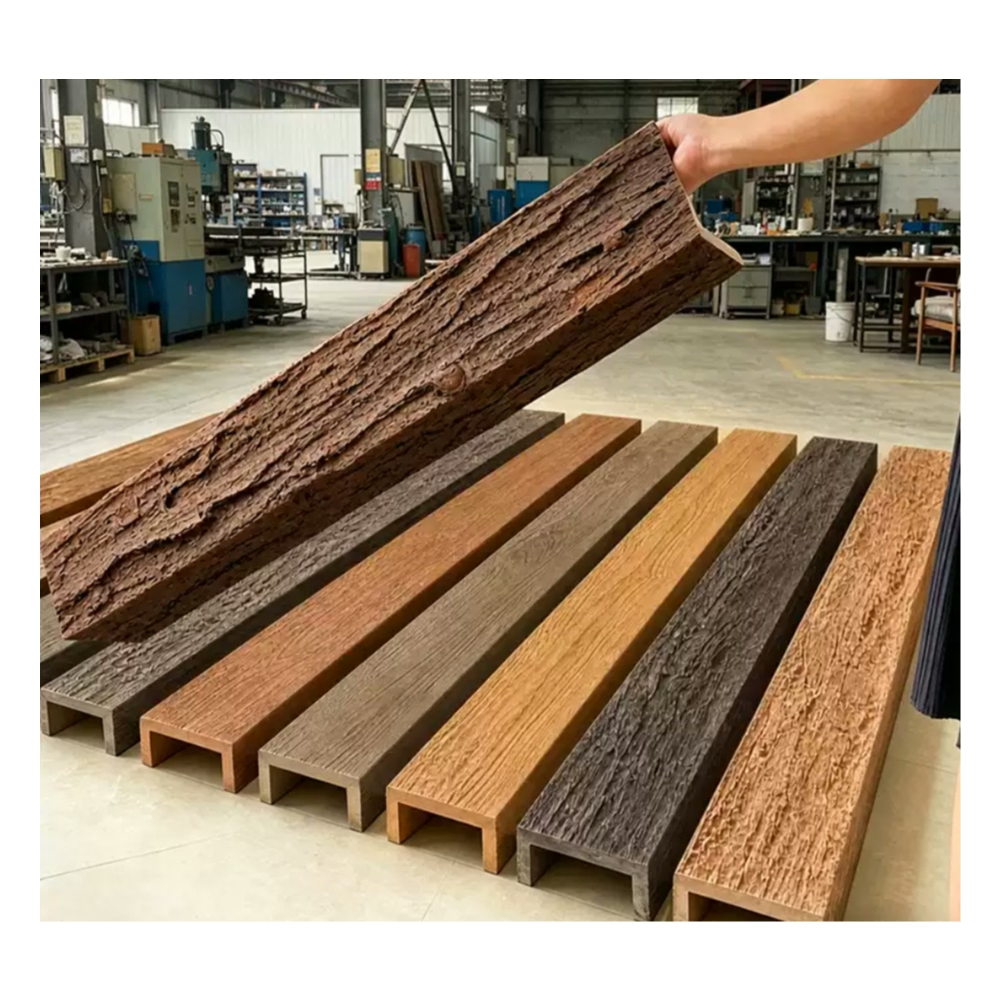
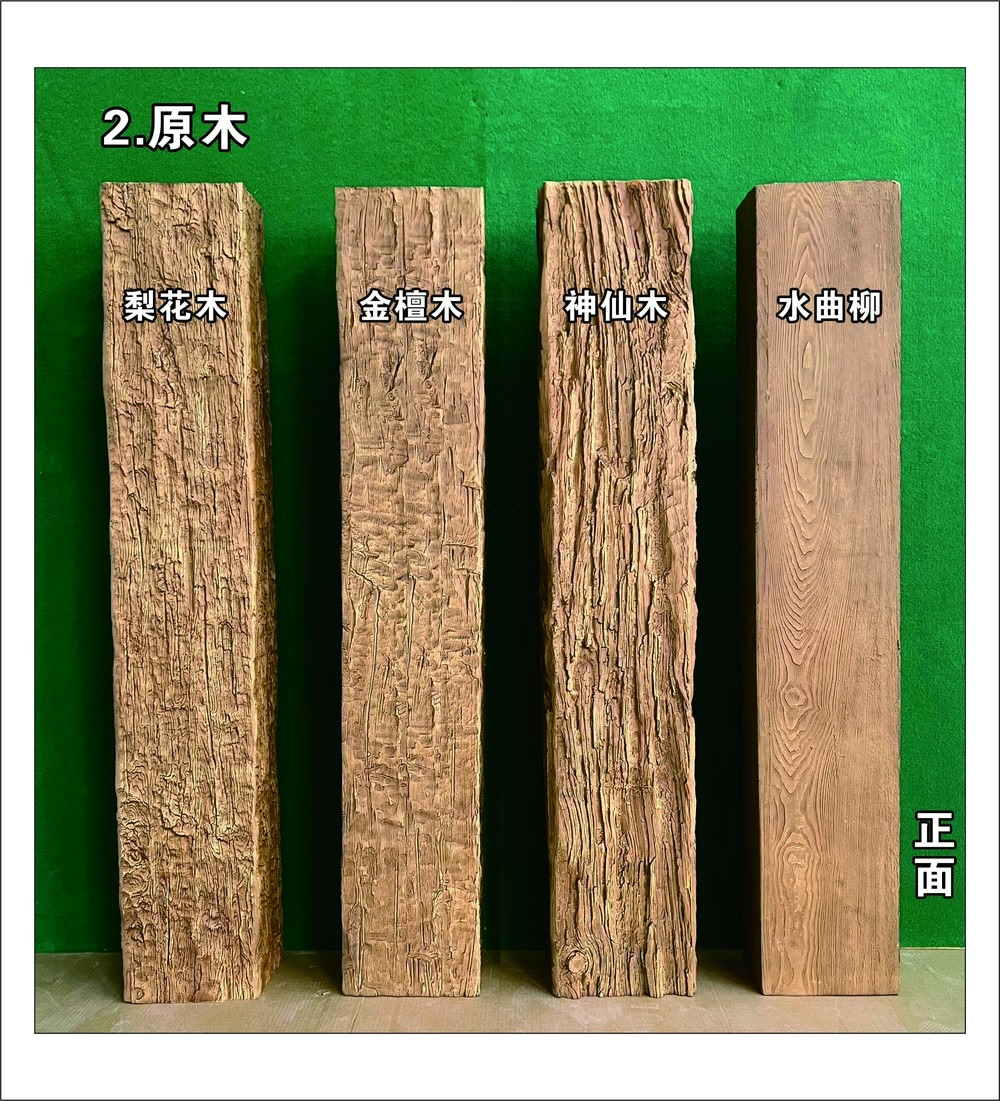
Spanish Rustic PU Faux Beams | Bulk Supply for Home Renovation Projects
Spanish style homes are common in regions with historical Spanish influence—California, Florida, the Southwest, parts of Texas, and similar areas. When these homes are renovated, the existing Spanish elements often need to be matched or complemented with new beam installations. Spanish rustic polyurethane beams work well for renovation when the supplier understands the specifics of working with existing Spanish homes.
This is what Spanish rustic polyurethane beams need for home renovation projects, how to blend with existing elements, and how bulk supply works for renovation contractors.
What makes Spanish homes distinctive
Spanish homes have architectural elements that affect beam renovation work:
Existing structural elements
Older Spanish homes often have:
- Original exposed beams. Real timber vigas that may need to be matched or supplemented.
- Existing plaster or stucco. Walls and ceilings finished in plaster that may need cleat attachment considerations.
- Wood ceilings. Tongue-and-groove wood ceilings supporting or surrounding beam installations.
- Tile roofing. Clay tile roofs that affect access and lighting.
These existing elements define the renovation context.
Architectural details
Spanish homes feature specific architectural details:
- Arched openings. Arches between rooms that affect beam layout.
- Wrought iron elements. Window grilles, light fixtures, railings.
- Tile work. Decorative tile around fireplaces, fountains, or staircases.
- Wrought iron and wood combinations. Doors, gates, and decorative elements.
These details need to be coordinated with beam installations.
Aging and weathering
Older Spanish homes show aging that may need to be matched:
- Patina on existing wood beams.
- Weathering of exterior elements.
- Color drift from decades of sun and weather exposure.
- Cracking or wear in plaster and stucco.
Matching new beams to existing aged elements is often the challenge.
Why Spanish rustic polyurethane beams work for renovation
Polyurethane beams offer specific advantages for Spanish home renovation:
Consistent appearance
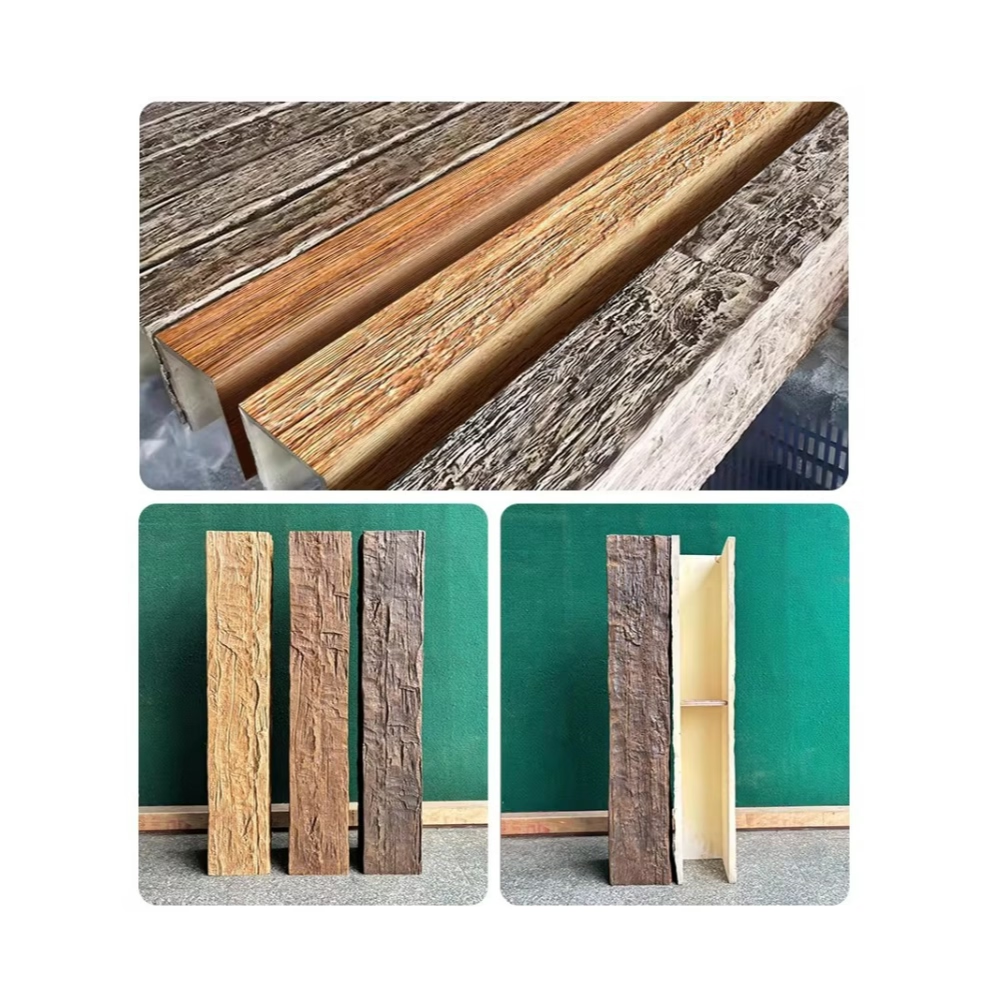
Polyurethane beams can be produced to match existing aged Spanish elements:
- Color matched to existing wood tones.
- Texture matched to existing rough-sawn or hand-hewn patterns.
- Weathering effects to blend with existing aging.
The consistency produces cohesive renovation results.
No additional load on existing structure
Older Spanish homes often have structural limitations:
- Roof loads designed for original roof materials, not additional structure.
- Wall structures not designed for heavy beam additions.
- Foundation limits on additional building weight.
Polyurethane beams add minimal load (typically 2 to 4 pounds per linear foot vs 15 to 30 for solid timber), preserving the existing structure.
Faster installation
Polyurethane beam installation is faster than solid timber:
- Standard 15 to 30 minutes per beam vs hours for timber.
- Smaller crew requirements.
- No specialized tools needed.
Faster installation reduces renovation timeline impact.
Cost predictability
Polyurethane beam costs are more predictable than solid timber:
- Per-piece pricing by length.
- No surprises from hidden defects in solid timber.
- No special handling costs.
Cost predictability supports renovation budgeting.
Bulk supply patterns for Spanish renovation
For renovation contractors running Spanish renovation projects, bulk supply typically follows:
Standing specifications
The contractor establishes standing specifications:
- Common Spanish profiles (vigas, latillas) used across renovation projects.
- Standard Spanish color palette (warm browns, weathered tones, whitewash options).
- Standard cleat hardware for common substrates.
- Standard documentation.
Standing specs cover most projects.
Volume tiers
The contractor negotiates volume tiers:
- Tier 1: 500 to 1,500 linear feet annually.
- Tier 2: 1,500 to 3,000 linear feet annually.
- Tier 3: 3,000+ linear feet annually.
Volume tiers reflect the contractor's annual renovation spend.
Order pattern
The contractor's order pattern includes:
- Many small to medium orders (renovation projects vary).
- Field measurement-driven specifications.
- Orders with shorter lead times than new construction.
- Orders with frequent deviations from standing specs.
The pattern requires the supplier to handle varied orders at consistent pricing.
Field measurement in Spanish homes
For renovation projects in older Spanish homes, field measurement has specific considerations:
Access challenges
Older Spanish homes often have:
- Steep ladder access to high ceilings.
- Furnished spaces requiring careful navigation.
- Tile or plaster surfaces that need protection during measurement.
- Limited working hours for occupied homes.
The contractor's project manager handles measurements carefully.
Substrate identification
Older Spanish homes have varied substrates:
- Original wood lath and plaster (common in pre-1950 homes).
- Modern drywall (in previously renovated areas).
- Exposed wood framing (in attics or above tile ceilings).
- Concrete or masonry (in some structural elements).
Each substrate requires different cleat specifications.
Existing element integration
Field measurements should account for existing elements:
- Existing beams that new beams align with.
- Arches or openings that affect beam layout.
- Tile or decorative elements that can't be modified.
- HVAC, lighting, or other elements that affect installation.
Comprehensive measurements prevent installation issues.
Documenting existing condition
For matching new beams to existing elements:
- Photograph the existing elements.
- Sample the existing color (if matching).
- Note any weathering or aging effects.
- Document texture characteristics.
Documentation supports accurate matching.
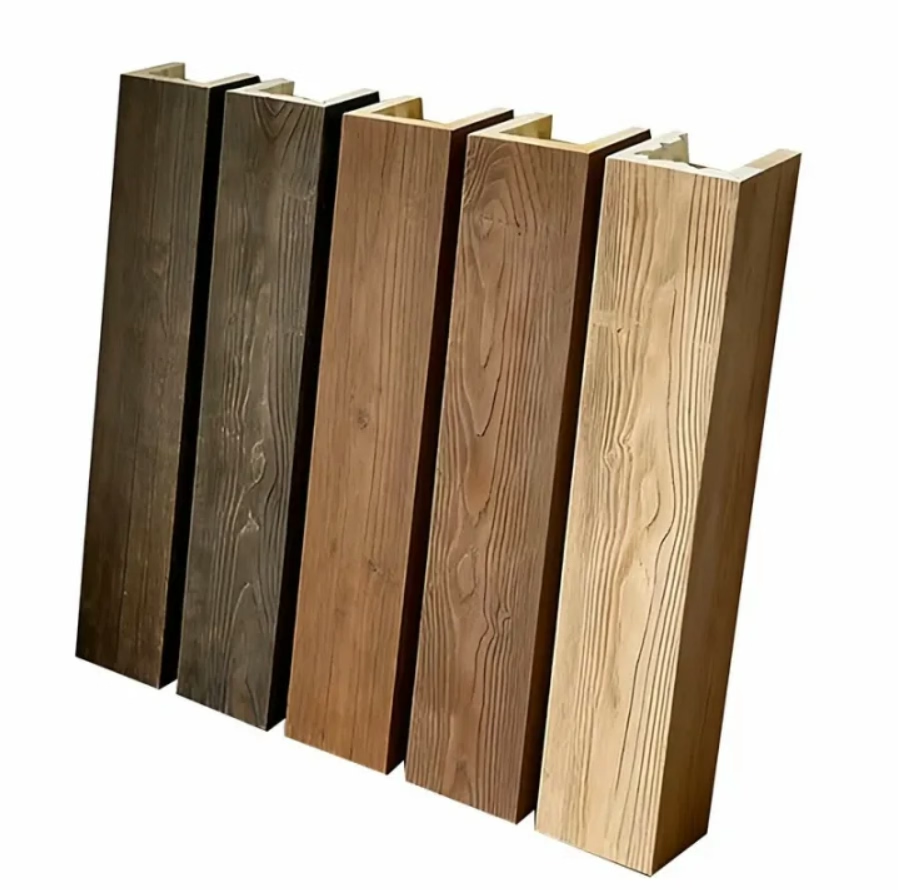
Matching new beams to existing Spanish elements
For Spanish renovation projects, matching new beams to existing elements requires:
Color matching
Match the new beam color to existing Spanish woodwork:
- Reference sample from existing beam (if possible).
- Color formula developed to match.
- Multiple iteration cycles for accurate match.
Color matching often requires more iteration than new construction color development.
Texture matching
Match the new beam texture to existing rough-sawn or hand-hewn patterns:
- Identify the texture type (rough-sawn, hand-hewn, weathered).
- Develop a texture that matches.
- Sample iteration for accuracy.
Texture matching is critical for visual cohesion.
Weathering effects
Match the weathering or aging effects:
- Patina or aging on existing beams.
- Sun exposure effects on exposed beams.
- Color shifts from years of exposure.
Weathering effects require skilled finish application.
Sheen matching
Match the sheen level of existing elements:
- Existing elements may have aged sheen.
- New beam sheen should match the aged appearance.
- Matte or satin typically appropriate for aged Spanish elements.
Sheen matching contributes to overall cohesion.
Pricing for Spanish renovation bulk supply
Pricing for Spanish renovation bulk supply typically includes:
- Per-piece pricing by length with volume discounts.
- Color match fees for matching to existing elements.
- Texture development fees for custom textures.
- Replacement beam pricing consistent with original orders.
For a renovation project with 200 to 500 linear feet of new beams, total project cost is typically $5,000 to $20,000 including installation.
Common pitfalls in Spanish renovation beam projects
A few issues that come up often enough to flag:
- Insufficient matching to existing elements. New beams that don't match existing woodwork.
- Wrong substrate cleats. Standard cleats inadequate for plaster or masonry substrates.
- Insufficient field measurement. Beams ordered on incorrect measurements don't fit.
- Slow replacement beam availability. Damaged beams without fast replacement delay the project.
- Inadequate documentation for occupied-space work. Documentation that doesn't address occupied-space concerns.
How renovation contractors evaluate Spanish beam suppliers
For renovation contractors evaluating suppliers for Spanish renovation beam work:
- Matching capability. The supplier has experience matching existing Spanish elements.
- Substrate expertise. The supplier has experience with varied renovation substrates.
- Field measurement support. The supplier provides guidance on measurement protocols.
- Lead time reliability. The supplier meets tight renovation timelines.
- References. The supplier has done comparable Spanish renovation work.
Spanish rustic polyurethane faux beams bulk supply for home renovation projects is a category where the matching capability, the substrate expertise, and the field measurement support all need to align. The right supplier produces new beams that blend with existing Spanish elements. The wrong one produces beams that stand out as new construction in an older home.
Technical References
ASTM standards cited in every specification
Test Data
Lab results from internal testing program
Updated 2026
Reviewed against current product specs