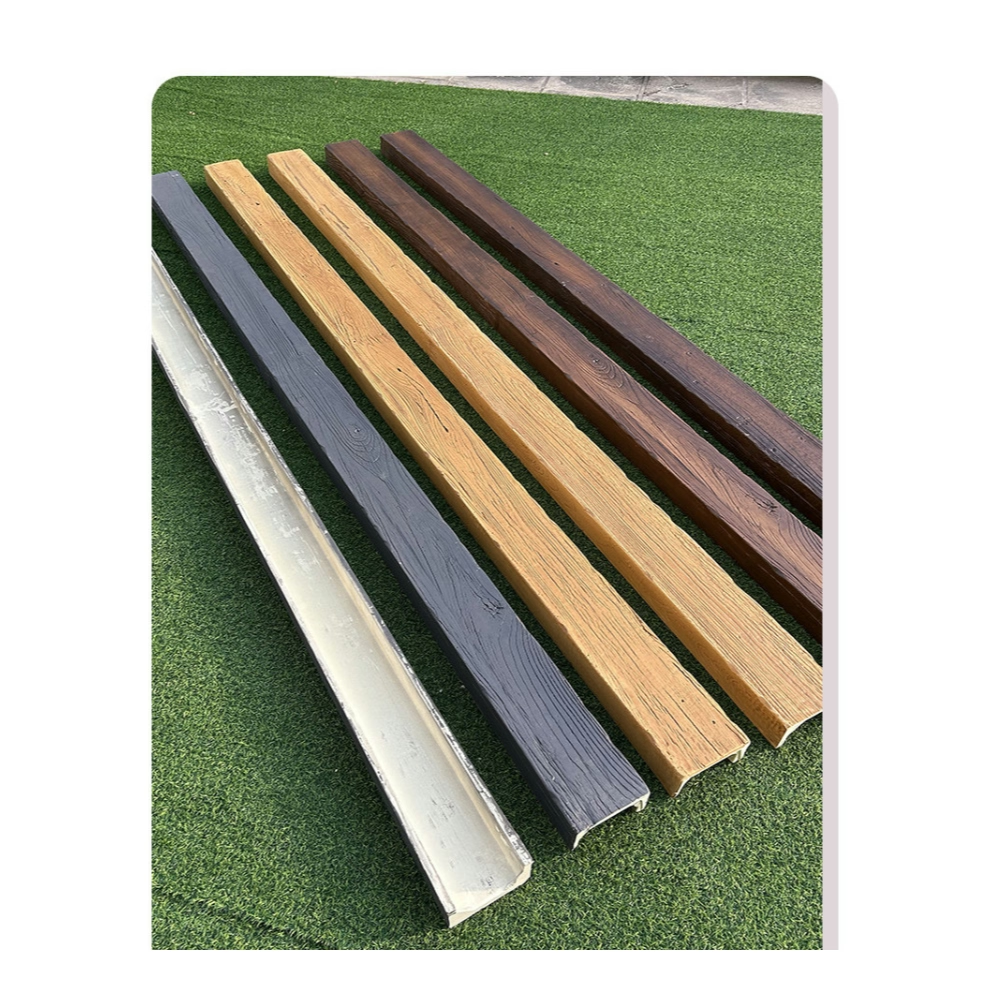
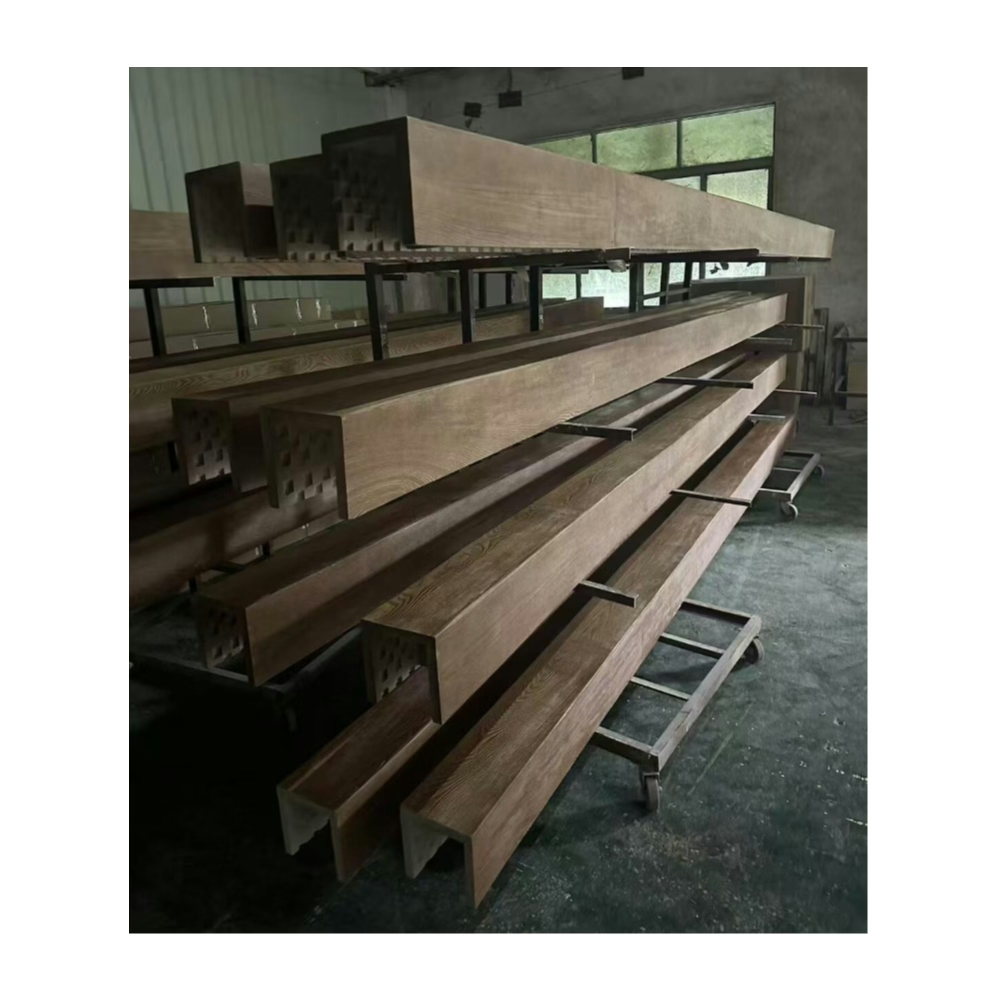
The general contractor assured the hotel developer that his crew could handle the beam installation across eighty guest rooms—after all, they'd installed crown molding for years, and beams seemed similar. Six weeks into the project, the developer called asking if I could assess progress. I found inconsistent spacing, visible fasteners where specifications required concealed mounting, adhesive squeeze-out marring finishes, and misaligned joints creating visual discord. The crew possessed basic carpentry skills but lacked specialized knowledge that beam installation demands. We ended up training their lead carpenter through our certification program, then supervising while they corrected previous work. That expensive remediation taught the developer to require certified installers on subsequent projects. The contractor, to his credit, completed certification for three crew members and now markets his certified beam installation capabilities commanding premium pricing justified by demonstrated expertise.
Professional certification programs establish standards, validate competency, and create credential systems that benefit installers, customers, and the industry broadly. While general carpentry skills provide foundations, specialty beam installation requires specific knowledge about materials, adhesives, layout principles, and quality standards that generic construction experience doesn't necessarily include. Understanding certification pathways and credential value helps installers invest in professional development while helping customers identify qualified contractors.
Understanding Professional Certification Value
Market differentiation through credentials separates certified professionals from competitors claiming equivalent capabilities without validated proof. Certifications provide objective third-party verification that customers can trust rather than relying on contractor assertions. This differentiation justifies premium pricing while attracting customers prioritizing quality over lowest cost.
Insurance benefits sometimes include reduced liability premiums for certified installers demonstrating lower risk through validated training. Insurance underwriters recognize that systematic training reduces claims frequency and severity. These premium reductions can offset certification costs while providing ongoing financial benefits.
Manufacturer warranties occasionally extend enhanced coverage to certified installers using approved techniques and materials. Some manufacturers void warranties when products install incorrectly—certification demonstrates proper installation methods protecting warranty coverage. This warranty advantage provides value to customers while ensuring manufacturers that installations meet standards.
Professional development benefits extend beyond credentials to actual skill improvement through structured training. Certification programs teach best practices, emerging techniques, and troubleshooting approaches that self-taught installers might never encounter. This knowledge improves installation quality while reducing job time through efficient methods.
Network access connecting certified professionals with peers, manufacturers, and industry resources creates communities supporting ongoing learning and problem-solving. Certification programs often include online forums, technical support hotlines, or regional meetings where professionals share experiences and solutions. These networks prove valuable throughout careers.
Core Competency Areas
Material science fundamentals covering polyurethane chemistry, manufacturing processes, product variations, and performance characteristics provide foundation for informed material selection and handling. Understanding how materials behave, what affects their performance, and how different formulations suit different applications separates professional installers from those treating all beams identically regardless of actual product characteristics.
Adhesive technology including chemistry, cure mechanisms, surface preparation requirements, and troubleshooting guides proper adhesive selection and application. Adhesive knowledge proves particularly critical since bonding failures create expensive callbacks. Understanding compatibility, working times, strength development, and environmental effects ensures reliable bonding across varying conditions.
Layout and design principles including symmetry, proportion, architectural harmony, and visual perception enable creating attractive installations beyond just mechanically mounting products. Professional installers understand how spacing affects appearance, how to compensate for optical illusions, and how beam placement interacts with room architecture creating cohesive designs rather than arbitrarily positioned elements.
Installation techniques covering preparation, mounting methods, fastening approaches, and finishing details teach efficient processes producing quality results. Systematic installation methodology reduces job time while improving consistency. Understanding multiple installation approaches allows adapting to varying site conditions rather than applying single methods regardless of appropriateness.
Quality control standards establishing inspection criteria, acceptance tolerances, and systematic verification ensure installations meet professional standards. Knowing what to check, when to check it, and what constitutes acceptable versus unacceptable quality guides objective quality assessment rather than subjective opinions about "good enough."

Certification Program Structures
Tiered credentials offering progressive levels—apprentice, journeyman, master—create advancement pathways encouraging ongoing professional development. Entry-level certifications validate basic competency while advanced credentials recognize expertise. This structure motivates continuous improvement while allowing professionals demonstrating appropriate skill levels at different career stages.
Manufacturer-specific programs focusing on particular product lines provide detailed knowledge about specific materials, proprietary installation systems, and warranty requirements. While narrower than general certifications, manufacturer credentials demonstrate deep expertise with specific products. Installers working primarily with single product lines benefit from manufacturer-specific training.
Industry association programs offered through trade organizations provide vendor-neutral credentials recognized broadly across manufacturers and products. Association-based certifications demonstrate general expertise not tied to specific brands. These portable credentials maintain value when installers change product suppliers or work with multiple manufacturers.
Third-party certification through independent training organizations provides objective credentials free from manufacturer or association biases. Independent certifiers focus purely on competency assessment without product promotion or organizational agendas. This independence creates credentials that customers might view as particularly credible.
Hybrid programs combining manufacturer product knowledge with independent competency assessment balance specific product expertise with objective skill validation. These comprehensive programs provide both brand-specific knowledge and general installation expertise creating well-rounded credentials.
Training Delivery Methods
In-person workshops providing hands-on practice under instructor supervision deliver optimal learning for physical skills. Installing actual beams in classroom or jobsite settings creates muscle memory and technique refinement that theory alone can't achieve. In-person training typically spans 2-5 days of intensive instruction and practice.
Online courses offering flexible self-paced learning suit busy professionals unable to attend in-person training. Video demonstrations, interactive modules, and knowledge assessments deliver substantial content efficiently. While online training can't fully replicate hands-on practice, it effectively covers theoretical knowledge and demonstrates techniques that students practice independently.
Hybrid models combining online theory with in-person practical assessments balance convenience with hands-on validation. Students complete knowledge modules online at their pace, then attend shorter in-person sessions focusing on practical skills and competency testing. This blended approach optimizes learning efficiency while ensuring hands-on skill development.
Apprenticeship programs pairing students with experienced mentors provide extended learning through actual project involvement. On-the-job training under supervision transfers practical knowledge and professional practices that classroom training can't replicate. Apprenticeships typically span months allowing gradual skill development across diverse project types.
Continuing education requirements maintaining certifications through ongoing learning ensure professionals remain current with evolving techniques, products, and standards. Recertification every 2-3 years requiring continuing education credits or skills refreshers prevents credential stagnation. This ongoing development benefits professionals and customers through maintained competency.
Curriculum Components
Safety training covering ladder use, fall protection, tool safety, and adhesive handling creates foundation protecting installers from injury. Construction safety principles apply to beam installation with some specialty considerations for overhead work and chemical exposure. Safety consciousness separates professionals from careless operators risking injury.
Tool proficiency including proper use of measuring devices, levels, fastening tools, and cutting equipment ensures accurate, efficient work. Knowing which tools suit specific tasks, how to maintain equipment, and troubleshooting tool problems increases productivity while improving quality. Tool mastery reflects professional craftsmanship.
Surface preparation protocols teaching cleaning, repair, priming, and conditioning techniques address the foundation that determines installation success. Understanding substrate assessment, preparation requirements for different materials, and quality verification prevents bonding failures. Preparation knowledge often proves more critical than installation technique itself.
Installation sequencing establishing logical work progression, quality checkpoints, and efficiency techniques reduces job time while improving consistency. Systematic approaches prevent problems from developing while enabling crews completing installations methodically rather than figuring out sequences on-the-fly creating inefficiency and errors.
Troubleshooting and problem-solving covering common issues, diagnostic approaches, and corrective techniques equips installers handling unexpected conditions. Real-world installations frequently present challenges that idealized training scenarios don't include. Problem-solving capability separates competent installers from those unable to adapt beyond perfect conditions.
Assessment and Testing Methodologies
Written examinations testing theoretical knowledge verify understanding of materials, techniques, and standards. Multiple choice, true/false, and short answer questions assess knowledge retention and comprehension. Written tests efficiently evaluate whether students absorbed training content establishing minimum knowledge baselines.
Practical demonstrations requiring students performing specific installation tasks under observation assess actual hands-on capabilities. Evaluators observe technique, tool use, quality attention, and efficiency. Practical testing ensures that credentials represent actual capability not just theoretical knowledge.
Portfolio reviews examining photos, documentation, and descriptions of completed projects demonstrate real-world experience applying learned techniques. Portfolios show whether installers successfully apply training across diverse projects encountering various conditions. This assessment method validates field competency beyond controlled test environments.
Customer references requiring testimonials from previous clients verify professional conduct, communication skills, and customer satisfaction. Technical skills matter but professional behavior, reliability, and customer service prove equally important. Reference checks assess complete professional competency beyond just installation technique.
Continuing competency verification through periodic recertification ensures credentials represent current capabilities not outdated skills certified years ago. Recertification might include abbreviated testing, continuing education credits, or demonstration of recent project experience. This ongoing verification maintains credential meaning over career spans.
Credential Management and Verification
Digital badges providing verifiable electronic credentials enable customers independently confirming certification status through online verification portals. Digital credentials prevent fraudulent claims while allowing instant verification. Blockchain-based systems emerging in professional certification provide tamper-proof credential verification.
Certificate display providing physical documents demonstrating certification allows professionals displaying credentials at offices or including in marketing materials. Professional certificates signal expertise to customers while providing tangible recognition of achievement. Display certificates should include credential details and verification instructions.
Online directories listing certified professionals help customers finding qualified installers in their regions. Searchable databases maintained by certifying organizations connect customers with certified professionals. Directory listings provide marketing benefit while helping customers locate credentialed contractors.
Verification systems allowing instant credential confirmation through phone hotlines, websites, or QR codes enable customers validating certifications. Easy verification prevents fraudulent credential claims while giving customers confidence. Verification systems should provide real-time status including whether certifications remain current.
Certification Investment and ROI
Training costs including tuition, travel, lodging, and lost work time during training require significant investment—perhaps $1,500-3,500 per certification depending on program intensity and location. These upfront costs sometimes deter small contractors despite substantial long-term benefits. Understanding investment requirements allows planning affordable certification pursuit.
Revenue premiums from certified status through higher billable rates or win rates justify certification costs rapidly. If certification enables $10/hour rate premium, break-even occurs after 150-350 billable hours—often just months into certification. Premium pricing justified by credentials quickly recoups investment while providing ongoing benefit.
Market access improvements winning projects requiring certified installers provides value beyond rate premiums. Some customers specify certified installers in RFPs—uncertified contractors can't even bid regardless of actual skill. Certification creates access to market segments otherwise unavailable.
Efficiency gains from improved techniques learned during training reduce job time increasing productivity even without rate increases. Completing installations 20% faster through superior methods yields equivalent financial benefit to 20% rate increases. Combined with premiums, efficiency and rate benefits provide compelling ROI.
Risk reduction through proper techniques reduces callback rates and warranty claims improving profitability beyond just revenue increases. Avoided callbacks save more than their direct costs—they preserve customer relationships and reputations that poor quality would damage. Quality improvement value proves difficult quantifying but substantially impacts long-term success.
Industry Standardization Benefits
Quality benchmarks established through certification create industry-wide standards elevating professional practices broadly. Certifications define what competent installation means, raising expectations beyond informal traditions. This standardization benefits customers through predictable quality and benefits professionals through clearer expectations.
Consumer protection through credential verification helps customers avoiding unqualified contractors claiming expertise they lack. Certifications provide objective basis for contractor evaluation versus relying solely on marketing claims and recommendations. This protection builds customer confidence in the professional contracting industry.
Trade elevation raising professional status of specialty installation work from generic labor to skilled craft attracts talented individuals into trades. Professional credentials dignify skilled work while creating career advancement pathways. This trade elevation addresses skilled labor shortages by making careers attractive to ambitious workers.
Best practices dissemination spreading knowledge about optimal techniques, materials, and methods throughout industries accelerates quality improvement. Certification training codifies collective industry knowledge making it accessible to all professionals rather than remaining scattered among experienced practitioners.
Global and Regional Variations
International certification programs including European, Australian, or Asian credentials might differ from North American standards. Professionals working globally benefit from understanding multiple certification systems or pursuing internationally recognized credentials. Some programs offer reciprocal recognition allowing credential portability across countries.
Regional adaptations addressing local building codes, climate conditions, or material availability customize training to specific contexts. Climate-specific considerations—freeze-thaw cycles, humidity extremes, seismic requirements—vary geographically requiring localized training. Regional programs provide relevant content versus generic approaches not reflecting local conditions.
Accreditation standards ensuring certification programs meet quality requirements provide credential credibility. Accredited programs undergo external review verifying curriculum quality, instructor qualifications, and assessment rigor. Accreditation increases credential value through objective quality assurance.
Future Certification Trends
Micro-credentials for specific skills rather than comprehensive certifications might enable focused competency demonstration. Professionals could earn multiple targeted credentials—adhesive specialist, layout designer, commercial installer—rather than single general certifications. Micro-credentials provide flexibility while allowing specialization recognition.
Digital skills integration including BIM, visualization software, or digital measurement tools reflects construction technology evolution. Modern professionals increasingly use digital tools requiring technology competencies beyond traditional craft skills. Certification programs incorporating these technologies prepare installers for contemporary practice.
Sustainability credentialing addressing green building practices, material lifecycle impacts, and environmental standards meets growing market demands for sustainable construction expertise. As environmental considerations become mainstream rather than specialty concerns, installer understanding of sustainability principles proves increasingly valuable.
Professional Excellence Through Certification
Trim carpenter certification programs for specialty beam installation provide structured pathways developing expertise, validating competency, and differentiating professionals in competitive markets. The investment in certification delivers returns through premium pricing, market access, efficiency improvements, and professional development that far exceed credential costs. For installers pursuing professional excellence and customers seeking qualified contractors, certification programs provide mutual benefits elevating installation quality while recognizing and rewarding skilled craftsmanship.
专业认证项目不仅提升安装技能,更能帮助安装商在市场中脱颖而出,获得更高的定价权和客户信任。
Technical References
ASTM standards cited in every specification
Test Data
Lab results from internal testing program
Updated 2026
Reviewed against current product specs