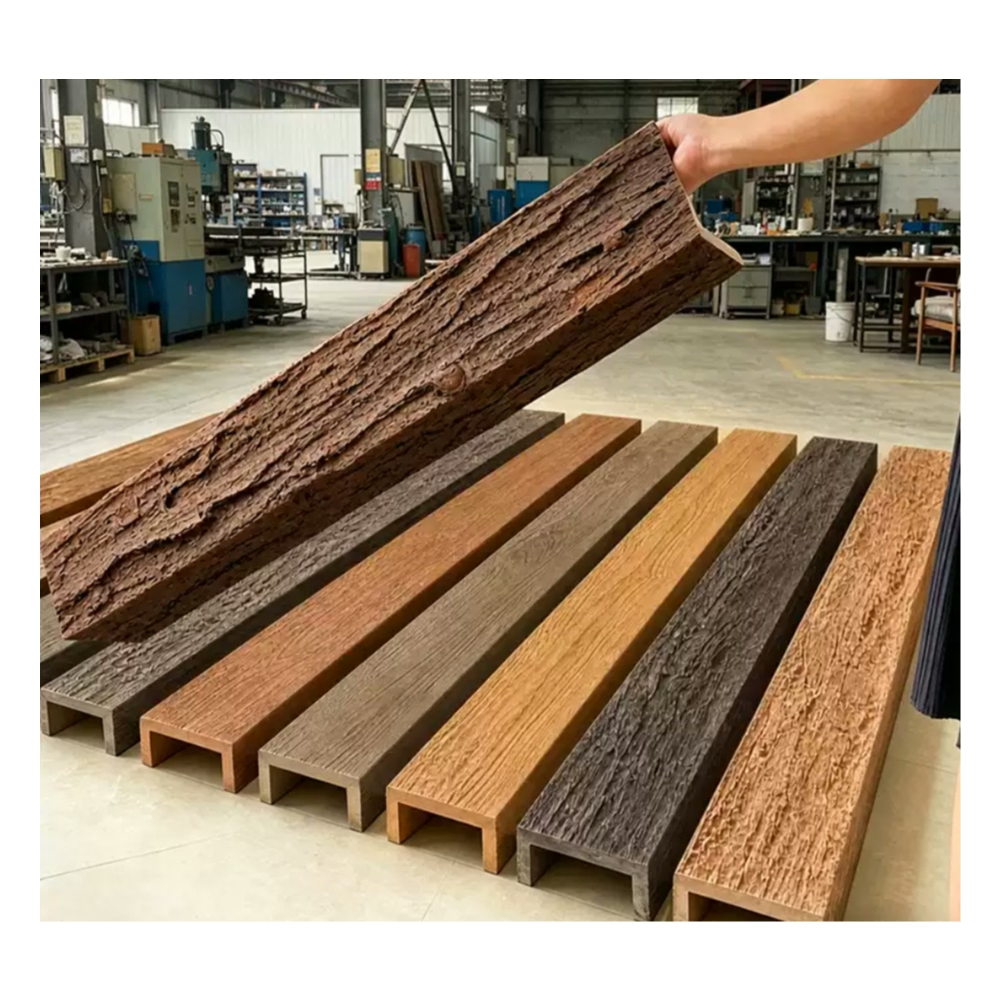
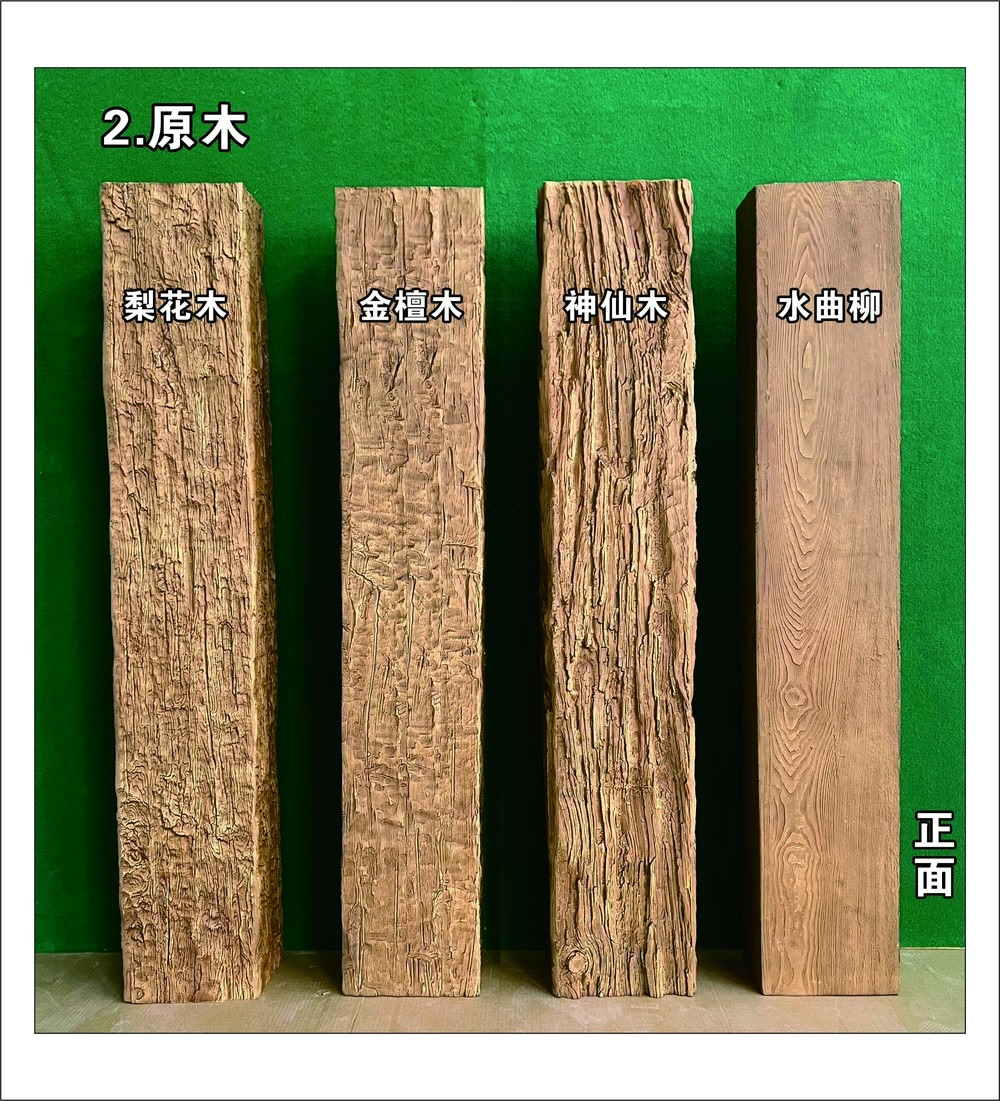
Wholesale Faux Timber Ceiling Beams | For Villa & Custom Home Projects
Villa projects and custom home projects sit at the high end of residential construction, but they're not the same segment. A villa is typically larger, often in a destination location, frequently designed by an architect with a specific design vocabulary. A custom home is typically a one-off or low-volume project designed by an architect or designer for a specific client, usually in a residential setting. The wholesale beam supply for each has different patterns.
This is what overlaps between villa and custom home projects, what diverges, and how a wholesale supplier structures service for both.
Where villa and custom home projects overlap
Despite the differences, villa and custom home projects share several characteristics:
Premium specifications
Both segments typically require premium beam specifications:
- High-density polyurethane (200+ kg/m³).
- Multi-tone factory finishes.
- Custom color matching against designer-specified references.
- Premium cleat hardware.
- Comprehensive documentation.
Standard builder-grade specifications rarely meet the bar for either segment.
Designer-driven specifications
Both segments typically involve designers or architects:
- Interior designers specify color and finish.
- Architects specify profile and cross-section.
- Landscape architects may specify covered outdoor beams for indoor-outdoor continuity.
The designer or architect drives the specification, not the contractor.
Custom color and finish development
Both segments typically require custom color development:
- The color matches other finishes in the home (flooring, cabinetry, trim).
- The finish may include weathering effects specific to the design intent.
- Multiple sample iterations are often required.
The color development process is similar for villa and custom home projects.
Documentation requirements
Both segments typically require comprehensive documentation:
- Density data.
- Fire rating (for some jurisdictions or attached structures).
- VOC emissions certification.
- Cleat specifications with engineering data.
- Care and maintenance guides.
The documentation depth is similar, though specific requirements vary by jurisdiction and project type.
Replacement stock expectations
Both segments typically expect replacement stock:
- 5 to 10 percent of order quantity held at the factory.
- Replacement lead time of 5 to 10 business days.
- Coverage period of 12 to 24 months.
The replacement terms are similar.
Where villa and custom home projects diverge
The differences between villa and custom home projects affect wholesale supply:
Scale
Villa projects typically involve larger beam volumes:
- 500 to 2,000+ linear feet per project.
- Larger cross-sections (8 inches by 10 inches to 12 inches by 14 inches for primary beams).
- More coordinating elements (corbels, beam caps, column wraps).
- Indoor-outdoor ceiling continuity adds substantial volume.
Custom home projects typically involve smaller beam volumes:
- 200 to 800 linear feet per project.
- Medium cross-sections (6 inches by 8 inches to 8 inches by 10 inches for primary beams).
- Fewer coordinating elements.
- Indoor-outdoor continuity is less common.
For wholesale suppliers, villa projects produce larger individual orders but with longer timelines. Custom home projects produce smaller orders with tighter timelines.
Timeline
Villa projects often have longer timelines:
- 18 to 36 months from order to final delivery.
- Construction phases spread over many months.
- Indoor and outdoor elements coordinated with landscaping and pool construction.
Custom home projects often have tighter timelines:
- 6 to 18 months from order to final delivery.
- Construction phases compressed.
- Less coordination with external elements.
Wholesale suppliers need different scheduling approaches for each.
Designer involvement
Villa projects typically involve a designer or architect throughout:
- The designer may be involved in specification development, sample approval, and even on-site quality verification.
- The designer may coordinate with multiple trade contractors.
Custom home projects may have less continuous designer involvement:
- The designer or architect specifies the beam during the design phase.
- The contractor handles the procurement and coordination.
- The designer may not be involved in the beam procurement details.
Wholesale suppliers work with designers more directly on villa projects.
Custom profile requirements
Villa projects more often require custom profile development:
- The villa's design vocabulary may call for a specific profile that doesn't exist in stock libraries.
- The architect's design intent drives profile development.
- The villa project's scale justifies the mold cost.
Custom home projects more often use stock or modified stock profiles:
- The custom home's design can typically be achieved with available profiles.
- The mold cost is harder to justify for a single home.
- Modified stock profiles are more common.
The profile work differs significantly between the segments.
Outdoor coverage
Villa projects often include substantial outdoor beam coverage:
- Covered terraces, lanais, loggias.
- Pool houses, outdoor kitchens.
- Pergolas and arbors.
The outdoor coverage requires exterior-rated beams and adds complexity to the specification.
Custom home projects sometimes include outdoor beams but less extensively:
- A covered porch or entry detail.
- An outdoor kitchen ceiling.
- Less extensive coverage overall.
The outdoor element is less central to custom home projects.
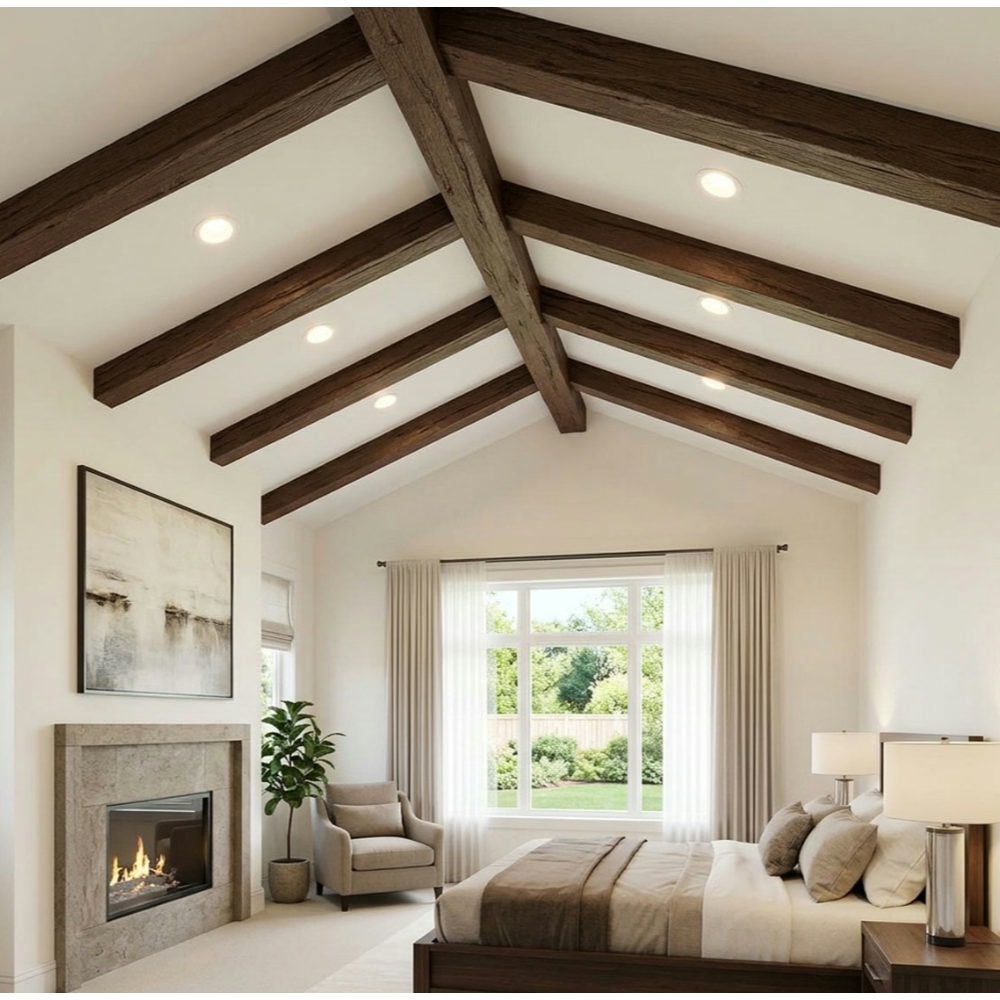
How wholesale suppliers serve both segments
A wholesale supplier serving both villa and custom home projects typically structures service as follows:
Villa service structure
For villa projects, the supplier typically provides:
- A dedicated senior project coordinator.
- Direct designer and architect communication.
- Custom profile development capability.
- Indoor-outdoor specification coordination.
- Phased delivery aligned to the villa's construction phases.
- Comprehensive documentation packages.
- Higher per-piece pricing reflecting the customization and service level.
Custom home service structure
For custom home projects, the supplier typically provides:
- A standard project coordinator.
- Communication primarily through the contractor.
- Stock or modified stock profiles.
- Indoor-only specifications in most cases.
- Single-phase or two-phase delivery.
- Standard documentation packages.
- Standard per-piece pricing.
Shared capabilities
Both segments benefit from:
- Mold library maintenance.
- Color library management.
- Production capacity flexibility.
- Logistics capability.
- Quality consistency.
The shared capabilities are the foundation; the segment-specific service is layered on top.
Pricing for villa and custom home wholesale
Pricing differs between the segments:
Villa pricing
- Per-piece pricing by length: 30 to 60 percent above stock tier pricing.
- Custom profile: $3,000 to $8,000+ mold development fee.
- Custom color: $300 to $800 color match fee.
- Coordinating elements: Per-piece pricing, often $50 to $200 per element.
- Total project cost: $15,000 to $60,000+ per villa.
Custom home pricing
- Per-piece pricing by length: 10 to 30 percent above stock tier pricing.
- Modified stock profile: $500 to $2,000 mold modification fee.
- Custom color: $200 to $600 color match fee.
- Coordinating elements: Per-piece pricing, often $30 to $100 per element.
- Total project cost: $3,000 to $15,000 per custom home.
The pricing reflects the different customization levels and service requirements.
How to choose a wholesale supplier for either segment
For both villa and custom home projects, the wholesale supplier evaluation criteria include:
- Designer relationship capability. The supplier should be able to work with designers and architects directly.
- Custom color development capability. The supplier should produce high-quality color matches with iteration cycles.
- Profile modification capability. The supplier should be able to modify stock profiles or develop custom profiles.
- Documentation depth. The supplier should provide the documentation the project requires.
- Replacement terms. The supplier should hold replacement stock with reasonable coverage terms.
- References. The supplier should have done comparable villa or custom home projects.
The criteria overlap significantly between the segments. A supplier who serves one well can typically serve the other.
Common pitfalls in villa and custom home wholesale
A few issues that come up often enough to flag:
- Treating custom home projects as small villa projects. The service expectations differ.
- Specifying villa-grade materials for custom home projects. Higher cost without proportional design benefit.
- Insufficient outdoor specification. Outdoor beams not rated for the environment.
- Designer-coordination gaps. The supplier doesn't communicate with the designer, leading to specification drift.
- Custom profile cost amortization. Custom profiles for one-off custom homes don't justify the mold cost.
Wholesale faux timber ceiling beams for villa and custom home projects is a category where the segment-specific service capabilities, the customization levels, and the project scale all need to align. The right wholesale supplier produces beams that match each segment's specific requirements. The wrong one applies the same approach to both, missing the differences.
Technical References
ASTM standards cited in every specification
Test Data
Lab results from internal testing program
Updated 2026
Reviewed against current product specs