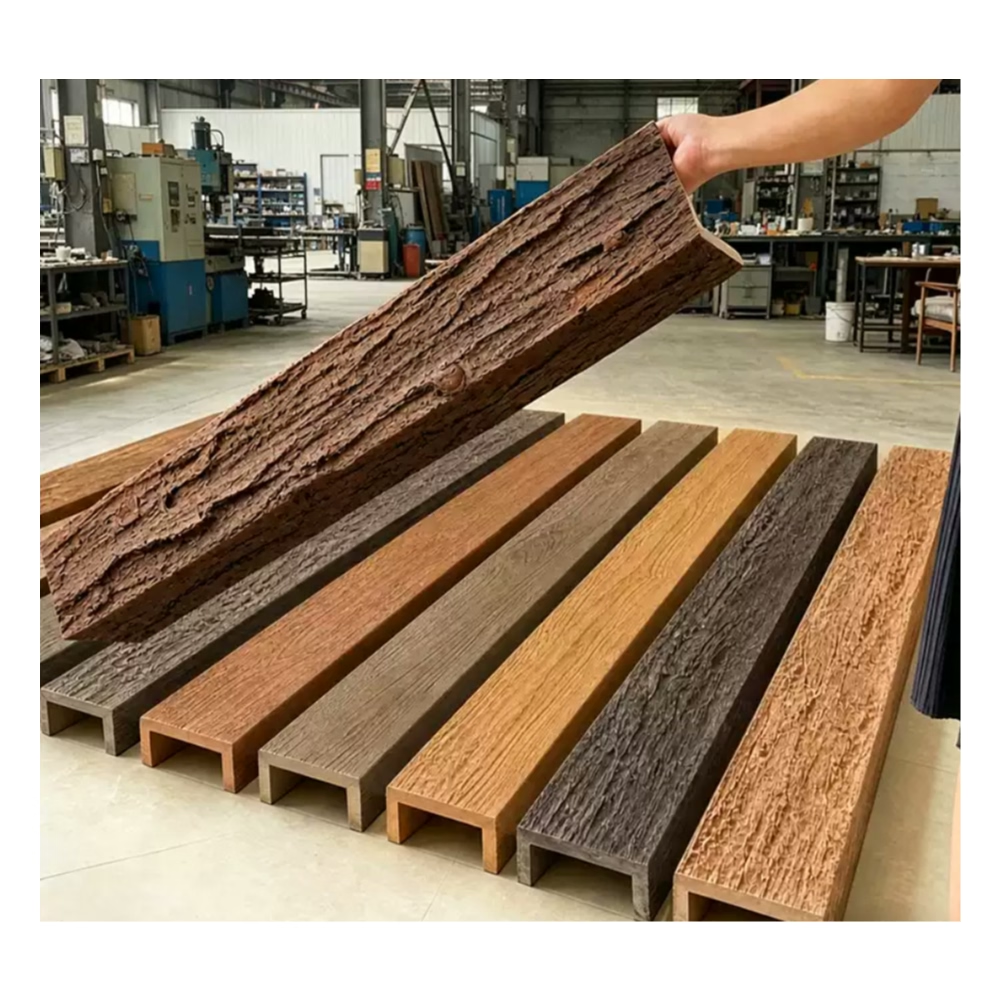
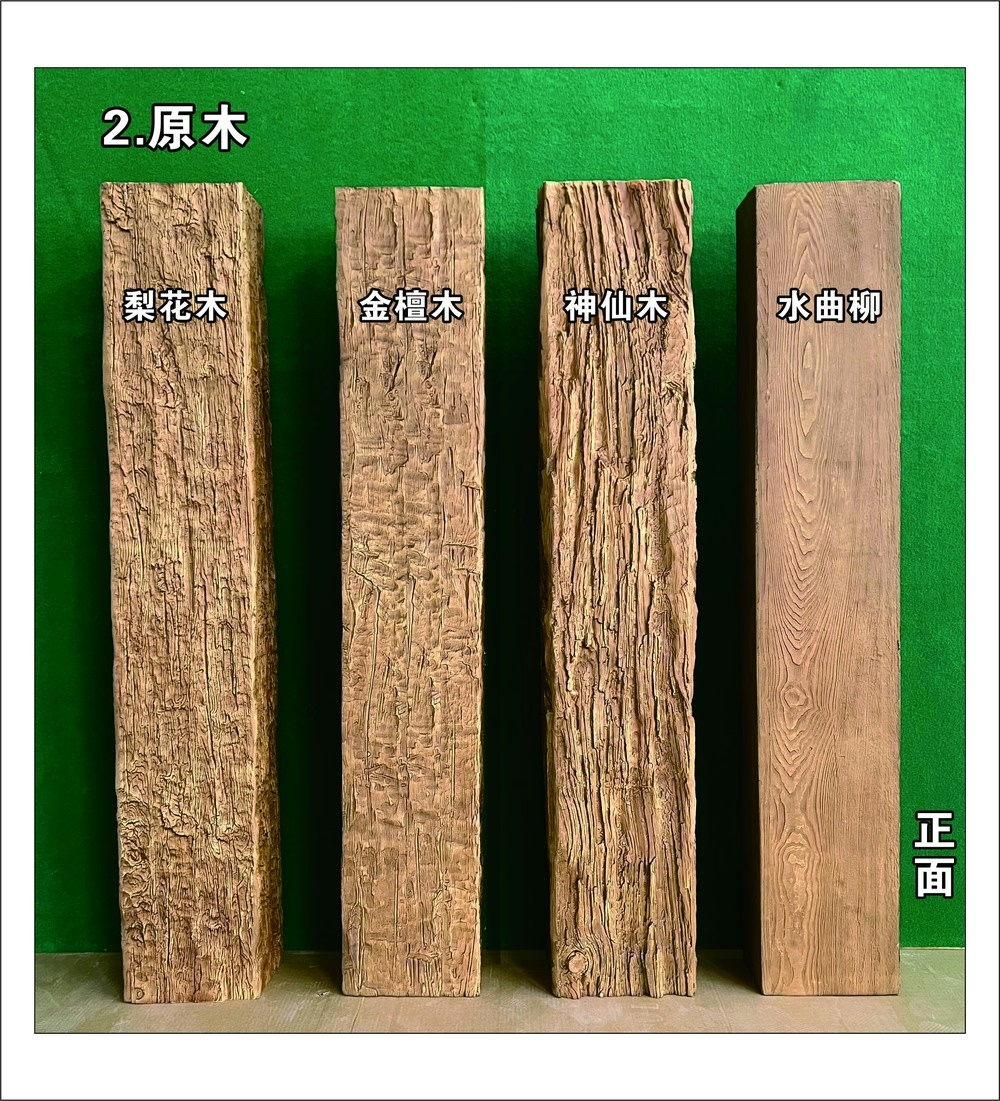
Wholesale Polyurethane Faux Timber Beams | Project Solutions for Builders
The relationship between a builder and a wholesale beam supplier has more dimensions than product, price, and lead time. The supplier capabilities that solve builder problems run through specification support, sample management, schedule reliability, field-condition response, and operational services that don't show up on a price comparison but determine whether a project runs smoothly or generates a series of compounding complications.
This article is about the wholesale relationship as a whole — what builders should expect from a wholesale polyurethane faux timber beam supplier, what separates project-solution suppliers from product-only suppliers, how to evaluate wholesale partners, and how to structure the partnership for long-term benefit.
The wholesale beam market has many participants. The participants that matter to builders are the ones that consistently deliver project outcomes, not just beam shipments.
What builders actually need from a wholesale beam supplier
A builder's relationship with a beam supplier doesn't begin at the order and end at delivery. It runs through the entire project lifecycle, from the moment the architect starts specifying beams to the moment the homeowner or property owner walks the completed project at the warranty inspection.
The needs builders have along that timeline:
Specification support. Early in the project, the architect and interior designer need product information, finish samples, and technical specifications to support the design process. The supplier needs to support these requests professionally without requiring the builder to manage the administrative load.
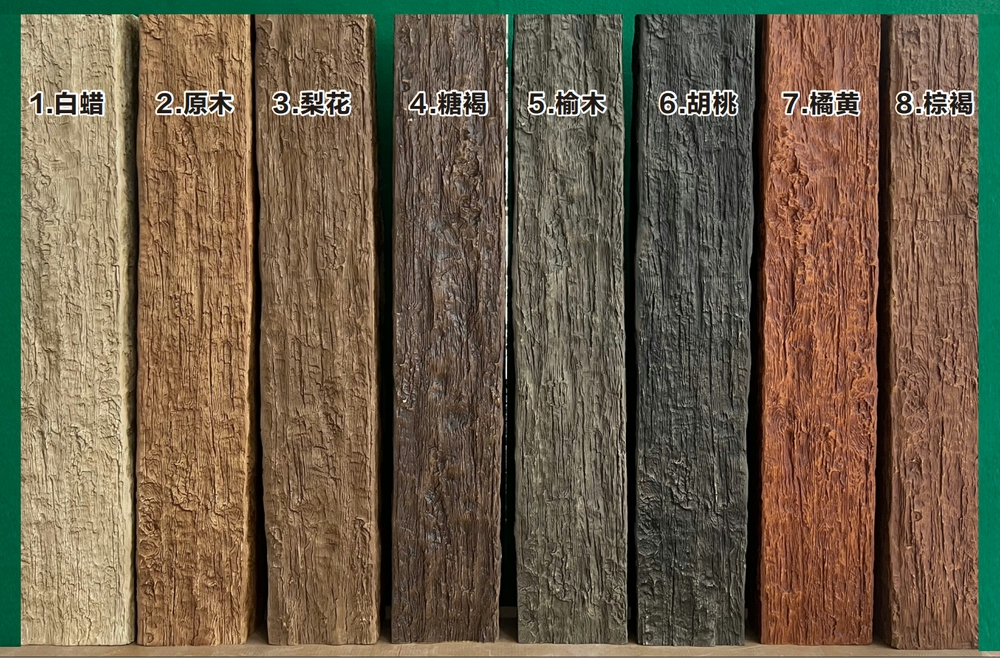
Sample management. As the design firms up, finish and profile samples need to be produced, delivered to the right parties, tracked through iteration, and eventually archived for future reference. Suppliers that manage sample logistics well reduce administrative friction on the builder's project team.
Pricing stability. Across the months between initial quote and final delivery, prices should remain reasonably stable. Suppliers whose prices shift during the project cycle force the builder to manage margin risk that should belong to the supplier.
Schedule reliability. Production and delivery need to align with the construction schedule. Suppliers who commit to dates and hold them give the builder predictable cash flow and labor planning. Suppliers who miss dates force the builder into reactive schedule management that consumes management attention.
Field-condition response. Field conditions inevitably differ from the model. Suppliers who respond to field-condition questions quickly and with practical solutions save the builder's team from spending project time on problem-solving.
Documentation completeness. Code compliance documentation, finish documentation, warranty documentation, and maintenance documentation need to be assembled into project closeout packages. Suppliers that deliver these proactively reduce the builder's project closeout burden.
Replacement and repair support. Occasional damage, field-condition change orders, and warranty events all require beam supply response. Suppliers that handle replacement and repair efficiently protect the builder's standing with the property owner.
The wholesale beam supplier that delivers consistently across these dimensions becomes a long-term project partner. The one that delivers only on price competes with manufacturers globally and offers no sustainable value.
The supplier capability framework
Builder-grade wholesale beam suppliers cluster into several capability tiers. Understanding the tiers helps builders evaluate suppliers and select the relationship appropriate to their business model.
Tier 1: Production-only suppliers. Source from manufacturing catalogs. Provide product, basic pricing, and delivery. Limited specification support, minimal sample customization, transactional relationship. Appropriate for builders running simple stock-profile, simple-finish projects without significant design team involvement.
Tier 2: Catalog-with-service suppliers. Add some specification support and basic sample services on top of Tier 1 capabilities. Sample selection from standard finishes, design team communications handled professionally, basic project coordination. Appropriate for production builders with recurring specifications across many similar projects.
Tier 3: Project-solution suppliers. Full specification support including profile selection, finish development, custom sample production, project-specific QC documentation, scheduled delivery coordination. Suppliers that understand the builder's business and adapt to it. Appropriate for custom home builders, remodel contractors with project variety, and any builder whose design teams expect substantive supplier engagement.
Tier 4: Strategic partners. Tier 3 capabilities plus collaborative product development, standing specification support, joint marketing initiatives, inventory programs, and dedicated account management. Appropriate for builders whose annual volume and business model warrants the relationship depth.
Most wholesale builder relationships operate between Tier 2 and Tier 3. Tier 4 relationships are reserved for builders whose volume and consistency make them strategic accounts for the supplier.
Pricing structures that build partnership
The pricing structure of the wholesale beam relationship shapes how the partnership develops. Several structures are common, each with different implications.
Tiered volume pricing. Per-piece or per-linear-foot pricing that decreases at quantity thresholds. Simple to administer and clear in its implications. Common for production builder relationships and lumberyard-style wholesale accounts.
Negotiated project pricing. Per-project pricing based on specification and quantity. Allows pricing flexibility for unusual projects but creates administrative overhead and may produce inconsistent pricing across similar projects.
Annual volume commitments. Pricing based on a builder's annual volume commitment rather than individual project quantities. Volume discounts increase as the builder's annual volume increases. Rewards consistent business and supports supplier planning.
Standing specification pricing. A defined specification (profile, finish, fire rating, mounting) carries a fixed price across all projects regardless of project quantity. Simplest pricing structure for builders running the same beam specification on most projects.
Hybrid structures. Combining elements of the above. For example, a standing specification price for the most common spec and negotiated pricing for unusual specs.
The right pricing structure depends on the builder's business pattern. Production builders benefit most from standing specification pricing. Custom builders benefit from negotiated project pricing. Mixed builders with both production and custom work benefit from hybrid structures.
What all these structures share is the principle that long-term partnership pricing should be predictable, consistent, and rewarded with volume loyalty. Suppliers that create pricing chaos through quote-by-quote negotiation make the relationship more difficult for both parties.
Operational services that matter
Beyond product and pricing, the operational services a wholesale supplier provides affect the builder's project efficiency. The most consequential operational services:
Direct design team communication. Suppliers that communicate directly with architects and interior designers reduce the builder's administrative load. Builders shouldn't have to be the information conduit between design teams and suppliers.
Sample shipping and tracking. Samples need to reach designers, architects, owners, and sometimes code officials at multiple points in the project. Suppliers that manage shipping logistics and tracking reduce administrative complexity.
Documentation templating. Suppliers that provide template documentation packages (closeout documents, warranty certificates, code compliance letters) on the builder's letterhead or format reduce the documentation effort at project closeout.
Sample archiving. Suppliers that maintain sample archives for repeat specifications streamline subsequent projects. New projects reference archived samples rather than requesting new samples.
Master sample retention. Approved production masters retained by the supplier for the duration of multi-project relationships ensure finish consistency across projects. Suppliers that retain masters properly provide this service systematically; suppliers without discipline provide it inconsistently.
Field-condition consultation. When project conditions surprise the builder at installation, suppliers that can consult on the fly (by phone, video, or email with photos) save the builder from extended field decisions.
Custom sample fees management. Sample production has real costs. Suppliers that absorb some sample costs into the project relationship for standing specifications reduce the per-project friction.
Quick-ship stock. Some beam specifications sell from stock inventory rather than produced-to-order. Quick-ship availability for emergency replacements, additions, or repairs reduces project delays. Maintain an inventory relationship with the supplier for stock programs.
Each of these services saves time that the builder's team would otherwise spend on administrative or problem-solving tasks. The total savings across a year of projects is substantial.
Evaluating wholesale suppliers as partners
The supplier evaluation process for wholesale partnership should examine dimensions beyond product and price.
Production capacity and reliability. Visit the production facility if possible. Look at production flow, equipment condition, quality control processes, and inventory management. These observations tell more about supplier reliability than any verbal pitch.
Financial stability. A wholesale supplier with financial issues becomes a problematic partner. Verify the supplier's business stability through credit checks, banking references, industry reputation, and observation of their operational sustainability.
Reference projects comparable to yours. Suppliers with relevant experience understand the builder's business. Verify reference projects not just through the supplier's claims but through direct reference contact.
Communication discipline. Working with the supplier during the evaluation period is itself a sample of the relationship. Suppliers who respond promptly, with appropriate detail, during evaluation demonstrate the discipline that carries through project work.
Documentation quality. Review the supplier's standard documentation: product data sheets, installation guides, warranty terms, QC records. The quality of these documents reflects the quality of the operational systems behind them.
Sample production capability. Request samples from the supplier at evaluation stage. The sample quality, turnaround, and tracking through the sample process is diagnostic of the relationship quality.
Pricing transparency. Suppliers that quote transparently — with itemized components, clear volume thresholds, and disclosed terms — are easier to work with than suppliers that quote as a single number without explanation.
Problem-handling history. Ask the supplier directly about problem cases and how they were resolved. Suppliers who handle problems transparently and competently in the evaluation stage will handle them similarly during project work. Suppliers who deflect questions about problems are diagnostic in a different way.
Strategic alignment. Long-term partnerships benefit from alignment between the builder's business direction and the supplier's capabilities. Builders expanding into commercial work need suppliers with commercial-grade capabilities. Builders focusing on luxury residential need suppliers with artisan capabilities.
The evaluation process is significant investment of time but produces the right supplier relationship. The wrong supplier relationship costs more.
Structuring the partnership for long-term benefit
Once a wholesale supplier is selected, structuring the partnership for long-term benefit involves operational decisions.
Annual volume projection. Builders should share their annual volume projections with the supplier to enable better production planning and pricing support. Suppliers cannot optimize for volume they cannot predict.
Standing specification commitment. Where the builder has standard specifications that apply across many projects, formalize the standing specification with the supplier. Standing specifications produce better pricing and faster project execution.
Sample and finish archive participation. Builders benefit from participating in the supplier's sample and finish archive program. Archived samples speed subsequent projects. Participation also supports the builder's role as a known specifier with the supplier.
Single-supplier concentration discipline. Builders benefit from concentrating volume with reliable suppliers rather than spreading volume across many. Concentration supports supplier reliability, strengthens pricing leverage, and simplifies relationship management. Multi-supplier strategies work for redundancy at scale but dilute relationship quality in smaller volumes.
Joint planning and review. Periodic business reviews with the wholesale supplier (quarterly or semi-annual) maintain alignment on volume trends, specification changes, market developments, and operational issues. Suppliers welcome these reviews because they deepen the partnership.
Documentation standardization. Builders benefit from working with the supplier to standardize documentation formats that the builder can use across multiple projects. Standardized documentation reduces administrative load per project.
Long-term communication. Builder purchasing and project management roles turn over. Long-term partnerships benefit from institutional knowledge rather than individual relationships. Working with the supplier's management team rather than only with current contacts preserves the partnership through personnel changes.
These structural decisions support the partnership's long-term value. Suppliers that see their builder clients invest in the relationship reciprocate with operational excellence. Suppliers that see transactional relationships invest at transactional levels.
Common partnership failure modes
Several specific failures show up repeatedly in wholesale beam partnerships. Recognizing them in advance prevents the failure.
Misaligned expectations on sample costs. Builders that assume samples are free and suppliers that charge for samples they previously provided free create friction. Clear communication on sample cost policies upfront prevents the friction.
Unclear communication about decision authority. Builders who route all decisions through purchasing staff when the architect needs direct communication create delays. Clear communication protocols about who decides what prevents delays.
Pricing that drifts with project conditions. Suppliers that quote project-by-project and adjust pricing based on current backlog create margin risk for builders. Tiered or standing specification pricing prevents the drift.
Schedule delays that aren't communicated. Suppliers that delay shipments without advance notice force builders into reactive response. Suppliers that communicate potential delays proactively enable builders to plan alternative approaches.
Quality variations across orders. Suppliers whose QC discipline lapses on certain orders produce inconsistent quality across a builder's body of work. Suppliers with rigorous QC consistency protect the builder's quality reputation.
Replacement costs that aren't addressed upfront. Suppliers that charge premium prices for replacement beams beyond the original order create friction during warranty events. Suppliers with clear replacement cost policies preserve the partnership through warranty events.
These failure modes are all preventable through clear communication, rigorous operational discipline, and partnership structures that align incentives. The right wholesale beam partnership avoids all of them.
Relationship depth and project outcomes
The depth of the wholesale relationship correlates with project outcomes. Builders working with deeply integrated supplier partnerships report:
- Smoother project execution with fewer surprises
- Higher quality consistency across their work
- Better margin control through predictable pricing
- Faster project cycles through standing specification support
- Lower warranty exposure through replacement and repair services
- Easier closeout through standardized documentation
These outcomes compound over time. A builder that builds three projects per year with a strong supplier relationship produces better outcomes across years than a builder that runs fifteen projects per year through transactional supplier sourcing.
Wholesale polyurethane faux timber beam partnerships reward builders who invest in them. The investment is in time and attention during supplier selection, in operational alignment through the partnership structure, in volume concentration on the chosen partners, and in consistent communication throughout the relationship lifecycle.
The investment pays back through projects that run smoothly, property owners who are satisfied with the finish, and a builder reputation that grows with each completed project. That is the value proposition of wholesale beam partnerships built for the long term.
Closing note on the builder's role
The wholesale beam supplier provides capabilities. The builder brings the relationship structure that unlocks those capabilities. Strong partnerships require both parties operating at a high level.
Builders who treat their wholesale relationships as strategic, who share information openly, who concentrate volume intentionally, and who maintain institutional knowledge through personnel changes earn returns on those investments that accumulate across the years of practice. Builders who treat wholesale relationships as transactional, who spread volume to optimize short-term price, and who fail to invest in operational alignment get transactional results.
The polyurethane faux timber beam market offers both possibilities. The builders who choose strategic partnership are the ones whose projects benefit from the partnership model. The builders who choose transactional relationship pay less per project but pay more in operational friction over the long term.
The choice is real, and the choice matters. Most builders who experience strong wholesale partnerships choose never to go back to transactional relationships. The compounding operational and quality benefits change how they think about supplier relationships across every category of materials, not just beams.
Technical References
ASTM standards cited in every specification
Test Data
Lab results from internal testing program
Updated 2026
Reviewed against current product specs