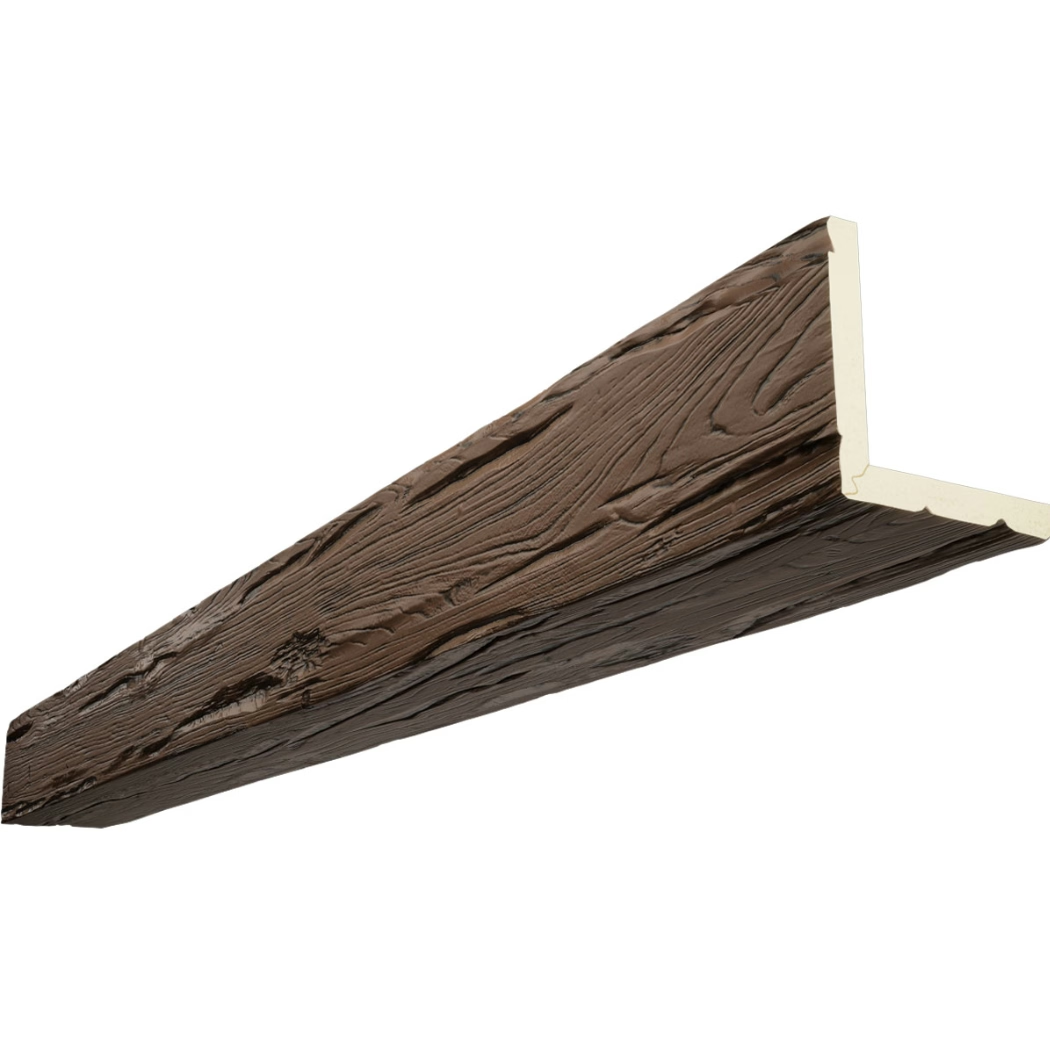
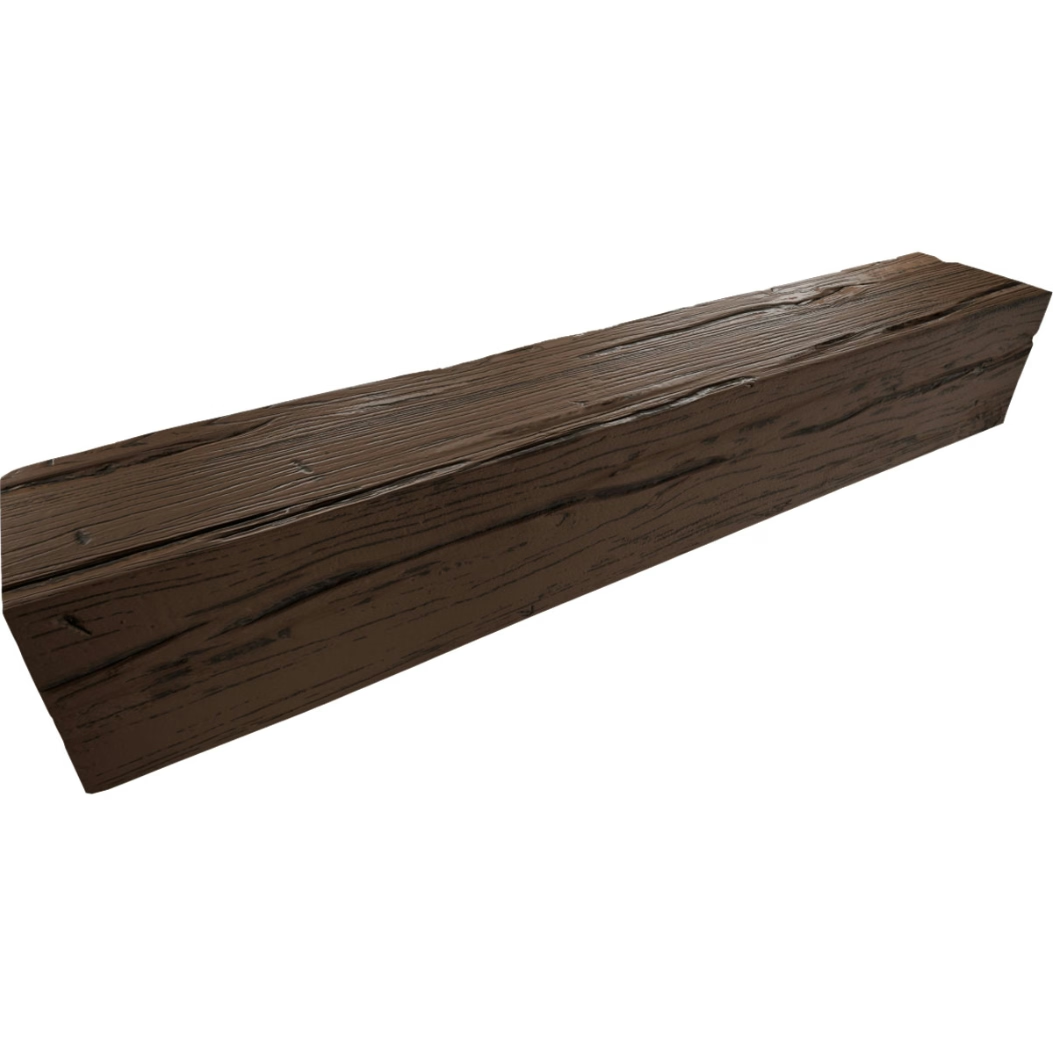
Artisan Faux Ceiling Beams | Custom Texture for Residential Builders
Texture is what gives an artisan faux ceiling beam its character. Color and profile get the most attention, but texture is what reads at close range—the visual depth, the surface variation, the sense that the beam was shaped by tools or aged by time. For residential builders specifying custom texture, understanding the texture library and the application process produces better outcomes.
This is how custom texture works on artisan faux ceiling beams, what the texture library offers, and how residential builders should approach texture specification.
Why texture matters in artisan beams
Texture affects how a beam reads in a space:
At close range
Beams at eye level (under 12 feet of ceiling height, often in primary living areas) need texture that holds at close range:
- Smooth textures look like generic molded plastic.
- Light textures read as flat and unconvincing.
- Medium textures start to suggest wood character.
- Heavy textures deliver authentic artisan appearance.
For primary living areas with closer-view beams, medium to heavy textures are appropriate.
From across the room
Beams viewed from across the room (over 12 feet of ceiling height, or in larger spaces) need texture that reads from a distance:
- Subtle texture variations disappear at distance.
- More pronounced textures remain visible.
- Texture pattern should align with the room's scale.
For larger spaces, more pronounced textures maintain visual character from across the room.
Under different lighting
Beams are lit differently throughout the day:
- Natural light from windows reveals texture depth.
- Downlighting from recessed fixtures casts shadows in the texture.
- Uplighting from floor or accent fixtures emphasizes texture.
The texture should respond to different lighting conditions. Texture that's invisible under one lighting condition may dominate under another.
The texture library
For artisan faux beams, factories offer a texture library with several categories:
Smooth or light texture
- Smooth planed. Smooth, slightly polished surface.
- Light planing marks. Subtle parallel marks from planing.
- Very light texture. Almost invisible texture for clean aesthetic.
Smooth textures work for modern, contemporary, or minimalist designs.
Medium texture
- Rough-sawn. Visible circular saw marks in parallel or curved patterns.
- Wire-brushed. Soft wood removed, harder grain raised.
- Light hand-hewn. Subtle axe marks.
Medium textures work for transitional, farmhouse, or industrial designs.
Heavy texture
- Heavy hand-hewn. Pronounced axe or adze marks.
- Weathered. Aged appearance with erosion patterns.
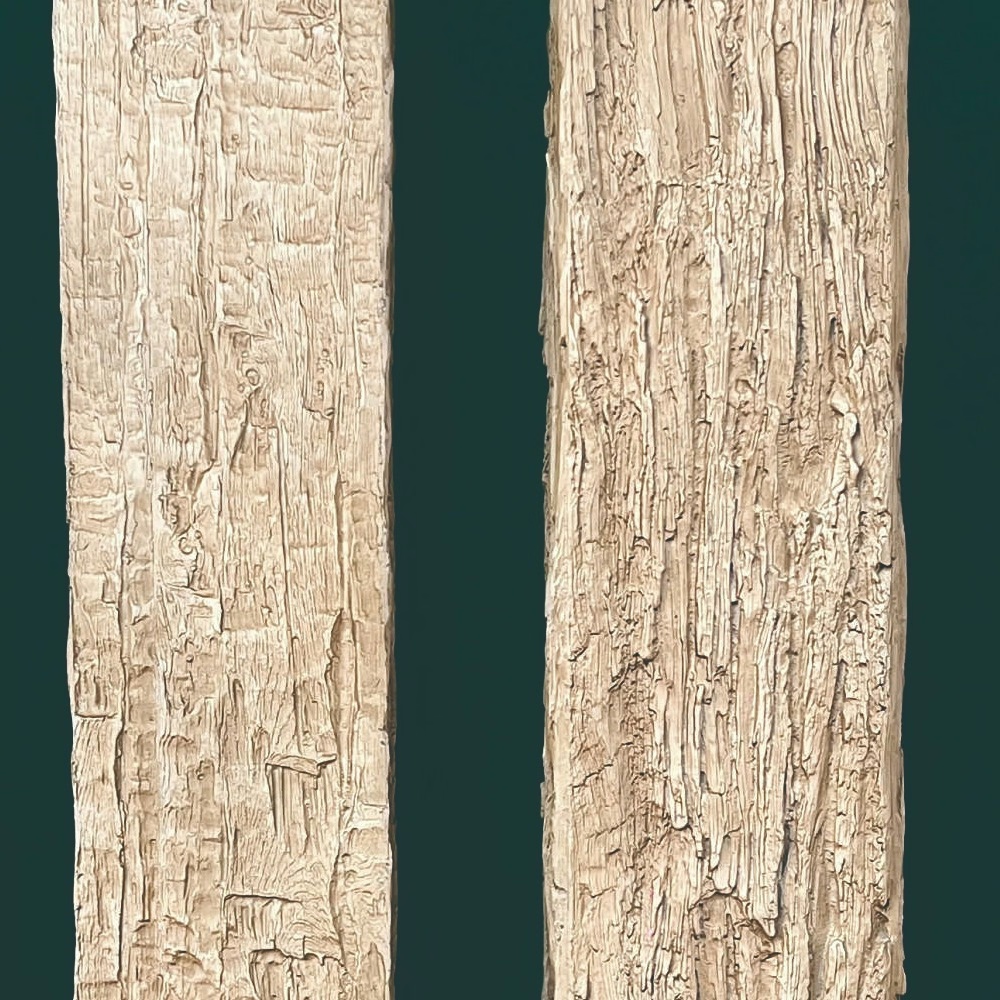
- Reclaimed. Multiple layers of wear, paint traces, or aging.
Heavy textures work for rustic, artisan, or reclaimed designs.
Specialty textures
- Distressed. Intentional marks, dents, or wear patterns.
- Chalked. Painted and aged with chalk residue.
- Wire-brushed with stain. Combined texture and color emphasis.
Specialty textures work for specific design intents.
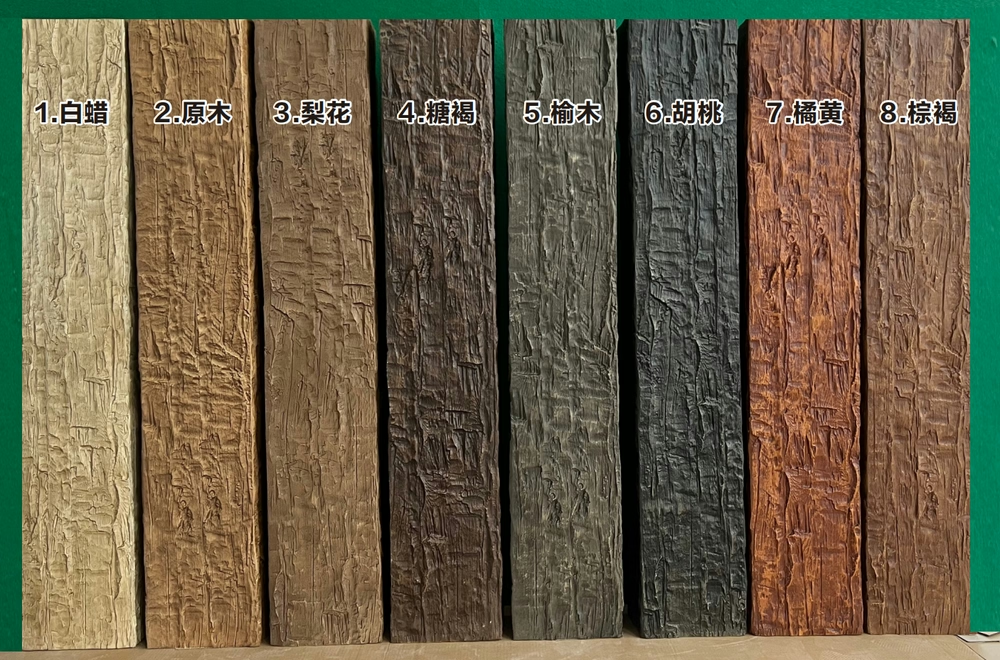
The custom texture process
For a residential builder specifying custom texture, the process typically includes:
Reference evaluation
The factory's texture specialist evaluates the builder's reference:
- Physical samples when available.
- High-quality photographs when physical samples aren't available.
- Reference images showing the desired texture pattern.
- Scale reference (texture that looks subtle on a small sample may be invisible on a full-size beam).
The specialist identifies the texture elements that need to be reproduced.
Sample production
The factory produces texture samples:
- 12 to 24 inch sections showing the proposed texture.
- Multiple variations showing the texture's sensitivity to application.
- Comparison against the builder's reference.
Sample production typically takes 1 to 2 weeks.
Iteration
The builder reviews the samples and either approves, requests modifications, or rejects:
- Cycle 1: Initial match attempt.
- Cycle 2: Adjustment based on feedback.
- Cycle 3: Final refinement.
Most custom textures require 1 to 3 iteration cycles.
Final approval
The builder approves the texture:
- Texture reference documented.
- Application technique documented.
- Reference sample held for production runs.
The approved texture becomes part of the order specification.
Production runs
For production runs, the factory:
- Uses the approved texture.
- Maintains texture consistency across production batches.
- Monitors quality against the reference sample.
Production typically takes 3 to 4 weeks.
Texture and finish interaction
Custom texture interacts with the finish in important ways:
Texture absorbs finish unevenly
Textured surfaces absorb finish differently in different areas:
- Raised grain catches more finish, appears darker.
- Recessed areas absorb less finish, appear lighter.
- Texture depth affects how much variation the finish shows.
The factory's finish application accounts for texture to produce the intended look.
Texture affects color depth
Deeper textures create more color variation:
- Heavy textures show more multi-tone variation.
- Light textures show less variation, appear more uniform.
- Color depth should match the texture depth.
For artisan beams, deeper textures typically have more color variation.
Texture and weathering effects
Weathering or aging effects work with the texture:
- Chalking accumulates in recessed areas.
- Worn edges show on raised areas.
- Paint traces remain in protected areas.
The factory coordinates texture and weathering effects for authentic appearance.
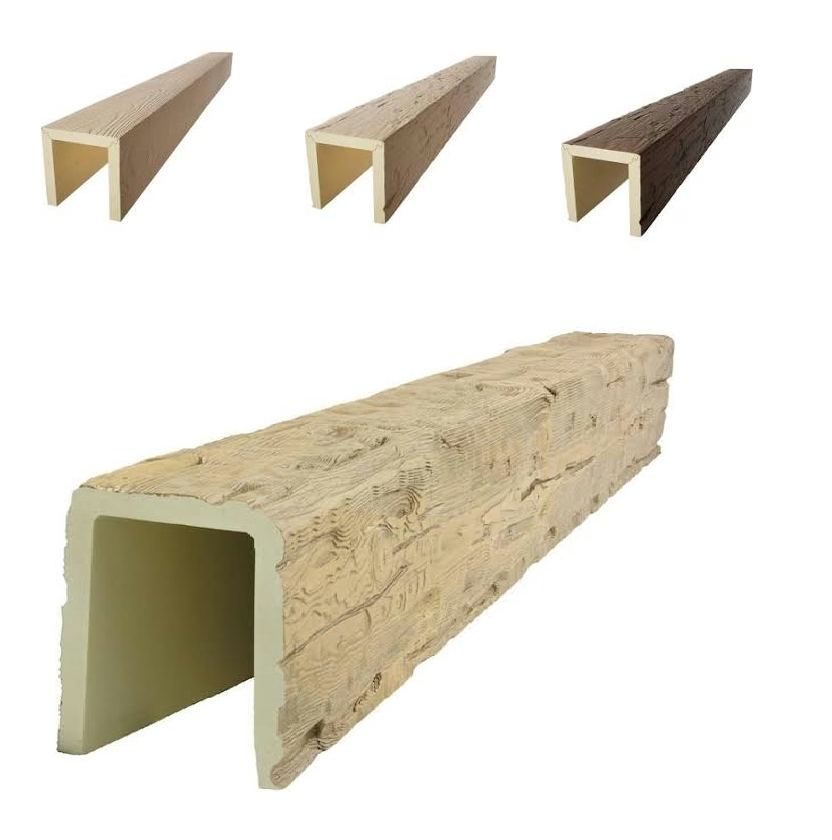
Texture specification for residential projects
For residential builders specifying custom texture, several considerations matter:
Match the room's design
The texture should match the room's design intent:
- Modern design: Smooth or light texture.
- Transitional design: Medium texture.
- Rustic or farmhouse: Heavy texture.
- Specific character (reclaimed, hand-hewn): Specialty texture.
The texture should support, not compete with, the room's design.
Consider the beam's location
The beam's location affects texture choice:
- Eye level: Texture that holds at close range.
- Higher than eye level: Texture that reads from typical viewing angles.
- Outdoor or covered outdoor: Texture appropriate for the environment.
Consider lighting conditions
The room's lighting affects texture:
- Downlighting emphasizes texture.
- Uplighting emphasizes texture less.
- Natural light from windows emphasizes texture.
- Indirect lighting minimizes texture.
The texture should respond to the room's lighting.
Consider the homeowner's preferences
For custom residential projects, the homeowner's preferences matter:
- Some homeowners want bold texture.
- Others prefer subtle texture.
- The texture is a permanent design element.
The texture should align with homeowner expectations.
Cost and lead time for custom texture
Custom texture typically carries modest premiums:
- Custom texture development fee. $200 to $500 per texture.
- Per-piece pricing premium. 5 to 15 percent above standard texture.
- Iteration cycles. Often included in development fee.
Lead times for custom texture:
- Texture development: 1 to 3 weeks.
- Sample iteration: 1 to 4 weeks.
- Production run: 3 to 4 weeks.
Total lead time is typically 5 to 11 weeks for the first order, less for reorders.
Common pitfalls in custom texture specification
A few issues that come up often enough to flag:
- Texture too subtle for the beam's scale. A subtle texture that looks fine on a sample may be invisible on a full-size beam.
- Texture that doesn't match the design. A modern design with heavy texture creates visual conflict.
- Insufficient sample iteration. Rushing through sample approval produces mismatched texture.
- Texture not maintained across production. Variation between production runs produces inconsistent appearance.
- Texture inappropriate for the location. Texture that doesn't respond to the room's lighting.
How residential builders evaluate custom texture suppliers
For residential builders evaluating custom texture suppliers:
- Texture library diversity. The supplier has a range of texture options.
- Custom texture capability. The supplier can develop custom textures to match references.
- Sample quality. The supplier's samples demonstrate high-quality texture reproduction.
- Quality consistency. The supplier maintains texture consistency across production runs.
- References. The supplier has done comparable custom texture work.
Artisan faux ceiling beams custom texture for residential builders is a category where the texture library, the custom development capability, and the quality consistency all need to align. The right supplier produces beams with texture that reads authentically at the room's viewing distance. The wrong one produces beams with texture that looks generic or doesn't match the design intent.
Technical References
ASTM standards cited in every specification
Test Data
Lab results from internal testing program
Updated 2026
Reviewed against current product specs