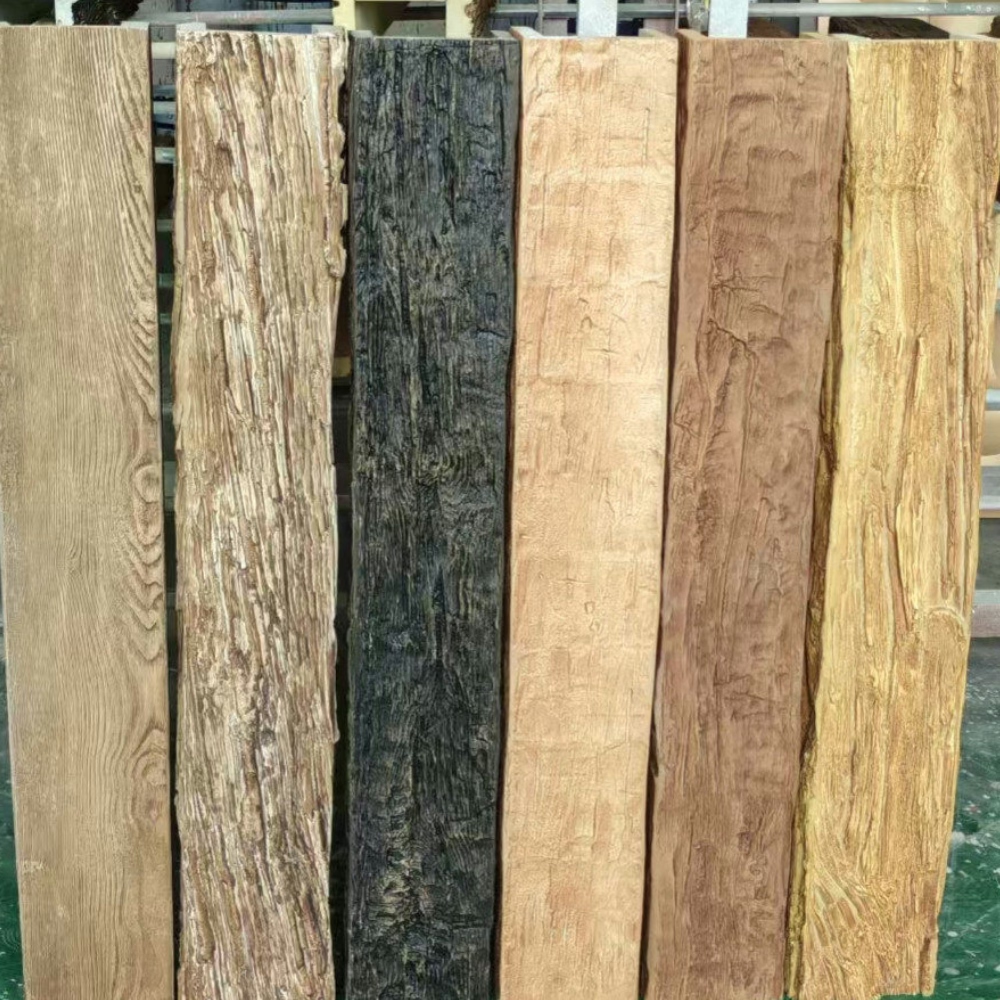
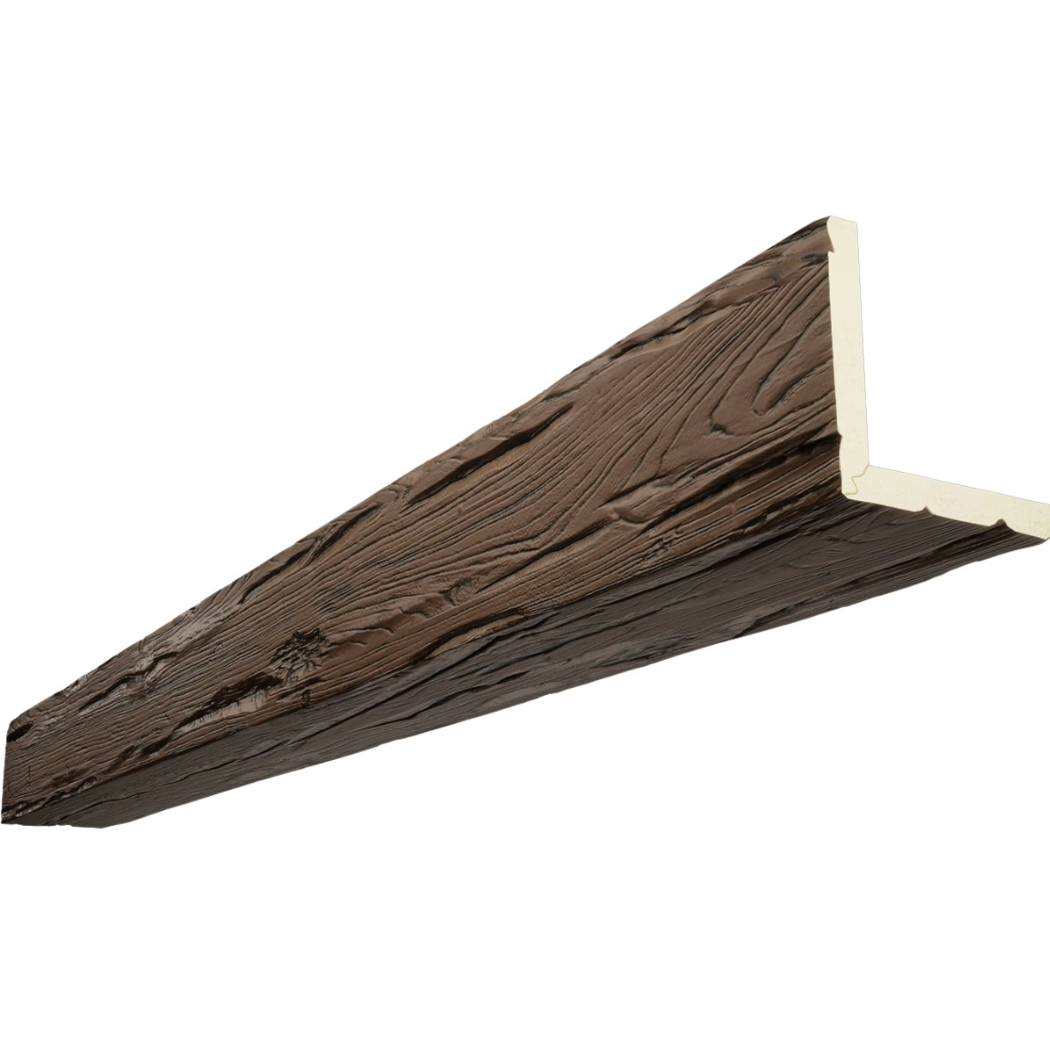
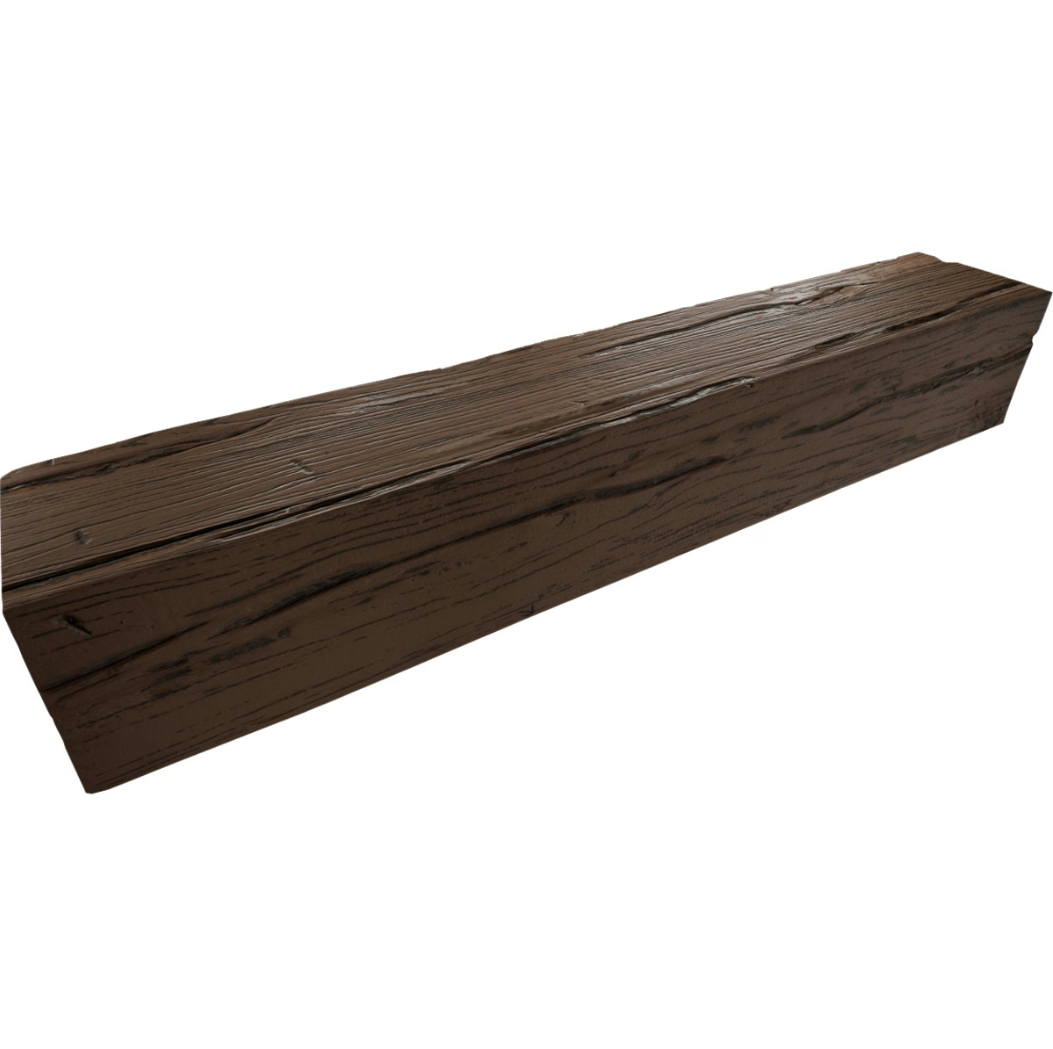
Artisan Polyurethane Beams | Wholesale for Luxury Residential Projects
Luxury residential projects have beam specifications that go well beyond the standard supplier data sheet. Density, fire rating, VOC emissions, color matching depth, finish chemistry, structural cleat ratings—every parameter that the supplier's stock catalog treats as a footnote becomes a specification line item at the luxury level. The reason isn't bureaucracy; it's that the interior designer, the architect, and the homeowner are all going to ask about these details, and the contractor needs documentation to answer them.
This is what the luxury spec actually requires, what the documentation looks like, and how luxury builders source it at wholesale.
Density: why it matters beyond the data sheet
Polyurethane faux beam density is typically specified in kg/m³. The industry standard for builder-grade beams is 80 to 150 kg/m³. Artisan or luxury beams typically run 200 to 320 kg/m³.
The density matters for several reasons:
- Edge detail. Higher-density foam holds crisper edge detail. A 1/8-inch chamfer stays sharp; a 1/4-inch reveal stays clean. Lower-density foam rounds off at the edges, and the edge detail reads as soft or imprecise.
- Surface texture. Higher-density foam captures finer texture detail from the mold. The grain patterns, knots, and weathering marks are more visible and more legible.
- Weight and handling. Higher-density beams weigh more. An 8-inch by 8-inch beam at 250 kg/m³ is significantly heavier than the same beam at 120 kg/m³. The cleat hardware and the install crew need to account for this.
- Long-term stability. Higher-density foam resists compression and deformation over time. A beam installed in a vaulted ceiling that doesn't compress or sag is part of what the homeowner is paying for.
For luxury projects, density is typically specified at 200 kg/m³ minimum, often 250 kg/m³ or higher. The supplier's data sheet should report the tested density, not just a category.
Fire rating: ASTM E84 and Euroclass
Polyurethane is a petroleum-based foam, and its fire performance is a real specification point for any project under inspection. The two main rating systems:
- ASTM E84 (North American standard). Tests surface burning characteristics, reporting a Flame Spread Index and a Smoke Developed Index. Class A is the best rating (FSI 0-25, SDI 0-450). Most polyurethane faux beams without fire treatment rate Class C or D. With fire-retardant treatment, Class B or A is achievable.
- Euroclass (European standard, EN 13501-1). Tests reaction to fire, with classifications A1, A2, B, C, D, E, F. Most polyurethane faux beams without treatment rate D or E. With treatment, B or C is achievable.
For luxury residential projects, the fire rating requirement depends on the jurisdiction and the building type. Most single-family luxury homes don't require a specific fire rating for decorative beams. Multifamily luxury (condominiums, apartments), hotels, and any project with strict building codes will require a Class B or better ASTM E84 rating, or a Euroclass B or C rating.
The supplier's data sheet should report:
- The test method (ASTM E84 or EN 13501-1).
- The test result (Flame Spread Index and Smoke Developed Index for ASTM E84, or Euroclass classification for EN 13501-1).
- The test date and the testing laboratory.
- Whether the rating applies to the beam with the factory finish or without.
Luxury builders typically require fire-rated beams for any project where the rating will be checked at inspection. The supplier should provide the documentation before the order is placed, not after.
VOC emissions and indoor air quality
Polyurethane foam can off-gas volatile organic compounds (VOCs), particularly in the first weeks after manufacture. For luxury projects with strict indoor air quality requirements—some health-focused homeowners, some green building certifications—this matters.
Relevant certifications and tests:
- GREENGUARD Gold. Tests for VOC emissions and certifies products that meet strict indoor air quality thresholds. Many polyurethane products can achieve GREENGUARD Gold certification.
- CDPH Standard Method v1.2. California Department of Public Health standard, used by some green building programs.
- Indoor Air Comfort Gold. European certification for low VOC emissions.
For luxury projects with indoor air quality specifications, the supplier should provide documentation of the relevant certification or test result. The beam itself isn't usually the dominant source of VOCs in a home (paints, finishes, and furnishings contribute more), but the documentation matters for the project's overall air quality specification.
Color matching depth
Luxury interior designers typically specify beam colors against specific reference palettes—Farrow & Ball, Benjamin Moore, Minwax, or designer-specific formulas. The polyurethane factory's color match process has to handle this depth of specification.
The color match process for luxury work:
- The designer provides a physical sample. Usually a 4-inch square of the cabinet, floor, or other finish being matched. Sometimes a labeled paint chip or wood sample.
- The factory's colorist develops a formula. This typically takes 3 to 7 days, with multiple iterations.
- A reference sample is produced. A 12-inch section of beam with the matched color, shipped to the designer for approval.
- Full production is run against the approved reference. The factory holds the reference and matches every beam against it.
The depth of color matching at the luxury level goes beyond the basic factory color. It includes:
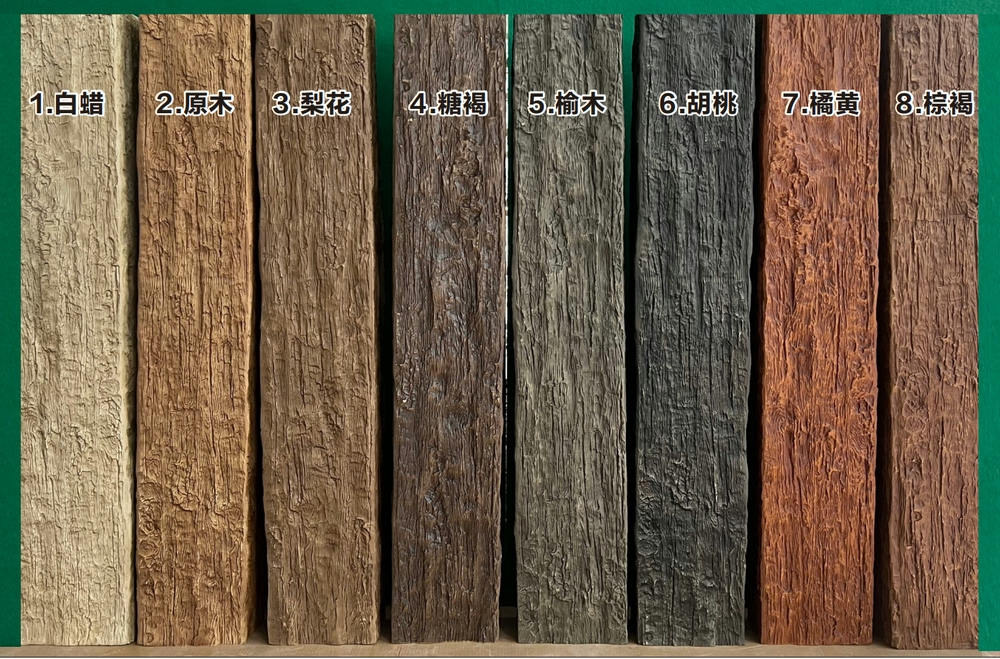
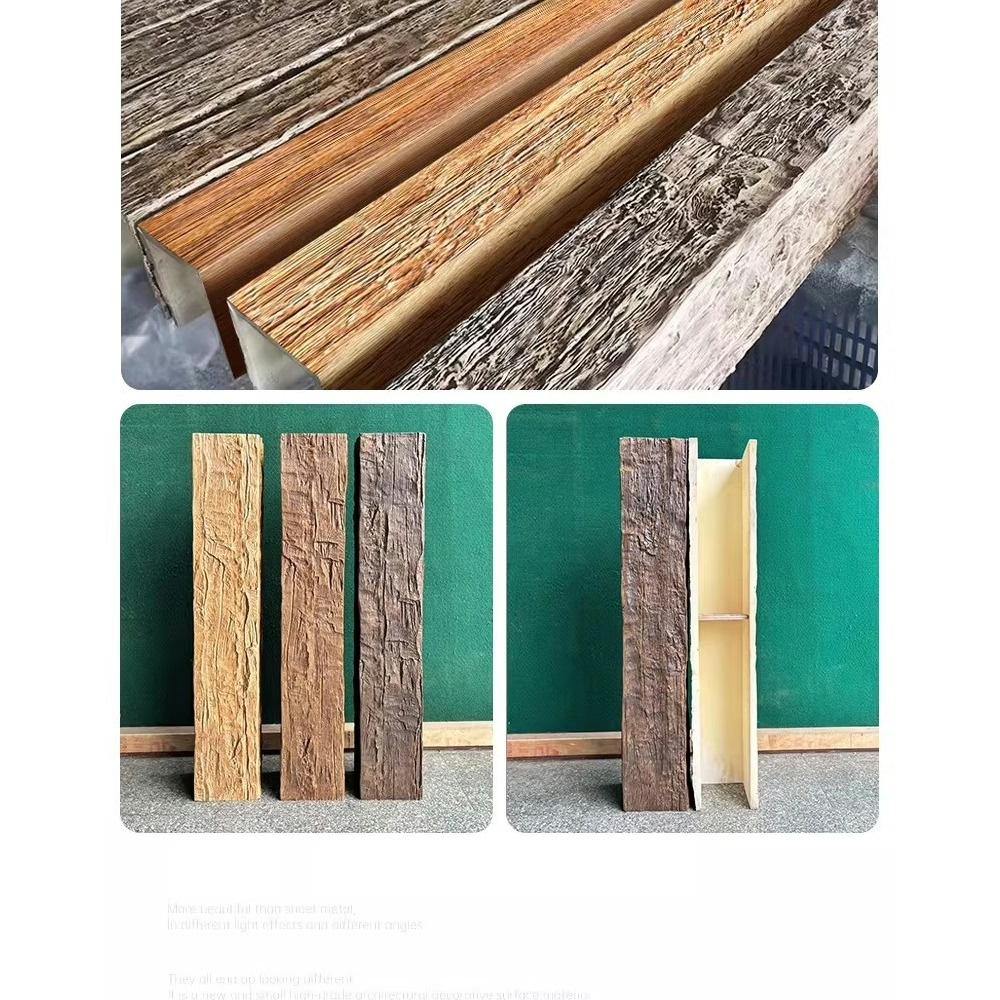
- Highlight and shadow tones. Real wood has variation in tone across the surface. Luxury beams replicate this with a multi-tone factory finish—darker in the recesses, lighter on the raised grain.
- Grain pattern color variation. The grain pattern itself has color variation—darker grain lines, lighter wood between. The factory finish captures this variation.
- Patina or aging tones. For beams that are meant to look aged or weathered, the color includes patina tones—grays, silvers, sometimes traces of original finish.
- Sheen matching. The beam's sheen matches the rest of the finishes in the room. Satin is most common for luxury work.
For luxury projects, the color match isn't a single number; it's a specification that includes the multi-tone formula, the sheen, and any patina or aging effects. The supplier's documentation should reflect this depth.
Finish chemistry
The factory finish on a polyurethane faux beam is typically one of three chemistries:
- Water-based acrylic. Low VOC, fast drying, moderate durability. Most common on stock beams.
- Water-based polyurethane. Low VOC, slower drying, higher durability. Common on premium and luxury beams.
- Solvent-based polyurethane. Higher VOC, slowest drying, highest durability. Used on some luxury applications where maximum durability is needed.
The finish chemistry affects:
- Durability. Solvent-based polyurethane is the most durable; water-based acrylic is the least.
- VOC emissions. Water-based finishes are lower VOC.
- Repairability. Water-based finishes are easier to repair on site if damaged during install.
- UV resistance. All three chemistries have UV-resistant formulations, but performance varies.
For luxury projects, water-based polyurethane is the most common specification. It balances durability with indoor air quality considerations.
Cleat hardware specifications
Luxury projects typically require cleat hardware that matches the beam's quality level. The cleat specifications:
- Material. Steel (standard), stainless steel (for moisture exposure), or brass/bronze (for visible decorative cleats).
- Load rating. The cleat should be rated for 2x the actual beam weight, with a documented safety factor.
- Finish. Powder-coated, plated, or painted to match the install environment.
- Documentation. Engineering data sheet showing the load rating, the substrate compatibility (drywall, plaster, wood, concrete), and the install procedure.
A cleat data sheet should be part of every luxury beam order. The cleat specification is part of the beam specification, not a separate item.
How luxury builders source at wholesale
For a luxury builder running 8 to 25 luxury projects per year, the wholesale supply pattern includes:
- Direct factory relationship. The luxury builder works directly with the factory's commercial team, not through a distributor. The factory knows the builder's specifications and quality standards.
- Project-by-project specification. Each luxury project has a custom beam specification. The factory produces samples and color references for each project.
- Documentation package with each order. Every beam order includes the full documentation package—density data, fire rating, VOC certification, color match reference, cleat specifications, install guide.
- Replacement stock held at the factory. The factory holds 5 to 10 percent attic stock for each project, available for replacement within 5 to 10 business days.
The luxury builder's factory relationship is closer than a standard wholesale arrangement. The builder's specifications become part of the factory's project files, and reorder cycles are smoother because the factory already knows the builder's quality standards.
What documentation luxury builders require
For each luxury project, the documentation package typically includes:
- Product data sheet. Density, dimensions, weight per linear foot.
- Fire rating documentation. Test method, result, test date, lab name.
- VOC emissions documentation. Certification (GREENGUARD, etc.) or test result.
- Color match reference. Sample of the matched color, formula number, sheen specification.
- Cleat hardware data sheet. Load rating, material, finish, install procedure.
- Install guide. Beam-specific install instructions, including handling, mounting, and field repair.
- Warranty. Coverage terms, duration, claim procedure.
This documentation package is part of the project file, shared with the interior designer, the architect, and sometimes the homeowner. The builder's project manager tracks the documentation and ensures it's complete before the beams ship.
Artisan polyurethane beams at the luxury level are a category where the documentation depth matters as much as the product quality. The right factory relationship produces both. The wrong one produces premium-marketed commodity product with inadequate documentation.
Technical References
ASTM standards cited in every specification
Test Data
Lab results from internal testing program
Updated 2026
Reviewed against current product specs