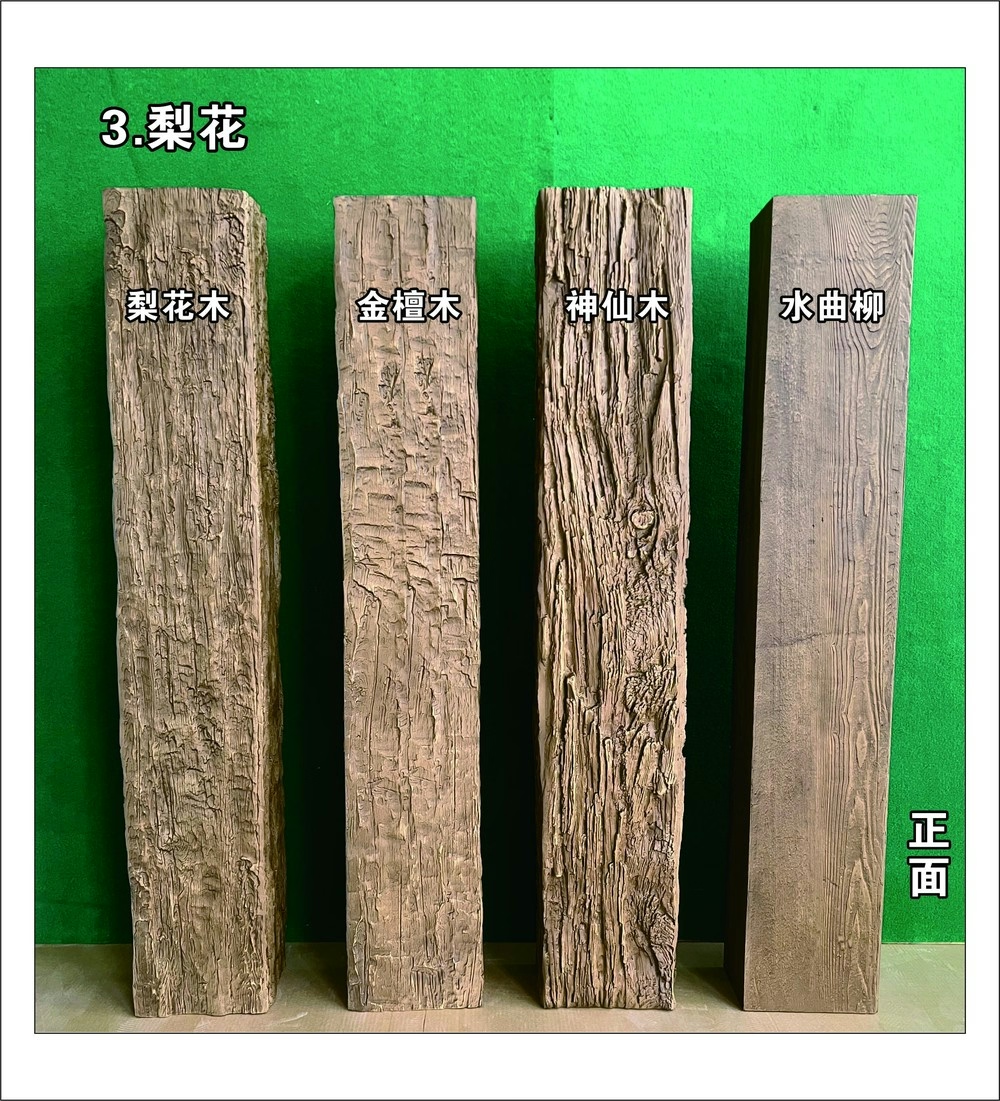
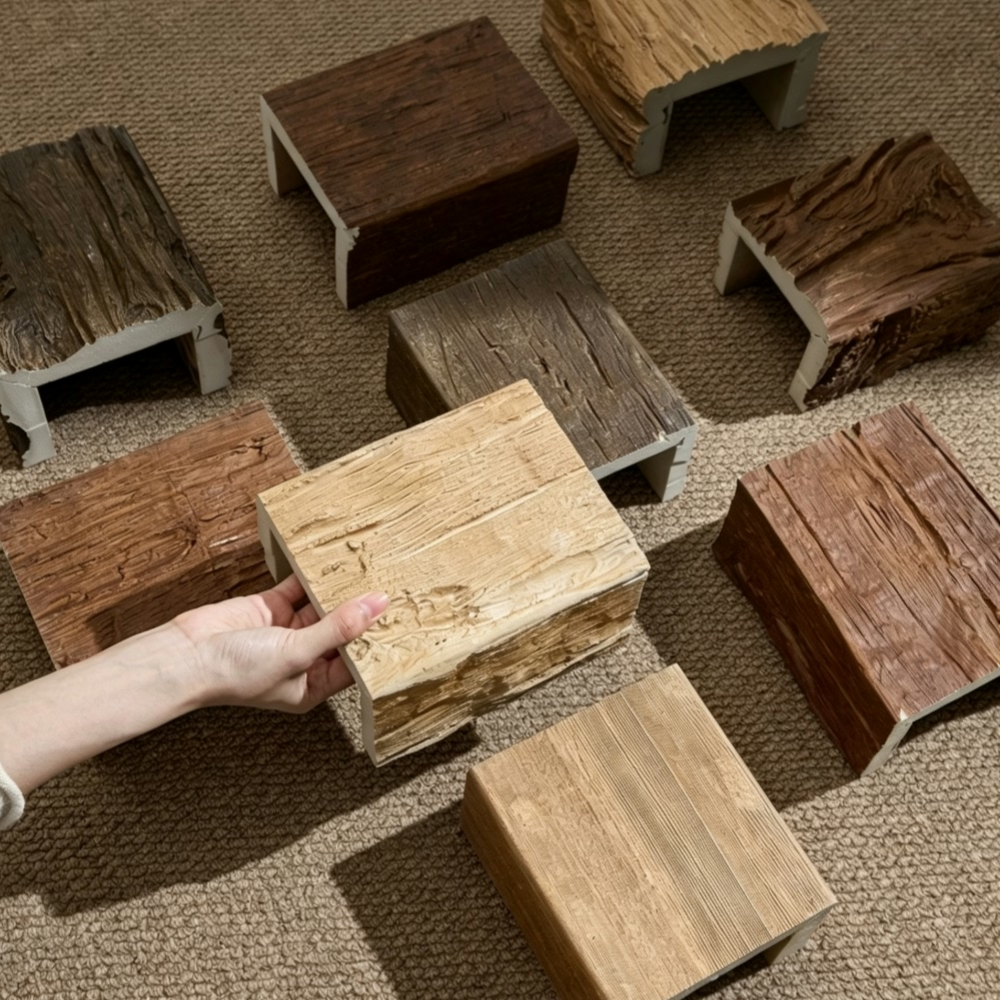
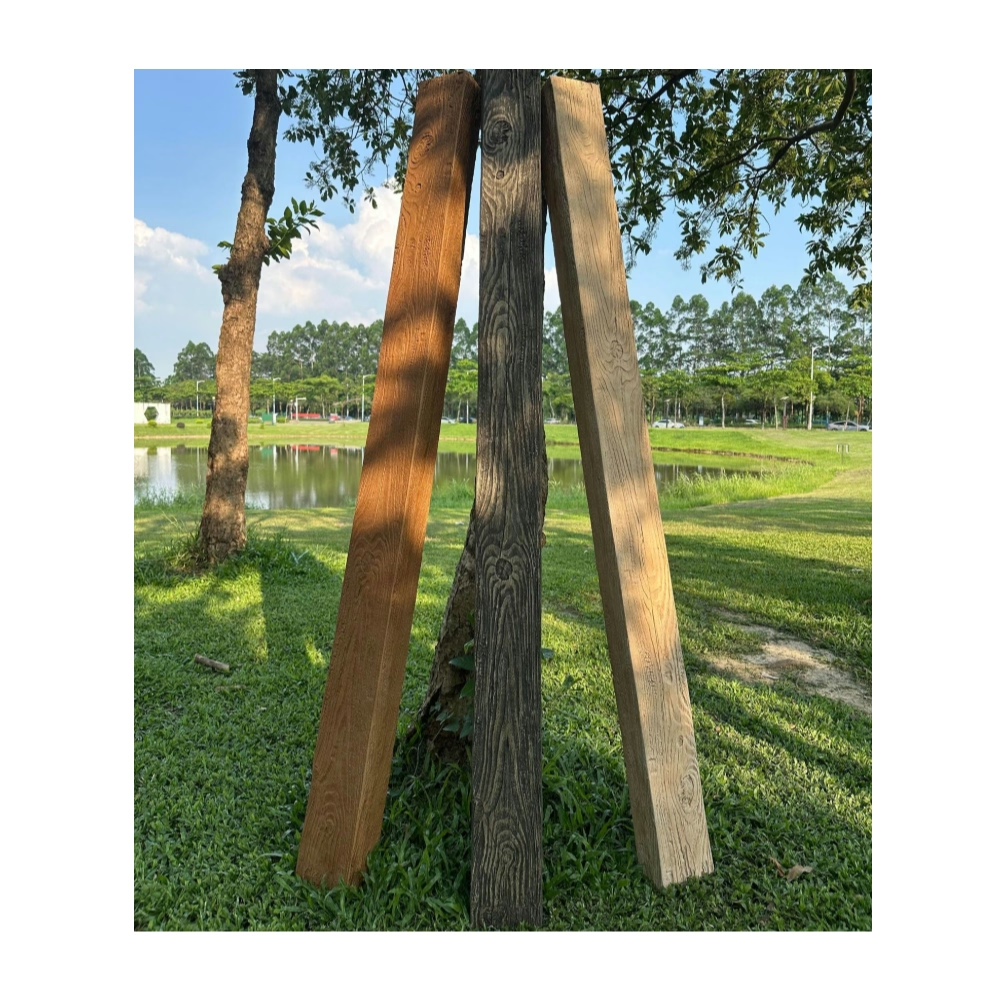
Artisan Faux Wood Beams | Bulk Purchase Advice for Custom Home Developers
Custom home developers running 10 to 40+ homes per year need practical bulk purchase advice for artisan faux wood beams. The advice covers volume tier strategies, design center integration, designer collaboration, and operational patterns that produce successful artisan beam programs at developer scale.
Advice 1: Aggregate volume for tier pricing
The most impactful advice for custom home developers:
- Aggregate beam volume across all homes in the year.
- Reach tier pricing thresholds (typically 1,500+ linear feet for 15 to 25 percent discount).
- Time orders to maximize tier benefits.
- Communicate the aggregated volume to the supplier.
Volume aggregation drives the largest pricing discounts.
Advice 2: Establish standing specifications per tier
For developers with multiple artisan tiers:
- Standard tier specifications that cover most homes.
- Premium tier specifications for upgraded homes.
- Bespoke tier specifications for distinctive homes.
- Documentation per tier.
Standing specifications reduce per-order overhead.
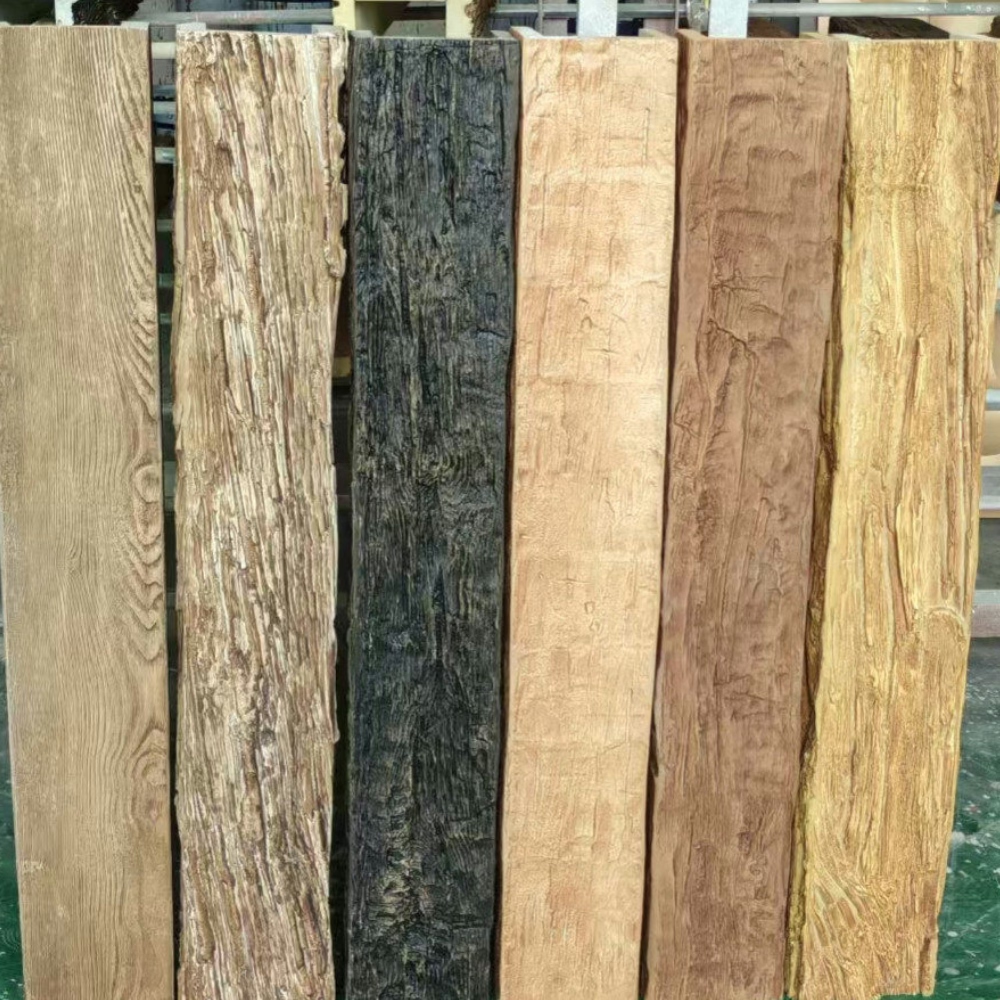
Advice 3: Use the design center effectively
For developers with design centers:
- Present artisan tiers with clear differentiation.
- Use samples and photography for buyer presentations.
- Train design center staff on artisan specifications.
- Integrate artisan beams with other design center options.
Effective design center usage supports buyer decision-making.
Advice 4: Build designer relationships
For projects with designer involvement:
- Build relationships with multiple designers.
- Support designers with sample libraries.
- Maintain direct designer communication.
- Document designer specifications.
Designer relationships support design intent.
Advice 5: Plan lead times per tier
For developers with multiple artisan tiers:
- Standard tier: 4 to 6 weeks lead time.
- Premium tier: 6 to 10 weeks lead time.
- Bespoke tier: 12 to 20 weeks lead time.
- Plan home construction schedules accordingly.
Lead time planning supports construction scheduling.
Advice 6: Maintain sample libraries
For developer sales processes:
- Maintain current sample libraries.
- Refresh samples annually.
- Document samples shown to specific buyers.
- Track samples that convert to orders.
Sample libraries support buyer presentations.
Advice 7: Document specifications per home
For each home in the program:
- Document the beam specification.
- Reference the design center tier.
- Document any buyer customizations.
- Track specifications for quality consistency.
Documentation supports per-home quality verification.
Advice 8: Coordinate phased delivery
For developer construction schedules:
- Production waves aligned to construction phases.
- Each wave delivered per phase schedule.
- Quality consistency across waves.
- Replacement stock per wave.
Phased delivery supports multi-home developer operations.
Advice 9: Use the supplier's marketing support
For developer sales:
- Photography for developer marketing materials.
- Brochure content for design center.
- Model home installations.
- Staff training.
Supplier marketing support enhances developer sales.
Advice 10: Negotiate volume-based payment terms
For ongoing developer relationships:
- Negotiate payment terms based on volume.
- Move from deposit-before-shipment to net-30 or net-60.
- Use payment terms to manage developer cash flow.
- Communicate payment status proactively.
Payment term negotiation supports cash flow management.
Advice 11: Use replacement stock effectively
For project protection:
- Negotiate replacement stock terms upfront.
- Use the replacement stock for damaged beams.
- Track replacement stock usage per home.
- Don't let damaged beams delay home completion.
Replacement stock terms protect home completion.
Advice 12: Coordinate with construction managers
For each home in the program:
- Communicate beam specifications to the construction manager.
- Coordinate delivery with the construction schedule.
- Verify beam installation against specifications.
- Document any installation issues.
Construction manager coordination supports quality installation.
Advice 13: Track quality issues per home
For continuous improvement:
- Document any quality issues with photos.
- Track issues per home in the program.
- Identify patterns of issues.
- Use tracking to inform supplier selection and specification.
Quality tracking supports continuous improvement.
Advice 14: Plan for buyer changes
For buyer-driven customization:
- Allow specification changes within production windows.
- Build change procedures into the developer operations.
- Track changes per home.
- Use change data for future planning.
Change planning supports buyer satisfaction.
Advice 15: Optimize installation scheduling
For efficient installation:
- Schedule beam installation with related trades.
- Coordinate cleat mounting with structural verification.
- Sequence installation with finishing work.
- Plan for installation quality verification.
Installation scheduling supports quality installation.
Advice 16: Use the supplier's logistics capability
For efficient delivery:
- Use the supplier's logistics for on-time delivery.
- Coordinate delivery with construction managers.
- Verify delivery against order specifications.
- Document delivery issues.
Logistics coordination supports home construction flow.
Advice 17: Continuously evaluate the supplier
For ongoing optimization:
- Evaluate the supplier relationship annually.
- Review pricing, quality, and service.
- Consider alternative suppliers periodically.
- Communicate evaluation results to the supplier.
Continuous evaluation supports ongoing optimization.
Advice 18: Build a long-term relationship
For long-term value:
- Build a personal relationship with the supplier's representative.
- Communicate developer business needs.
- Provide feedback on products and services.
- Use the relationship for problem resolution.
Long-term relationships produce compounding value.
Advice 19: Plan for the unexpected
For project protection:
- Build contingencies into the order quantity.
- Hold replacement stock for unexpected damage.
- Plan for mid-home changes.
- Communicate contingencies to the supplier.
Contingency planning protects against unexpected events.
Advice 20: Use data for continuous improvement
For optimization:
- Track costs per home in the program.
- Track quality issues per home.
- Track installation efficiency per home.
- Track buyer satisfaction with beam selections.
Data-driven improvement supports ongoing optimization.
Common pitfalls in developer artisan beam procurement
A few issues that come up often enough to flag:
- Insufficient volume aggregation. Missing tier pricing benefits.
- Inconsistent tier differentiation. Tiers that look similar reduce upgrade value.
- Inadequate design center support. Suppliers who don't invest in design center materials.
- Lead time not planned for bespoke tier. Bespoke projects require longer timelines.
- Designer engagement gaps. Suppliers who don't communicate with designers.
Quick reference for developer artisan procurement
- Volume tiers: 800+ linear feet for 10 to 15 percent, 1,500+ for 15 to 25 percent.
- Tier lead times: Standard 4 to 6 weeks, premium 6 to 10 weeks, bespoke 12 to 20 weeks.
- Documentation: Per-tier documentation with per-home references.
- Replacement: 5 to 10 percent stock held with 24 to 36 month coverage.
- Payment terms: Net-30 to Net-60 based on volume history.
Artisan faux wood beams bulk purchase advice for custom home developers is a category where the volume strategies, the design center integration, and the operational discipline all need to align. The right combination produces efficient procurement that supports developer artisan beam programs across many homes.
Technical References
ASTM standards cited in every specification
Test Data
Lab results from internal testing program
Updated 2026
Reviewed against current product specs