Bulk Faux Timber Beams: Cost & Lead Time for General Contractors
General contractors handling bulk faux timber beam procurement need to understand both the cost structure and the lead time factors that affect project budgets and schedules. This article provides a practical analysis of cost and lead time for general contractors, with specific guidance for budget planning.
Cost components for bulk faux timber beams
For general contractors, the total cost of bulk faux timber beams includes several components:
Per-piece pricing
The base cost per beam by length:
- 6 to 8 feet: $10 to $15 per linear foot.
- 8 to 12 feet: $12 to $18 per linear foot.
- 12 to 16 feet: $15 to $22 per linear foot.
- 16 to 20 feet: $18 to $28 per linear foot.
- 20+ feet (with field joint): $25 to $40 per linear foot.
Length affects per-piece pricing because longer beams have more material and handling complexity.
Volume discounts
Tier discounts applied to per-piece pricing:
- 500 to 1,500 linear feet annually: 10 to 15 percent discount.
- 1,500 to 3,000 linear feet annually: 15 to 25 percent discount.
- 3,000 to 6,000 linear feet annually: 25 to 35 percent discount.
- 6,000+ linear feet annually: 35 to 45 percent discount.
Volume discounts apply based on the contractor's annual beam spend.
Setup fees
Setup fees for deviations from standing specs:
- Color match: $200 to $600 per color.
- Profile modification: $500 to $2,000 per modification.
- Custom profile: $3,000 to $8,000 per mold.
- Custom finish: $200 to $500 per finish.
Setup fees are typically one-time per deviation.
Freight costs
Freight from factory to project site:
- Domestic freight: $0.50 to $2.00 per linear foot.
- International freight: Higher, with longer lead times.
- Multiple delivery waves: Multiple freight charges.
Freight varies by distance, volume, and delivery requirements.
Documentation costs
Documentation for code compliance or premium projects:
- Standard documentation: Often included.
- Custom documentation: $100 to $500 per project.
- Code-specific testing: Variable by requirement.
Documentation may be included or charged separately.
Installation costs
Labor for beam installation:
- Two-person crew at $40 to $80 per hour per person.
- 15 to 30 minutes per beam for typical installations.
- $20 to $80 per beam for installation labor.
- Plus cleat hardware ($5 to $20 per cleat).
Installation is a significant component of total cost.
Replacement stock costs
Replacement stock held at the factory:
- 5 to 10 percent of order quantity.
- Same per-piece pricing as original orders.
- No setup fees for standing spec replacements.
- Coverage period of 24 to 36 months.
Replacement stock is part of the total procurement cost.
Lead time factors for bulk faux timber beams
For general contractors, lead time is affected by several factors:
Standard lead times by specification
- Stock profile, stock finish: 5 to 15 business days.
- Modified profile, custom finish: 10 to 20 business days.
- Custom profile, fully custom: 8 to 16 weeks.
The specification complexity drives lead time.
Production scheduling
The factory's production schedule affects lead time:
- Production slot reserved at order confirmation.
- Production waves aligned to delivery dates.
- Capacity utilization affects availability.
Production scheduling coordination supports lead time reliability.
Custom development time
For custom profiles or finishes:
- Wood master development: 4 to 12 weeks.
- Sample iteration cycles: 1 to 4 weeks.
- Production from approved mold: 3 to 6 weeks.
Custom development significantly affects lead time.
Freight time
Freight time varies by destination and mode:
- Domestic ground freight: 3 to 10 business days.
- International freight: 2 to 6 weeks.
- Expedited freight: Premium pricing, faster delivery.
Freight time adds to the total lead time.
Rush order options
For tight timelines:
- Rush production: 5 to 10 business days at premium pricing.
- Expedited freight: Faster delivery at premium pricing.
- Standing inventory: Available for immediate shipment.
Rush options add cost but compress lead time.
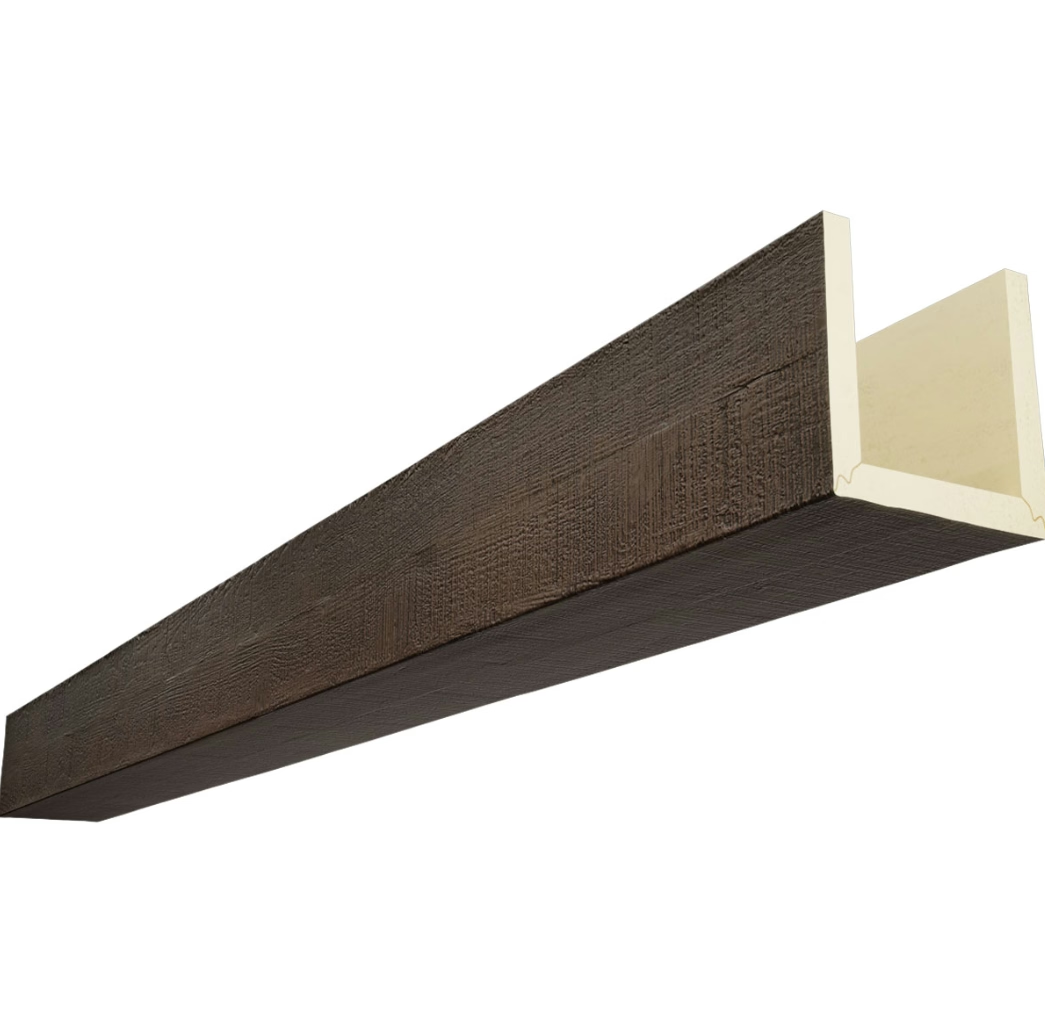
Total cost analysis example
For a general contractor with a 200 linear foot beam project:
Per-piece cost
- 200 linear feet at $15 per linear foot average: $3,000.
- Volume discount (assume Tier 1): 10 percent = $300 savings.
- Net per-piece cost: $2,700.
Setup fees
- Custom color match: $300.
- Total setup: $300.
Freight
- 200 linear feet at $1 per linear foot: $200.
- Total freight: $200.
Documentation
- Standard documentation: Included.
- Total documentation: $0.
Installation
- 25 beams at $50 per beam average: $1,250.
- Cleat hardware: $250.
- Total installation: $1,500.
Replacement stock
- 10 percent of order quantity held: Included in per-piece pricing.
Total project cost
- Per-piece: $2,700.
- Setup: $300.
- Freight: $200.
- Installation: $1,500.
- Total: $4,700.
This analysis provides a baseline for budget planning.
Cost optimization strategies
For general contractors, several strategies reduce total cost:
Volume aggregation
- Aggregate beam volume across multiple projects.
- Reach tier pricing thresholds.
- Time orders to maximize tier benefits.
Standing specifications
- Reduce setup fees for deviations.
- Reduce color match fees for reorders.
- Streamline the ordering process.
Lead time optimization
- Use standard lead times when possible.
- Avoid rush order premiums.
- Plan ahead for tight timelines.
Installation efficiency
- Train crews on the cleat system.
- Use standard crew compositions.
- Optimize installation scheduling.
Damage prevention
- Handle beams carefully during transport.
- Protect beams during on-site storage.
- Reduce replacement needs.
Specification optimization
- Use stock specifications when possible.
- Avoid custom work for non-essential elements.
- Coordinate specifications with the supplier's capabilities.
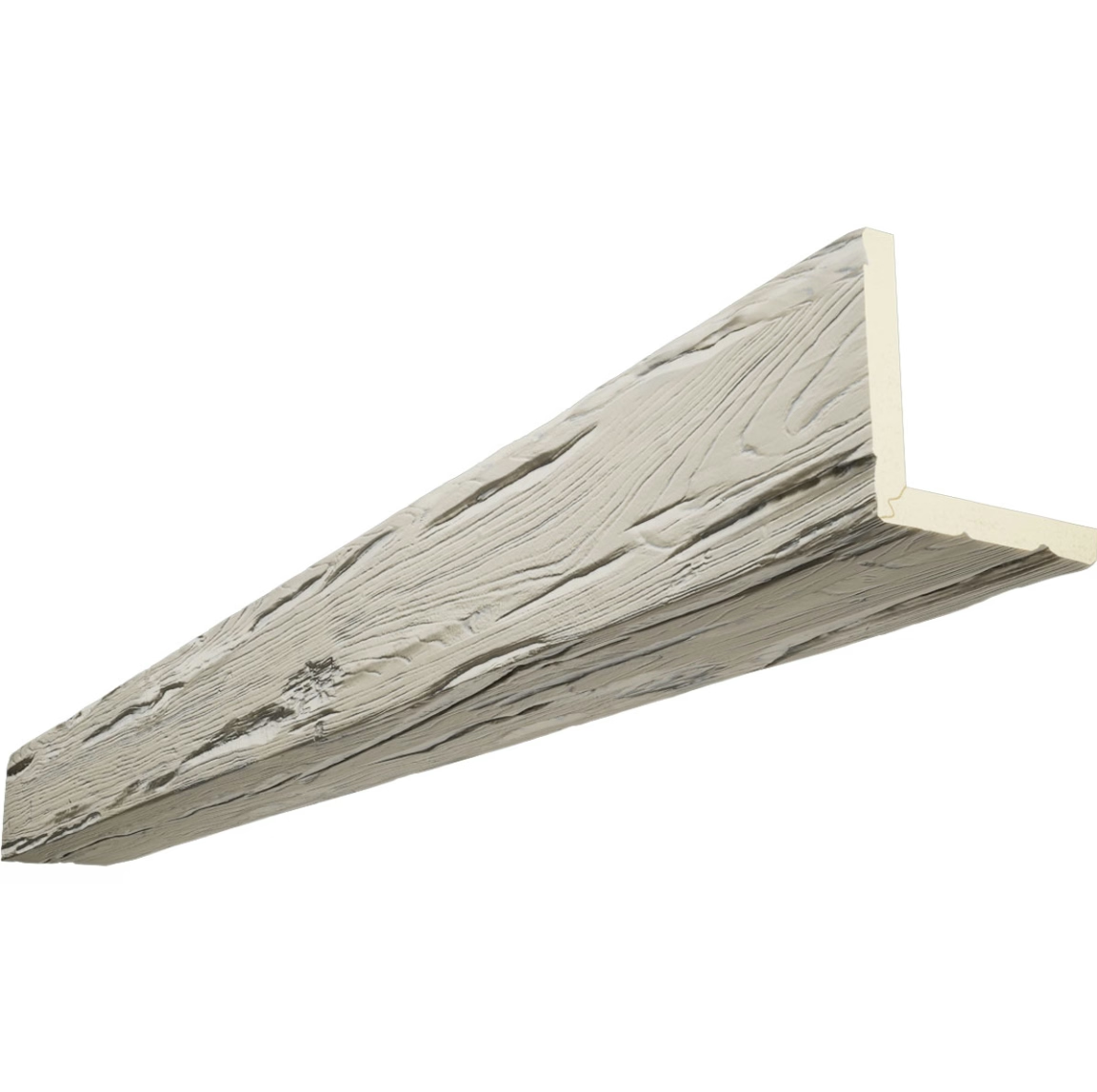
Lead time optimization strategies
For general contractors, lead time optimization strategies:
Plan ahead
- Identify beam needs early in the project.
- Allow for standard lead times.
- Build lead time into the project schedule.
Coordinate with construction
- Align beam delivery with construction phases.
- Coordinate with framing completion.
- Coordinate with finishing work.
Use standing inventory
- For urgent needs, use the supplier's standing inventory.
- Standing inventory typically ships within 5 to 10 business days.
- Higher per-piece pricing but faster delivery.
Avoid rush orders
- Plan ahead to avoid rush premiums.
- Rush orders add 20 to 50 percent to per-piece pricing.
- Use rush orders only for true emergencies.
Communicate timeline constraints
- Communicate timeline constraints to the supplier.
- The supplier can plan production to meet deadlines.
- Communication prevents last-minute issues.
Common pitfalls in cost and lead time management
A few issues that come up often enough to flag:
- Underestimating total cost. Missing setup fees, freight, or installation cost.
- Not planning for lead time. Tight timelines produce rush premiums.
- Failing to aggregate volume. Missing tier pricing benefits.
- Ignoring replacement stock terms. Damaged beams without replacement delay projects.
- Not communicating timeline constraints. Suppliers can't plan if they don't know the constraints.
Budget planning for general contractors
For general contractor project budgets:
Initial budget estimate
Use the total cost analysis to estimate:
- Per-piece cost at expected volume tier.
- Setup fees for expected deviations.
- Freight cost for the project location.
- Installation cost for the project scope.
- Total budget: Sum of components.
Contingency planning
Build contingency into the budget:
- 10 to 15 percent contingency for unexpected needs.
- Replacement stock for damaged beams.
- Rush order reserve for timeline issues.
Cost tracking
Track costs against the budget:
- Per-piece costs vs. estimated.
- Setup fees vs. estimated.
- Freight costs vs. estimated.
- Installation costs vs. estimated.
- Variance analysis for future projects.
Continuous improvement
Use cost data for improvement:
- Identify cost reduction opportunities.
- Refine specifications for cost efficiency.
- Negotiate better terms based on volume history.
Bulk faux timber beam cost and lead time management for general contractors is a category where the cost structure analysis, the lead time planning, and the optimization strategies all need to align. The right combination produces efficient procurement that meets project budgets and timelines.
Technical References
ASTM standards cited in every specification
Test Data
Lab results from internal testing program
Updated 2026
Reviewed against current product specs