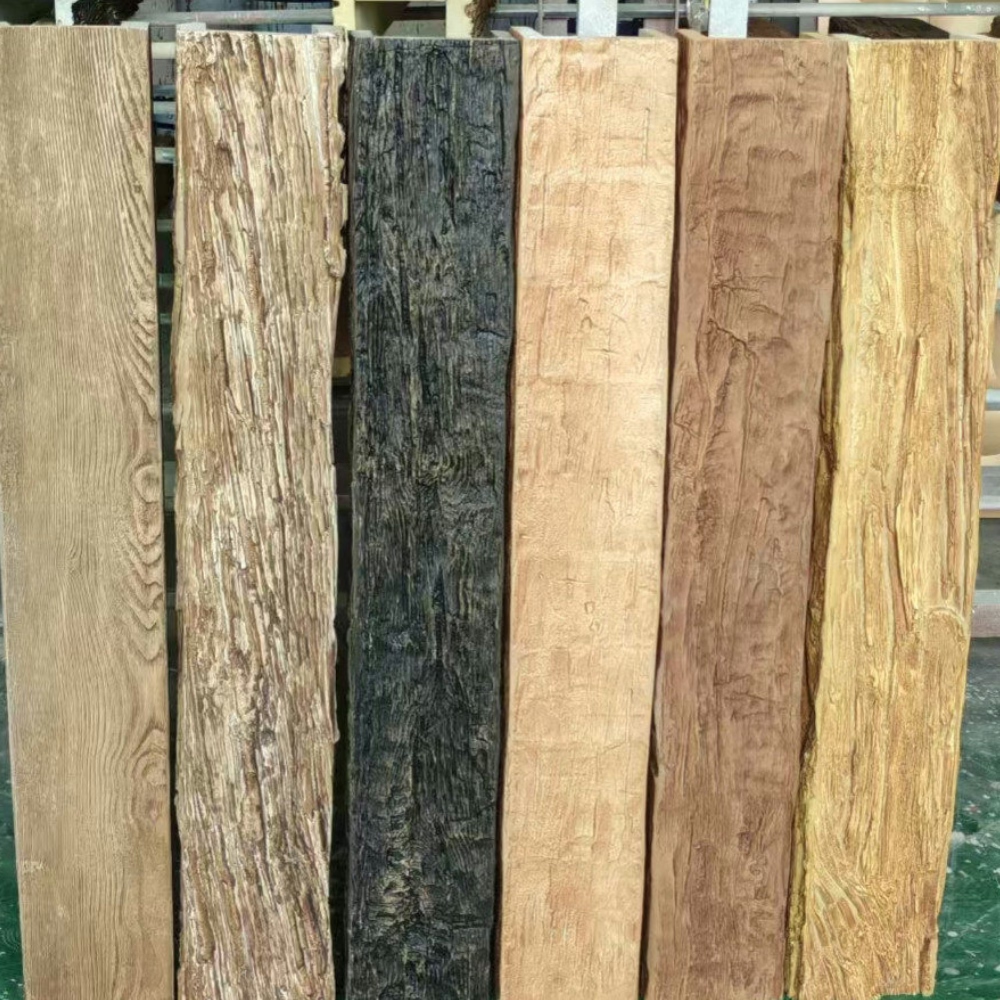
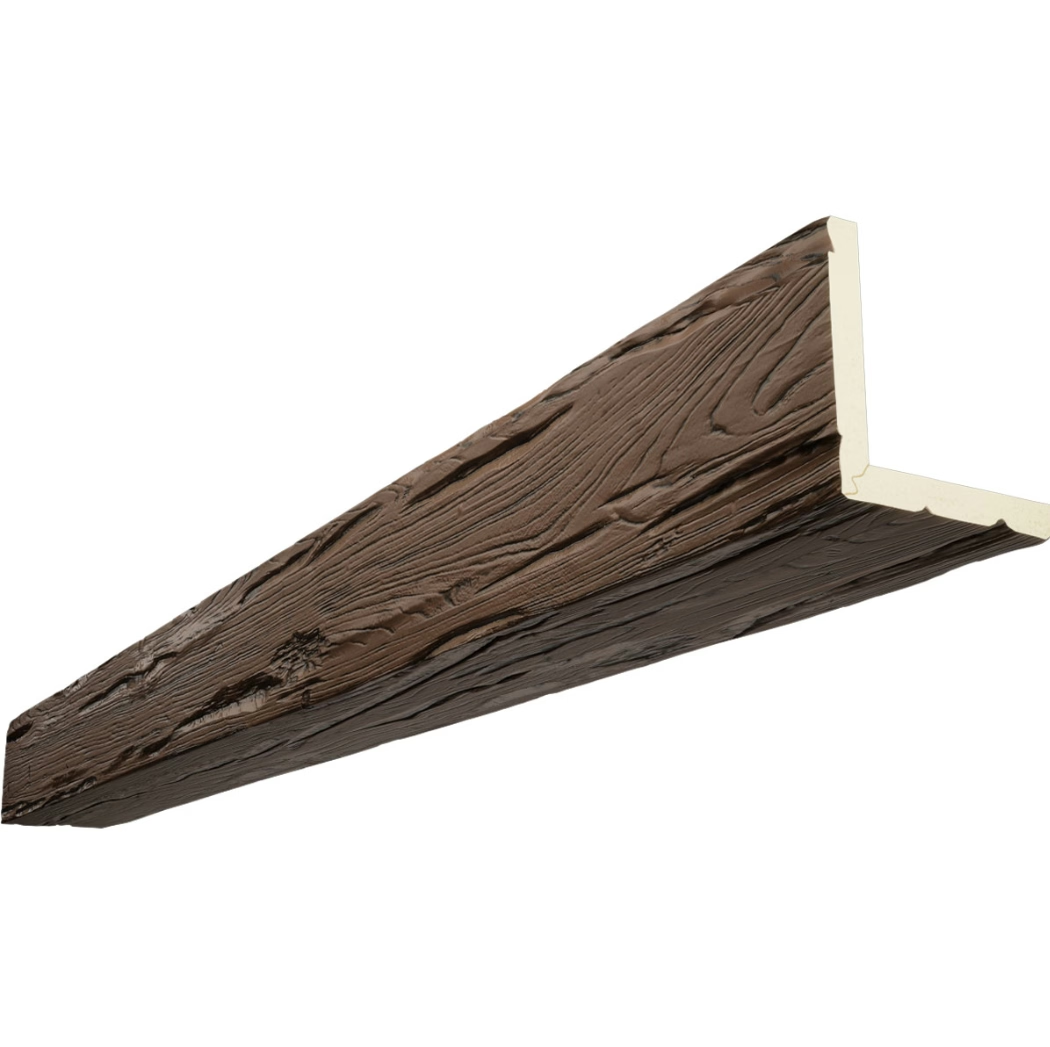
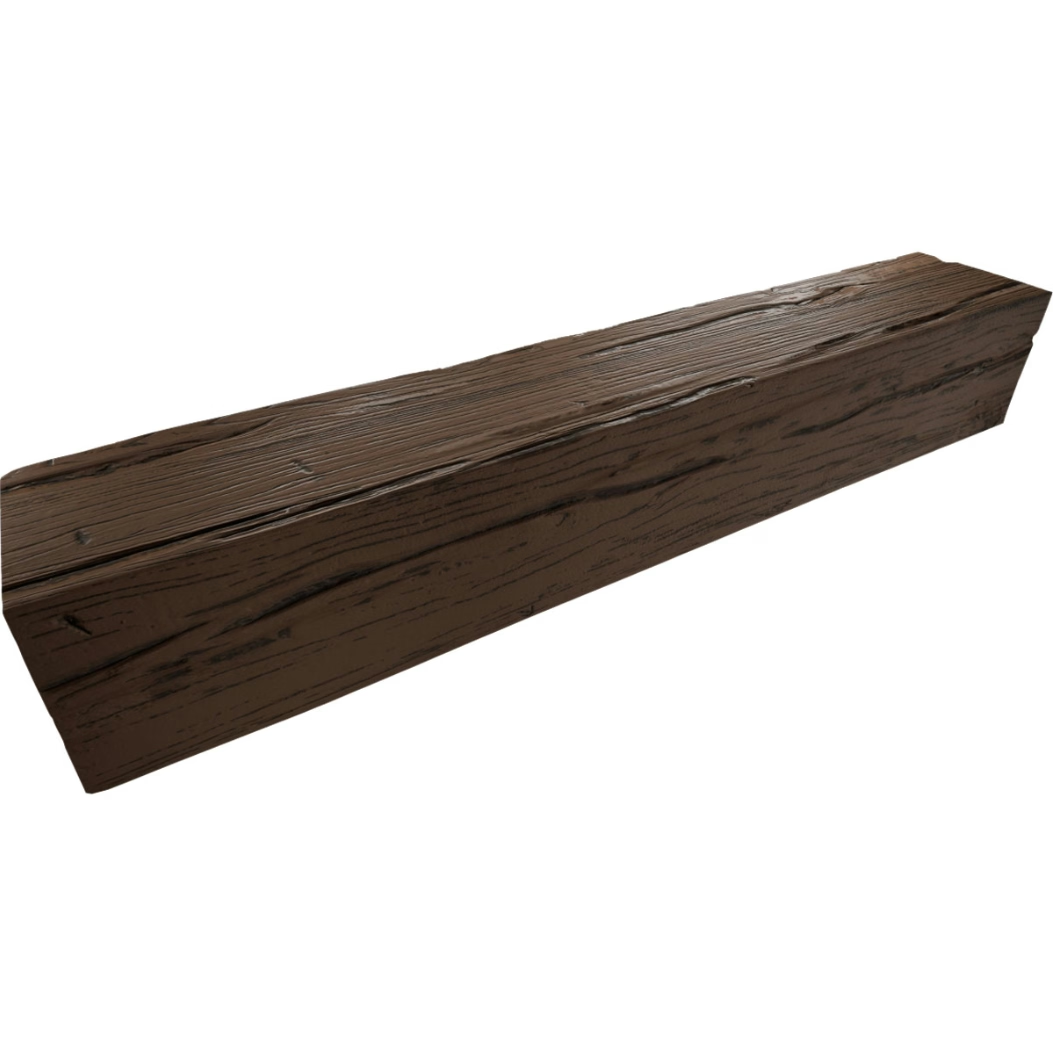
Artisan Polyurethane Faux Beams | Custom Sizes for Commercial Projects
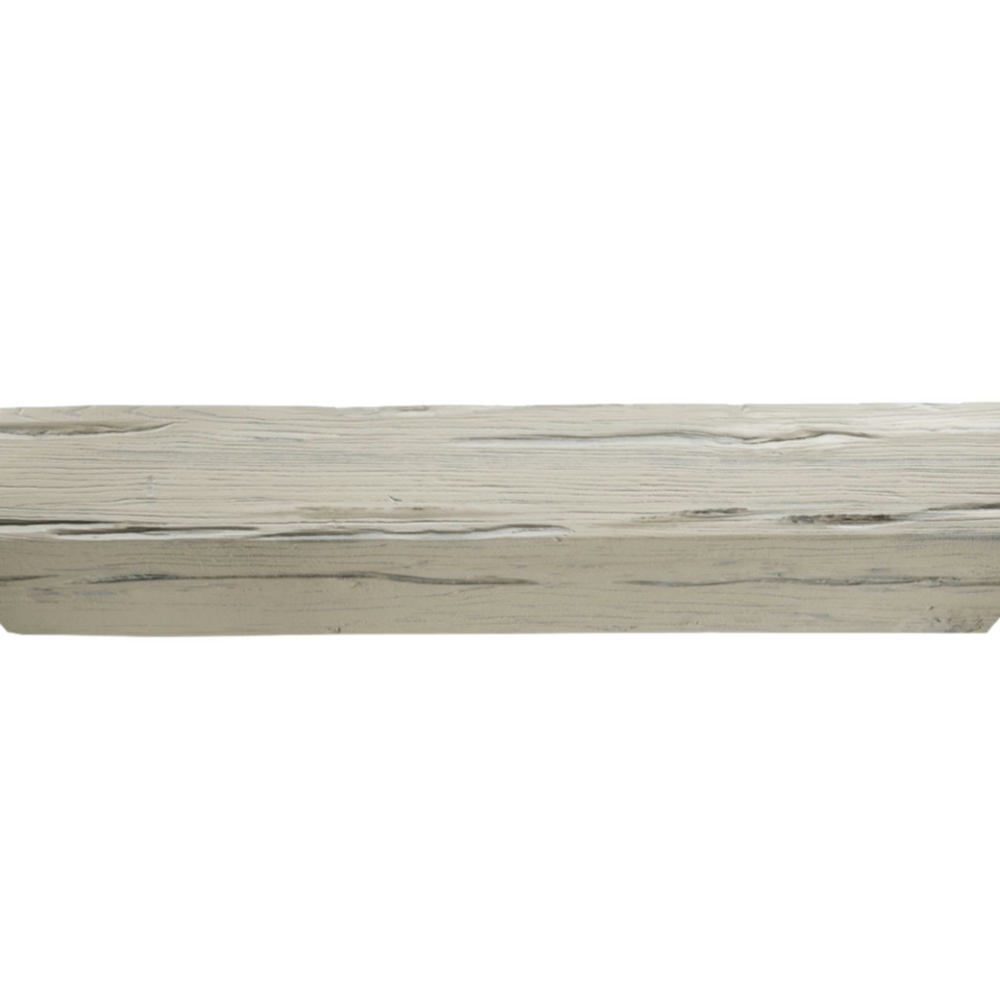
Artisan polyurethane faux beams in commercial projects require custom sizing that meets architectural specifications and commercial code requirements. The custom sizing for commercial projects involves architectural drawing coordination, dimensional verification against the building's actual conditions, tolerance that meets commercial standards, and multi-trade coordination. Understanding these requirements helps commercial project teams specify artisan beams correctly.
This is what custom sizing means for artisan polyurethane beams in commercial projects, how to coordinate with architectural drawings, and what makes the sizing work.
What makes commercial project sizing different
Commercial project beam sizing differs from residential in several ways:
Architectural drawing coordination
Commercial projects typically have detailed architectural drawings:
- Reflected ceiling plans showing beam locations.
- Section drawings showing beam heights and details.
- Detail drawings showing beam profiles and connections.
- Coordination drawings showing beam intersections with other trades.
The beam specification must align with these architectural drawings.
Dimensional verification
Commercial beam dimensions are verified against the building's actual conditions:
- Field measurements after structural framing is complete.
- Verification against the architectural drawings.
- Coordination with HVAC, lighting, and other ceiling elements.
- Documentation for code compliance verification.
The verification ensures the beam dimensions match the building's actual conditions.
Tolerance for commercial code
Commercial beam tolerances are typically tighter than residential:
- Dimensional tolerance: ±1/16 to ±1/8 inch.
- Profile tolerance: Within factory's standard tolerance.
- Finish tolerance: Color consistency within defined limits.
The tolerance reflects the commercial code requirements.
Multi-trade coordination
Commercial projects involve multiple trades:
- The architect specifies the beam.
- The structural engineer verifies the load capacity.
- The HVAC contractor coordinates ductwork and beam locations.
- The electrical contractor coordinates lighting and beam locations.
- The fire suppression contractor coordinates sprinkler locations.
- The beam supplier produces per the coordinated drawings.
Multi-trade coordination is what makes commercial projects work.
The custom sizing process for commercial projects
For commercial projects, the custom sizing process typically includes:
Architectural drawing review
The project architect and the beam supplier review the architectural drawings:
- Beam locations and dimensions.
- Profile and cross-section specifications.
- Connection details.
- Coordination with other trades.
The review identifies any specification issues early.
Specification development
The architect and the beam supplier develop the specification:
- Custom lengths per drawing locations.
- Profile and cross-section per architectural details.
- Color and finish per design specifications.
- Documentation per code requirements.
The specification becomes part of the construction documents.
Field measurement verification
The project's construction manager or surveyor verifies dimensions in the field:
- Beam lengths at each location.
- Substrate conditions.
- Coordination with other trades.
- Any field conditions that affect beam installation.
Field verification identifies discrepancies between drawings and actual conditions.
Order placement
The project's purchasing agent places the order:
- Reference to the architectural specifications.
- Specific lengths per location.
- Custom features per the specification.
- Delivery date aligned to construction schedule.
The order includes any deviations from standing specs.
Production
The supplier produces the beams:
- Per the verified dimensions.
- Per the profile and finish specifications.
- With commercial-grade quality documentation.
- Replacement stock held for the project.
Production follows the architectural specifications.
Delivery and installation
The supplier delivers to the project site:
- Inside delivery where required.
- Coordination with the project's construction manager.
- Protection during on-site storage.
- Installation per the architectural details.
Delivery supports the construction sequence.
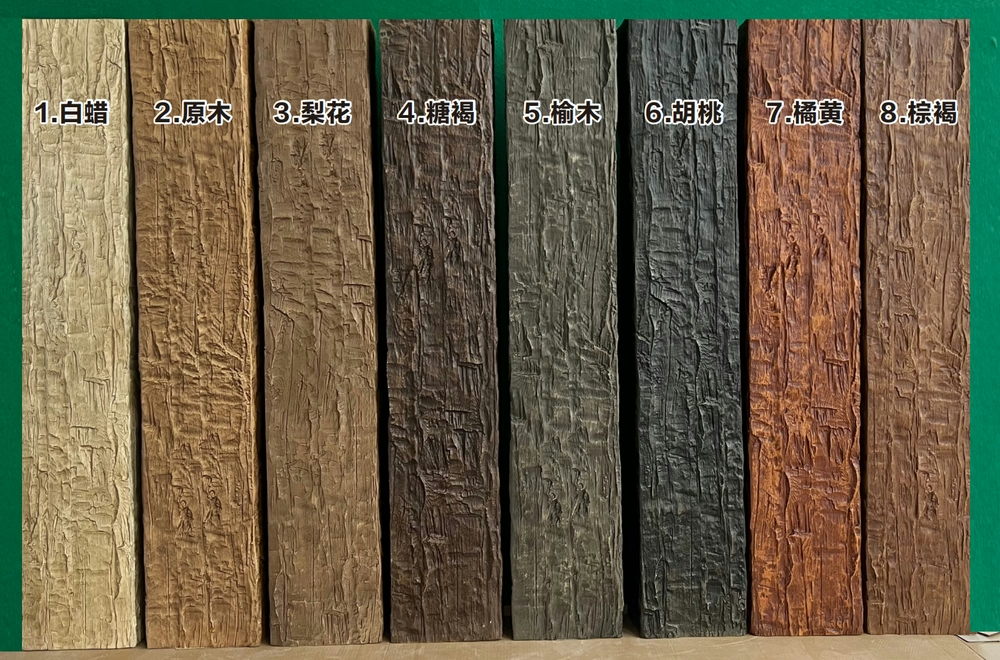
Custom sizes for commercial beam specifications
For commercial projects, custom sizes typically include:
Per-location lengths
Each beam is sized to its specific location:
- Reflected in the reflected ceiling plan.
- Verified in field measurement.
- Specified with tolerance appropriate to the location.
Per-location lengths ensure fit at each install location.
Standard or custom cross-sections
The cross-section per architectural specifications:
- Standard profiles from the supplier's library.
- Modified profiles for specific locations.
- Custom profiles for distinctive elements.
The cross-section determines the beam's visual impact.
Custom profile details
For distinctive commercial projects:
- Custom beam profiles designed by the architect.
- Custom corbel or bracket profiles.
- Custom beam intersection details.
- Custom transition elements.
Custom profile details produce distinctive commercial results.
Coordination dimensions
Dimensions that coordinate with other trades:
- Beam heights aligned with HVAC requirements.
- Beam positions that don't conflict with lighting.
- Beam profiles that accommodate sprinkler locations.
- Beam specifications that meet fire rating requirements.
Coordination dimensions ensure all trades work together.
Tolerance management for commercial projects
For commercial projects, tolerance management is critical:
Dimensional tolerance
Standard commercial dimensional tolerance:
- ±1/16 inch for precision-fit applications.
- ±1/8 inch for typical commercial applications.
- ±1/4 inch for less critical applications.
The tolerance is specified per project.
Profile tolerance
Profile tolerance:
- Within the supplier's standard profile tolerance.
- Documented in the project specifications.
- Verified during factory inspection.
Profile tolerance affects visual consistency.
Finish tolerance
Finish tolerance:
- Color consistency within defined Delta E limits.
- Sheen consistency within defined limits.
- Texture consistency within defined limits.
Finish tolerance is documented and verified.
Code compliance tolerance
For commercial code compliance:
- Fire rating per code requirements.
- Load capacity per structural requirements.
- Acoustic performance per acoustic requirements.
Code compliance tolerance is verified through documentation and testing.
Lead times for commercial custom sizes
Lead times for commercial custom size artisan orders:
- Stock profile, custom length, standard finish: 4 to 6 weeks.
- Modified profile, custom length, custom finish: 6 to 10 weeks.
- Custom profile development, fully custom: 12 to 20 weeks.
Commercial lead times are typically longer than residential due to documentation and verification requirements.
Pricing for commercial custom sizes
Pricing for commercial custom size artisan beams typically includes:
- Per-piece pricing by length with volume discounts.
- Premium for commercial documentation.
- Premium for tighter tolerance specifications.
- Premium for code compliance testing.
For commercial projects, total cost is typically 20 to 40 percent above residential equivalent due to documentation and tolerance requirements.
What commercial projects need from artisan beam suppliers
For commercial projects, several artisan beam supplier capabilities matter:
Commercial code expertise
The supplier has commercial code expertise:
- Fire rating documentation capability.
- Acoustic performance testing capability.
- Seismic documentation capability.
- ADA compliance awareness.
Architectural coordination
The supplier works with project architects:
- Architectural drawing review.
- Specification development.
- Field verification support.
- Multi-trade coordination.
Quality documentation
The supplier provides quality documentation:
- Project-specific documentation packages.
- Material certifications.
- Test reports per code requirements.
- Care and maintenance guides.
Field support
The supplier provides field support:
- Field measurement verification.
- Installation guidance.
- Issue resolution during install.
- Replacement availability.
Common pitfalls in commercial custom size artisan projects
A few issues that come up often enough to flag:
- Insufficient architectural coordination. Beams that don't match the architectural drawings.
- Field measurement errors. Beams ordered on incorrect measurements.
- Tolerance inadequate for the application. Standard tolerance inadequate for precision-fit.
- Missing code documentation. Gaps in fire rating or acoustic documentation.
- Multi-trade coordination gaps. Beams that conflict with other trades.
How commercial projects evaluate artisan beam suppliers
For commercial projects evaluating artisan beam suppliers:
- Commercial code expertise. The supplier has commercial code experience.
- Architectural coordination. The supplier works with project architects.
- Quality documentation. The supplier provides commercial-grade documentation.
- Lead time reliability. The supplier meets commercial lead time commitments.
- References. The supplier has done comparable commercial artisan work.
Artisan polyurethane faux beams custom sizes for commercial projects is a category where the architectural coordination, the commercial code compliance, and the multi-trade coordination all need to align. The right supplier produces artisan beams that meet commercial specifications and code requirements. The wrong one produces friction at every code inspection or coordination meeting.
Technical References
ASTM standards cited in every specification
Test Data
Lab results from internal testing program
Updated 2026
Reviewed against current product specs