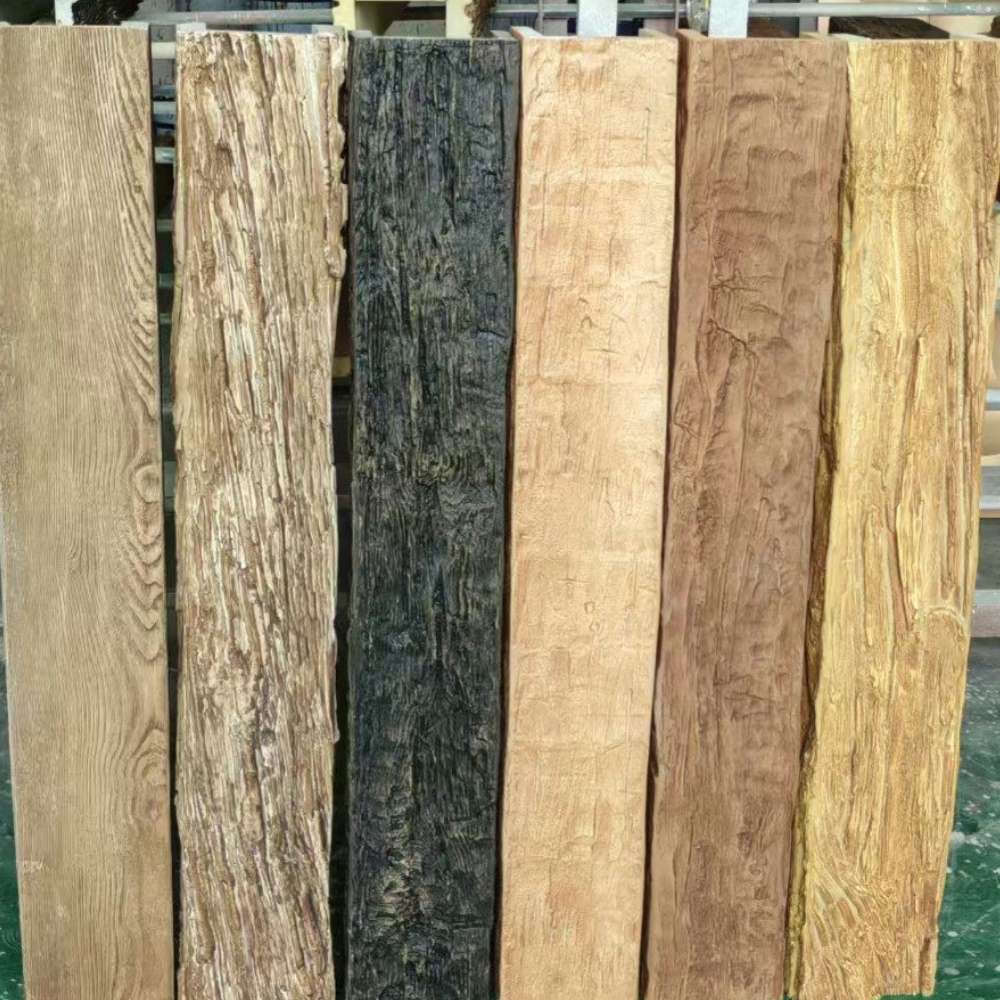
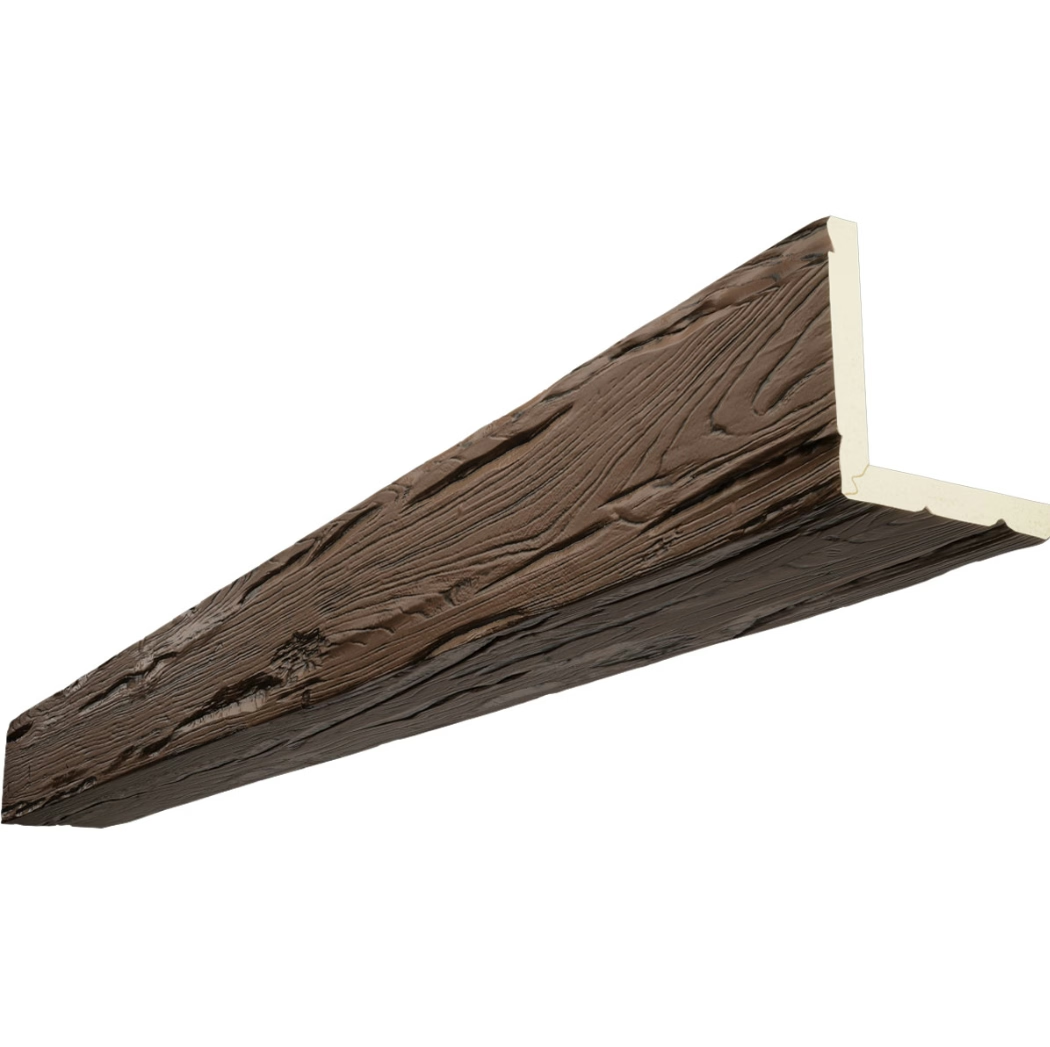
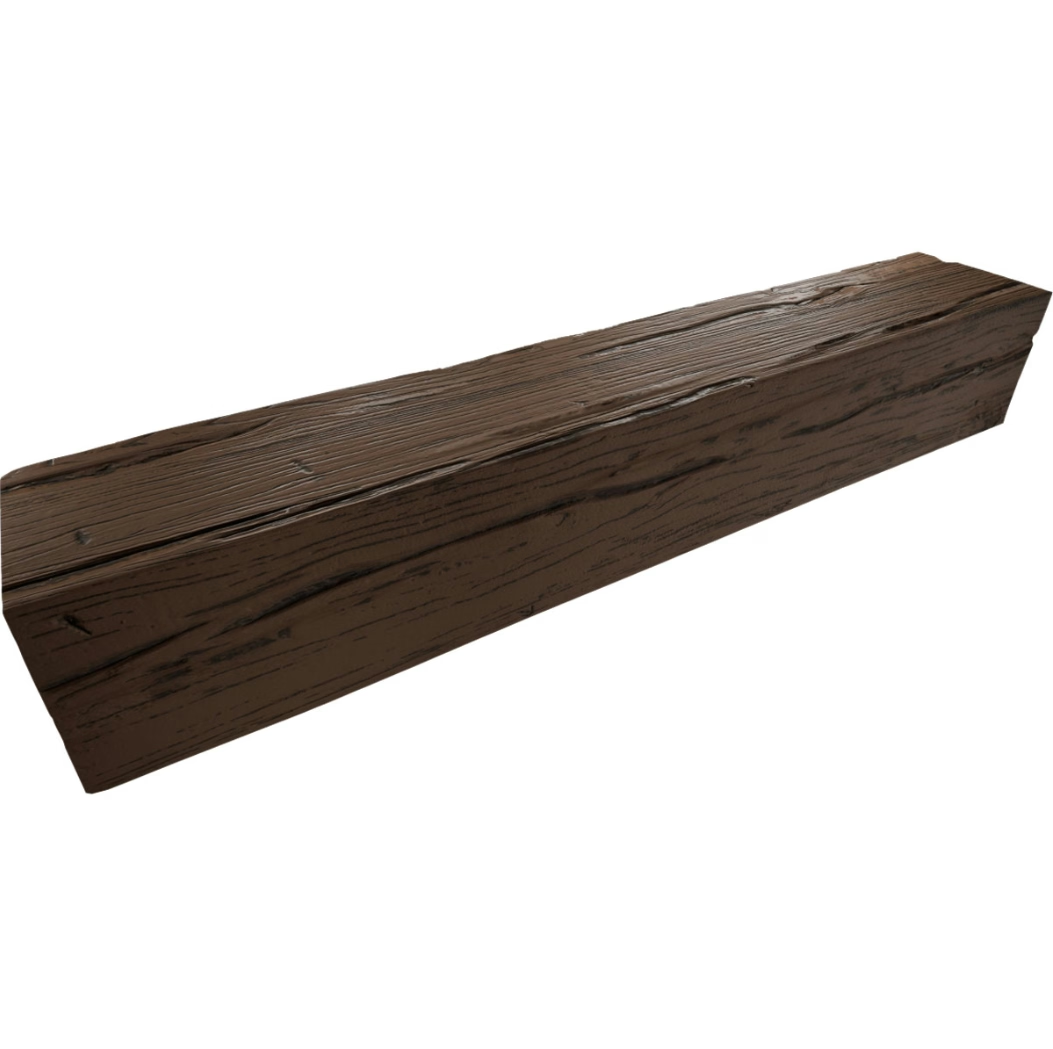
Artisan Rustic Faux Timber Beams | Wholesale for Residential Contractors
Residential contractors running single-home projects (rather than multi-home builder programs) have a different relationship with artisan rustic beams than production-oriented builders. Each project has its own specifications, the project volume is modest, and the contractor needs the supplier to handle varied projects efficiently. Wholesale relationships for residential contractors need to support this varied project pattern.
This is how artisan rustic faux timber beams work for residential contractors at the single-home scale, what the project specifications look like, and how the wholesale relationship operates.
What residential contractors do
Residential contractors occupy a specific segment:
Project scale
Residential contractors typically handle:
- 5 to 20 residential projects per year.
- Project values from $200,000 to $3 million.
- Project durations from 3 months to 18 months.
- Beam requirements per project: 50 to 400 linear feet.
The scale per project is modest.
Project variety
Residential contractors handle varied project types:
- Custom homes.
- Renovations and additions.
- Specific room remodels.
- Historic or character home work.
Each project has unique beam requirements.
Buyer relationships
Residential contractors typically have:
- Direct relationships with homeowners.
- Sometimes architect or designer involvement.
- Buyer-driven customization.
- High-touch project management.
Buyer relationships are direct and customized.
Why artisan rustic beams fit residential contractor projects
Artisan rustic beams work for residential contractor projects in several ways:
Aesthetic differentiation
Artisan rustic beams differentiate the contractor:
- Production builders offer limited artisan options.
- Residential contractors can offer artisan rustic as premium upgrades.
- The artisan rustic aesthetic adds character and quality.
Differentiation supports the contractor's market position.
Buyer-driven customization
Artisan rustic beams fit buyer-driven customization:
- The buyer can choose from multiple artisan rustic profiles.
- The buyer can specify color and finish.
- The buyer can upgrade to higher artisan tiers.
Customization fits the buyer's preferences.
Single-project scale
Artisan rustic beams work at single-project scale:
- 50 to 400 linear feet per project.
- Smaller batches than production builder volume.
- Per-project specifications.
Single-project scale is appropriate for artisan work.
Margin opportunity
Artisan rustic upgrades provide margin opportunity:
- Factory pricing as cost basis.
- Project pricing marked up appropriately.
- Premium upgrade pricing for higher tiers.
Margin is meaningful for residential contractors.
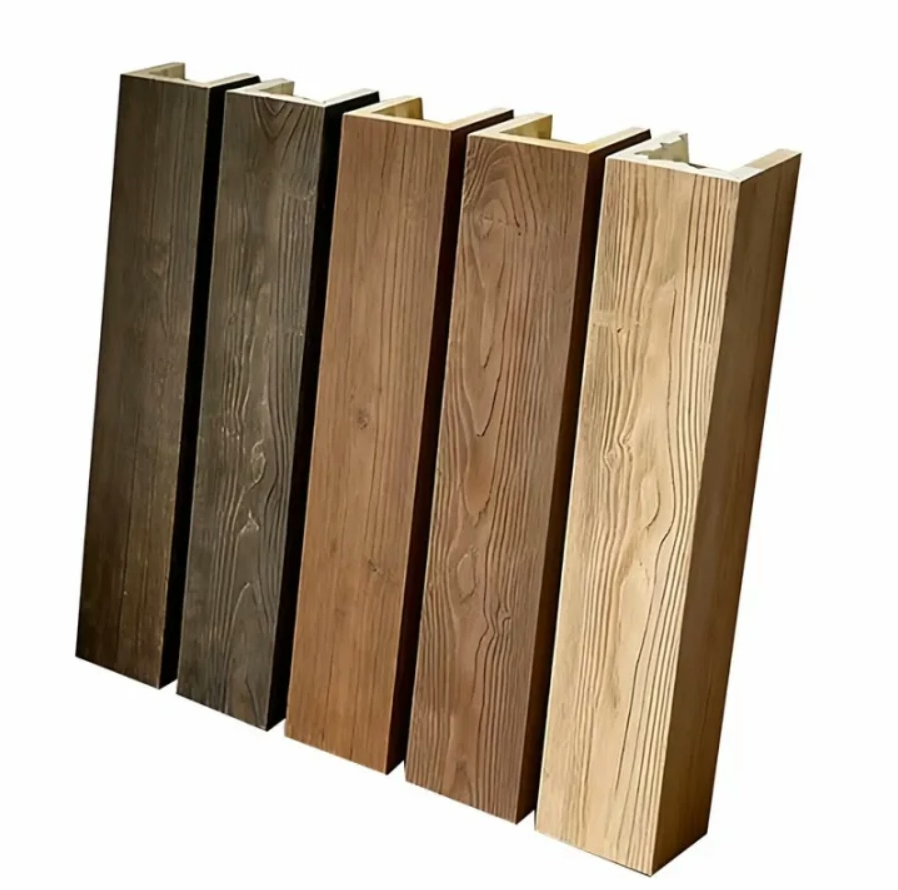
Wholesale supply for residential contractors
For residential contractors, wholesale supply typically includes:
Project-based ordering
The contractor places orders on a project basis:
- Reference to specific project specifications.
- Project-specific lengths and quantities.
- Project-specific color and finish.
- Project-specific delivery dates.
Project-based ordering handles the varied work.
Annual volume tiers
The contractor negotiates annual volume tiers:
- Tier 1: 500 to 1,500 linear feet annually.
- Tier 2: 1,500 to 3,000 linear feet annually.
- Tier 3: 3,000+ linear feet annually.
Annual tiers aggregate across multiple projects.
Standing specifications
For contractors with portfolio patterns:
- Common artisan rustic profiles used across projects.
- Standard color and finish specifications.
- Standard documentation packages.
Standing specs cover common projects.
Per-project customization
Each project may have custom elements:
- Custom lengths for specific floorplans.
- Custom colors for specific design intent.
- Custom profile modifications for distinctive elements.
Customization within the standing spec framework.
Project specification for artisan rustic residential projects
For residential contractor projects, the specification includes:
Profile and cross-section
Per project:
- Profile selection per the design intent.
- Cross-section dimensions appropriate to the ceiling height.
- Standard or modified profile per the project.
Color and finish
Per project:
- Color matched to the project's other finishes.
- Sheen appropriate to the room's design.
- Weathering effects per the design intent.
Layout
Per project:
- Beam locations per the project's architectural drawings.
- Field verification of dimensions.
- Coordination with other trades.
Documentation
Per project:
- Material data sheets.
- Care and maintenance guides.
- Warranty terms.
- Project-specific documentation for code compliance.
Sample iteration for residential projects
For residential contractor projects, sample iteration is critical:
Reference provision
The contractor provides references:
- Physical wood samples (when available).
- Photographs of desired appearance.
- Reference images for the project.
- Color codes or specifications.
Reference provision supports accurate sample development.
Sample production
The supplier produces samples:
- Color and finish samples.
- Texture samples.
- Multiple iterations as needed.
Sample production takes 1 to 3 weeks per iteration.
Approval
The contractor and buyer review samples:
- Compare against the design intent.
- Approve, modify, or reject.
- Document the approved specification.
Approval produces the production specification.
Production
The supplier produces per the approved specification:
- Lead time of 4 to 6 weeks for stock profiles with standard finish.
- Lead time of 6 to 10 weeks for modified profiles with custom finish.
- Replacement stock held for the project.
Pricing for residential contractors
Pricing for residential contractors typically includes:
Per-piece pricing by length
Tier discounts at residential contractor volumes:
- 500 to 1,500 linear feet annually: 10 to 15 percent discount.
- 1,500 to 3,000 linear feet annually: 15 to 25 percent discount.
- 3,000+ linear feet annually: 25 to 35 percent discount.
Per-project pricing
Each project has its own pricing:
- Per-piece pricing for the project's specifications.
- Setup fees for deviations from standing specs.
- Color and finish development fees.
- Documentation package pricing.
For a typical residential contractor project with 100 to 300 linear feet of artisan rustic beams, project cost is $4,000 to $15,000 including installation.
Replacement availability
The supplier holds replacement stock:
- 5 to 10 percent of order quantity.
- Coverage period of 24 to 36 months.
- Same artisan rustic quality.
Replacement availability handles project issues.
Common pitfalls in residential contractor artisan rustic projects
A few issues that come up often enough to flag:
- Insufficient reference materials. Vague references produce mismatched artisan results.
- Skipping sample iteration. Rushing through sample approval produces mismatched results.
- Inadequate field measurement. Beams ordered on incorrect measurements don't fit.
- Underestimating timeline. Artisan rustic projects require longer timelines.
- Inadequate budget planning. Setup fees and color development costs surprise the project budget.
How residential contractors evaluate artisan rustic suppliers
For residential contractors evaluating wholesale suppliers for artisan rustic beams:
- Artisan capability. The supplier has skilled craftspeople for artisan work.
- Sample iteration discipline. The supplier supports multiple iteration cycles.
- Project-based ordering. The supplier handles project-based ordering efficiently.
- Replacement availability. The supplier supports fast replacement.
- References. The supplier has done comparable residential contractor artisan work.
Artisan rustic faux timber beams wholesale for residential contractors is a category where the artisan capability, the sample iteration discipline, and the project-based ordering all need to align. The right supplier produces artisan rustic beams that match each project's specific design intent. The wrong one produces beams that don't quite match, requiring rework or replacement.
Technical References
ASTM standards cited in every specification
Test Data
Lab results from internal testing program
Updated 2026
Reviewed against current product specs