Benefits of Lightweight PU Faux Beams for Commercial Interior Builds
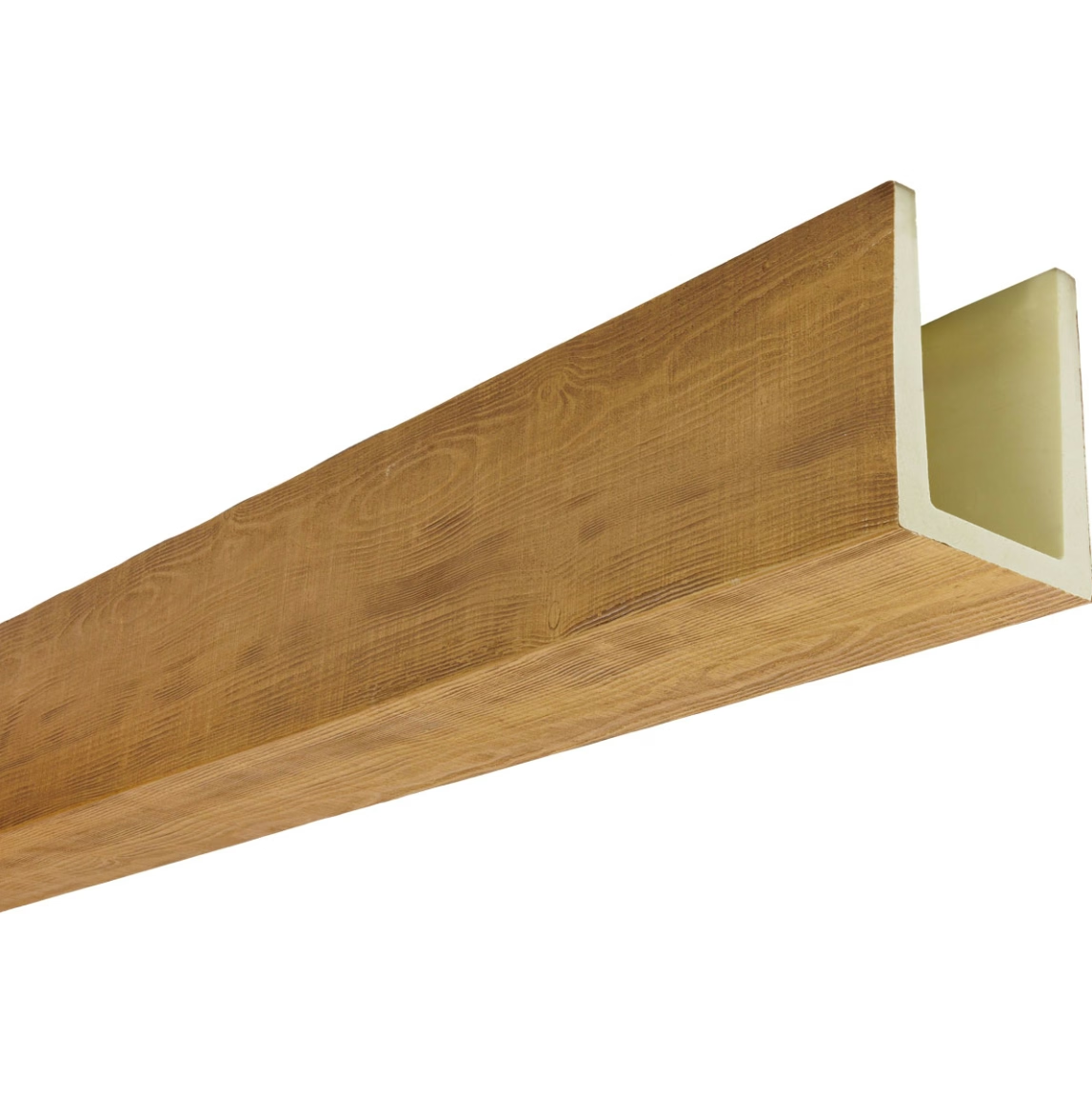
Lightweight polyurethane faux beams offer commercial interior builds specific benefits that go beyond simple install speed. The weight difference between polyurethane and solid timber or metal creates cascading effects across structural engineering, freight costs, crew handling, ceiling system design, and tenant improvement scope. Understanding these benefits helps commercial contractors and project teams make informed beam material decisions.
This is what lightweight polyurethane beams deliver for commercial interior builds, the specific data points that matter, and the implications for project economics and construction operations.
The weight data in detail
Polyurethane faux beams are dramatically lighter than alternatives:
Polyurethane weight per linear foot
By cross-section and density:
- 6 inches by 8 inches at 200 kg/m³: approximately 1.6 pounds per linear foot.
- 8 inches by 10 inches at 200 kg/m³: approximately 2.7 pounds per linear foot.
- 10 inches by 12 inches at 250 kg/m³: approximately 5.0 pounds per linear foot.
- 12 inches by 14 inches at 280 kg/m³: approximately 7.8 pounds per linear foot.
These weights are for the beam itself, not the mounting hardware.
Solid timber weight per linear foot
For comparison, solid timber (at typical moisture content):
- 6 inches by 8 inches pine: approximately 10 to 12 pounds per linear foot.
- 8 inches by 10 inches pine: approximately 17 to 20 pounds per linear foot.
- 10 inches by 12 inches oak: approximately 30 to 35 pounds per linear foot.
- 12 inches by 14 inches oak: approximately 45 to 50 pounds per linear foot.
Solid timber is 5 to 8 times heavier than polyurethane at comparable cross-sections.
Metal beam weight per linear foot
For comparison, structural steel:
- W6x15 (6 inch depth, 15 lb/ft): 15 pounds per linear foot.
- W8x18 (8 inch depth, 18 lb/ft): 18 pounds per linear foot.
- W10x22 (10 inch depth, 22 lb/ft): 22 pounds per linear foot.
Metal is 3 to 10 times heavier than polyurethane at comparable visual depth.
MDF or composite weight per linear foot
For comparison, MDF or composite beams:
- 6 inches by 8 inches MDF: approximately 12 to 14 pounds per linear foot.
- 8 inches by 10 inches MDF: approximately 20 to 23 pounds per linear foot.
MDF is comparable to solid timber in weight.
Structural implications
The lightweight nature of polyurethane creates structural implications:
Reduced ceiling system load
Polyurethane beams add minimal load to ceiling systems:
- Typical residential ceiling designed for 10 to 15 pounds per square foot live load.
- A 20-foot polyurethane beam adds approximately 50 to 100 pounds to the ceiling system.
- Comparable solid timber beam adds approximately 400 to 700 pounds.
For commercial buildings with strict load limits (especially older buildings), the load reduction matters.
Existing structure accommodation
For commercial renovations in older buildings:
- Existing structure often has limited additional load capacity.
- Polyurethane beams can be added without structural reinforcement.
- Solid timber beams may require structural assessment and possibly reinforcement.
The accommodation is critical for tenant improvement projects.
Seismic load implications
In seismic zones:
- Building weight affects seismic forces.
- Lighter materials reduce seismic forces on the structure.
- Polyurethane beams contribute less to seismic load than solid timber.
- This can simplify seismic engineering for beam installations.
The seismic advantage is meaningful in active seismic zones.
Tall building considerations
For high-rise commercial buildings:
- Beam weight affects column and foundation loads cumulatively.
- Lighter beams reduce total building weight.
- Reduced weight can allow additional floors or features in some designs.
- Freight elevator and staging area capacity is less strained.
The cumulative weight savings matter for tall buildings.
Freight and logistics implications
The lightweight nature creates freight and logistics benefits:
Per-shipment weight reduction
For bulk shipments:
- A 40-foot container of polyurethane beams: approximately 8,000 to 12,000 pounds.
- Same container of solid timber beams: approximately 40,000 to 60,000 pounds.
The weight difference affects shipping costs, especially for weight-based freight.
Freight cost comparison
For domestic LTL or truckload freight:
- Polyurethane beams: Class 70 to 85 (lower freight class, lower cost).
- Solid timber beams: Class 85 to 100 (higher freight class, higher cost).
Polyurethane freight is typically 20 to 40 percent cheaper per linear foot.
Site handling and staging
For commercial project sites:
- Polyurethane beams can be moved by smaller crews.
- Less equipment needed for moving beams to installation locations.
- Staging area can hold more beams per square foot.
- Less risk of injury during handling.
The handling advantage improves site operations.
Material lift requirements
For multi-story commercial buildings:
- Polyurethane beams can be moved on passenger elevators (where they fit).
- Solid timber beams often require freight elevators or material lifts.
- Smaller material lifts can handle polyurethane beams.
- Less coordination with building systems for beam movement.
The lift requirement simplification matters for tenant improvement.
Crew handling benefits
The lightweight nature improves crew operations:
Installation crew size
For typical beam installation:
- Polyurethane 8 to 14 feet: Two-person crew sufficient.
- Polyurethane 14 to 20 feet: Two-person crew with second person supporting end.
- Solid timber 8 to 14 feet: Two to three person crew with mechanical assistance.
- Solid timber 14 to 20 feet: Three to four person crew with mechanical assistance.
Smaller crews handle polyurethane beams.
Installation speed
Time per beam:
- Polyurethane standard beam: 15 to 30 minutes per beam.
- Solid timber standard beam: 90 to 240 minutes per beam.
Polyurethane installs 3 to 8 times faster.
Crew safety
The lightweight nature reduces injury risk:
- Less strain on crew members during positioning.
- Less risk of dropping beams.
- Less risk of crush injuries.
- Less workers' compensation exposure.
Safety benefits are meaningful for commercial contractors.
Equipment requirements
For polyurethane beam installation:
- Cordless drill and basic carpentry tools.
- Standard ladders or scaffolding.
- No cranes, lifts, or specialized equipment.
For solid timber installation:
- Cranes or lifts for many beams.
- Specialized cutting tools.
- Material handling equipment.
Polyurethane reduces equipment costs and logistics.
Ceiling system design benefits
The lightweight nature affects ceiling system design:
Existing ceiling modification
For commercial renovations:
- Polyurethane beams can be added to most existing ceilings without modification.
- Solid timber beams may require ceiling reinforcement or new structural support.
- Less disruption to existing building systems.
- Faster tenant improvement completion.
The minimal ceiling modification is valuable for occupied buildings.
Coordination with other ceiling elements
Polyurethane beams coordinate more easily with:
- HVAC ductwork (lighter beams don't conflict with mounting).
- Lighting fixtures (less structural concern for combined loads).
- Sprinkler systems (less interference).
- Ceiling finishes (less risk of cracking from beam movement).
Coordination is simpler with lightweight beams.
Access and maintenance
Polyurethane beams don't impede:
- Access to HVAC equipment above ceilings.
- Access to electrical junction boxes.
- Access to plumbing cleanouts.
- Maintenance access to building systems.
The access benefit is important for ongoing building operations.
Commercial code compliance implications
For commercial code compliance, lightweight beams help:
Load documentation
For permit submittals:
- Polyurethane beam weight is easy to calculate and document.
- Less engineering analysis required for ceiling load verification.
- Faster permit approval in most jurisdictions.
The documentation simplicity supports faster permits.
Fire rating documentation
For fire-rated assemblies:
- Polyurethane beams with proper fire rating don't change ceiling assembly ratings.
- Solid timber beams may affect fire-rated ceiling assemblies.
- Less fire engineering analysis required.
Fire compliance is simpler.
Seismic documentation
For seismic-rated projects:
- Lighter materials reduce seismic load calculations.
- Less structural engineering for beam installations.
- Simpler seismic submittals.
The seismic documentation is less complex.
Accessibility compliance
For ADA compliance:
- Lighter beams have less concern about impact resistance at accessible heights.
- Easier to install at heights that don't create protruding object concerns.
- Less risk of falling objects in seismic events.
Accessibility considerations are simpler.
When lightweight matters most
For commercial interior builds, lightweight matters most in:
Tenant improvement projects
Where the existing building has limited additional load capacity:
- Older buildings with conservative structural design.
- Buildings with strict weight limits.
- Projects where structural reinforcement would be expensive.
- Fast-track tenant improvements.
High-rise buildings
Where cumulative weight affects structural design:
- Column and foundation load management.
- Material lift coordination.
- Freight elevator capacity.
Seismic zone construction
Where lighter materials reduce seismic forces:
- Active seismic zones.
- Buildings with seismic concerns.
- Tenant improvements in seismic-rated buildings.
Occupied buildings
Where minimal disruption is required:
- Hotels with continuous operations.
- Office buildings with tenants.
- Healthcare facilities with patients.
- Schools with students.
Cost implications of lightweight
The cost implications extend beyond per-piece pricing:
Structural engineering savings
For projects requiring structural analysis:
- Less engineering time for beam weight calculations.
- Less structural reinforcement if needed.
- Lower engineering fees.
Structural savings can be significant.
Freight savings
For bulk shipments:
- 20 to 40 percent freight cost reduction.
- Lower per-shipment costs.
- More cost-effective for distant projects.
Freight savings compound across many projects.
Equipment rental savings
For projects requiring equipment:
- Less crane or lift rental.
- Less specialized equipment.
- Lower per-project equipment costs.
Equipment savings add up.
Labor savings
For installation labor:
- 3 to 8 times faster installation.
- Lower labor cost per beam.
- More projects per crew per year.
Labor savings are the largest cost benefit.
Insurance and liability savings
For workers' compensation and liability:
- Lower injury risk.
- Lower insurance premiums.
- Less liability exposure.
Insurance savings are ongoing.
Limitations of lightweight beams
Honest assessment: lightweight isn't always an advantage:
Visual authenticity
Some projects require authentic solid timber weight:
- Projects where solid timber authenticity is the point.
- Buyers who specifically want solid timber.
- Historic restoration requiring authentic materials.
Structural applications
Polyurethane beams are decorative, not structural:
- They don't carry building loads.
- Structural beams require solid timber, steel, or engineered lumber.
- Polyurethane supplements structural framing, doesn't replace it.
Premium positioning
Some buyers perceive solid timber as premium:
- Solid timber weight can signal quality.
- Polyurethane may not match the buyer's positioning expectations.
- Authentic material preference overrides weight considerations.
The lightweight advantage doesn't overcome all preferences.
Choosing lightweight for commercial interior builds
For commercial interior build project teams, the decision framework:
| Consideration | Lightweight Advantage | Solid Timber Advantage |
|---|---|---|
| Structural impact | Minimal load | Significant load |
| Freight cost | 20 to 40 percent less | Higher |
| Install speed | 3 to 8 times faster | Slower |
| Crew safety | Lower injury risk | Higher injury risk |
| Equipment | Less needed | More needed |
| Cost | Lower total | Higher total |
| Authenticity | Factory appearance | Authentic material |
| Seismic | Lower forces | Higher forces |
The decision depends on the specific project's priorities.
Lightweight polyurethane faux beams for commercial interior builds deliver benefits that extend across structural engineering, freight, crew handling, ceiling system design, and code compliance. The benefits compound for projects with multiple commercial constraints, producing meaningful advantages over heavier alternatives.
Technical References
ASTM standards cited in every specification
Test Data
Lab results from internal testing program
Updated 2026
Reviewed against current product specs