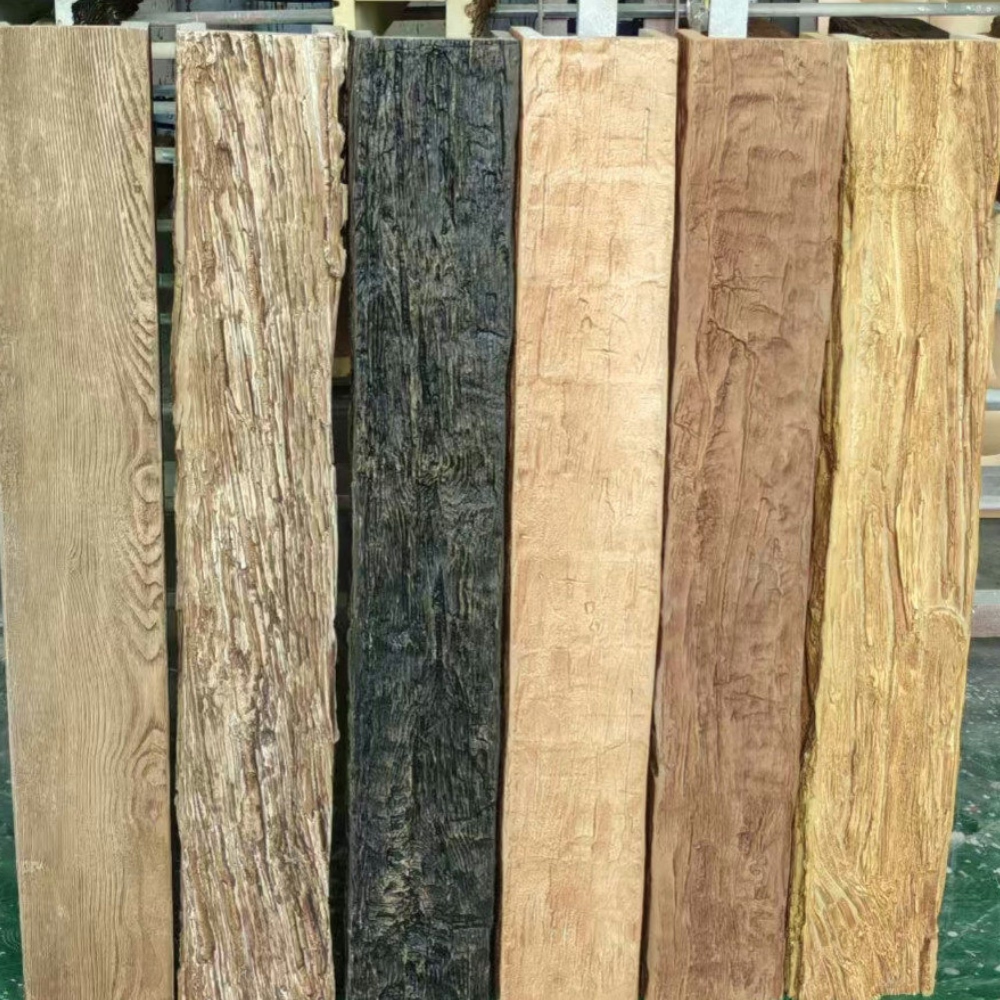
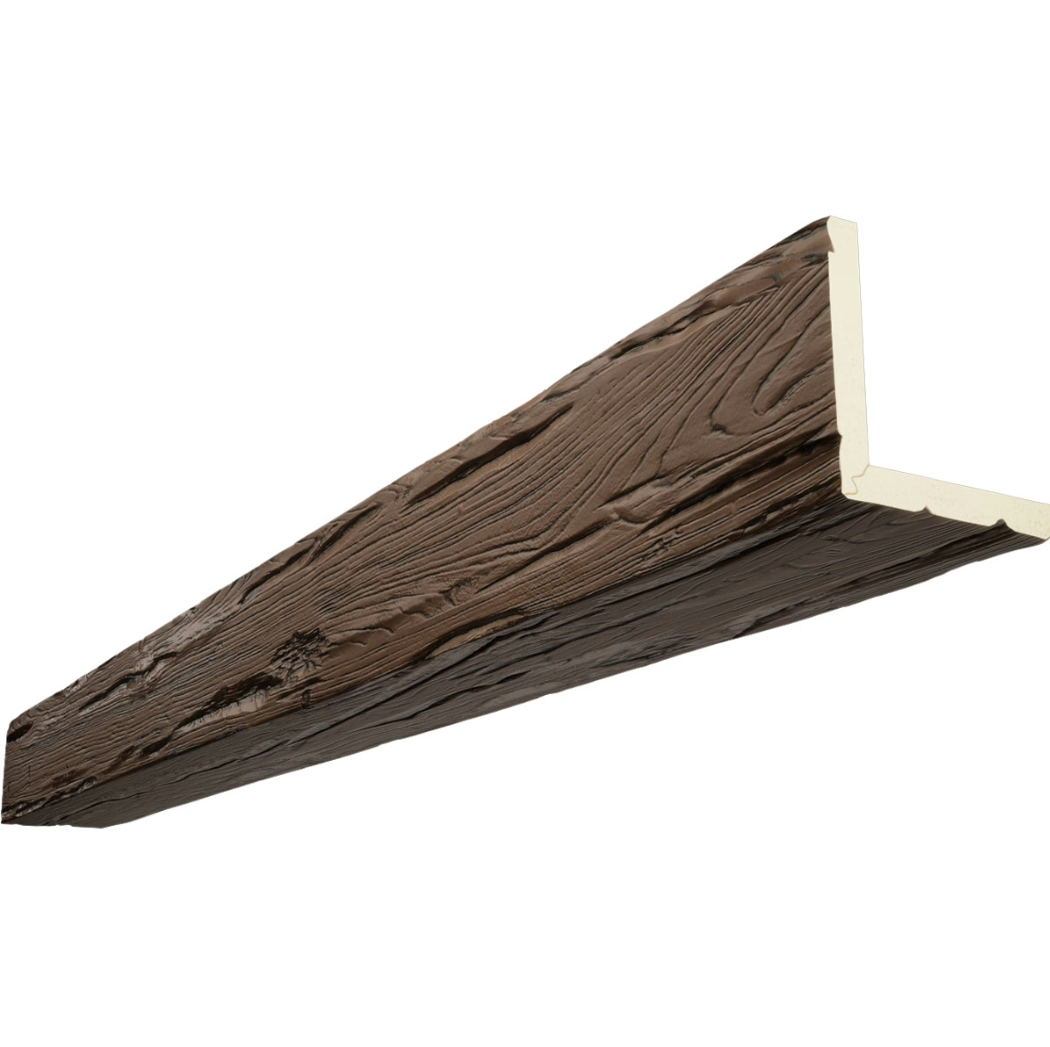
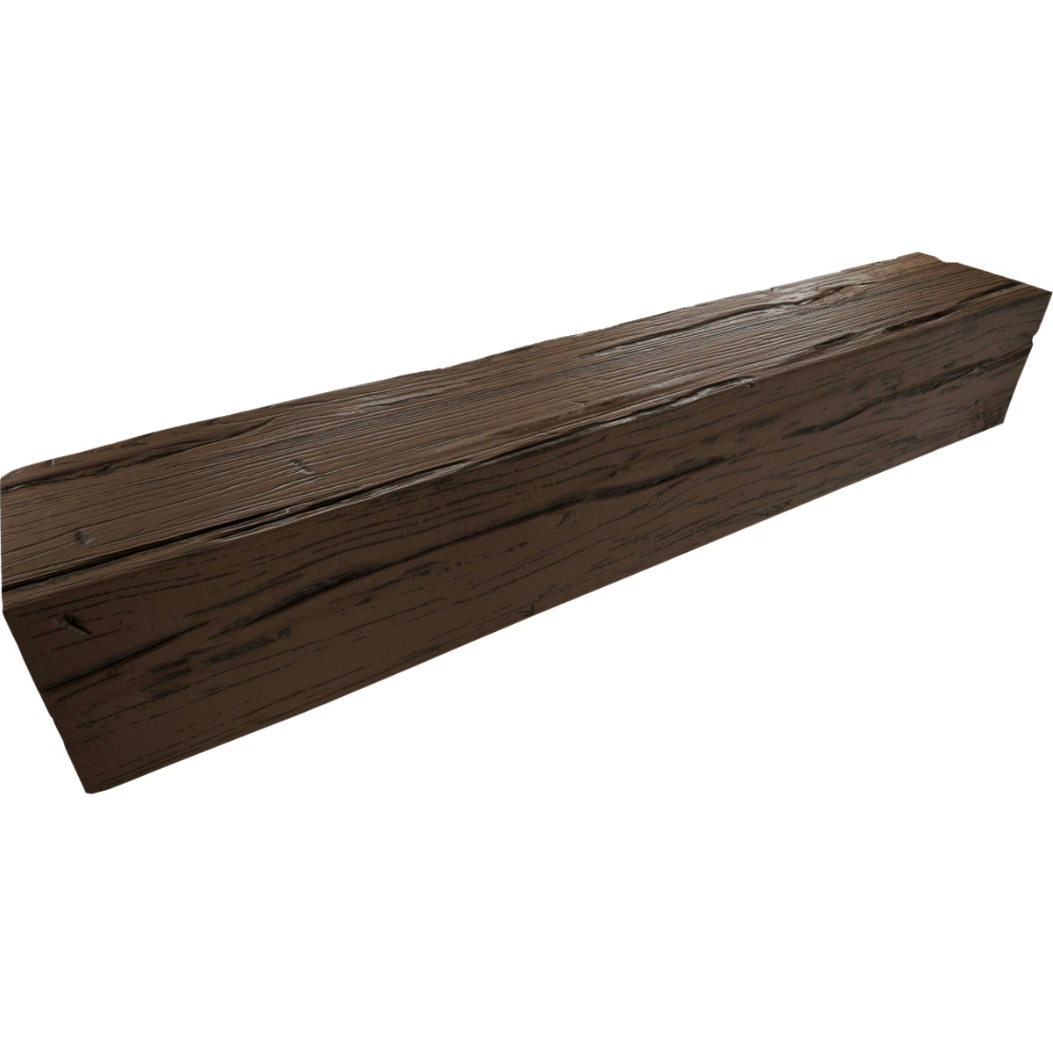
Bulk Faux Wood Beams for Builders | Benefits of Polyurethane Faux Timber
Polyurethane faux timber beams have become the default choice for production builders and a frequent choice for custom builders, but the material isn't always the right answer. A clear-eyed comparison against the alternatives—solid wood, MDF, plaster, metal, and other materials—shows where polyurethane wins and where other materials serve better.
This is a side-by-side comparison, focused on the criteria that matter for residential and commercial builders.
Polyurethane faux timber
Composition: Closed-cell polyurethane foam, density 80 to 320 kg/m³, with a factory-applied surface finish.
Strengths
- Lightweight. One-quarter to one-third the weight of solid wood. Reduces structural support requirements and install labor.
- Moisture resistant. Closed-cell structure doesn't absorb water; properly sealed, handles bathroom and outdoor conditions.
- Consistent quality. Factory production produces consistent texture, color, and dimension across the run.
- Customizable. Profiles, colors, and finishes are customizable within the factory's capabilities.
- Documentation. Density, fire rating, VOC emissions are documented and verifiable.
- Cost-effective. Lower per-piece cost than solid wood for most applications.
Limitations
- Edge detail. Lower-density polyurethane rounds off at fine edges; high-density polyurethane is needed for crisp details.
- Surface hardness. Polyurethane can be scratched or dented by sharp impact; the surface is repairable but not as durable as solid wood.
- Heat sensitivity. Polyurethane can deform at sustained high temperatures (above 180°F); not suitable for sauna applications without specialized formulation.
- UV degradation. Untreated polyurethane yellows or chalks under UV exposure; UV-stabilized finishes are needed for exterior applications.
- Perception. Some homeowners perceive polyurethane as "fake" compared to real wood, regardless of the visual quality.
Cost
- Per-piece: $10 to $30 per linear foot, depending on profile, density, and finish.
- Installed: $17 to $45 per linear foot, including cleats and labor.
Best for
Production builders, commercial projects, bathroom and outdoor applications, projects with documentation requirements, projects with tight timelines.
Solid wood beams
Composition: Solid timber, typically pine, fir, oak, cedar, or reclaimed wood from old structures.
Strengths
- Authenticity. Real wood, with real grain, real texture, real aging characteristics.
- Structural capacity. Solid wood beams can carry structural loads (with proper engineering).
- Repairability. Scratches, dents, and surface damage can be sanded and refinished.
- Aging character. Solid wood develops patina over time; many homeowners value this aging.
- High-end perception. Solid wood beams are perceived as premium; they justify premium pricing.
Limitations
- Weight. Solid wood beams are heavy; long-span beams require engineered support and crane installation.
- Moisture sensitivity. Solid wood absorbs water, swells, warps, and cracks in high-moisture environments.
- Variability. Each beam is different; consistency across a run is harder to achieve.
- Cost. Per-piece cost is significantly higher than polyurethane.
- Lead time. Sourcing specific sizes and species can take weeks or months.
- Code documentation. Fire rating and VOC documentation is less standardized than for polyurethane.
Cost
- Per-piece: $30 to $90 per linear foot for typical residential cross-sections, significantly more for reclaimed or specialty wood.
- Installed: $50 to $150 per linear foot, including structural support and labor.
Best for
Structural applications, high-end custom homes where authenticity matters, restoration projects, projects where real wood is specifically required.
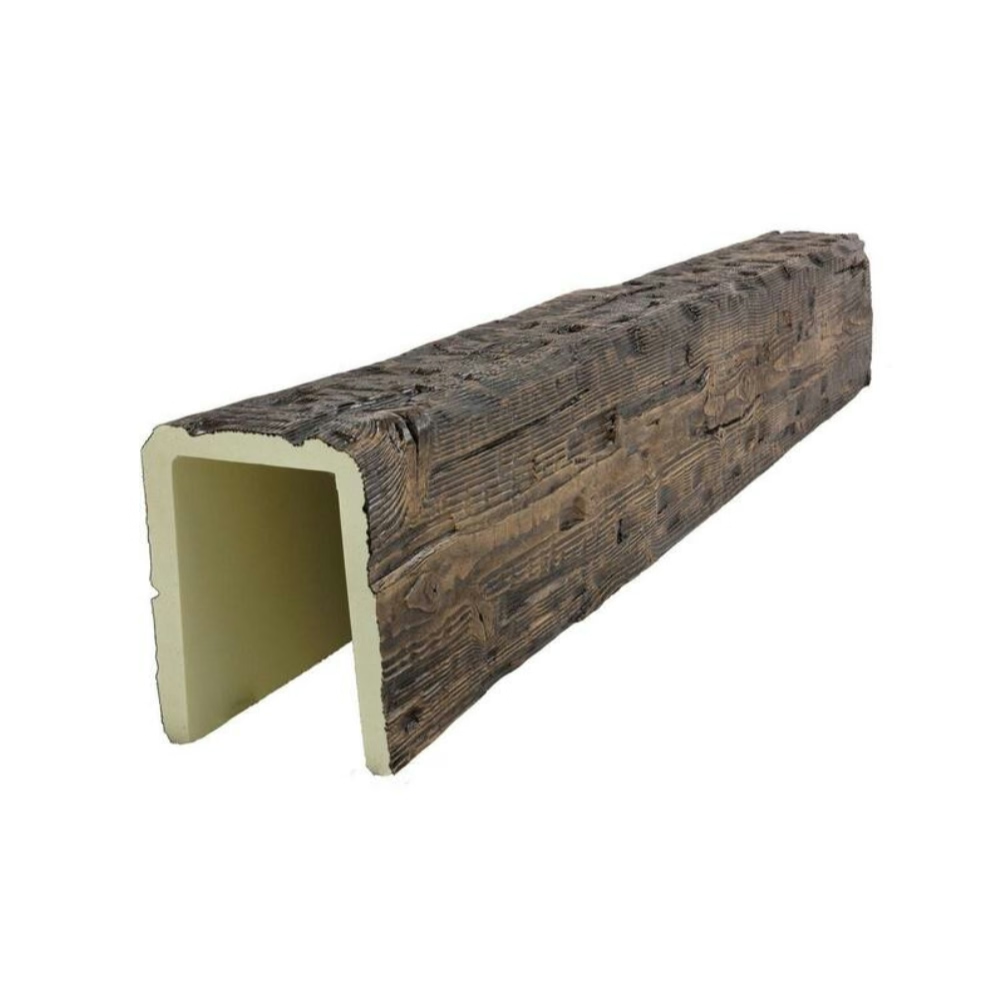
MDF (medium-density fiberboard) beams
Composition: Engineered wood product made from wood fibers combined with resin and pressed into dense panels, often shaped into beam profiles.
Strengths
- Cost-effective. Lower per-piece cost than solid wood.
- Smooth surface. Easy to paint or finish.
- Consistent quality. Factory production produces consistent results.
- Lightweight (relative to solid wood). Lighter than solid wood, though heavier than polyurethane.
Limitations
- Moisture sensitivity. MDF swells and degrades rapidly when exposed to water; not suitable for bathroom or outdoor applications.
- Weight. Heavier than polyurethane; structural support requirements are closer to solid wood than to polyurethane.
- Edge detail. MDF edges are softer than solid wood; fine details can chip or wear.
- Formaldehyde content. Some MDF products off-gas formaldehyde; documentation varies.
- Repair difficulty. MDF damage is harder to repair than solid wood or polyurethane.
Cost
- Per-piece: $8 to $25 per linear foot.
- Installed: $14 to $40 per linear foot.
Best for
Indoor applications where moisture isn't a concern, painted beam finishes, budget-constrained projects where polyurethane isn't available.
Plaster beams
Composition: Gypsum plaster, often reinforced with fiber or metal lath, formed into beam shapes.
Strengths
- Architectural detail. Plaster can be formed into intricate shapes and details.
- Fire resistance. Plaster is naturally fire-resistant.
- Traditional appearance. Authentic for Victorian, craftsman, and some traditional styles.
- Paintable surface. Smooth surface for painted finishes.
Limitations
- Weight. Plaster beams are very heavy; structural support requirements are significant.
- Fragility. Plaster chips and cracks on impact; repair is specialized.
- Moisture sensitivity. Plaster degrades in high-moisture environments.
- Install complexity. Plaster beam installation requires skilled trades.
- Cost. Per-piece and installed costs are typically higher than polyurethane.
Cost
- Per-piece: $25 to $60 per linear foot.
- Installed: $45 to $100 per linear foot.
Best for
Victorian and traditional restoration projects, decorative elements where intricate shapes are required, projects where plaster is specifically needed for historical accuracy.
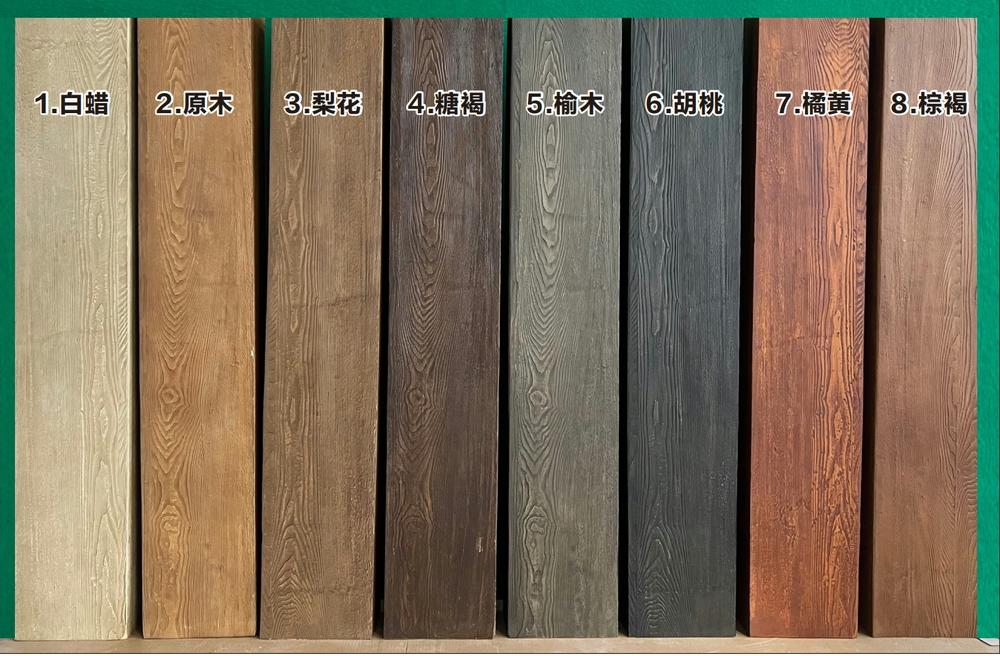
Metal beams
Composition: Steel, aluminum, or wrought iron, formed into beam shapes, often with a wood-look finish applied.
Strengths
- Fire resistance. Metal is naturally fire-resistant; often used in fire-rated construction.
- Structural capacity. Metal beams can carry significant structural loads.
- Modern aesthetic. Authentic for industrial, modern, and contemporary styles.
- Durability. Metal doesn't degrade from moisture, UV, or impact.
Limitations
- Weight. Steel beams are very heavy; aluminum is lighter but still heavier than polyurethane.
- Cost. Higher per-piece cost than polyurethane for most applications.
- Aesthetic limitations. Metal doesn't replicate wood grain convincingly in most applications.
- Thermal conductivity. Metal beams can create thermal bridging issues.
- Install complexity. Metal beam installation often requires specialized tools and skills.
Cost
- Per-piece: $30 to $80 per linear foot.
- Installed: $50 to $130 per linear foot.
Best for
Industrial and modern styles, fire-rated construction, structural applications where wood-look isn't required.
The comparison table
| Criterion | Polyurethane | Solid Wood | MDF | Plaster | Metal |
|---|---|---|---|---|---|
| Weight | Very light | Heavy | Medium-heavy | Very heavy | Heavy |
| Moisture resistance | Excellent | Poor | Poor | Poor | Excellent |
| Fire rating documentation | Excellent | Variable | Variable | Excellent | Excellent |
| Custom profiles | Easy | Hard | Moderate | Moderate | Moderate |
| Cost (per linear foot) | $10-30 | $30-90 | $8-25 | $25-60 | $30-80 |
| Lead time | 2-4 weeks | 4-12 weeks | 2-4 weeks | 4-8 weeks | 4-8 weeks |
| Edge detail | Good-Excellent | Excellent | Moderate | Excellent | Excellent |
| Repairability | Moderate | Excellent | Poor | Poor | Moderate |
| Authenticity perception | Moderate | Excellent | Poor | Good (traditional) | Poor (wood-look) |
Where polyurethane clearly wins
For most residential and commercial beam applications, polyurethane is the right choice:
- Production home building. The cost, weight, lead time, and documentation all favor polyurethane.
- Commercial interiors. The fire rating documentation, weight, and customization favor polyurethane.
- Bathroom and outdoor applications. The moisture resistance is decisive.
- Renovation projects. The weight advantage avoids structural reinforcement costs.
- Tight timelines. The lead time is shorter than solid wood or plaster.
Where other materials win
- Structural applications. Solid wood or metal, with engineering.
- Restoration projects. Solid wood (often reclaimed) for historical accuracy.
- High-end custom homes with authenticity requirement. Solid wood, often reclaimed or hand-hewn.
- Fire-rated construction where polyurethane doesn't meet the rating. Metal or plaster, with proper engineering.
- Intricate architectural shapes. Plaster for traditional styles, metal for modern styles.
Polyurethane faux timber beams aren't the right answer for every project. But for most production builders and many custom builders, they're the most practical choice, and the comparison against alternatives shows why.
Technical References
ASTM standards cited in every specification
Test Data
Lab results from internal testing program
Updated 2026
Reviewed against current product specs