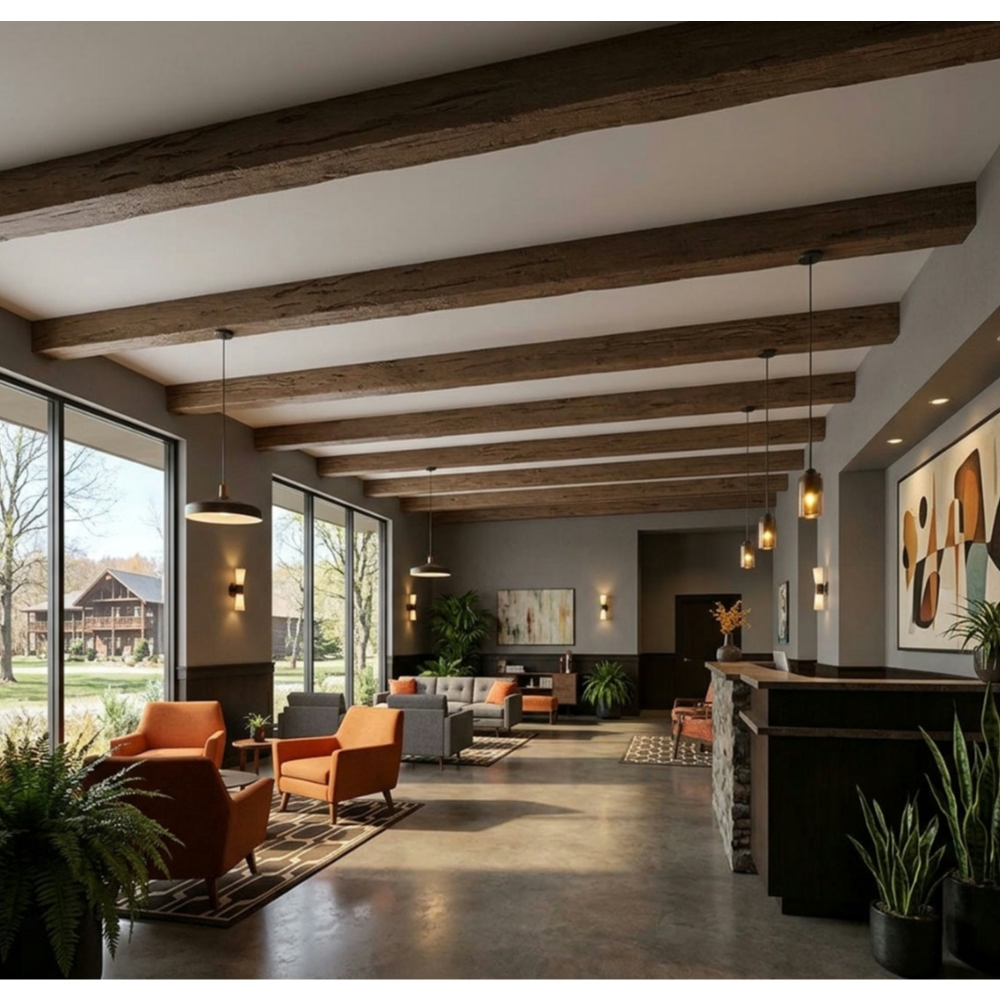
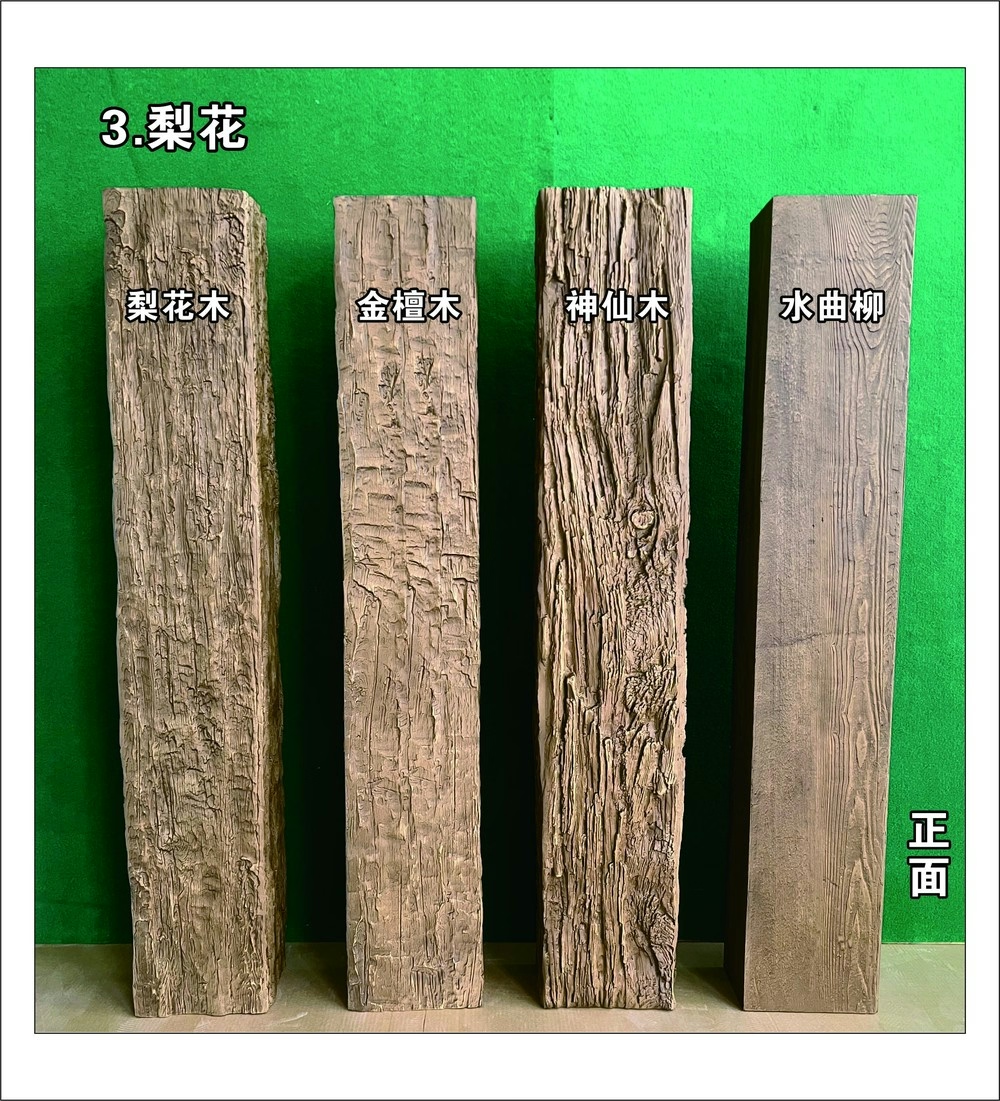
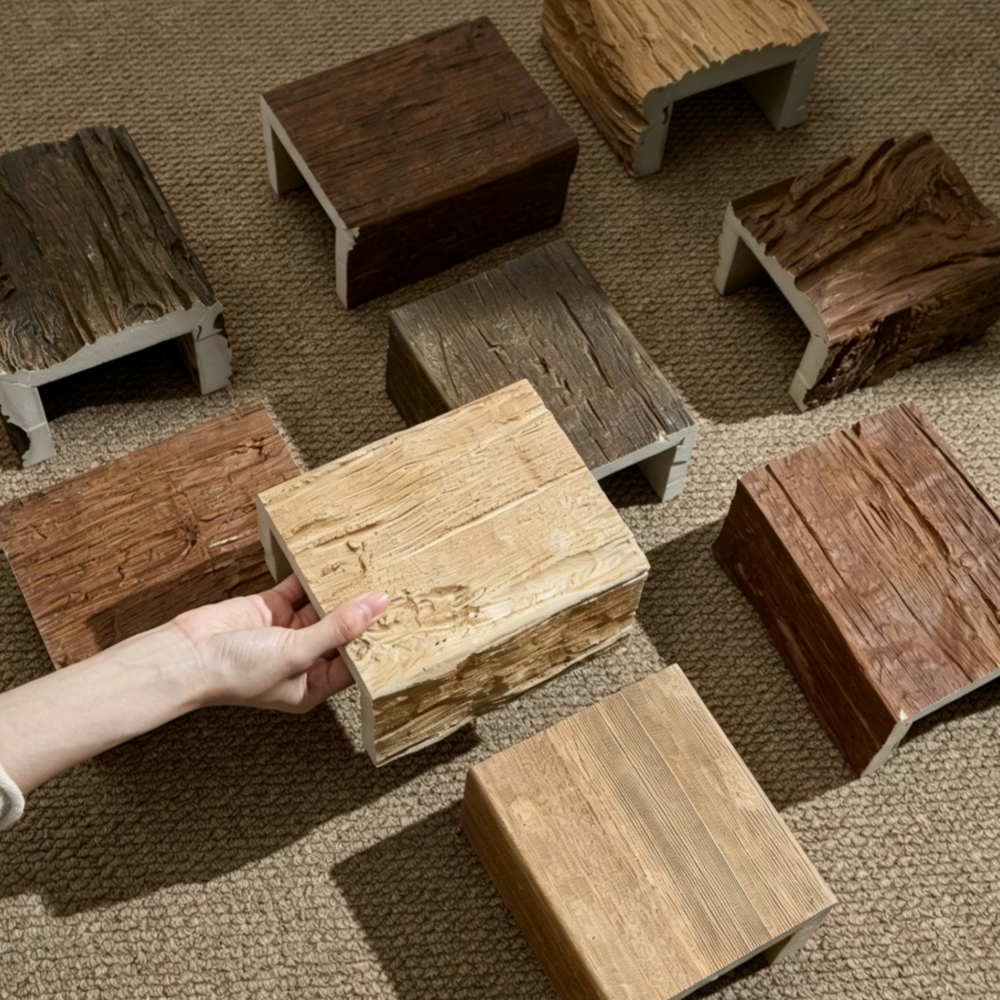
Choosing Faux Ceiling Beams for Commercial Interior Renovation
Choosing the right faux ceiling beams for commercial interior renovation involves matching beam specifications to project requirements across multiple dimensions: profile, finish, density, fire rating, documentation, and supplier capability. The decision framework helps commercial project teams select beams that meet the project's specific needs.
This is how to choose faux ceiling beams for commercial interior renovation, the decision framework, specification-by-specification comparison, application-specific recommendations, and what makes the right selection.
The decision framework
For commercial interior renovation beam selection, consider these dimensions:
Application context
Determine the application context:
- What type of commercial space (office, retail, restaurant, hotel, healthcare, etc.).
- What's the visibility level (high, medium, low).
- What's the existing structure (ability to add beams).
- What's the project's design intent.
The application context drives specification.
Code requirements
Determine applicable code requirements:
- Fire rating per jurisdiction.
- VOC emissions per local requirements.
- Seismic requirements per zone.
- ADA requirements for accessible areas.
- Industry-specific requirements (healthcare, education, etc.).
Code requirements are non-negotiable.
Aesthetic requirements
Determine aesthetic requirements:
- Design style (modern, traditional, rustic, industrial).
- Color and finish preferences.
- Profile preferences.
- Texture preferences.
Aesthetic requirements drive the visual outcome.
Operational requirements
Determine operational requirements:
- Timeline constraints.
- Budget constraints.
- Installation constraints.
- Maintenance expectations.
Operational requirements affect feasibility.
Specification-by-specification comparison
For each specification, compare options:
Density
Polyurethane density options:
- Low density (80 to 150 kg/m³): Lowest cost, lightest weight, softest edges. Best for: Above-eye-level applications, low-visibility areas, budget-constrained projects.
- Medium density (150 to 250 kg/m³): Standard balance. Best for: Most commercial applications, eye-level installations.
- High density (250 to 320 kg/m³): Best edge detail, strongest cleat holding. Best for: Eye-level installations, commercial high-traffic areas, premium appearance.
Choose density based on visibility and application.
Fire rating
Fire rating options:
- No rating: Acceptable for some residential and unrated commercial applications. Verify with local jurisdiction.
- ASTM E84 Class B: Acceptable for most commercial applications. Standard for many jurisdictions.
- ASTM E84 Class A: Required for some jurisdictions and high-occupancy applications.
Choose fire rating based on jurisdiction and occupancy.
VOC emissions
VOC emissions options:
- No certification: Acceptable for some applications.
- GREENGUARD certified: Required for some commercial applications (schools, healthcare, etc.).
- GREENGUARD Gold: Required for sensitive environments (children's facilities, healthcare, etc.).
Choose VOC certification based on project requirements.
Profile
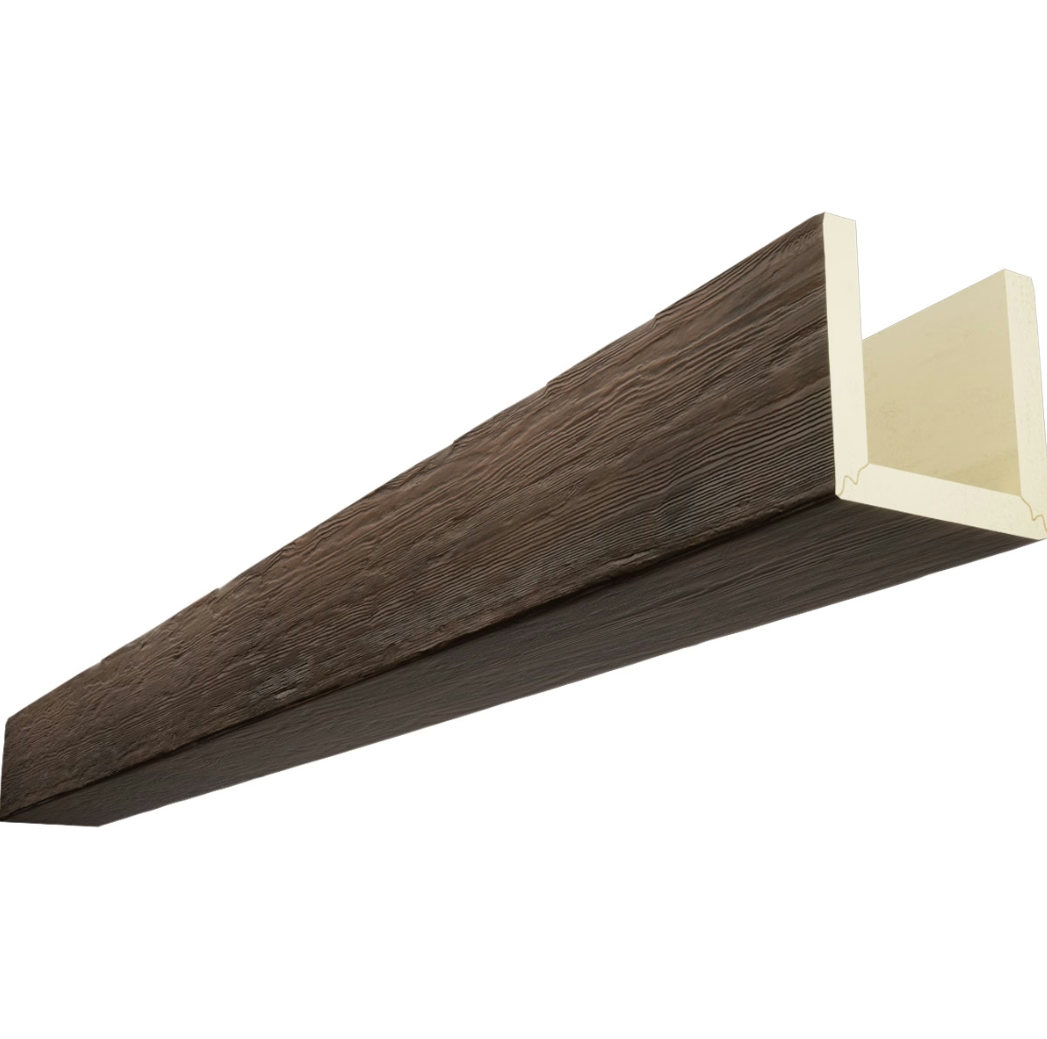
Profile options:
- Stock profiles: Wide variety available. Best for: Standard projects, fast turnaround.
- Modified stock profiles: Modified from stock molds. Best for: Projects requiring specific profile variations.
- Custom profiles: New mold development. Best for: Distinctive projects, brand standard development.
Choose profile based on design requirements and budget.
Finish
Finish options:
- Single-tone finish: Standard, cost-effective. Best for: Most applications.
- Multi-tone finish: More depth and character. Best for: Higher-visibility applications, premium appearance.
- Hand-detailed finish: Authentic artisan appearance. Best for: Premium projects, distinctive installations.
- Weathering effects: Aged or weathered looks. Best for: Specific design intents (rustic, reclaimed, etc.).
Choose finish based on aesthetic requirements.
Texture
Texture options:
- Smooth: Clean appearance. Best for: Modern, contemporary designs.
- Light texture: Subtle wood character. Best for: Transitional designs.
- Medium texture: Distinctive wood character. Best for: Traditional designs.
- Heavy texture: Pronounced wood character. Best for: Rustic, reclaimed, or artisan designs.
Choose texture based on aesthetic requirements.
Application-specific recommendations
For common commercial applications, recommended specifications:
Office building lobbies
For office building lobbies:
- Density: Medium to high (180 to 280 kg/m³).
- Fire rating: ASTM E84 Class B (Class A in some jurisdictions).
- Profile: Stock architectural profiles (rectangular, slight chamfer).
- Finish: Single-tone or multi-tone in formal colors.
- Texture: Light to medium.
Office lobbies call for professional, durable specifications.
Retail store interiors
For retail store interiors:
- Density: Medium (150 to 220 kg/m³).
- Fire rating: ASTM E84 Class B.
- Profile: Stock profiles appropriate to brand aesthetic.
- Finish: Brand-specified color and finish.
- Texture: Per brand aesthetic.
Retail interiors prioritize brand consistency.
Restaurant dining rooms
For restaurant dining rooms:
- Density: Medium to high (180 to 280 kg/m³).
- Fire rating: ASTM E84 Class B (Class A in some jurisdictions).
- Profile: Style-appropriate (rustic, modern, etc.).
- Finish: Multi-tone or hand-detailed for character.
- Texture: Medium to heavy.
Restaurant dining rooms benefit from character and durability.
Hotel lobbies
For hotel lobbies:
- Density: Medium to high (180 to 280 kg/m³).
- Fire rating: ASTM E84 Class B.
- Profile: Brand-standard profiles or distinctive profiles for luxury brands.
- Finish: Multi-tone or hand-detailed.
- Texture: Medium to heavy.
Hotel lobbies prioritize brand and durability.
Healthcare facilities
For healthcare facilities:
- Density: Medium (150 to 220 kg/m³).
- Fire rating: ASTM E84 Class A.
- VOC: GREENGUARD Gold required.
- Profile: Smooth or light texture for cleanability.
- Finish: Easy-clean finishes.
Healthcare facilities prioritize safety and cleanability.
Educational facilities
For educational facilities:
- Density: Medium (150 to 220 kg/m³).
- Fire rating: ASTM E84 Class A.
- VOC: GREENGUARD or GREENGUARD Gold.
- Profile: Durable, easy to maintain.
- Finish: Durable, cleanable.
Educational facilities prioritize safety and durability.
Selection process
For choosing faux ceiling beams:
Step 1: Define project requirements
Document the project requirements:
- Application context.
- Code requirements.
- Aesthetic requirements.
- Operational requirements.
Requirements definition drives all subsequent decisions.
Step 2: Evaluate options against requirements
For each potential beam specification:
- Compare against code requirements.
- Compare against aesthetic requirements.
- Compare against operational requirements.
- Compare against budget constraints.
Evaluation identifies the best fit.
Step 3: Request samples
For shortlisted specifications:
- Request samples from potential suppliers.
- Evaluate samples against the design intent.
- Evaluate samples against the application requirements.
- Document sample evaluation.
Samples confirm the specification selection.
Step 4: Verify supplier capability
For potential suppliers:
- Verify production capability.
- Verify documentation capability.
- Verify lead time reliability.
- Verify references.
Supplier capability affects successful delivery.
Step 5: Make the selection
Based on the evaluation:
- Select the specification that best meets requirements.
- Select the supplier that best meets capability needs.
- Document the selection rationale.
- Communicate the selection to stakeholders.
The selection becomes the project specification.

Common mistakes in beam selection
A few mistakes that occur frequently:
Selecting by appearance alone
Appearance-focused selection may miss:
- Code compliance requirements.
- Durability for the application.
- Installation requirements.
- Maintenance considerations.
Appearance is important but not the only factor.
Underestimating code requirements
Code underestimation can cause:
- Inspection failures.
- Required replacement.
- Project delays.
- Additional costs.
Code compliance is non-negotiable.
Choosing based on price alone
Price-focused selection may miss:
- Quality issues.
- Documentation gaps.
- Lead time problems.
- Long-term maintenance costs.
Total cost of ownership matters more than unit price.
Not verifying supplier capability
Capability assumptions can lead to:
- Production delays.
- Documentation gaps.
- Quality issues.
- Communication problems.
Supplier verification protects against issues.
Ignoring application specifics
Generic specification may not address:
- Specific application requirements.
- Specific code requirements.
- Specific durability needs.
- Specific maintenance expectations.
Application-specific specification produces better results.
Evaluation criteria summary
For choosing faux ceiling beams for commercial interior renovation, the evaluation criteria:
| Criterion | Weight | Source |
|---|---|---|
| Code compliance | Mandatory | Jurisdiction |
| Application suitability | High | Project requirements |
| Aesthetic match | High | Design intent |
| Durability | High | Application context |
| Supplier capability | High | Supplier verification |
| Total cost | High | Budget analysis |
| Lead time | Medium | Schedule requirements |
| Maintenance | Medium | Operational requirements |
The criteria support informed selection.
How commercial renovation teams choose beam suppliers
For commercial renovation teams choosing beam suppliers:
- Capability match. The supplier can produce the required specification.
- Documentation depth. The supplier provides comprehensive documentation.
- Lead time reliability. The supplier meets commercial timelines.
- Quality consistency. The supplier maintains quality across production.
- References. The supplier has done comparable commercial work.
Choosing faux ceiling beams for commercial interior renovation is a category where the decision framework, the specification comparison, and the supplier evaluation all need to align. The right selection produces beams that meet the project's specific requirements across all dimensions: code, aesthetics, durability, and operations.
Technical References
ASTM standards cited in every specification
Test Data
Lab results from internal testing program
Updated 2026
Reviewed against current product specs