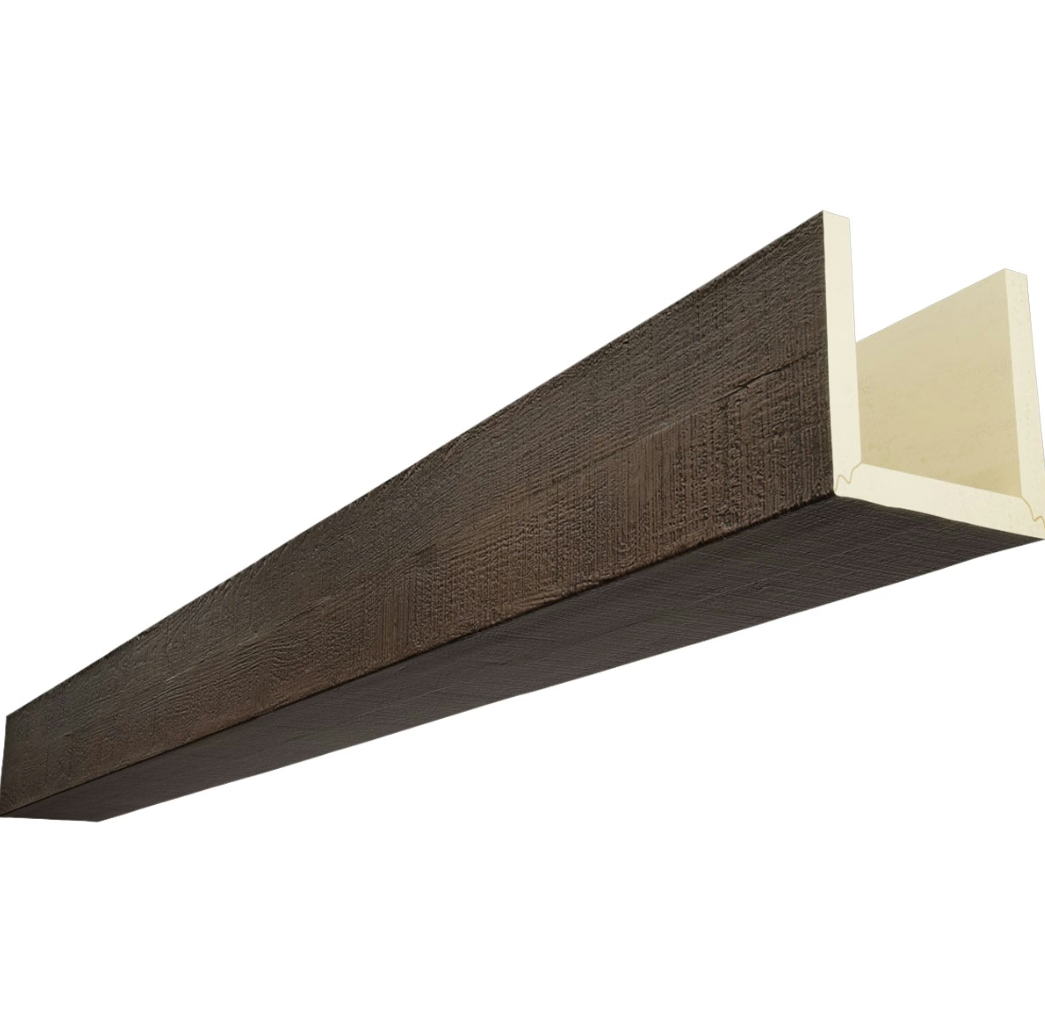
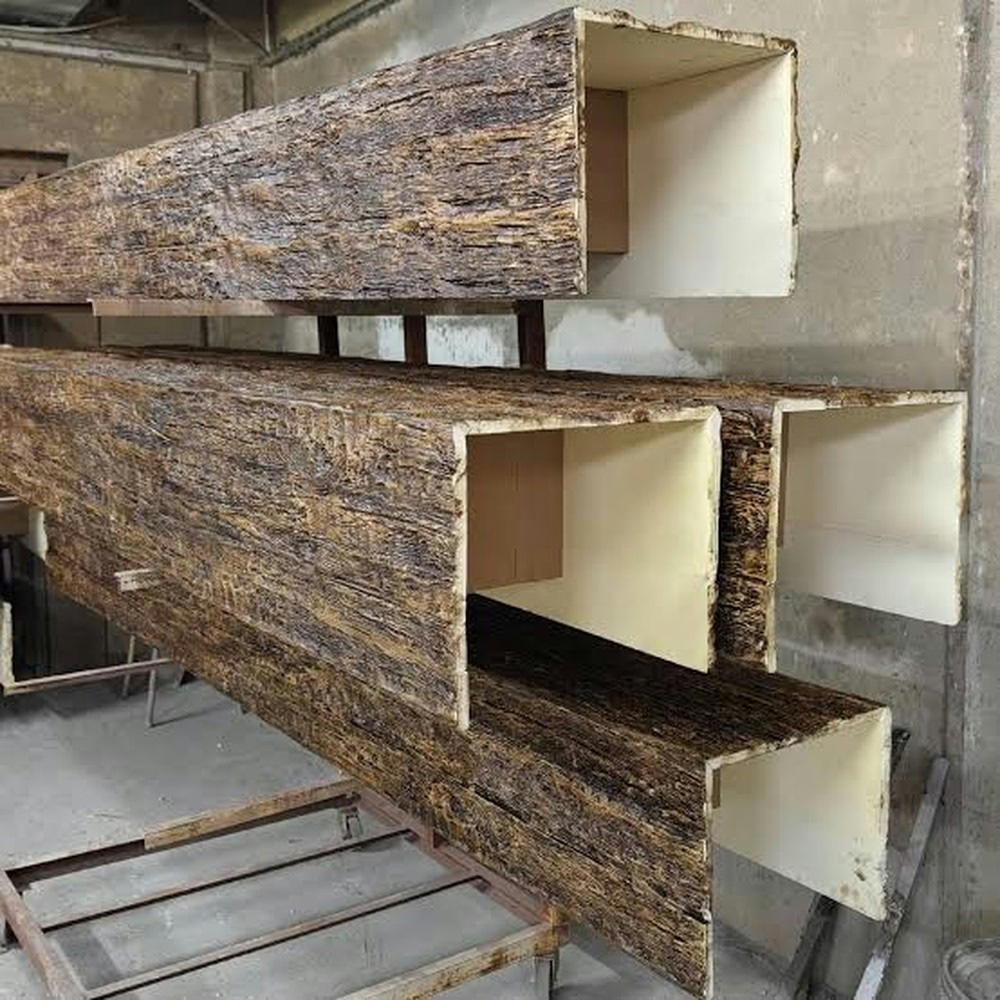
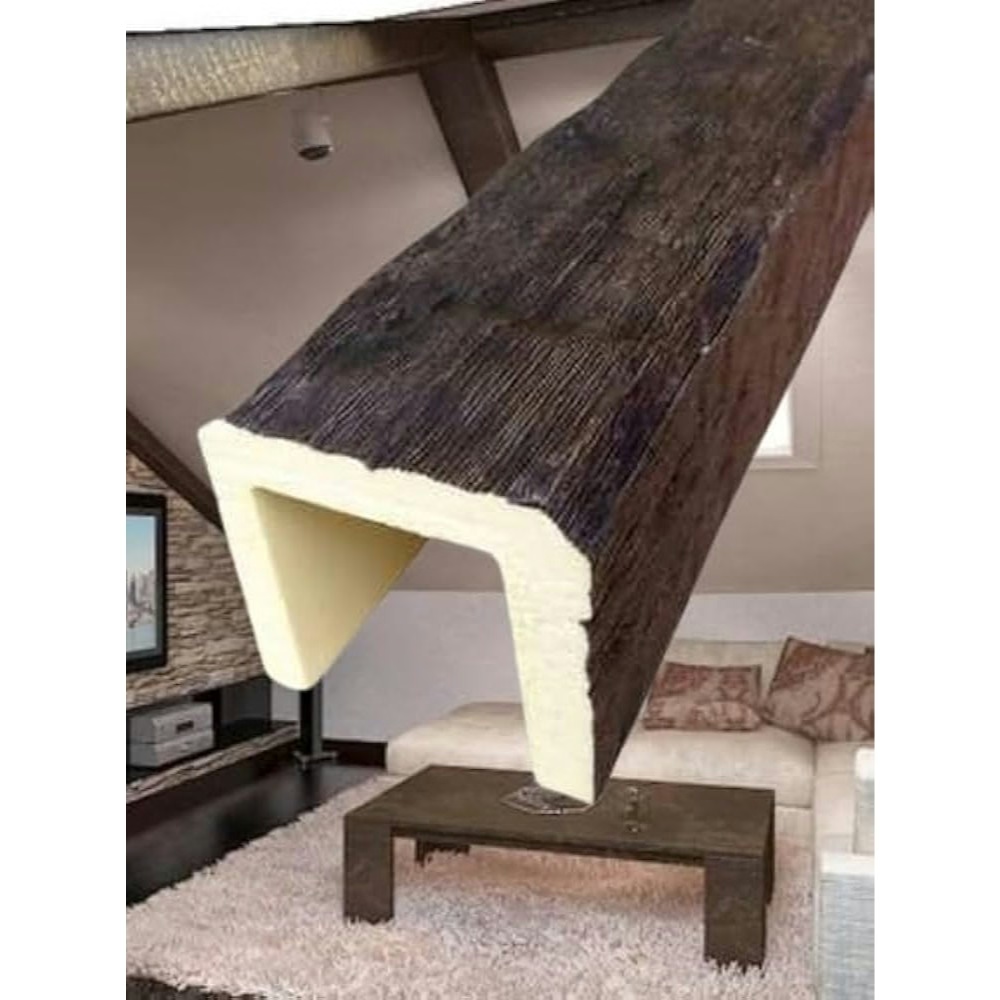
Custom Cross-Section Faux Beams | Factory for Luxury Home Builders
For luxury home builders, a custom cross-section faux beam is more than a specification—it's an exclusive design element that becomes part of the builder's portfolio identity. The cross-section that no competitor can easily replicate, the profile that defines the builder's architectural vocabulary, the detail that appears in marketing materials and model homes. The factory relationship that produces this cross-section is a long-term strategic asset.
This is how luxury home builders use custom cross-section beams as an exclusive design element, what the factory relationship looks like, and what the marketing value is.
Why custom cross-section matters for luxury builders
Several factors make custom cross-section particularly valuable for luxury home builders:
Portfolio differentiation
Luxury home buyers choose builders partly based on the builder's portfolio identity—the design vocabulary that distinguishes the builder's homes from competitors. A custom cross-section beam is a tangible expression of that identity.
When buyers tour the builder's model homes or portfolio, the beams are visible and memorable. They associate the beam profile with the builder's brand.
Design vocabulary control
Luxury builders often have a defined design vocabulary—specific architectural traditions, specific material palettes, specific proportions. A custom cross-section beam expresses that vocabulary in a way stock profiles can't.
For luxury builders with distinctive design vocabularies (mountain modern, coastal contemporary, desert transitional, etc.), the cross-section beam is part of how the vocabulary is expressed.
Marketing value
Custom cross-section beams appear in:
- Model home photography.
- Marketing materials (brochures, websites, social media).
- Portfolio showcases for prospective buyers.
- Awards submissions and architectural publications.
The custom cross-section becomes a recognizable element of the builder's marketing.
Buyer exclusivity
Luxury buyers value exclusivity. A custom cross-section beam that only the builder uses signals that the builder has invested in distinctive design, which translates to a more exclusive home.
This perceived exclusivity supports premium pricing.
The cross-section development process for luxury builders
For luxury home builders developing custom cross-sections, the process is structured:
Initial design exploration
The builder's design team works with the factory's design team on the cross-section:
- Reference images from completed projects, architectural precedents, or hand sketches.
- Cross-section drawings with dimensions, edge treatments, and features.
- Material and finish specifications.
The design exploration produces a preliminary specification that the builder reviews.
Wood master creation
The factory creates a wood master:
- Hand-carved by the factory's master craftsperson, or CNC-carved from the design drawings.
- Hand-detailed to match the reference texture.
- Photographed and shared with the builder for review.
The wood master is the original; everything that follows reproduces it.
Sample production
The factory produces sample beams from the wood master:
- 12 to 24 inch sections with the full finish specification.
- Multiple samples to show texture variation across the run.
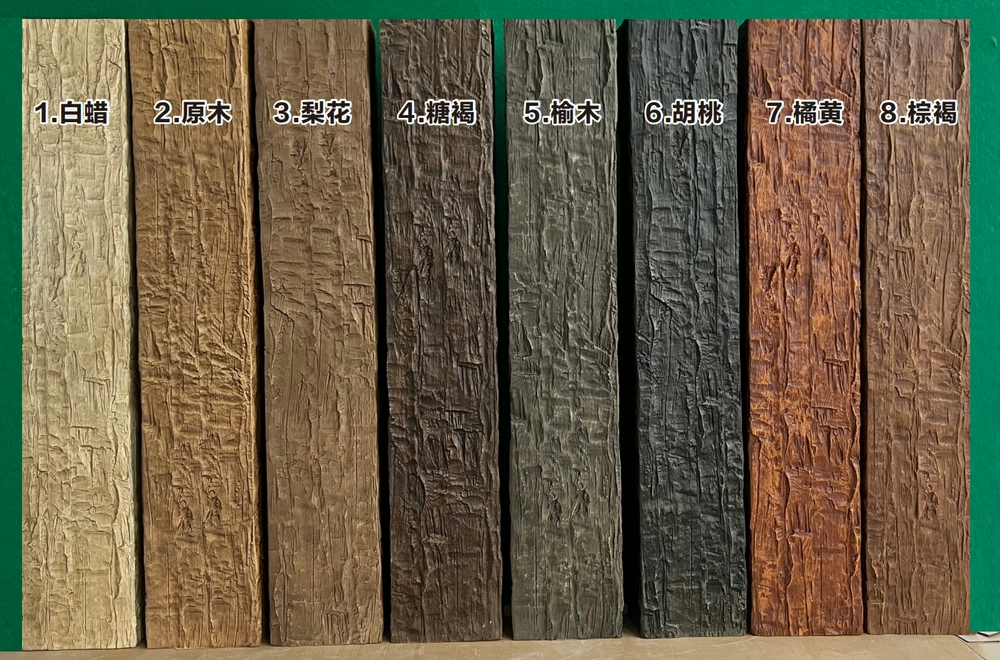
- Color-matched to the builder's specification.
Samples are shipped to the builder for review and approval.
Iteration
The builder reviews the samples and may request modifications:
- Dimension adjustments.
- Texture refinements.
- Color adjustments.
- Edge treatment modifications.
Each iteration produces new samples until the builder approves.
Mold production
Once the wood master is approved, the factory pours the production mold:
- Polyurethane mold from the wood master.
- Cured and inspected.
- Tested with a small production run.
- Approved for full production.
Mold production takes 2 to 4 weeks after sample approval.
Production and delivery
The factory produces the first order:
- Per the builder's quantity and length requirements.
- With the specified finish.
- Packaged and delivered per the construction schedule.
Lead time for the first order is typically 4 to 6 weeks after mold approval.
Exclusivity terms
For luxury builders, the custom cross-section typically includes exclusivity provisions:
Time-limited exclusivity
The factory grants the builder exclusive use of the cross-section for a defined period—typically 24 to 36 months. During this period, the factory doesn't produce the cross-section for other builders.
After the exclusivity period, the builder can:
- Negotiate an extension (typically with additional commitment or fee).
- Move to a new custom cross-section.
- Accept that the cross-section may be used by other builders.
Geographic exclusivity
Some builders negotiate geographic exclusivity—the cross-section is exclusive to the builder within a defined geographic area (typically a metropolitan market or region).
Geographic exclusivity is more restrictive for the factory and may carry a higher fee.
Volume commitment
Exclusivity is typically tied to a volume commitment from the builder:
- Annual minimum volume.
- Multi-year commitment.
- Penalties for falling below the commitment.
The volume commitment makes the exclusivity economically viable for the factory.
Mold ownership
The mold ownership terms affect exclusivity:
- Factory owns the mold. Builder has exclusive use during the exclusivity period. Factory can use the mold for other customers after the period.
- Builder owns the mold. Builder has permanent exclusive use. Builder pays for mold storage and maintenance.
Builder-owned molds are more expensive but provide permanent exclusivity.
How luxury builders use the custom cross-section in marketing
For luxury builders, the custom cross-section becomes part of the marketing strategy:
Model home showcase
The model home prominently features the custom cross-section beams. Buyers touring the model see the beams and recognize them as the builder's signature.
Photography and visual identity
Custom cross-section beams appear prominently in the builder's photography:
- Hero shots of great rooms with the beams visible.
- Detail shots showing the beam profile and texture.
- Lifestyle shots with the beams in the background.
The photography builds visual association between the beams and the builder's brand.
Marketing collateral
The custom cross-section appears in:
- Brochures and sales materials.
- Website hero images.
- Social media posts.
- Architectural publications and awards submissions.
The beams become part of the builder's visual identity across all channels.
Sales conversation
The builder's sales team uses the custom cross-section as a sales differentiator:
- "Our beams are custom-designed exclusively for our homes."
- "This profile is not available from any other builder."
- "Our architects and designers developed this profile specifically for our portfolio."
The exclusivity narrative supports premium pricing.
What luxury builders should consider
For luxury home builders considering a custom cross-section investment, several factors matter:
Volume justification
The mold cost ($3,000 to $8,000+) only amortizes if the builder uses the cross-section across enough homes:
- 20+ homes per year using the cross-section.
- Multi-year commitment to the cross-section.
- The cross-section across multiple floorplans.
A builder with lower volume may not justify the mold cost.
Design commitment
The custom cross-section is a long-term commitment. Changing the cross-section after 2 to 3 years means starting over with a new mold. The builder should be confident in the design before committing.
Factory relationship
The factory relationship is critical:
- The factory must have custom profile capability.
- The factory must have experience with luxury specifications.
- The factory must be able to maintain the cross-section over years.
Choosing the right factory is as important as choosing the right design.
Marketing integration
The custom cross-section is valuable only if it's integrated into marketing. Builders who develop a custom profile but don't feature it in marketing miss out on the differentiation value.
Common pitfalls in custom cross-section programs
A few issues that come up often enough to flag:
- Insufficient volume to amortize the mold. Builders with low volume pay more per piece than the design benefit justifies.
- Design changes after mold production. The builder changes the design intent after the mold is produced, requiring a new mold.
- Letting exclusivity lapse without negotiating extension. The exclusivity period ends, and competitors start using the same profile.
- Not featuring the cross-section in marketing. The design investment doesn't translate to marketing differentiation.
- Inconsistent application across homes. Some homes use the cross-section, others use stock profiles. The portfolio identity becomes muddled.
How to choose a factory for luxury cross-section work
For luxury home builders choosing a factory for custom cross-section work:
- Custom profile experience. The factory should have done custom profile work for luxury builders.
- Wood master capability. The factory should have in-house wood master creation or a partner for this work.
- Sample production capability. The factory should produce high-quality samples for approval.
- Mold maintenance practices. The factory should maintain molds to ensure long-term consistency.
- Exclusivity terms. The factory should be willing to negotiate exclusivity terms that protect the builder's investment.
- Marketing support. The factory should be willing to support the builder's marketing use of the custom profile.
Custom cross-section faux beams for luxury home builders are a category where the design investment, the exclusivity terms, and the marketing integration all need to align. The right combination produces a distinctive design element that becomes a long-term portfolio asset. The wrong combination produces a design investment that doesn't pay back.
Technical References
ASTM standards cited in every specification
Test Data
Lab results from internal testing program
Updated 2026
Reviewed against current product specs