Rustic Artisan Faux Beams | Design & Sourcing for Villa Contractors
A villa is not a house. The distinction matters in beam specification because what works at scale in residential developments fails under the scrutiny villa owners apply to their own homes. A villa buyer who has flown in their interior designer from Milan and flown their stone in from Tuscany scrutinizes every beam in the great room with the same level of attention. Rustic artisan faux beams can absolutely serve this scrutiny — when specified correctly and sourced from suppliers who understand the aesthetic vocabulary at the depth required for villa work.
This article is written for the villa contractor and project manager — the person who has to translate the architect's vision into a procurement specification, then translate that specification into an installation that satisfies both the design team and the owner. It addresses the specific demands of rustic artisan work in the villa context: how the aesthetic differs from general rustic, what the supplier relationship needs to deliver, and the operational details that separate successful villa installations from the rest.
What "rustic artisan" means in villa work
The phrase "rustic artisan" is used broadly in the building products industry. In the villa context, it has specific implications.
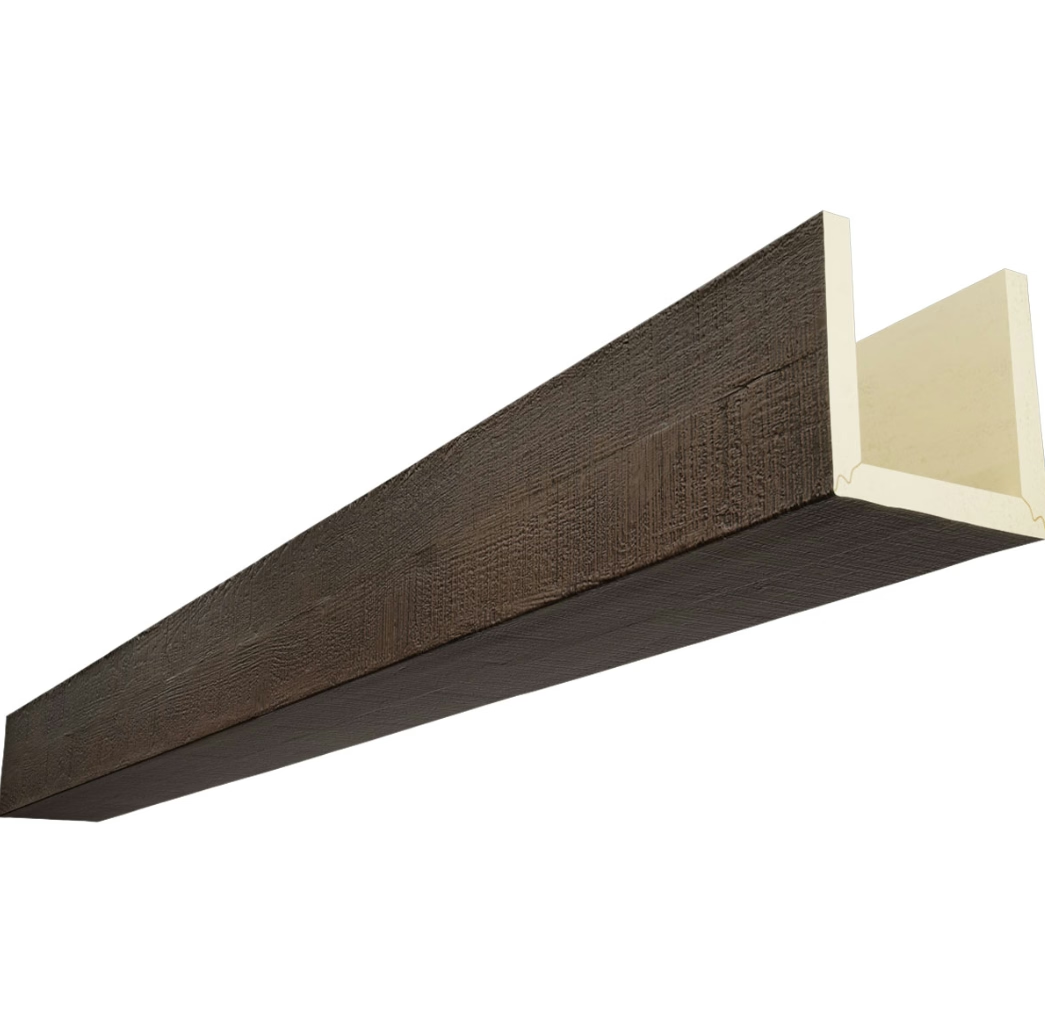
Rustic as authentic imperfection. True rustic aesthetic embraces the irregularity, weathering, and surface variation that come from hand craftsmanship and age. It does not mean merely rough or merely brown. The most convincing rustic beams show evidence of specific tools — adzes, axes, saws — and specific aging patterns — checking, color variation, patina. Polyurethane replication must capture these specific details rather than relying on generic rough texture.
Artisan as hand-quality finishing. Artisan finishing on rustic beams means layered application with attention to the natural variation in real timber. Stain is built up in layers, glaze washes bring out texture depth, highlight strokes emphasize tool marks, and protective topcoats preserve the finish without flattening the visual depth. Production-grade finishes that look acceptable on smooth beams fail the visual test on rustic surfaces.
The combination resists industrial precision. Rustic artisan work should not look factory-perfect. Each beam should have unique character. The pattern of weathering, the variation in tool marks, the slight shifts in color across the surface — these are design features in rustic artisan work, not defects. Suppliers committed to this aesthetic produce variation intentionally rather than controlling it out of the product.
Villas demand the highest level of this aesthetic. Villa work pushes rustic artisan quality higher than commercial rustic, custom residential rustic, or any other category of rustic specification. The beam is in the most visible room of a multi-million dollar home, under directional lighting that brings out every detail of the surface. The aesthetic must hold up at viewing distance and on touch.
Profile selection for rustic villa ceilings
Rustic beam profiles for villa ceilings span a range from heavy hand-hewn timber simulations to more restrained rough-sawn looks. The selection depends on the architectural intent and the scale of the space.
Heavy rustic hand-hewn. Simulates beams that were hand-shaped from logs using axes and adzes. Surface shows tool marks, irregular edges, occasional gouges, and visible evidence of the original shaping process. Most appropriate in villa styles ranging from mountain lodge to Tuscan estate. Visual weight is substantial.
Rough-sawn rustic. Simulates beams that were milled using early industrial saws but finished by hand. Saw marks are visible but more uniform than hand-hewn texture. Edges are more defined. Appropriate for farmhouse, transitional rustic, and most modern rustic styles. Visual weight is moderate.
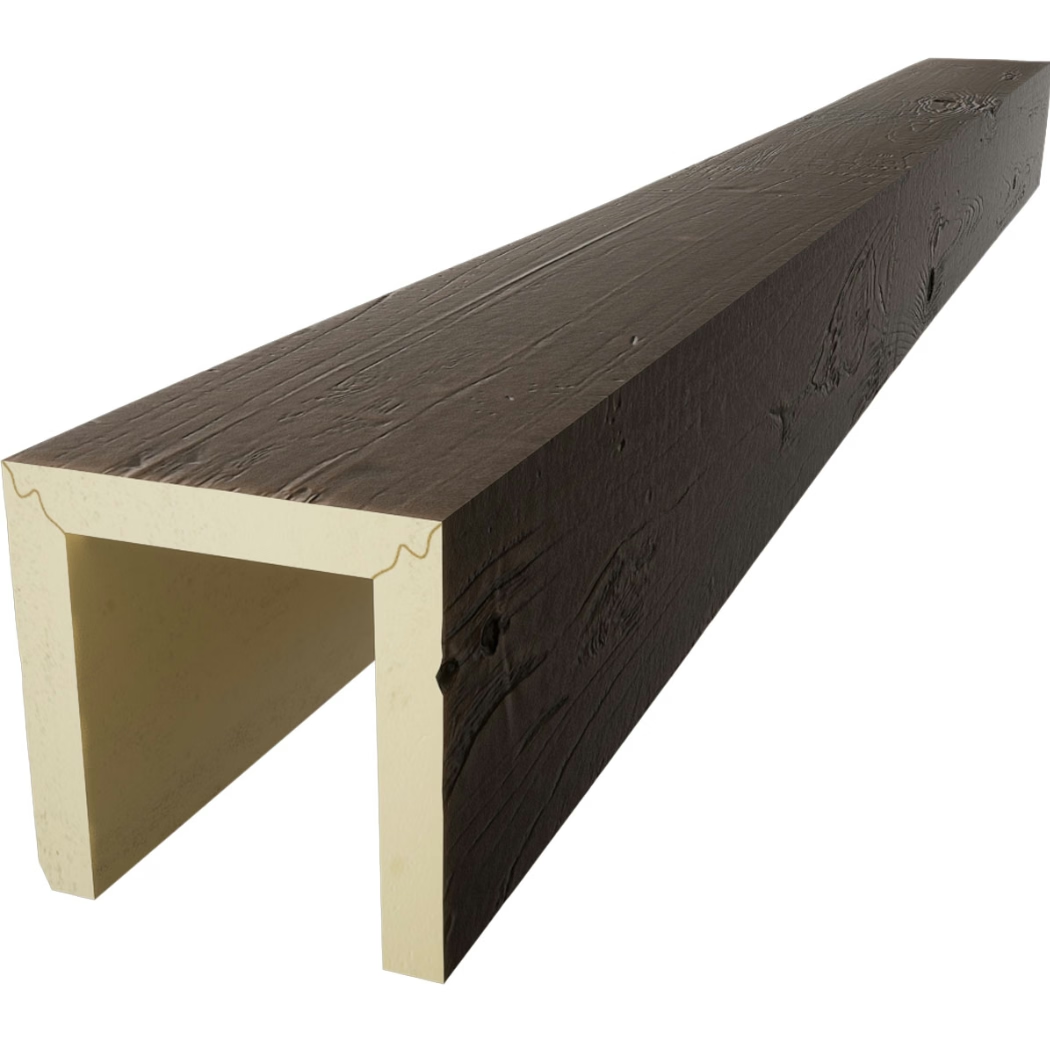
Weathered aged timber. Simulates beams that have aged naturally over decades, with color patina, surface checking, and small cracks. Surface texture can be smooth or rough underneath — the aging effect dominates. Appropriate for coastal villa, Mediterranean revival, and reclamation-aesthetic designs.
Reclaimed timber look. Simulates beams that have been previously used in another structure, then recovered and refinished. Distinctive features include nail holes, knots, oxidation patterns, and the varied weathering of different exposures. Most authentic-looking rustic option but also most expensive due to the complexity of the surface detail.
Rustic with refined edges. A hybrid option for villa work that wants the rustic character without the heavy visual weight. Beam shows rustic surface texture but edges are cleaner and the overall profile is more architectural. Appropriate for modern rustic and transitional styles.
The choice between these profiles is set by the architect or interior designer. The contractor's role is to source a supplier capable of producing the specified quality at the specified price, and to ensure the supplier understands the design intent well enough to recommend adjustments if needed during sampling.
Finish depth and color specification
Rustic finishes carry more complexity than smooth finishes because the textured surface creates multiple planes for light interaction. The finish specification needs to address all those planes, not just the dominant surface.
A high-quality rustic finish typically involves:
Base stain application. Establishes the dominant color and penetrates into recessed areas. Often hand-applied to ensure penetration into the texture valleys where sprayed application would leave insufficient coverage.
Secondary glaze wash. Applied over the base stain, typically a contrasting tone, then partially wiped away to leave glaze in recessed areas and lifted highlights on raised surfaces. This step creates much of the visible depth.
Color accent work. Targeted application of additional tones in specific areas — darker in knots and end-grain, lighter on raised tool marks, varied in patches to break up color uniformity. Often done by hand with brushes or rags.
Topcoat application. Protective layer that preserves the finish without flattening it. Matte or low-sheen topcoats are typical for rustic work because they don't create glare that competes with the surface character.
The number of operations, the materials used in each, and the technique of the applicator all affect the final quality. Rustic finishes with fewer operations look acceptable at 20 feet but fail at 5 feet. Villa-grade rustic finishes remain convincing at any distance.
Color selection for rustic villa work also tends to be more nuanced than for general rustic:
- Aged oak tones. Warm brown with subtle red undertones. Pairs with Tuscan, French country, and rustic transitional interiors.
- Weathered gray. Desaturated brown with cool gray influences. Pairs with coastal, modern farmhouse, and Scandinavian-influenced rustic.
- Burnt umber. Deep brown with red-violet undertones. Pairs with mountain lodge, Pacific Northwest, and heavier rustic styles.
- Charred timber. Very dark brown to near-black with surface variation. Pairs with modern rustic and Japanese-influenced aesthetics.
- Bleached timber. Light cream or whitewashed tones with texture visible through the light finish. Pairs with coastal, Mediterranean, and lighter contemporary rustic.
These broad color directions are starting points. Specific projects often blend tones or shift the palette subtly. The contractor's role is to communicate the owner's preferences to the supplier through samples and to manage the iteration process until the color is approved.
Sourcing considerations specific to villa contractors
Villa contractors operate under different commercial constraints than developers, custom home builders, or commercial contractors. The sourcing approach reflects those constraints.
Variable project volume. Villa contractors may work on three to ten villas per year, each with different specifications. There's rarely enough volume on any single project to qualify for the deepest production discounts, and there's rarely enough repeat volume across projects to lock in standing specification discounts. Suppliers must be willing to serve variable-volume buyers fairly.
Architect-driven specifications. Most villa projects have an architect or interior designer specifying the beams in detail. The contractor sources to the design specification rather than developing it. The supplier relationship must accommodate the design team's standards for sample quality and approval process.
High owner attention. Villa owners pay close attention to the materials in their homes. They may visit the supplier's showroom, request additional samples, ask detailed questions about the materials, and want to understand exactly what they are getting. The contractor benefits when the supplier can support these owner interactions professionally.
Schedule variability. Villa construction often runs longer than expected due to owner customization, design changes, and construction complexity. Beam lead times need to flex with project schedule changes rather than forcing the schedule to lock against production timelines.
Quality consistency across the project. A villa project typically has beams in multiple locations — great room, kitchen, primary bedroom, library, entry. All these locations need consistent finish quality so the villa reads as a coherent design. Single-supplier sourcing simplifies this consistency.
The sourcing approach that works for villa contractors is built on a relationship with one or two suppliers who understand the aesthetic depth required, can handle variable volume reliably, and treat each project as deserving the full effort rather than as a small account.
Supplier qualification for rustic artisan work
Not every polyurethane beam supplier is qualified for villa-grade rustic artisan work. The qualification process should examine specific capabilities.
Sample portfolio depth. Suppliers should have a portfolio of past work that includes rustic artisan projects at villa quality. The portfolio should include multiple samples that demonstrate variation within rustic style — different profiles, different finishes, different color palettes. A supplier with limited sample range may not have the production flexibility required.
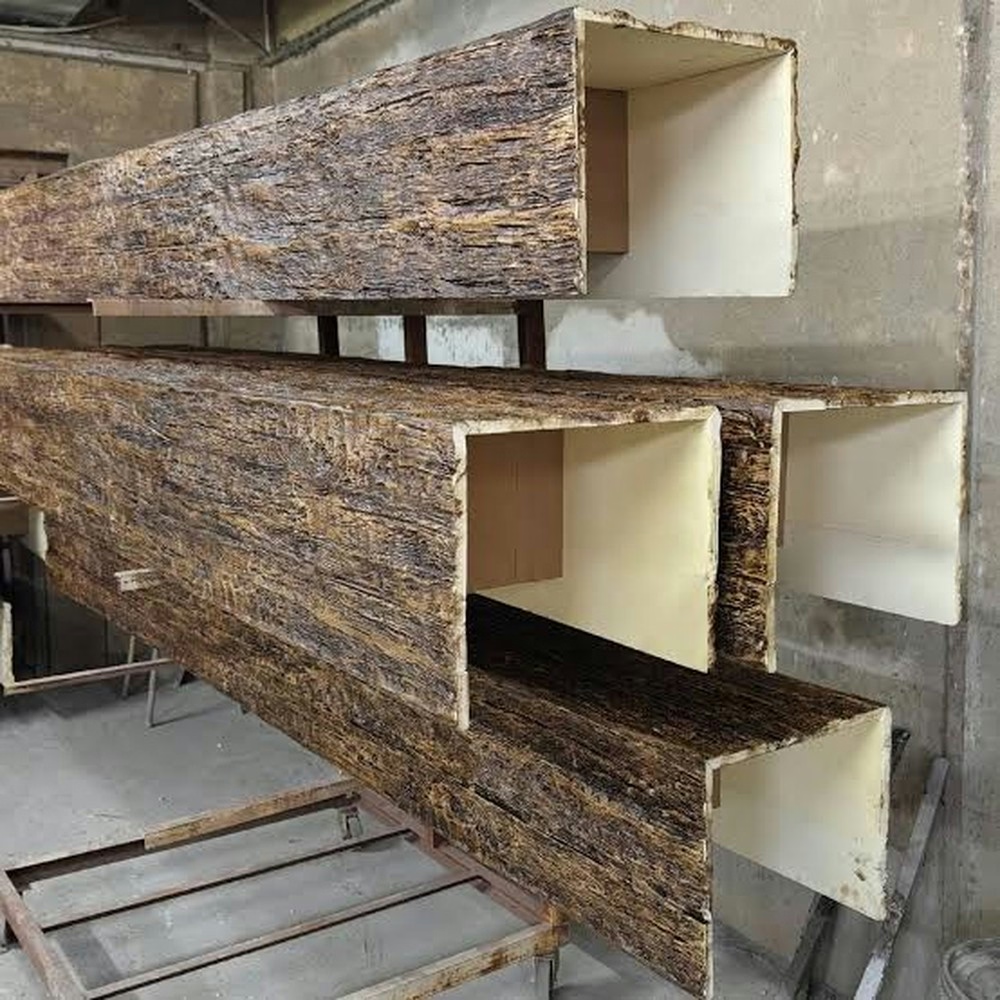
Production line breadth. Rustic artisan production requires more than standard mold-textured beams. Suppliers should have capabilities for hand-finishing accent work, custom surface detailing, and texture variation across production runs. Pure mechanical mass-production suppliers cannot deliver this depth.
Sample iteration responsiveness. Sample development is where the rustic artisan quality shows. Suppliers who can iterate on samples — adjusting the weathering intensity, modifying the color palette, refining the surface texture — are required for villa work. Suppliers who quote a standard sample and offer limited iteration are not qualified.
Project management capability. Villa projects require more communication than typical residential projects. Suppliers should have dedicated project management or technical support staff who can navigate complex specifications, design team interactions, and field follow-up.
Reference projects at villa quality. Suppliers should have references from past villa projects. References should be contactable and willing to discuss their experience — both positives and challenges — with the contractor's project team.
Lead time calibration. Villa lead times are typically more generous than other villa construction trades, but suppliers need to commit to specific timelines and hold them. Missed lead times on villa projects create owner-relationship damage that compounds across the project duration.
The qualification process is a real investment of contractor time. Suppliers who value the contractor relationship will support the qualification process rather than pushing to close deals prematurely. Suppliers who are evasive about qualifications provide diagnostic information that should be weighted accordingly.
Iteration and sample approval workflow
The sample approval process for rustic villa beams typically requires more iteration than other beam categories because the aesthetic is more variable and more sensitive to specifics.
A realistic workflow:
Step 1 (rough direction). Supplier provides 3–5 rough samples showing different color and weathering approaches based on the architect's specification. These are quick finishes, often on small samples rather than full beams. Cost is minimal.
Step 2 (refinement). Architect and owner select a direction from the rough samples. Supplier produces 1–2 refined samples based on the selected direction. These samples are more carefully finished and may be on full beam pieces.
Step 3 (final master). One sample is approved as the production master. This approval locks the finish recipe used for production. Any further refinement is treated as a new sample cycle.
Step 4 (mid-production verification). For larger orders, the supplier produces a mid-production sample or photo report confirming continued match to the master. This catches drift before shipment.
Step 5 (delivery and field approval). Beams arrive at the site and are inspected against the master under the project's lighting conditions. Field approval validates that the production run matches expectations. Any field touch-ups are addressed with the manufacturer's finish repair kit.
The timeline for this workflow is typically 8–14 weeks from rough direction through delivery. Villa project schedules accommodate this timeframe when beam supplier engagement begins at design development.
Installation considerations for rustic villa beams
The rustic aesthetic creates specific installation considerations beyond standard beam installation.
Hand-feel preservation. Rustic surfaces reward touch. The installer should avoid heavy handling that scratches or chips the textured surface. Cotton gloves during handling and installation protect the finish and prevent skin oils from accumulating in surface recesses.
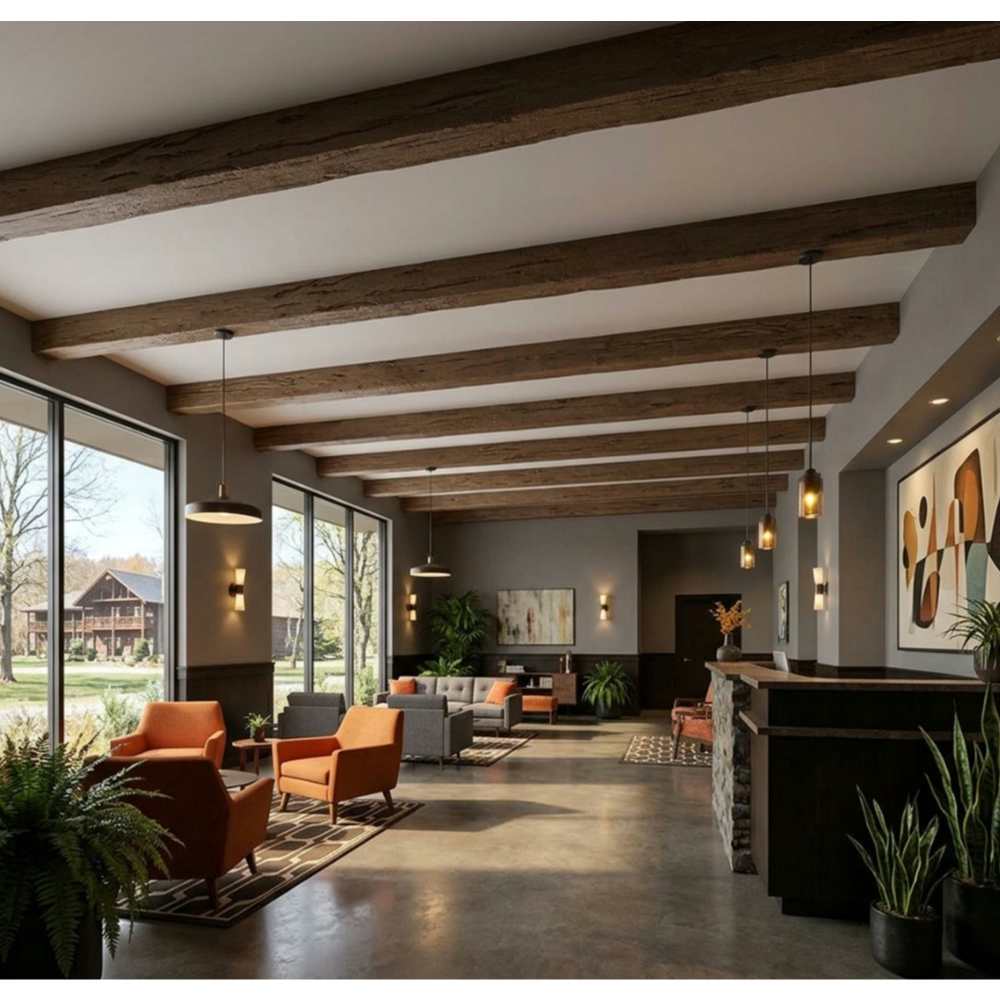
Lighting coordination. Rustic beams are designed to interact with light — shadows in recessed areas, highlights on raised texture, color variation across the surface. Installation should coordinate with lighting design to ensure the lighting positions amplify rather than wash out the texture. Recessed lights aimed parallel to beam surfaces create the grazing light effect that emphasizes texture.
Field-cut handling. Any field cuts needed during installation will expose the interior of the beam. For rustic beams, the interior finish may not match the exterior surface treatment. Field cuts should be minimized through careful pre-installation measurement. When field cuts are necessary, the cut ends should be positioned where they are least visible (against walls, in corners, behind other architectural elements).
Touch-up discretion. Field damage from installation can be repaired, but repairs should be done in a way that preserves the rustic character. Heavy brush marks or smooth patch repairs are inappropriate for rustic beams. Repairs should match the surrounding surface character rather than blending invisibly.
Coordinating with adjacent materials. Rustic beams typically pair with other rustic or natural materials — stone, reclaimed wood, weathered metals. Installation should ensure the beam relationships with these adjacent materials are clean and the design vocabulary is consistent.
These installation considerations are above-and-beyond typical beam installation requirements. Rustic villa work requires installers who understand the aesthetic and will adapt their practices accordingly. The contractor's installation crews should be briefed specifically for each villa's rustic beam package.
Common pitfalls in rustic villa sourcing
A few specific issues show up repeatedly in rustic villa beam work:
Specifying rustic texture without specifying finish depth. Some specifications describe the profile (rustic hand-hewn) but leave the finish at production-grade depth. The result is a beam with the right shape but flat finish character. Specify finish depth explicitly when the design intent requires artisan-grade.
Insufficient sampling for color decision. Villa owners may select finishes from small swatches under supplier showroom lighting and be surprised by how different the appearance is under their villa's installed lighting. Require samples to be evaluated under the project's actual lighting specification.
Underestimating shipping damage risk on textured surfaces. Rustic textured surfaces can have texture damage at corners and edges during shipping that wouldn't be visible on smoother products. Specify extra packaging protection for rustic orders, particularly for long shipping distances.
Treating rustic as a single aesthetic. Rustic varies from refined modern rustic to heavy hand-hewn mountain timber. Specifiers and contractors who treat rustic as one category produce work that misses the specific style the design team intended.
Failing to coordinate beam selection with adjacent woodwork. When beams need to match cabinetry, flooring, or other wood elements in the same space, the coordination has to happen at the sample stage — not after the beams are produced. Color shifts between adjacent wood elements in a finished room are visible to the owner and hard to correct.
Closing thought for villa contractors
Villa beam work is small volume per project, but the relationship value across multiple villa projects is substantial. Contractors who consistently deliver beautiful rustic villa installations build a reputation that translates into ongoing project flow. The reputation depends on the beam sourcing — not just because beams are visible, but because beams are the kind of detail that owners remember and talk about after the project closes.
The contractor's sourcing discipline shapes the villa's aesthetic and the owner's lasting impression. Investing the time in supplier qualification, sample iteration, and finishing depth specification is what produces beautiful results. Treating beam sourcing as another procurement line item produces acceptable results that fail the villa test.
Pick suppliers who understand rustic artisan aesthetics at the depth villa work requires. Build the relationships that produce villa-quality results consistently. The villa projects that come from those relationships are the projects that grow the contractor's villa practice.
Technical References
ASTM standards cited in every specification
Test Data
Lab results from internal testing program
Updated 2026
Reviewed against current product specs