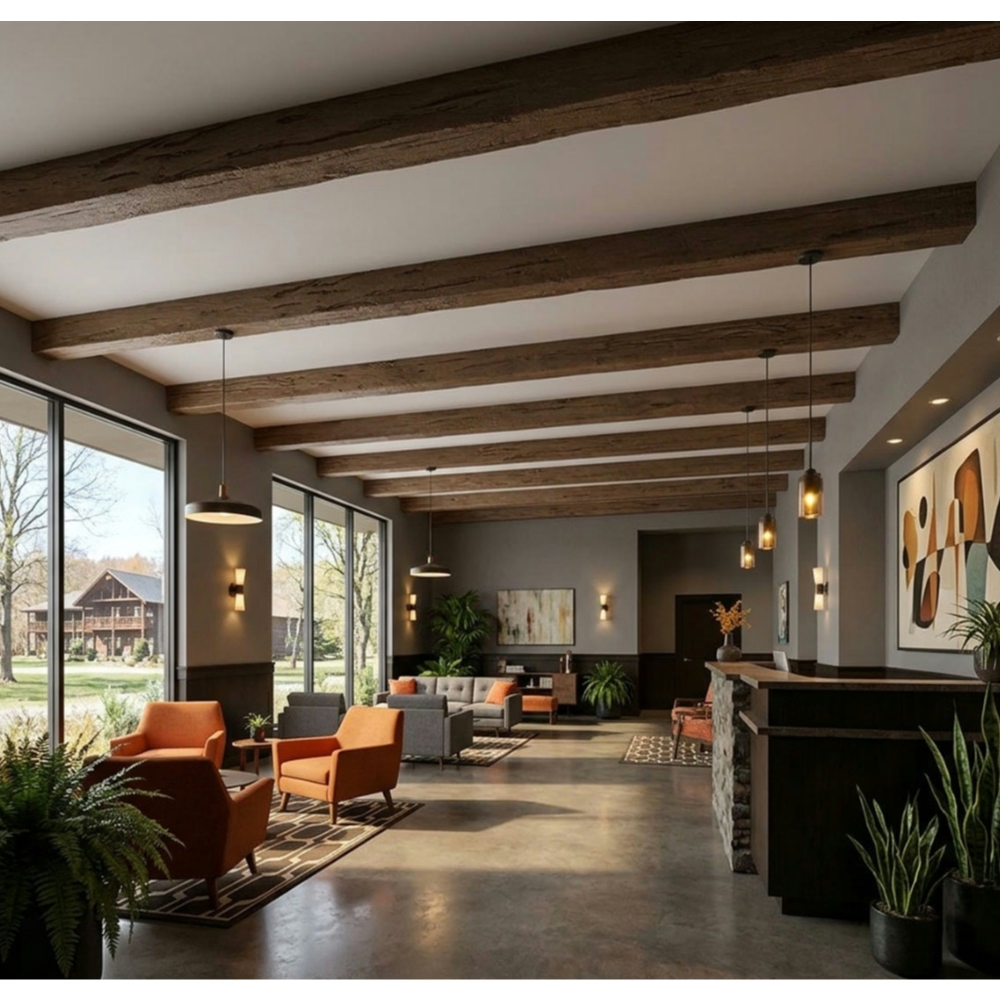
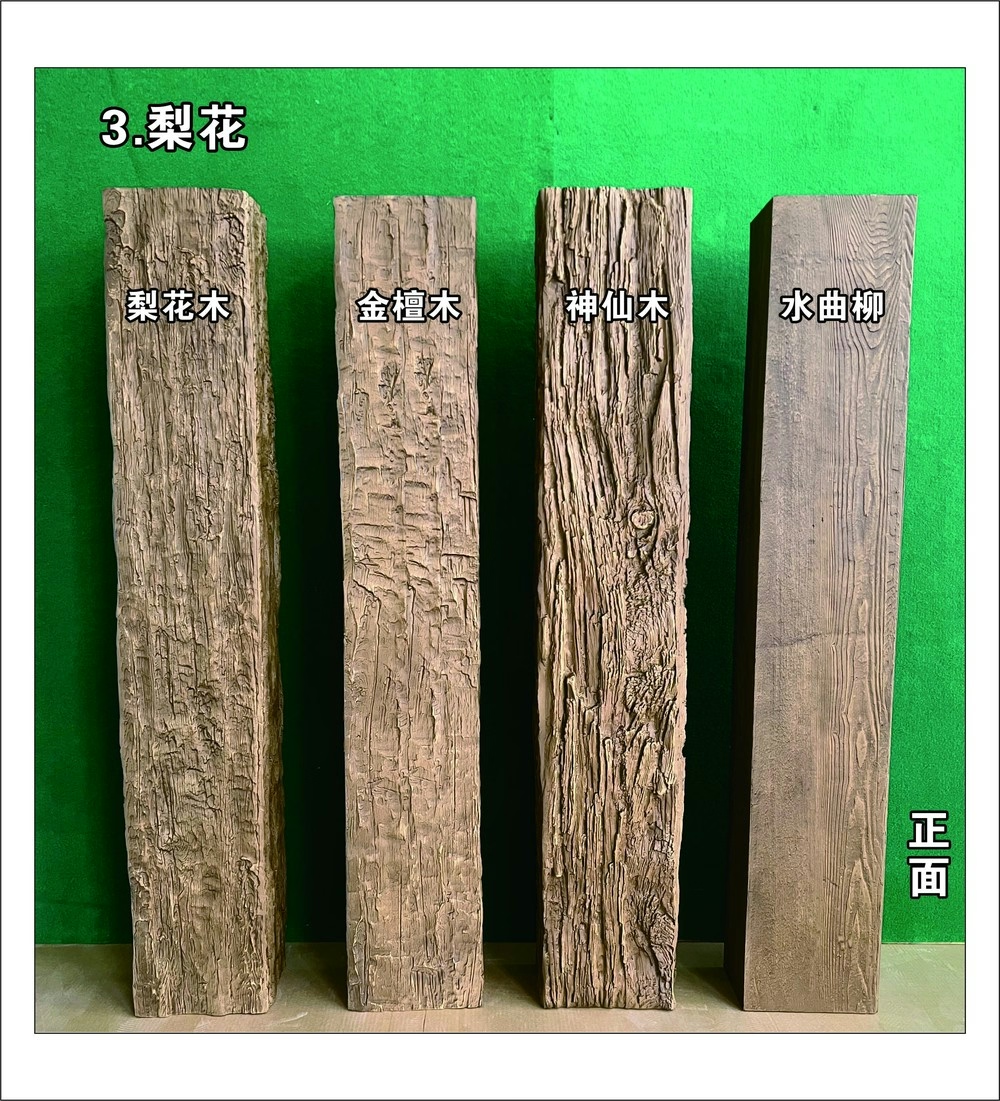
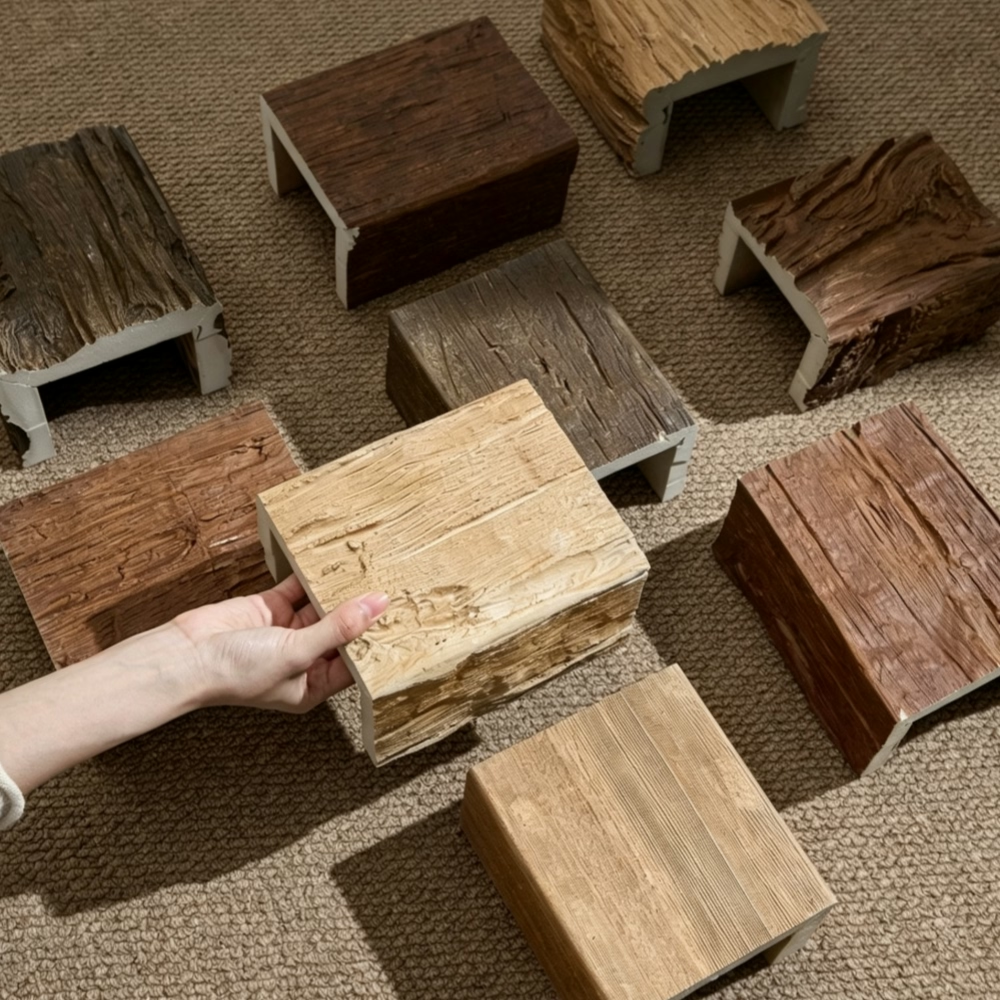
Custom Faux Timber Beams | FAQ for Wholesale Buyers & Builders
Wholesale buyers and builders asking about custom faux timber beams have many questions about the ordering process, customization options, lead times, pricing, quality, and operational details. This FAQ addresses the most common questions with practical answers.
Ordering questions
What information do I need to provide for a quote?
To get an accurate quote, provide:
- Beam profile (stock or custom).
- Color and finish specifications.
- Quantity and lengths needed.
- Delivery location and timing.
- Documentation requirements.
- Special application (humid, exterior, etc.).
More information produces more accurate quotes.
What is the typical MOQ for custom orders?
Minimum order quantities vary:
- Stock profiles with custom length: Often no MOQ beyond per-piece minimums.
- Stock profiles with custom color: Often 200 to 400 linear feet.
- Modified stock profiles: Often 300 to 500 linear feet.
- Custom profiles: Often 500 to 1,000 linear feet.
MOQs depend on the customization level.
How do I submit an order?
The typical order process:
- Request a quote via email, phone, or online form.
- Receive a formal quote with specifications and pricing.
- Approve the quote and provide a purchase order.
- Receive order confirmation with production schedule.
- Pay deposit per terms.
- Receive production updates.
- Receive delivery per the schedule.
The process is similar across most suppliers.
What payment terms are typical?
Common payment terms:
- Initial orders: 30 to 50 percent deposit, balance before shipment.
- Established relationships: Net-30 or Net-60 possible.
- Custom profile orders: 50 to 70 percent deposit, balance before shipment.
- Standing spec orders: Often Net-30 for established buyers.
Terms depend on the buyer's credit history and order size.
Lead time questions
What are typical lead times?
Lead times vary by customization:
- Stock profile, stock color: 5 to 15 business days.
- Modified profile, custom color: 10 to 20 business days.
- Custom profile, fully custom: 8 to 16 weeks.
Lead times are longer for higher customization.
Can I get rush production?
Rush production is often available:
- Typical rush lead time: 5 to 10 business days.
- Rush premium: 20 to 50 percent above standard pricing.
- Rush availability varies by supplier capacity.
Rush should be planned for, not relied upon as standard.
Can I change an order after it's placed?
Order change policies:
- Changes before production starts: Usually no penalty.
- Changes during production: May incur fees or delay.
- Changes after production: Not possible; order must be completed.
Communicate changes as early as possible.
What if my delivery date changes?
For delivery date changes:
- Notify the supplier as early as possible.
- Rescheduling within production window: Usually possible.
- Rescheduling after production: May incur storage fees.
- Long-term delays: May require renegotiation.
Communication enables accommodation.
Customization questions
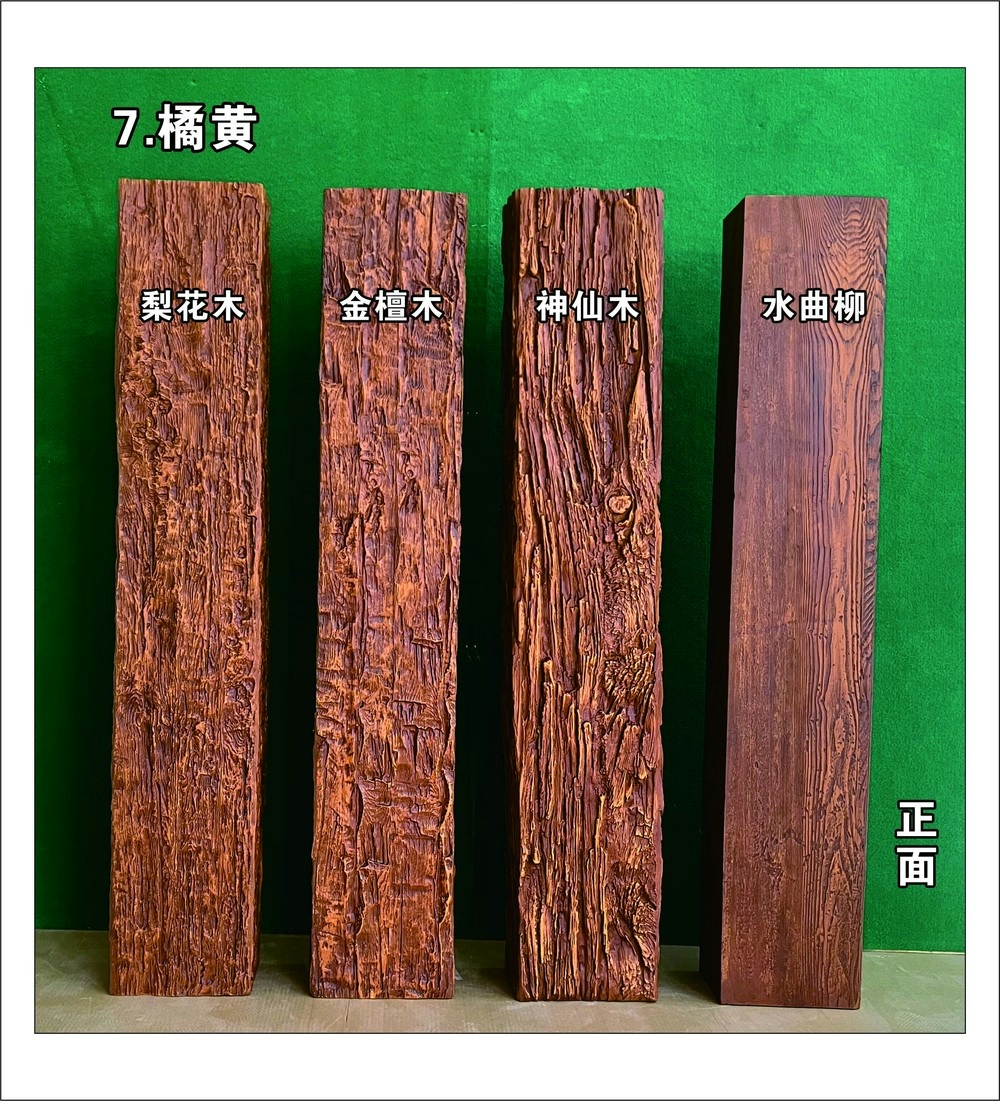
Can I get a custom color?
Custom colors are typically available:
- Color match against physical samples or photographs.
- Multi-iteration sample development.
- Color match fee: $200 to $800 per color.
- Lead time impact: 1 to 3 weeks for color development.
Custom colors are common in beam procurement.
Can I get a custom profile?
Custom profile development is available:
- New mold from wood master.
- Mold development fee: $3,000 to $8,000+.
- Lead time: 4 to 12 weeks for mold development.
- Total project lead time: 10 to 20 weeks.
Custom profiles are significant investments.
Can I get custom sizes?
Custom sizes are typically available:
- Custom lengths from standard molds.
- No additional fee for length customization.
- Extended lengths beyond standard mold: May require special production.
- Custom cross-sections: Treated as custom profile development.
Most suppliers accommodate custom sizes.
Can I get custom textures?
Custom textures are typically available:
- Texture development against reference samples.
- Texture development fee: $200 to $500 per texture.
- Lead time impact: 1 to 3 weeks for texture development.
- Often combined with custom color development.
Custom textures support design intent.
What coordinating elements are available?
Common coordinating elements:
- Corbels (for viga support).
- Beam caps (for viga end treatments).
- Latillas (smaller perpendicular poles).
- Column wraps (for support columns).
- Cane or zarzo elements (smaller details).
Coordinating elements complete the Spanish or other beam vocabulary.
Pricing questions
What affects per-piece pricing?
Per-piece pricing depends on:
- Length (longer beams cost more).
- Profile complexity (more complex profiles cost more).
- Finish complexity (multi-tone or hand-detailed costs more).
- Quantity (volume discounts apply).
- Customization (custom work adds fees).
Multiple factors affect the final per-piece price.
What discounts are available?
Common discounts:
- Volume discounts: 10 to 45 percent at tier thresholds.
- Standing specification discounts: Reduced or waived setup fees.
- Multi-project discounts: Negotiated for ongoing relationships.
- Early payment discounts: Sometimes available.
Discounts depend on the supplier and the relationship.
What additional fees should I expect?
Additional fees may include:
- Color match fees.
- Profile development fees.
- Custom finish development fees.
- Freight.
- Documentation fees for special certifications.
- Rush production fees.
Verify all fees during the quoting process.
How do I get an accurate landed cost?
For accurate landed cost:
- Per-piece pricing × quantity.
- Plus setup fees.
- Plus freight to project site.
- Plus customs fees (if importing).
- Plus installation cost.
- Plus contingency.
Total landed cost enables accurate project budgeting.
Quality questions
How is quality controlled?
Quality control typically includes:
- Raw material inspection.
- Production process monitoring.
- Master reference sample comparison.
- Batch color measurement.
- Final inspection before shipping.
- Documentation per shipment.
Multiple checkpoints ensure quality.
What if the beams don't match the approved sample?
For mismatches:
- Document the mismatch with photographs.
- Contact the supplier within warranty period.
- Supplier investigates and resolves.
- Replacement or credit typically provided.
Quality issues are addressed through the supplier's warranty process.
How long do the beams last?
Service life:
- Polyurethane beams typically last 20+ years.
- No warping or structural degradation.
- Finish may need refreshing after 15 to 25 years.
- Warranty terms typically 10 to 25 years.
Long service life supports lifecycle cost.
Are the beams suitable for outdoor use?
For outdoor applications:
- Exterior-rated polyurethane available.
- UV-stabilized finishes available.
- Moisture-resistant properties.
- Verify outdoor suitability with the supplier.
Outdoor applications require specific specifications.
Documentation questions
What documentation is typically provided?
Standard documentation includes:
- Material data sheets.
- Density specifications.
- Care and maintenance guides.
- Warranty terms.
- Installation guides.
Documentation supports project closeout.
What code documentation is available?
For code compliance:
- Fire rating certificates (ASTM E84 Class A or B).
- VOC emissions certification (GREENGUARD).
- Seismic documentation (where required).
- Country of origin certificates (for import).
- Project-specific documentation packages.
Code documentation supports permit and inspection.
Can I get custom documentation?
For project-specific needs:
- Project-specific documentation packages.
- Per-project certification letters.
- Engineered drawings for specific installations.
- Custom warranty terms (for large projects).
Custom documentation available for large or specialized projects.
How is documentation delivered?
Documentation delivery:
- Typically digital (PDF).
- Sometimes with physical copies.
- Per shipment or per project.
- Stored by the supplier for future reference.
Digital delivery is standard.
Installation questions
How are the beams installed?
Installation process:
- Cleats mounted to the substrate.
- Beam positioned onto cleats.
- Beam secured to cleats.
- Touch-up for any field damage.
- Field joint finishing for long spans.
Standard carpentry tools sufficient for most installations.
What tools are needed?
Standard tools:
- Cordless drill with bits.
- Level (4-foot or laser).
- Stud finder.
- Tape measure, pencil, chalk line.
- Socket wrench or impact driver.
- Safety equipment.
Basic carpentry tools are sufficient.
How are long spans handled?
For long spans:
- Extended mold production for 16 to 24 feet.
- Field joint production for 24+ feet.
- Multiple cleats for support.
- Joint assembly before mounting.
- Joint finishing after installation.
Long spans require specific planning.
Can I install the beams myself?
For DIY installation:
- Possible for experienced DIYers.
- Two-person crew minimum.
- Standard carpentry skills required.
- Manufacturer's installation guide should be followed.
DIY is possible but professional installation is often recommended.
Supplier selection questions
How do I find a good supplier?
For supplier identification:
- Industry directories and trade shows.
- Referrals from other builders.
- Online research and reviews.
- Sample evaluation from multiple suppliers.
- Reference verification.
A shortlist of 3 to 5 suppliers provides comparison.
What questions should I ask suppliers?
Key questions to ask:
- What's your production capacity for my volume?
- What's your lead time for my specification?
- Can you provide references from comparable projects?
- What documentation do you provide?
- What are your payment terms?
- What replacement stock do you hold?
These questions support supplier evaluation.
How do I verify supplier claims?
For claim verification:
- Request references and contact them.
- Request samples and evaluate quality.
- Request documentation examples.
- Verify certifications.
- Visit the production facility if possible.
Verification protects against supplier mismatches.
What if I have issues with the supplier?
For supplier issues:
- Document issues with photographs.
- Communicate issues to the supplier.
- Use warranty terms if applicable.
- Consider alternative suppliers if issues persist.
Issue resolution typically works through direct communication.
Miscellaneous questions
What about lead times for samples?
Sample lead times:
- Standard sample request: 1 to 2 weeks.
- Custom sample development: 2 to 4 weeks.
- Multiple iteration samples: 1 to 3 weeks per iteration.
Sample lead times depend on the customization.
What about packaging?
Packaging typically includes:
- Foam end-caps and corner protectors.
- Protective wrapping.
- Sturdy crating for long beams.
- Marked with project information.
Packaging protects beams during shipping.
What about warranty?
Warranty terms typically:
- 10 to 25 year limited warranty.
- Coverage for manufacturing defects.
- Exclusions for improper installation or damage.
- Replacement or credit per warranty terms.
Verify warranty terms before ordering.
Can I get installation support?
Installation support:
- Installation guides provided.
- Technical support by phone or email.
- On-site support for complex projects (sometimes).
- Field measurement guidance.
Support availability varies by supplier.
Quick reference for common questions
For quick reference:
- MOQ: 200+ linear feet for custom color, 500+ for custom profile.
- Lead time: 5 to 15 business days stock, 10 to 20 custom, 8 to 16 weeks new profile.
- Pricing: $10 to $40 per linear foot depending on specifications.
- Discounts: 10 to 45 percent at tier thresholds.
- Warranty: 10 to 25 years typical.
- Documentation: Standard package included, custom available.
Custom faux timber beam FAQ for wholesale buyers and builders covers the most common questions about procurement. For questions not addressed here, direct supplier communication typically produces the specific answers needed for each project.
Technical References
ASTM standards cited in every specification
Test Data
Lab results from internal testing program
Updated 2026
Reviewed against current product specs