Custom Grain Faux Wood Beams | Factory Direct for Home Builders
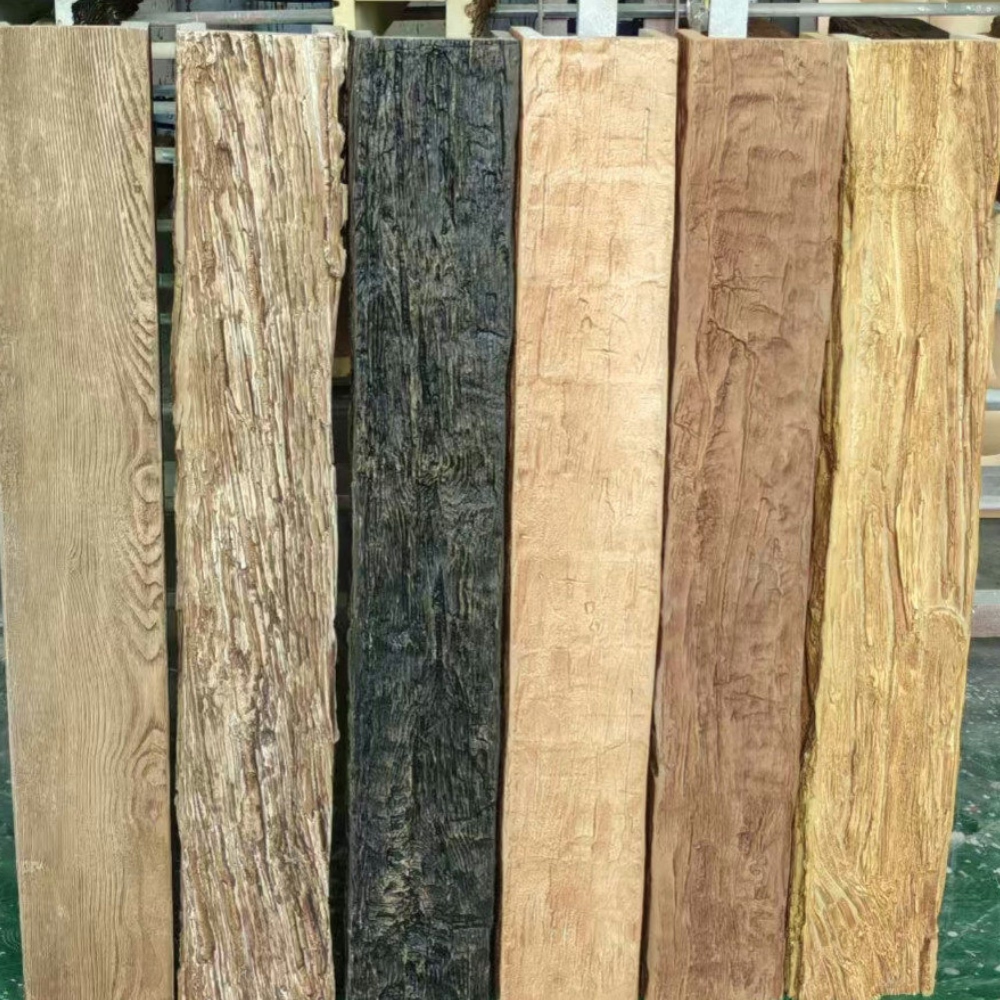
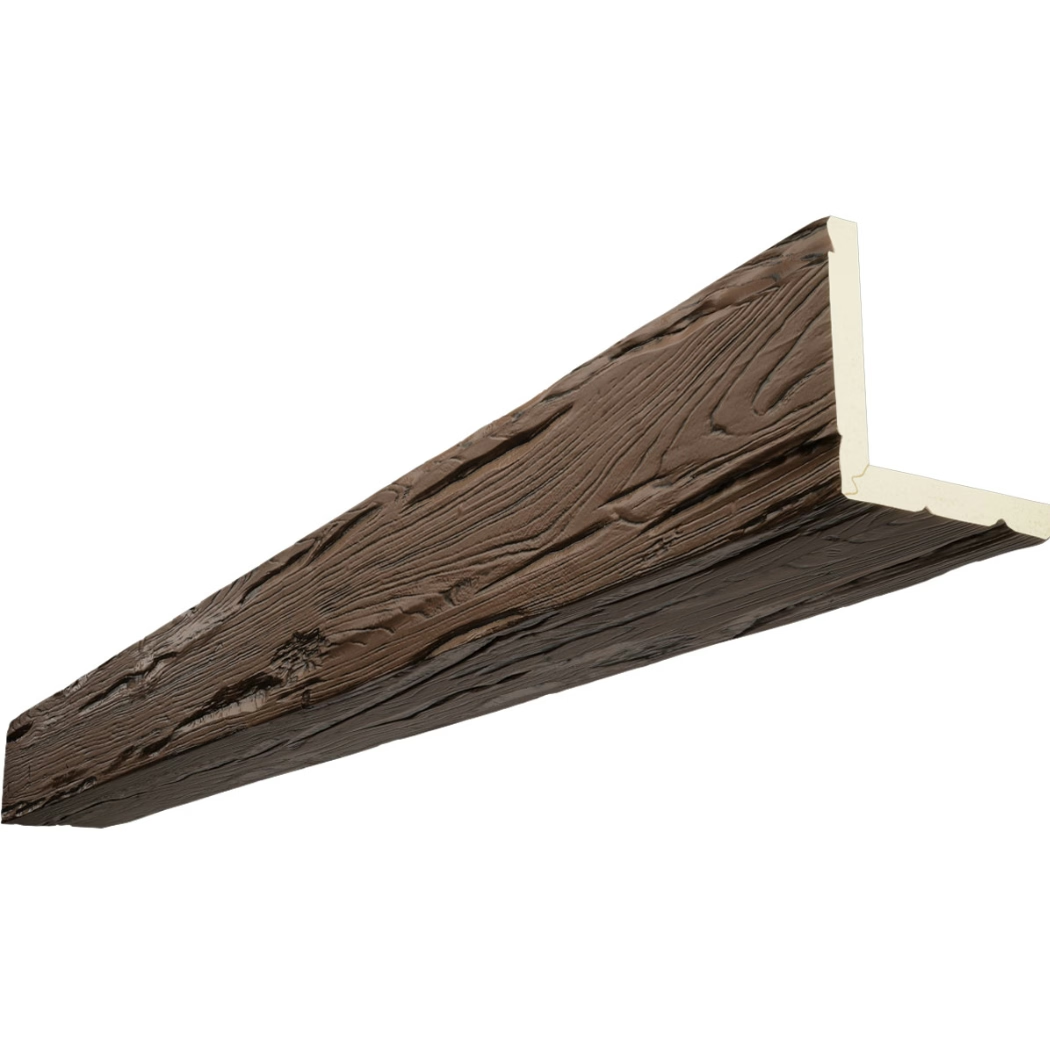
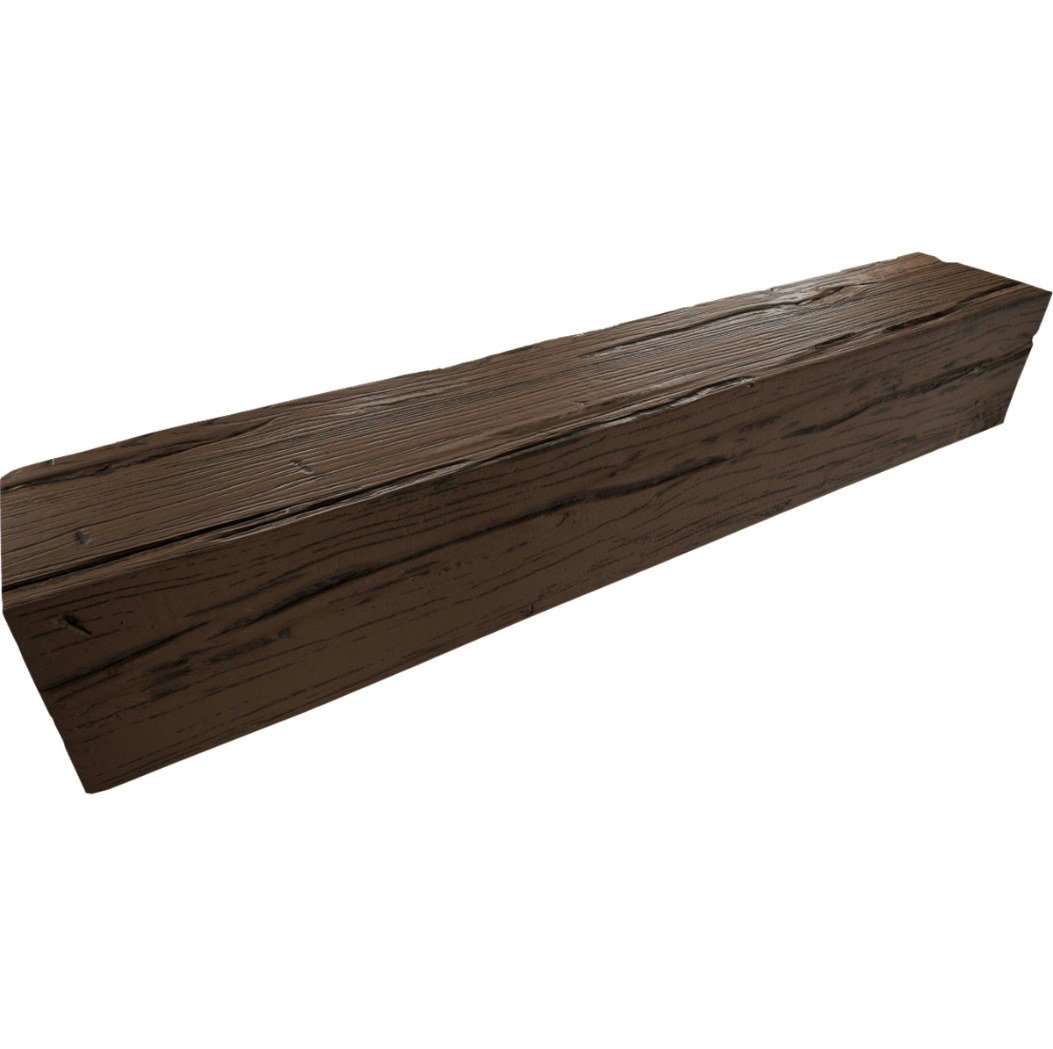
Custom grain on faux wood beams is what separates generic polyurethane beams from beams that look like specific wood species with distinctive grain patterns. For home builders who want beams that match a specific wood reference—a particular oak, a particular pine, a particular reclaimed wood look—custom grain development with a factory is the answer.
This is how custom grain faux wood beams work, what the factory process looks like, what it costs, and how home builders should approach the engagement.
What "custom grain" means on a faux wood beam
Grain on a faux wood beam refers to the visual pattern of wood features that the beam's surface displays:
Grain pattern elements
The visual elements that make up a wood grain pattern:
- Cathedral grain. The flame-shaped pattern typical of plain-sawn oak and similar species.
- Straight grain. The parallel line pattern typical of quarter-sawn or rift-sawn lumber.
- Knots. The circular or oval patterns where branches grew.
- Burls. The swirled patterns from abnormal growth.
- Ray flecks. The radial patterns visible in quarter-sawn oak.
- Density variation. Areas of tight grain versus areas of loose grain.
Each wood species has a characteristic combination of these elements.
Texture characteristics
The texture characteristics that complement the grain pattern:
- Smooth planed. The smooth surface typical of finished lumber.
- Rough-sawn. The textured surface from circular saw cuts.
- Wire-brushed. The surface with softer wood removed, harder grain raised.
- Hand-hewn. The surface from axe or adze work.
- Distressed. The surface with intentional marks, dents, or wear.
Texture and grain pattern work together to create the wood's visual character.
Color integration
The grain pattern interacts with the color:
- Early wood (spring growth) and late wood (summer growth) absorb stain differently.
- Knots are typically darker than surrounding wood.
- Some species have distinct color variation between heartwood and sapwood.
A custom grain specification typically includes color coordination with the grain pattern.
How factories produce custom grain beams
For a factory producing custom grain faux wood beams, the process involves several capabilities:
Wood master creation
The factory creates a wood master that captures the desired grain pattern:
- Hand-carved. A skilled craftsperson carves the grain pattern into a wood block, using chisels, gouges, and other tools.
- CNC-carved. A computer-controlled carving machine cuts the grain pattern from a digital design.
- Combination. Hand-carved details added to a CNC-carved base.
The wood master becomes the original for mold production.
Mold production
The factory produces a polyurethane mold from the wood master:
- The mold captures every detail of the wood master's surface.
- The mold is cured and inspected.
- The mold is tested with sample beams.
Mold production typically takes 2 to 4 weeks.
Sample beam production
The factory produces sample beams from the mold:
- 1 to 3 sample beams at 12 to 24 inches long.
- Color-matched to the home builder's specification.
- Finished with the specified sheen and weathering effects.
Samples are produced within 1 to 2 weeks after mold completion.
Hand-detailing
For grain patterns that require additional character, the factory applies hand-detailing:
- Hand-painted color variations on individual grain features.
- Hand-applied texture variations.
- Selective staining to emphasize or de-emphasize grain elements.
Hand-detailing is labor-intensive and adds to the per-piece pricing.
Production runs
For production runs, the factory:
- Uses the approved mold.
- Applies the approved color and finish.
- Monitors quality across the production batch.
Production typically takes 3 to 4 weeks for the first run, 2 to 3 weeks for reorders.
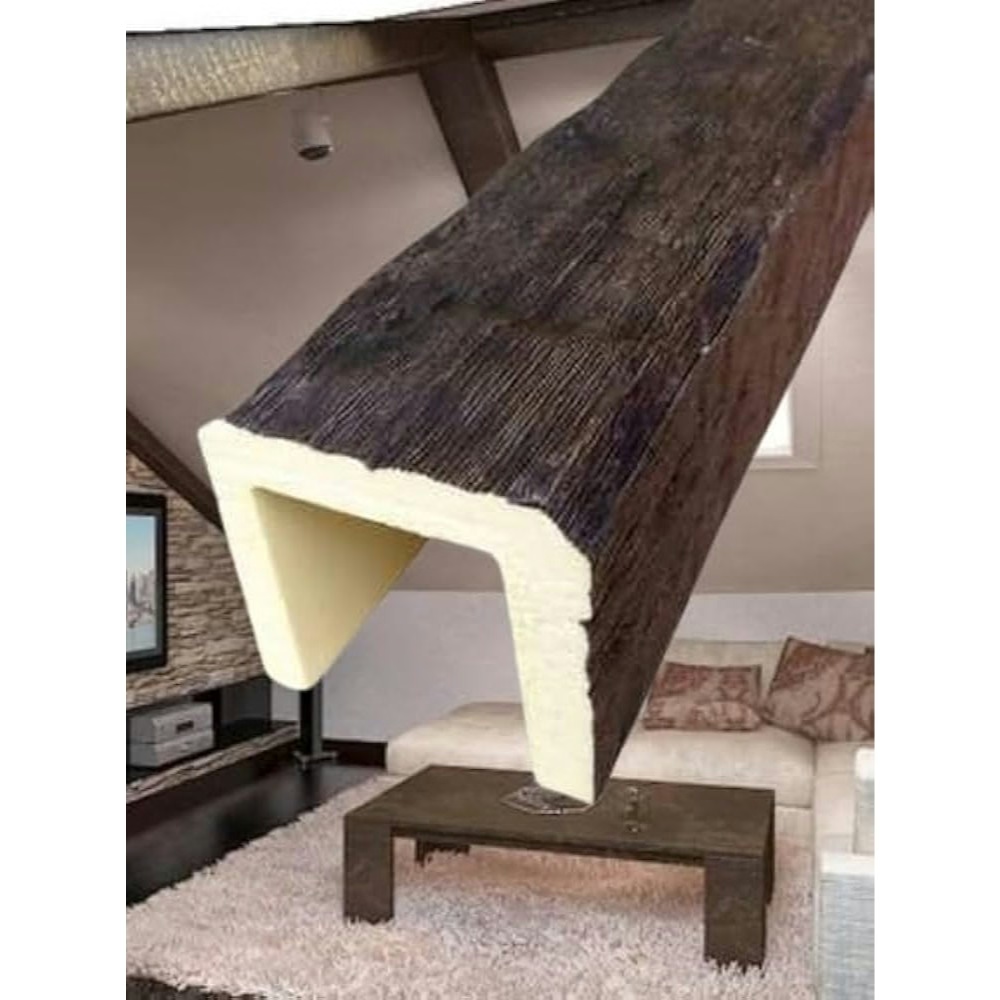
Custom grain options for home builders
For home builders, custom grain typically falls into several categories:
Species simulation
The home builder specifies a wood species:
- Oak. Red oak or white oak, with characteristic cathedral or quarter-sawn patterns.
- Pine. Various pine species with knot patterns and color variations.
- Cedar. Cedar with characteristic tight grain and color variation.
- Fir. Douglas fir or similar with vertical grain patterns.
- Reclaimed wood. Various reclaimed wood looks with weathering and aging.
- Exotic species. Teak, mahogany, ipe, or other exotic species with distinctive grain.
Each species has characteristic grain features that the factory reproduces.
Pattern style
Within a species, the home builder can specify:
- Plain-sawn. The most common cut, with cathedral grain patterns.
- Quarter-sawn. With ray flecks and straighter grain.
- Rift-sawn. With the straightest, most uniform grain.
- Live-sawn. With a mix of all grain patterns in a single piece.
- Reclaimed patterns. With weathering, knots, and aging effects.
The pattern style affects the beam's visual character.
Aging and weathering
The home builder can specify:
- Fresh-cut. New wood appearance.
- Aged. Some patina and color shift.
- Weathered. Significant sun and moisture exposure effects.
- Reclaimed. Distinctive aged appearance with character marks.
- Distressed. Intentional marks for a particular design effect.
Aging and weathering add character to the grain pattern.
Texture specification
The home builder can specify:
- Smooth planed. The smoothest finish.
- Light texture. Subtle saw marks or planing variations.
- Medium texture. Visible saw marks or rough-sawn.
- Heavy texture. Deep rough-sawn or hand-hewn.
The texture works with the grain pattern to create the overall wood character.
How home builders should approach custom grain
For home builders considering custom grain, the engagement process includes:
Define the wood reference clearly
Before engaging the factory:
- Physical wood samples (the actual species and finish).
- High-quality photographs showing the grain pattern.
- Multiple reference images showing variation.
- Color codes or samples for the finish.
The clearer the reference, the more accurate the factory's reproduction.
Evaluate factory capability
Not all factories produce high-quality custom grain:
- Wood master creation capability.
- Hand-detailing capability.
- Color matching capability.
- Quality consistency across production runs.
A factory with strong custom grain capability produces better results.
Plan the timeline
Custom grain projects require longer lead times:
- Specification development: 1 to 2 weeks.
- Wood master and mold: 4 to 6 weeks.
- Sample production: 1 to 2 weeks.
- Iteration cycles: 1 to 4 weeks.
- Production run: 3 to 4 weeks.
- Total: 10 to 18 weeks.
For projects with tight timelines, the custom grain timeline may not be feasible.
Budget for the premium
Custom grain carries premiums:
- Mold development: $3,000 to $8,000+ for custom grain patterns.
- Hand-detailing: 10 to 30 percent above standard pricing.
- Per-piece pricing: 30 to 60 percent above stock pricing.
For home builders running 20+ homes per year, the mold cost amortizes across the portfolio. For lower volumes, the premium may be harder to justify.

Cost structure for custom grain beams
The cost structure for custom grain beams includes:
One-time costs
- Wood master creation: often included in the mold development fee.
- Mold production: $3,000 to $8,000+ depending on pattern complexity.
- Sample production: often included in the development fee.
Per-piece costs
- Per-piece pricing for the molded beam: 30 to 60 percent above stock pricing.
- Hand-detailing premium: 10 to 30 percent above standard finish pricing.
- Custom color (if applicable): $200 to $800 per color match.
Reorder costs
- Reorder per-piece pricing: same as the original production run.
- Color match fees: not re-applied for reorders against the same color.
- Mold maintenance: covered by the factory for the mold's active life.
Common pitfalls in custom grain projects
A few issues that come up often enough to flag:
- Insufficient reference materials. A vague wood reference produces a beam that doesn't match expectations.
- Skipping sample iteration. Rushing through sample approval produces mismatched results.
- Underestimating timeline. Custom grain requires longer lead times than stock beams.
- Insufficient volume to amortize mold cost. Low-volume projects pay more per piece than the design benefit justifies.
- Letting grain reference drift. Subsequent reorders against a different reference produce visible inconsistency.
How home builders evaluate factories for custom grain
For home builders evaluating factories for custom grain work:
- Wood master capability. The factory has skilled craftspeople or CNC capability.
- Sample quality. The factory's samples demonstrate high-quality grain reproduction.
- Hand-detailing capability. The factory has the skill to add character beyond the mold.
- Color matching. The factory matches wood species colors accurately.
- References. The factory has done comparable custom grain projects.
- Pricing transparency. The factory's pricing structure for custom grain is clear.
Custom grain faux wood beams factory direct for home builders is a category where the wood species simulation, the hand-detailing, and the mold development process all need to align. The right factory produces beams that authentically reproduce specific wood species. The wrong one produces generic "wood-look" beams that don't match the reference.
Technical References
ASTM standards cited in every specification
Test Data
Lab results from internal testing program
Updated 2026
Reviewed against current product specs