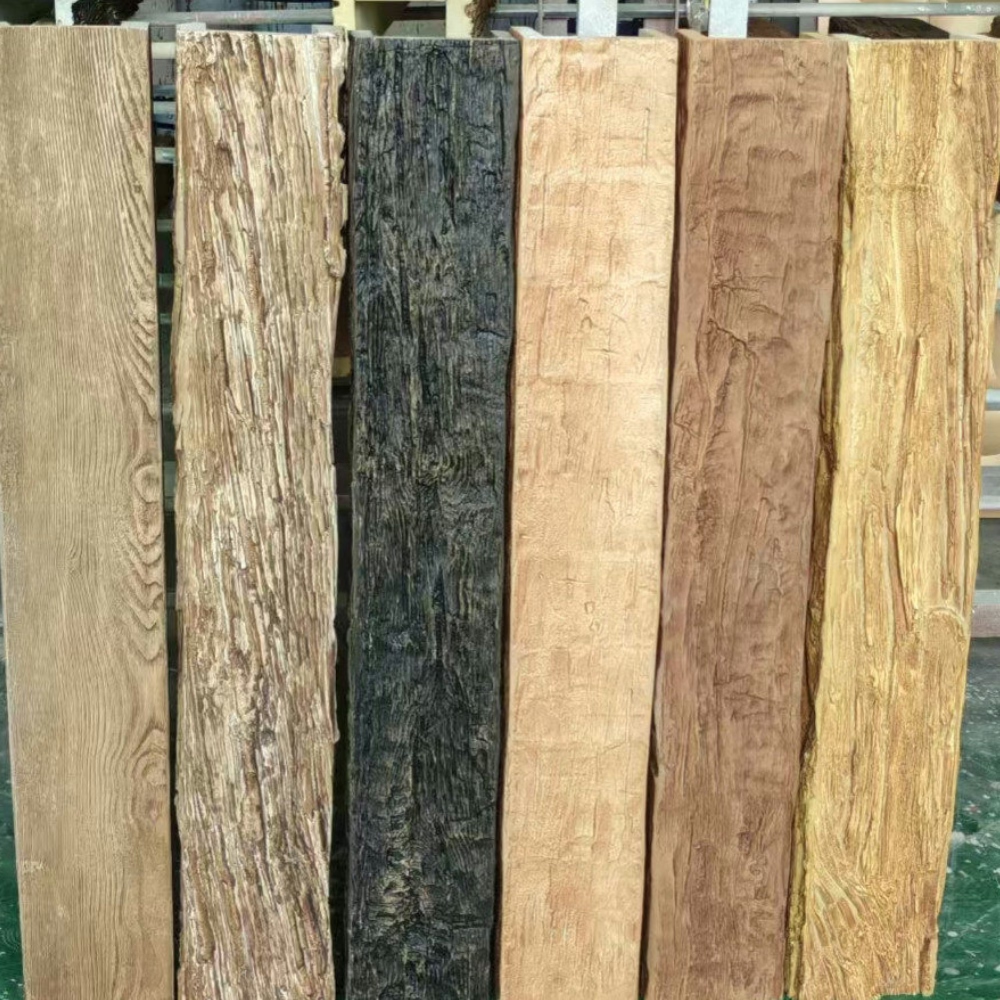
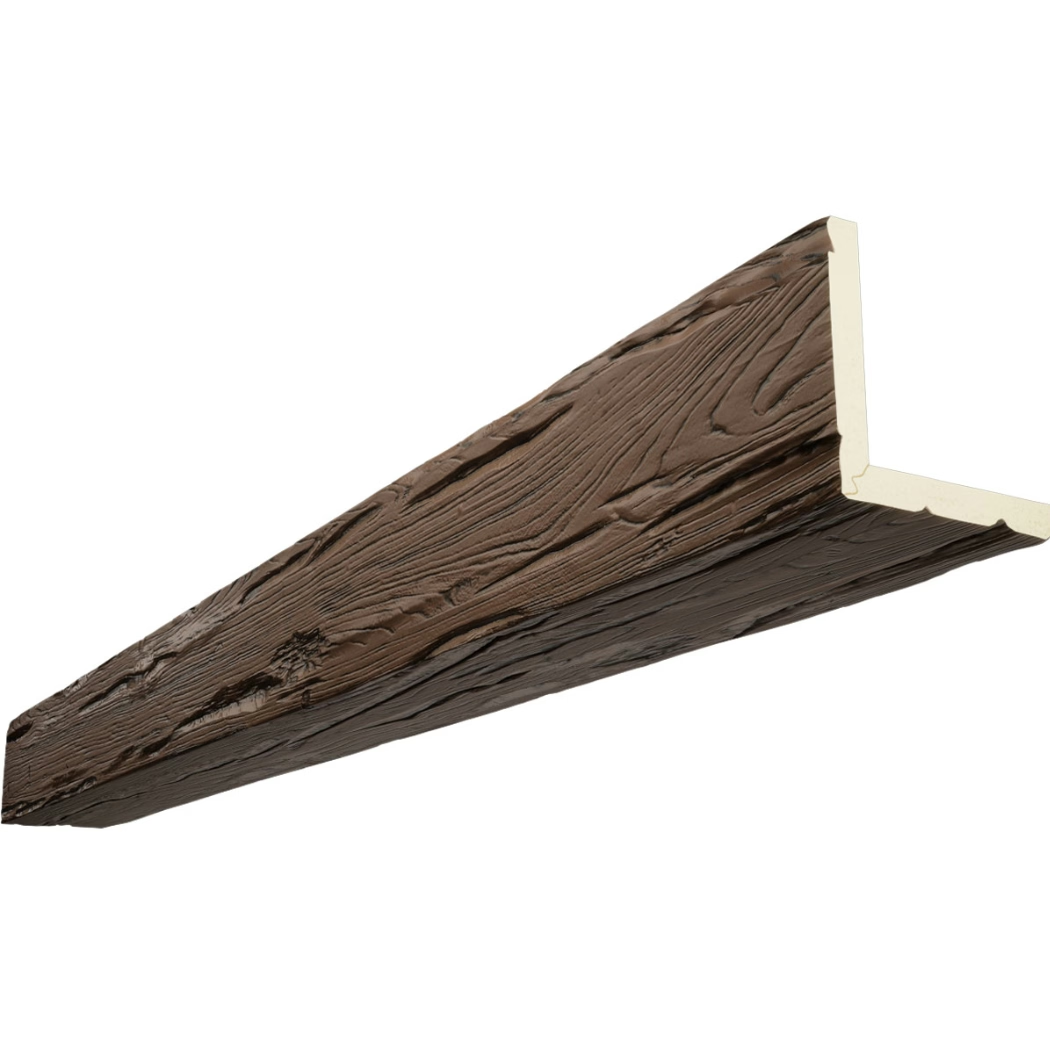
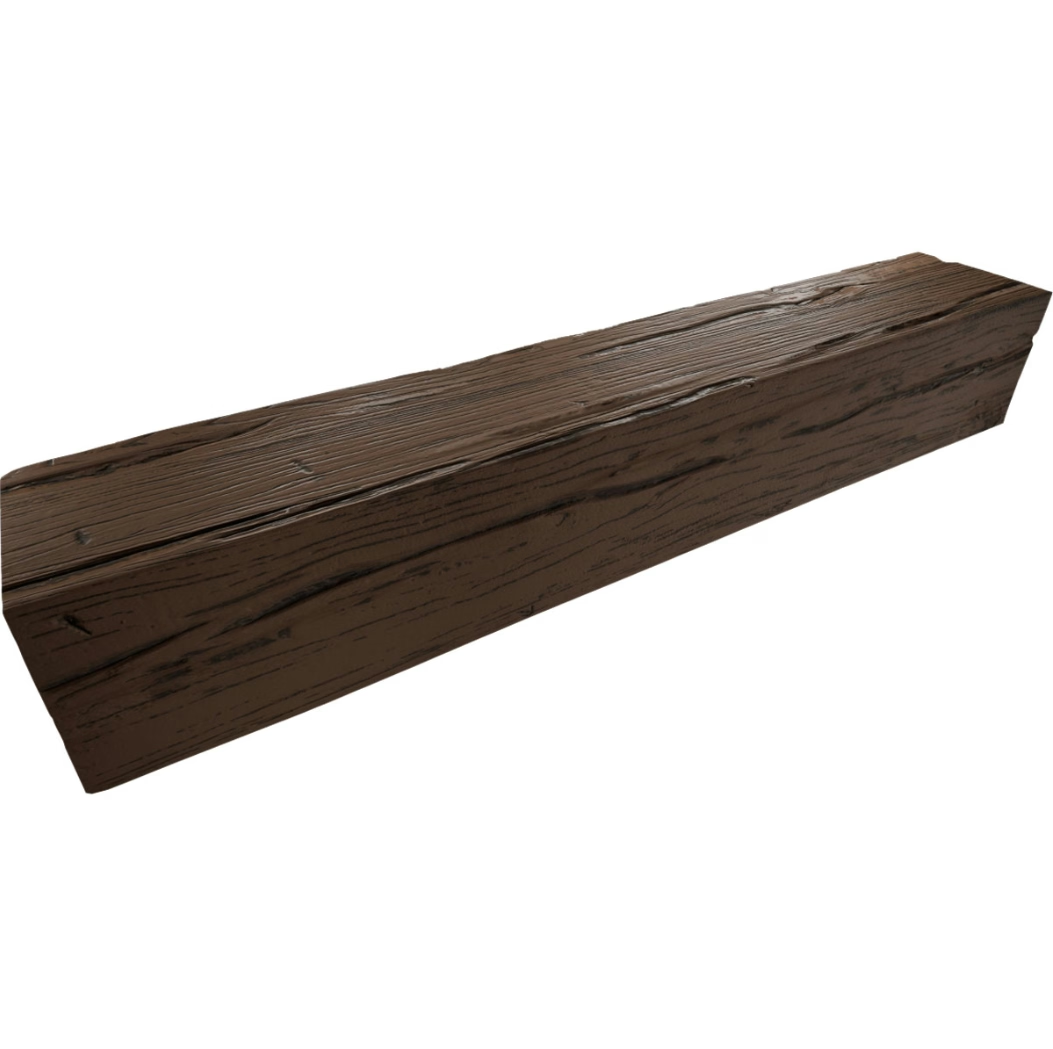
Faux Wood Beams for Commercial Buildings | Wholesale Manufacturer
Commercial buildings—offices, retail centers, hotels, restaurants, healthcare facilities, schools—are a different scale of faux beam project than residential work. The beam quantities are larger (often hundreds or thousands of linear feet per project), the code compliance requirements are stricter, the lead times are tighter, and the documentation has to support the commercial inspection and approval process. A wholesale manufacturer serving this segment needs capabilities that go beyond what residential suppliers offer.
This is what commercial building projects need from a faux wood beam wholesale manufacturer, what the supplier capabilities look like, and how the relationship develops.
What commercial building projects require
Commercial building beam projects have specific requirements that differ from residential work:
Larger volumes
Commercial projects typically involve 500 to 5,000+ linear feet of beam per project:
- Hotel lobby: 800 to 2,000 linear feet.
- Restaurant chain buildout: 200 to 800 linear feet per location, multiple locations per year.
- Office building lobby: 500 to 1,500 linear feet.
- Retail store: 300 to 800 linear feet per location, multiple locations.
- Healthcare facility: 1,000 to 3,000 linear feet.
The volumes require production capacity that can handle 10 to 50 beams per wave, with multiple waves per project.
Code compliance depth
Commercial buildings require comprehensive code compliance:
- Fire rating documentation (ASTM E84 Class A or B, depending on jurisdiction).
- VOC emissions certification (GREENGUARD, CDPH, or equivalent).
- Seismic documentation (in seismic zones).
- Structural engineering stamps for cleat specifications.
- ADA compliance verification for beam heights in accessible routes.
- Sometimes additional certifications for healthcare, education, or government.
The documentation has to be project-specific, with the building address, jurisdiction, and applicable codes documented.
Faster lead times
Commercial projects often have tight construction timelines:
- Tenant improvement: 4 to 8 weeks total construction.
- Retail store buildout: 4 to 8 weeks.
- Restaurant buildout: 4 to 8 weeks.
- Hotel renovation phase: 3 to 6 months per phase.
- Office fit-out: 2 to 4 months.
Beam lead times of 15 to 25 business days for custom work are often too long. Commercial projects need 5 to 15 business days for standing specs, 10 to 20 for custom.
Multi-floor coordination
Commercial buildings often have multiple floors with beam installations:
- The beams need to be consistent across floors.
- Production scheduling needs to handle multiple floors in waves.
- Delivery coordination needs to align with construction phases per floor.
A manufacturer serving multi-floor commercial projects needs production capacity that handles this scale.
Multi-property coordination
For commercial chains (hotel brands, restaurant chains, retail chains), the manufacturer needs to coordinate across multiple properties:
- Brand-standard specifications maintained across properties.
- Volume pricing across the chain's annual beam spend.
- Coordinated delivery across multiple locations.
- Standardized documentation package for all properties.
This multi-property capability is what makes a manufacturer valuable for commercial chains.
What commercial building manufacturers need
A wholesale manufacturer serving the commercial building segment needs:
Production capacity
Sufficient production capacity to handle commercial project volumes:
- Multiple mold stations for parallel production.
- Sufficient curing space for the production volume.
- Finishing capacity for the order mix.
- Packaging capacity for the volumes.
- Replacement stock capacity for fast-turnaround needs.
Documentation capability
Comprehensive documentation capability:
- Fire rating test reports from accredited labs.
- VOC emissions certifications.
- Seismic documentation (engineering stamps where required).
- Project-specific documentation packages.
- Care and maintenance guides per beam type.
The documentation team needs to produce project-specific packages within days, not weeks.
Project management capability
Strong project management for commercial projects:
- Dedicated project coordinators for commercial accounts.
- Coordination with multiple project managers per chain.
- Proactive communication about production status and delivery.
- Issue resolution within hours, not days.
Code expertise
Familiarity with commercial building codes across jurisdictions:
- Fire rating requirements per jurisdiction.
- Seismic requirements per zone.
- ADA considerations.
- Healthcare, education, and government-specific requirements.
The manufacturer's technical team should be able to advise on code questions.
How commercial building projects differ from commercial interior projects
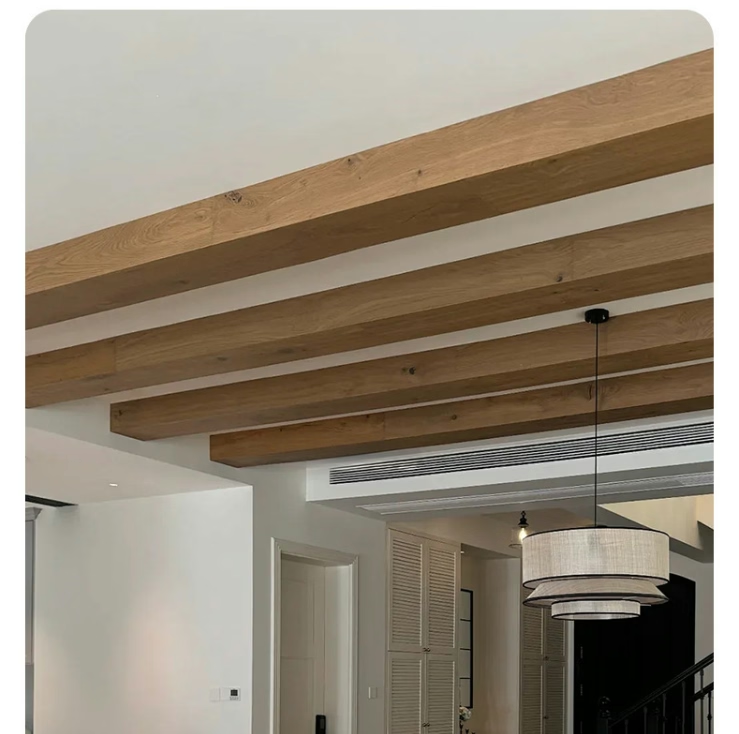
A distinction worth clarifying: "commercial buildings" in this context refers to the building shell and primary interior spaces (lobbies, common areas, restaurants within buildings, retail within mixed-use developments). This differs from "commercial interior decoration" which focuses on tenant improvements and specific commercial interior programs.
For commercial building projects:
- The beam installation is part of the building's primary construction or major renovation.
- The architect or design firm typically drives the beam specification.
- The general contractor coordinates the beam installation with other trades.
- The documentation supports the building's overall code compliance.
For commercial interior decoration projects:
- The beam installation is part of a tenant improvement or interior refresh.
- The interior designer or design-build firm drives the beam specification.
- The tenant or commercial property manager coordinates the installation.
- The documentation supports the tenant's specific requirements.
A wholesale manufacturer may serve both, but the operational capabilities differ.
How commercial building manufacturers price
Pricing for commercial building projects typically reflects the volume and complexity:
Per-piece pricing by length
Standard tier pricing by length, applicable to all orders. For commercial projects, the length distribution skews longer than residential—8 to 20 feet is common.
Volume discounts
Volume discounts apply at higher commercial volumes:
- 500 to 1,000 linear feet: 5 to 10 percent discount.
- 1,000 to 3,000 linear feet: 10 to 20 percent discount.
- 3,000+ linear feet: 20 to 30 percent discount.
For commercial chains with multiple properties, the volume tiers apply across the chain's annual spend.
Documentation package pricing
Documentation packages are typically included in the per-piece pricing for commercial orders. Project-specific documentation (custom engineering stamps, special certifications) may carry additional fees.
Setup fees
Setup fees for deviations against standing specs are reduced or waived at higher commercial volumes.
Replacement beam pricing
Replacement beams are priced at the same per-piece rate as the original order, with no setup fees for standing specs.
Common pitfalls in commercial building beam projects
A few issues that come up often enough to flag:
- Insufficient code documentation. Skipping fire rating, VOC, or seismic documentation creates problems at inspection.
- Inadequate lead time for fast-track projects. Commercial projects with 4 to 8 week timelines need fast beam turnaround; standard 15 to 25 day lead times are too slow.
- Multi-floor coordination gaps. Beams on different floors installed at different quality levels or with different color drifts.
- Multi-property inconsistency. For chains, properties installed at different times show visible variation.
- Cleat specifications not engineered. Standard cleats may not meet seismic or commercial code requirements; engineered cleats are often needed.
How to evaluate a commercial building manufacturer
For commercial building project teams evaluating manufacturers, the criteria include:
- Commercial project references. The manufacturer should have done comparable commercial projects.
- Documentation depth. The manufacturer should provide comprehensive documentation per the project's code requirements.
- Production capacity. The manufacturer should be able to handle the project's volume in the required timeline.
- Multi-property coordination. For chains, the manufacturer should be able to maintain consistency across properties.
- Lead time reliability. The manufacturer should meet lead time commitments consistently.
Faux wood beams for commercial buildings from a wholesale manufacturer is a category where the operational capabilities, the documentation depth, and the project management all need to align. The right manufacturer produces beams that meet the building's specifications and code requirements. The wrong one produces friction at the inspection stage.
Technical References
ASTM standards cited in every specification
Test Data
Lab results from internal testing program
Updated 2026
Reviewed against current product specs