Handcrafted Artisan PU Faux Wood Beams | Wholesale to Contractors
"Handcrafted" on a polyurethane faux wood beam is a specific claim with specific production implications. Unlike solid wood beams where the entire shape is created by hand tools, polyurethane beams are molded, but skilled hands touch the beam at multiple stages of production. Understanding where hands touch the beam clarifies what "handcrafted" actually delivers and what it doesn't.
This is where in the production process hands actually touch a handcrafted artisan polyurethane beam, what each hand step contributes, and what this means for contractor procurement.
The polyurethane beam production process
To understand where hands touch the beam, the full production process needs to be clear:
Mold creation
The mold is created from a wood master:
- Wood master creation. A skilled carver hand-cuts the wood master from a wood block. This is the most extensive handcraft step in the production process.
- Mold pouring. Liquid polyurethane is poured into the mold around the wood master.
- Curing. The polyurethane cures in the mold.
- Demolding. The mold is opened and the cast beam is removed.
The wood master creation is genuinely handcrafted.
Beam production
For each beam:
- Mold preparation. The mold is cleaned and prepared.
- Polyurethane pouring. Liquid polyurethane is poured into the mold.
- Curing. The polyurethane cures in the mold.
- Demolding. The mold is opened and the beam is removed.
The pouring and demolding steps may involve hand operations, but the beam shape comes from the mold, not from the hands directly.
Cutting and finishing
After demolding:
- Cutting to length. The beam is cut to specified length using precision equipment.
- Cut-end sealing. The cut ends are sealed.
- Surface preparation. The surface is prepared for finishing.
- Quality inspection. The beam is inspected for defects.
These steps involve both equipment and hands.
Finish application
The factory finish is applied:
- Base color application. Spray or wipe application.
- Hand-detailing. Skilled craftspeople apply color variations, texture accents, and weathering effects.
- Multi-tone layering. Multiple color layers create depth and complexity.
- Sealer or topcoat. The protective finish is applied.
- Final inspection. The finished beam is inspected.
The hand-detailing step is genuinely handcrafted.
Where hands actually touch the beam
Across the production process, hands touch the beam at specific points:
Wood master creation (most extensive handcraft)
The wood master is the source of the beam's profile and texture. A skilled carver:
- Selects the wood block (typically basswood, mahogany, or similar).
- References the design intent.
- Hand-cuts the profile using chisels, gouges, and other tools.
- Adds texture details by hand.
- Reviews the wood master against the design intent.
- Makes refinements as needed.
This step typically takes 30 to 80 hours of skilled work per wood master.
Hand-detailing in finishing (significant handcraft)
After demolding, skilled craftspeople apply hand-detailing:
- Hand-painted color variations across the beam.
- Selective staining for grain emphasis.
- Texture variations applied by hand.
- Worn or aged effects applied by hand.
- Quality inspection at each step.
This step typically takes 30 to 90 minutes per beam.
Quality inspection (judgment-based handcraft)
Quality inspection is judgment-based work:
- Visual inspection of profile and texture.
- Inspection of color and finish.
- Identification and remediation of defects.
- Documentation of quality.
While not traditionally called "handcraft," this step requires skilled judgment.
What handcraft delivers vs what it doesn't
Understanding the boundaries of handcraft helps set appropriate expectations:
What handcraft delivers
- Authentic profile character. The wood master's hand-cutting produces profile details that machine-only production can't achieve.
- Unique variation. Hand-detailing produces natural variation that machine-only finishing can't replicate.
- Artisan quality. The combination of skilled mold creation and skilled finishing produces artisan quality.
- Distinction from machine production. Genuine handcraft distinguishes artisan beams from generic faux beams.
What handcraft doesn't deliver
- Hand-shaped beam. The beam itself is molded, not hand-shaped. The wood master is hand-shaped, but each beam is a cast of the master.
- Unique variation between beams. Hand-detailing produces variation, but within a controlled range. Each beam is similar but not identical.
- Visible handcraft marks. Hand-detailing is intended to look natural, not to show handcraft marks. The handcraft is invisible in the finished product.
The distinction matters for contractor specifications and homeowner expectations.
Production scale and handcraft
Handcrafted artisan beams are produced at smaller scale than standard faux beams:
Production rate
Standard faux beam production:
- 50 to 200 beams per day per production line.
- Highly automated.
- Limited handcraft.
Handcrafted artisan beam production:
- 5 to 30 beams per day per artisan line.
- Significantly more handcraft.
- Higher labor cost per beam.
The smaller scale is what produces the artisan quality.
Per-piece pricing
The pricing reflects the labor-intensive process:
- Standard faux beam: $10 to $18 per linear foot.
- Handcrafted artisan beam: $30 to $60 per linear foot.
- Premium: 100 to 200 percent above standard.
The premium reflects the skilled labor involved.
Lead times
Lead times for handcrafted artisan beams:
- Profile development: 4 to 12 weeks.
- Sample production: 1 to 2 weeks.
- Production run: 4 to 8 weeks.
- Total: 9 to 22 weeks for the first order.
The longer lead times reflect the labor-intensive process.
How contractors should evaluate "handcrafted" claims
For contractors evaluating handcrafted artisan beam suppliers, several considerations matter:
Verify the handcraft
Ask the supplier:
- Where in the production process are hands used?
- Who does the handcraft work (skilled craftspeople or production workers)?
- How is handcraft quality verified?
- Can you see the production process?
Genuine handcraft involves skilled craftspeople in production.
Look at samples
The supplier's samples demonstrate the handcraft:
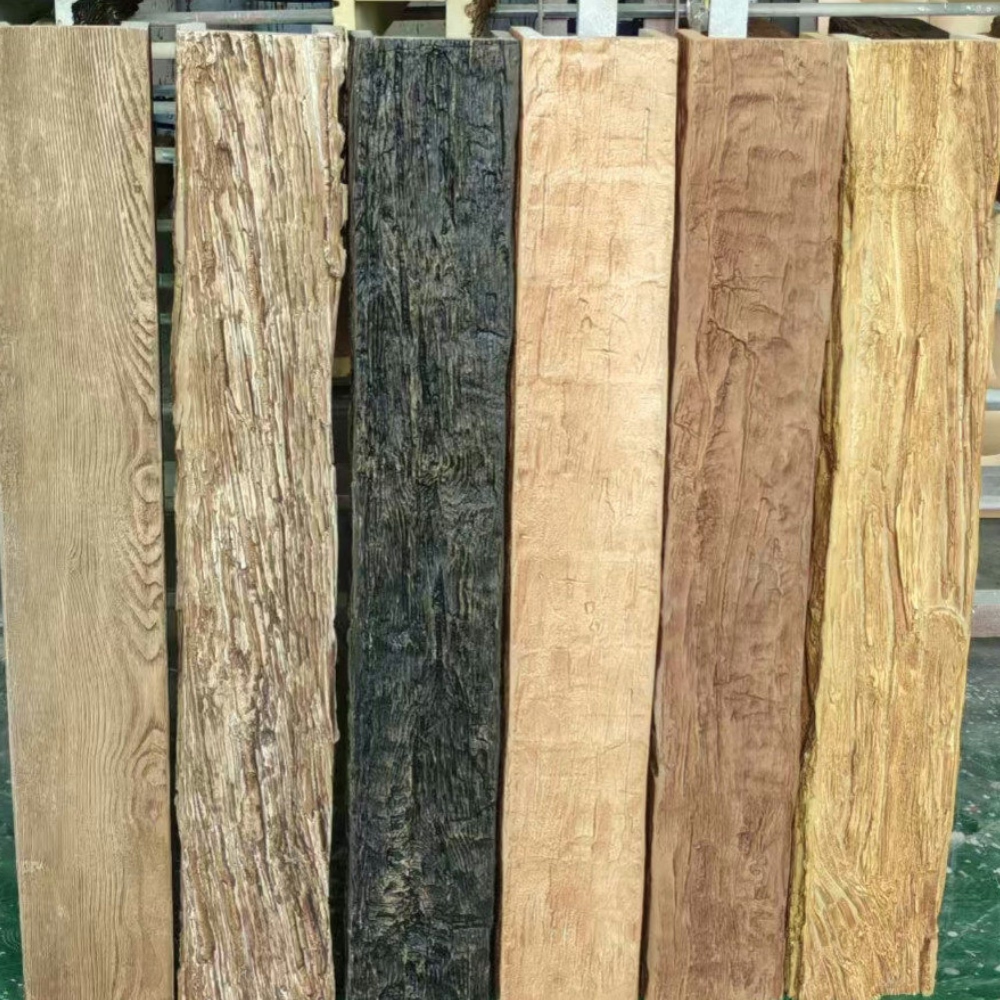
- Genuine handcraft shows natural variation.
- Genuine handcraft shows character that machine production can't replicate.
- Genuine handcraft feels authentic at close range.
Samples reveal the quality of the handcraft.
Visit the production facility
If possible, visit the production facility:
- See the wood masters in production.
- See the hand-detailing in process.
- See the quality inspection.
- Meet the craftspeople.
A facility visit confirms the handcraft claims.
Ask for references
References from other contractors:
- Production quality and consistency.
- Lead time reliability.
- Communication responsiveness.
- Issue resolution.
References confirm the supplier's actual performance.
Wholesale supply structure for handcrafted artisan beams
For contractors sourcing handcrafted artisan beams, the wholesale supply structure typically includes:
Standing specifications
For contractors running multiple artisan projects:
- Standard profiles in the contractor's portfolio.
- Standard color and finish specifications.
- Standard documentation packages.
Standing specs cover most orders.
Volume tiers
Volume tiers reflect the contractor's annual spend:
- Tier 1: 300 to 1,000 linear feet annually.
- Tier 2: 1,000 to 3,000 linear feet annually.
- Tier 3: 3,000+ linear feet annually.
Volume tiers drive pricing discounts.
Pricing structure
Pricing includes:
- Per-piece pricing by length with volume discounts.
- Premium for handcraft (100 to 200 percent above standard).
- Profile development fees for custom profiles.
- Color and finish development fees.
Lead times
Lead times for handcrafted artisan orders:
- Stock profile, standard finish: 4 to 6 weeks.
- Modified profile, custom finish: 6 to 10 weeks.
- Custom profile, fully custom: 12 to 20 weeks.
Replacement stock
The supplier holds replacement stock:
- 5 to 10 percent of order quantity.
- Coverage period of 24 to 36 months.
- Same handcraft quality and color match.
Common pitfalls in handcrafted artisan procurement
A few issues that come up often enough to flag:
- Supplier claiming handcraft that isn't actually performed. Marketing language without production substance.
- Inconsistent handcraft quality across production. Variation that reduces the artisan appearance.
- Lead times not planned for. Handcrafted projects require longer timelines.
- Pricing surprises. Underestimating the premium for genuine handcraft.
- Color drift across production. Visible variation between production runs.
How contractors evaluate handcrafted artisan suppliers
For contractors evaluating handcrafted artisan beam suppliers:
- Verified handcraft process. The supplier demonstrates genuine handcraft in production.
- Sample quality. The supplier's samples show authentic handcraft character.
- Quality consistency. The supplier maintains handcraft quality across production.
- Lead time reliability. The supplier meets artisan lead time commitments.
- References. The supplier has done comparable handcraft work.
Handcrafted artisan polyurethane faux wood beams wholesale to contractors is a category where the genuine handcraft, the production scale, and the artisan quality all need to align. The right supplier produces handcrafted beams that justify the premium. The wrong one produces beams with handcraft claims that the production process doesn't actually deliver.
Technical References
ASTM standards cited in every specification
Test Data
Lab results from internal testing program
Updated 2026
Reviewed against current product specs