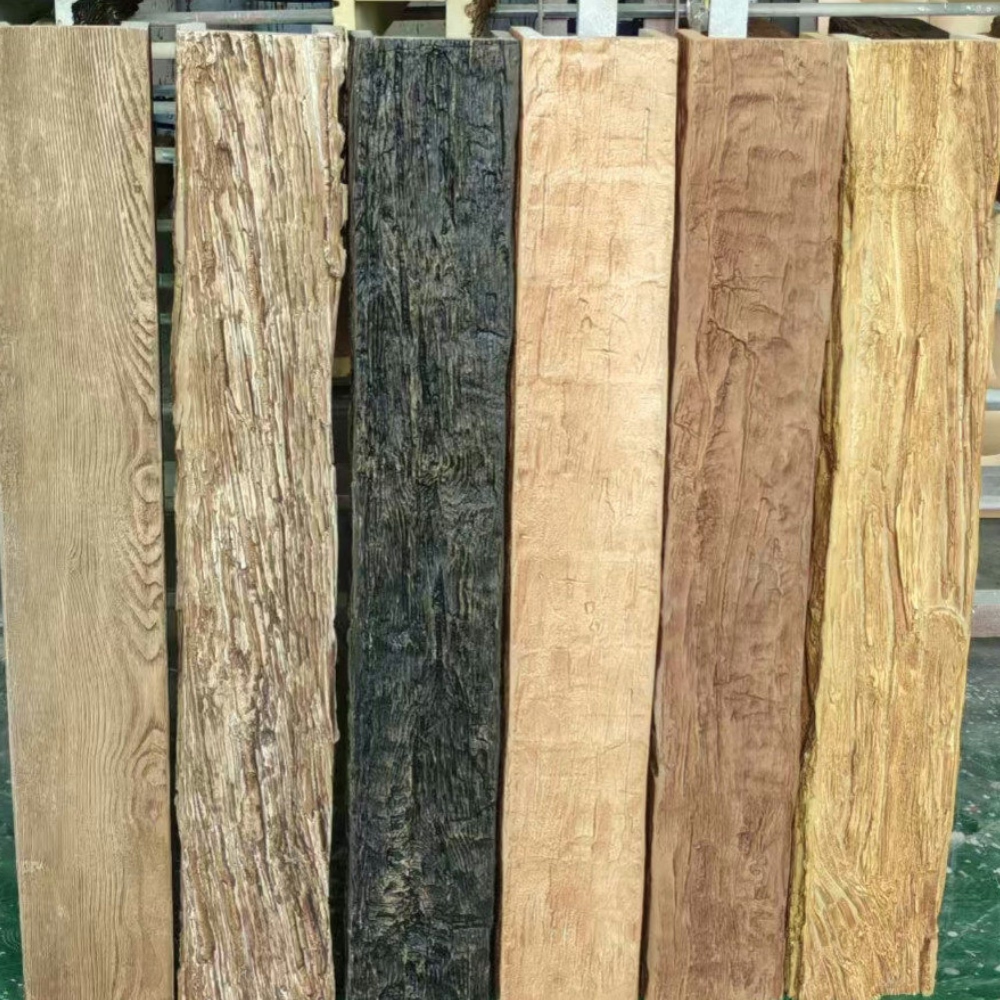
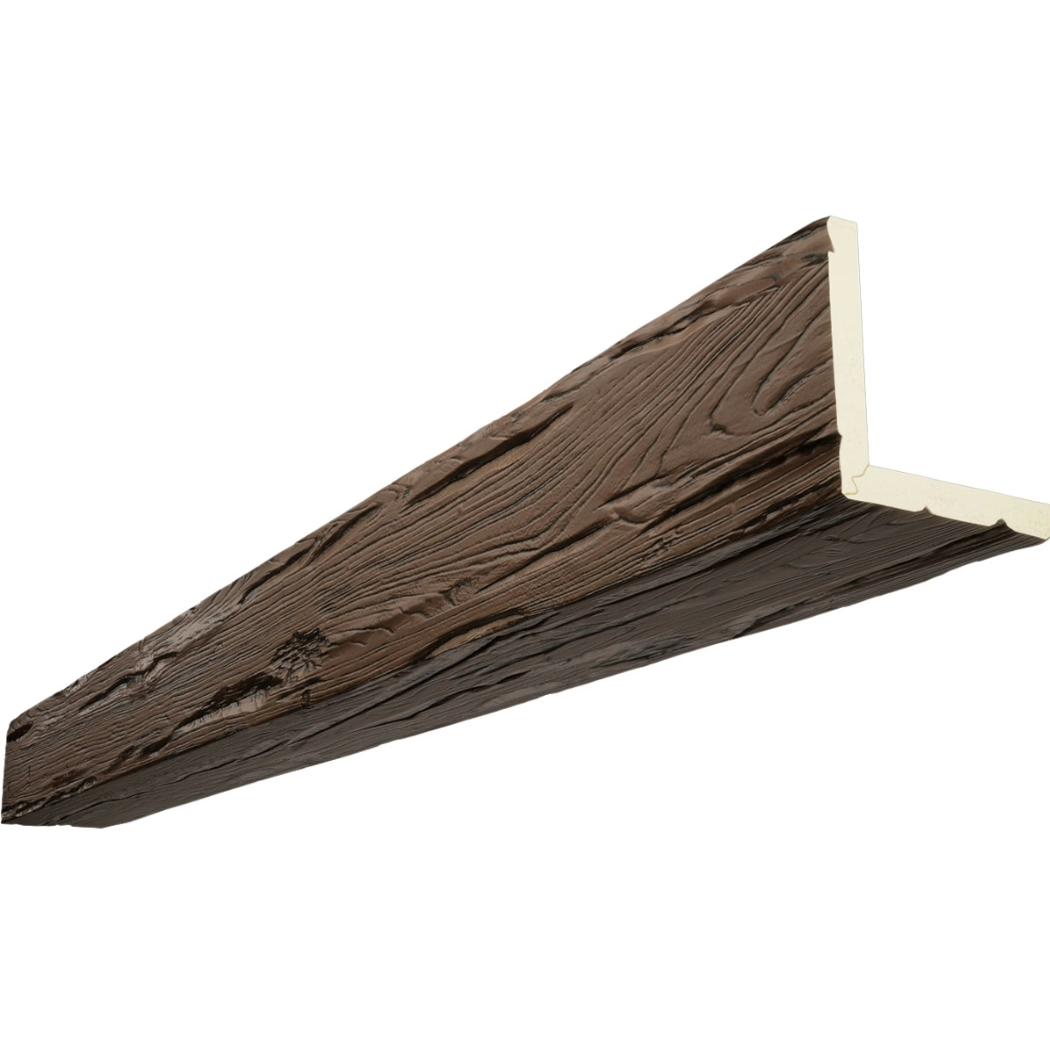
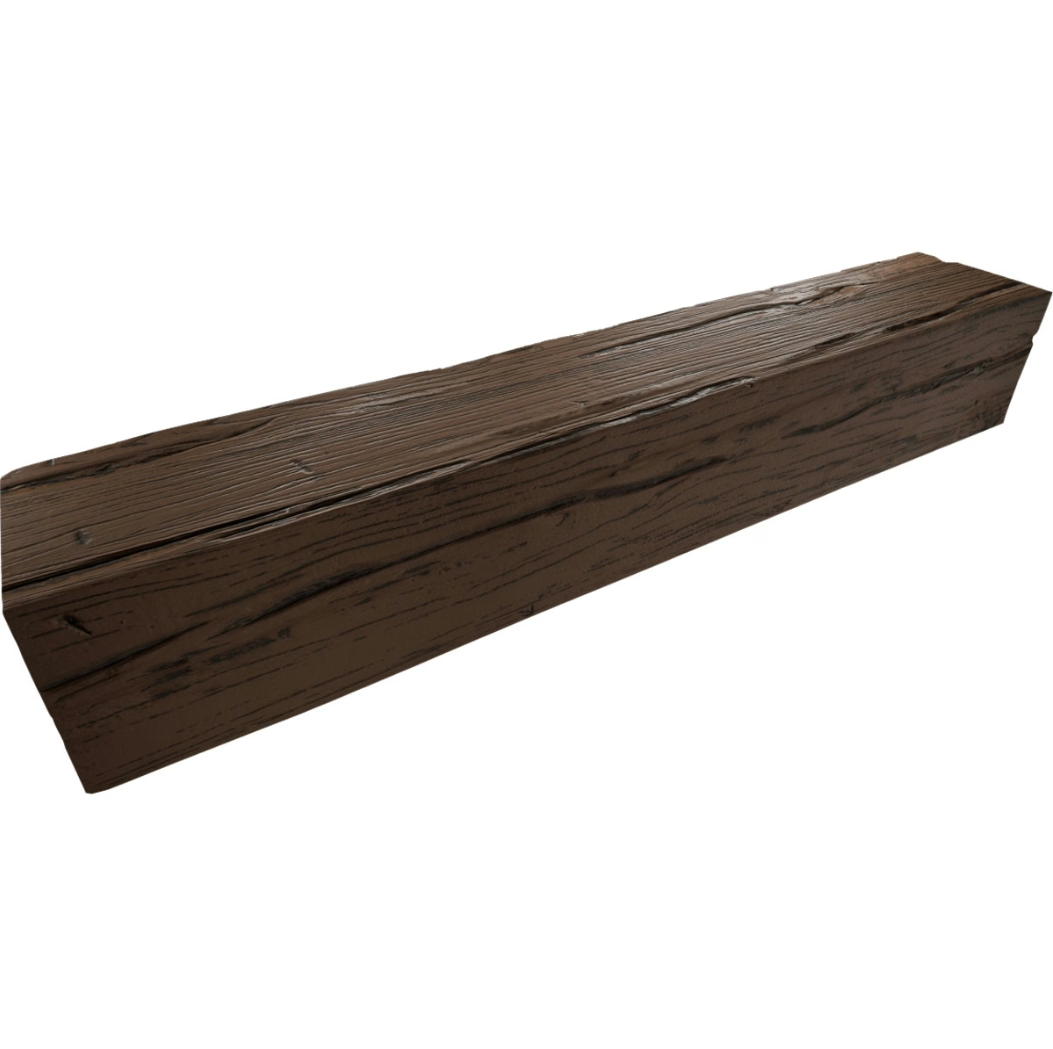
Light Faux Ceiling Beams | No Warping, Bulk Supply to Builders
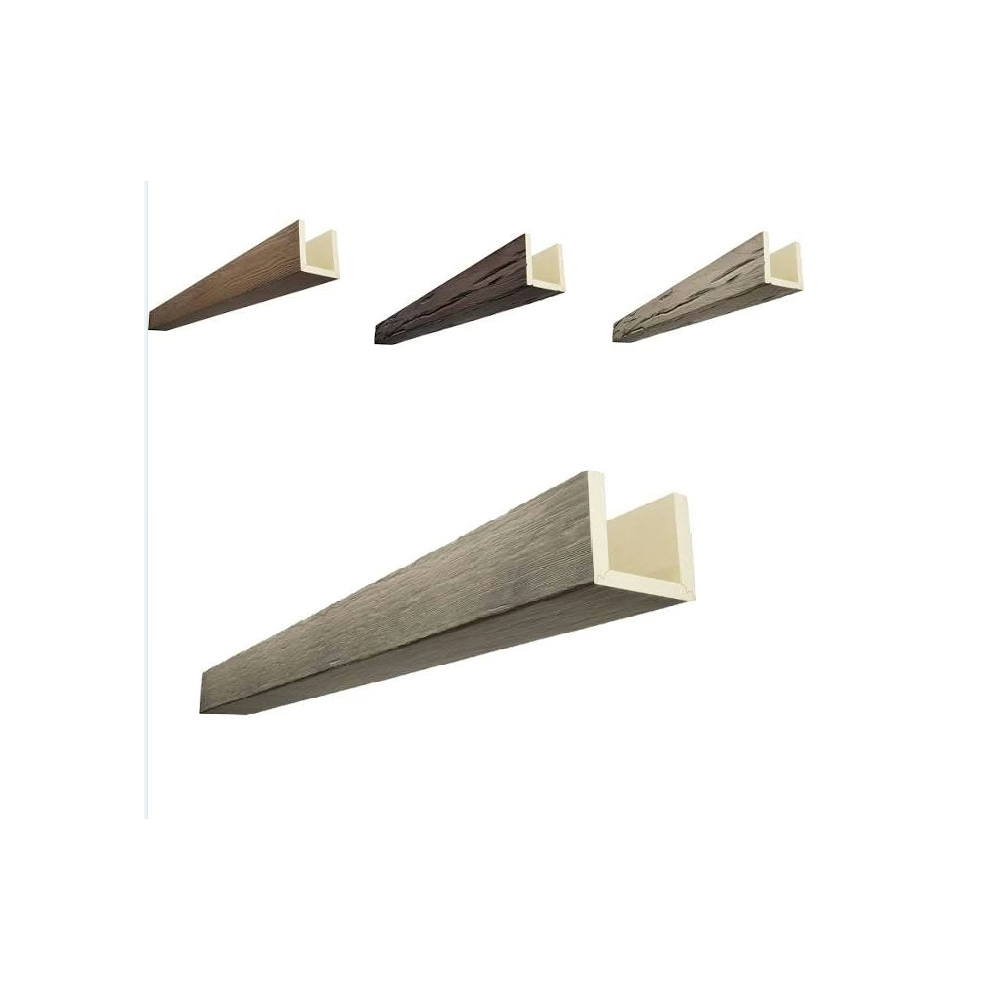
"No warping" is one of the most important practical advantages of polyurethane faux ceiling beams. Real wood beams warp over time as moisture content changes, and the warping can be severe enough to require replacement or cause ongoing issues with the ceiling. Polyurethane beams, made from closed-cell foam, don't absorb moisture and don't warp. For builders running bulk supply programs, this stability translates into predictable long-term performance.
This is why polyurethane beams don't warp, how they compare to solid wood over time, and what the bulk supply implications are.
Why solid wood beams warp
Solid wood beams warp because wood is hygroscopic—it absorbs and releases moisture based on the surrounding environment. The moisture absorption is uneven, and the uneven moisture content creates internal stresses that cause warping:
Types of warping
Several types of warping affect solid wood beams:
- Bow. The beam curves along its length, with the ends higher or lower than the middle.
- Cup. The beam curves across its width, with the edges higher or lower than the center.
- Twist. The beam rotates along its length, with one end twisted relative to the other.
- Crook. The beam curves along its length in the direction of the grain.
Each type of warping affects the beam's appearance and structural performance differently.
Causes of warping
Warping is caused by:
- Moisture content changes. As wood absorbs or releases moisture, it swells or shrinks unevenly.
- Grain orientation. Different grain orientations in the same piece shrink at different rates.
- Internal stresses. Growth stresses in the original tree, relieved during drying, cause warping.
- Environmental conditions. Humidity changes, temperature changes, and direct moisture exposure all contribute.
- Initial drying. Improper drying of the original lumber sets up stresses that manifest later.
For solid wood beams, warping is a question of when, not if.
Time scale of warping
Warping occurs over different time scales:
- Initial warping. Within weeks to months of install, as the beam acclimates to the environment.
- Seasonal warping. Year-to-year changes as humidity varies seasonally.
- Long-term warping. Cumulative effects over years, often worsening with age.
A solid wood beam that appears straight at install may warp significantly within 1 to 5 years.
Why polyurethane beams don't warp
Polyurethane beams don't warp because polyurethane is a closed-cell foam that doesn't absorb water:
Closed-cell structure
Polyurethane foam is composed of closed cells—each cell is a sealed pocket of gas surrounded by solid polyurethane. The closed cells:
- Don't connect to each other.
- Don't allow water migration through the material.
- Don't allow moisture absorption at the surface.
The closed-cell structure means the bulk material doesn't change dimensionally with humidity.
Cut-end sealing
While the bulk material is closed-cell, the cut ends of a beam expose the cell structure. The factory's cut-end sealing:
- Seals the exposed cells with a coating.
- Prevents moisture absorption through the cut ends.
- Maintains dimensional stability at the most vulnerable points.
With proper cut-end sealing, the beam maintains its dimensions over time.
Factory finish
The factory finish provides additional protection:
- Seals the surface against moisture absorption.
- Protects against UV degradation.
- Maintains the beam's appearance over time.
The factory finish works with the closed-cell structure to ensure dimensional stability.
Dimensional stability over time
Polyurethane beams maintain their dimensions over years:
- No swelling or shrinking from humidity changes.
- No bow, cup, twist, or crook from internal stresses.
- No warping from seasonal cycles.
- No cumulative warping over decades.
The dimensional stability is one of the most practical advantages of polyurethane for builders.
Comparison to solid wood over time
Comparing polyurethane to solid wood beams over time:
Year 1
- Solid wood: Initial warping may be visible. Some beams develop significant bow or twist within months.
- Polyurethane: No warping. Beam maintains the dimensions it had at install.
Year 5
- Solid wood: Cumulative warping from seasonal cycles. Some beams may need adjustment or replacement.
- Polyurethane: No change. Beam maintains original dimensions.
Year 10
- Solid wood: Significant warping in many beams. Finish cracking from dimensional changes. Some beams require replacement.
- Polyurethane: No change. Beam maintains original dimensions.
Year 20
- Solid wood: Severe warping in many beams. Finish deterioration. Most beams require replacement or major rework.
- Polyurethane: No change. Beam maintains original dimensions. Finish may show UV degradation but not warping.
The comparison shows that polyurethane beams are stable over decades, while solid wood beams deteriorate over years.
What this means for builders
For builders running bulk supply programs, the no-warping property has significant implications:
Long-term performance
Polyurethane beams maintain their appearance and fit over decades:
- No callbacks for warping issues.
- No replacement costs from warping.
- No warranty claims related to dimensional changes.
Builders who use polyurethane beams have fewer long-term issues.
Predictable ceiling appearance
Ceilings with polyurethane beams maintain their intended appearance:
- No visible warping affecting sight lines.
- No gaps opening at joints from dimensional changes.
- No finish cracking from beam movement.
The ceiling appearance is predictable over the building's life.
Reduced warranty exposure
Builders using polyurethane beams have reduced warranty exposure:
- No warranty claims for warping.
- No warranty claims for finish cracking from warping.
- Reduced risk of builder warranty disputes.
The reduced warranty exposure translates to lower warranty reserve requirements.
Customer satisfaction
Homeowners with polyurethane beams report higher long-term satisfaction:
- No surprises from warping.
- No callbacks for repairs.
- Maintained appearance over years.
Customer satisfaction supports referrals and reputation.
Bulk supply implications
For builders running bulk programs with polyurethane beams, the no-warping property affects several aspects of the supply relationship:
Specification confidence
Builders can specify polyurethane beams with confidence:
- The dimensions will be maintained over time.
- The fit will not change.
- The finish will not crack from beam movement.
This confidence supports the specification choice.
Reduced replacement budgets
Builders don't need to budget for warping-related replacements:
- No allocation for warping callbacks.
- No reserve for finish repairs from beam movement.
- Reduced warranty reserve requirements.
The cost savings over the building's life are significant.
Quality consistency over time
Polyurethane beams maintain quality consistency:
- No warping means consistent fit at joints.
- No dimensional change means consistent finish appearance.
- No degradation means consistent performance over time.
The quality consistency supports the builder's reputation.
What builders should communicate to homeowners
For builders specifying polyurethane beams, communicating the no-warping property to homeowners is valuable:
In sales materials
- "Our beams are made from closed-cell polyurethane and will never warp."
- "Unlike real wood beams, our beams maintain their dimensions over decades."
- "No seasonal movement, no cracking, no replacement needed."
The sales message differentiates the builder's offering.
In warranty documentation
- "Beams are warranted against warping, cracking, and dimensional change for the warranty period."
- "This warranty covers the beam's structural and dimensional integrity."
The warranty documentation provides peace of mind.
In care and maintenance guides
- "Polyurethane beams require no special maintenance related to dimensional changes."
- "Unlike wood beams, polyurethane beams will not warp, twist, or bow over time."
The care guide sets correct expectations.
Common misconceptions
A few misconceptions about polyurethane beams and warping:
"Polyurethane beams don't move at all"
Polyurethane does have a small thermal expansion coefficient—slightly more than wood in some directions, slightly less in others. For typical interior applications, this thermal movement is negligible (typically less than 1/16 inch over 16 feet). For most projects, the thermal movement is invisible.
"All faux beams don't warp"
Some faux beams are made from materials that can warp (MDF, for example, swells and degrades with moisture). Polyurethane's no-warping property is specific to closed-cell polyurethane foam.
"Warping is just cosmetic"
Warping can affect structural performance as well as appearance. A significantly warped beam may pull away from its mounting, creating gaps or stress on the cleats. Polyurethane beams don't have this issue.
How builders evaluate the no-warping property
For builders evaluating the no-warping property of beam suppliers:
- Material specification. Confirm the beams are made from closed-cell polyurethane.
- Density documentation. Higher density typically correlates with better dimensional stability.
- Cut-end sealing. Confirm the factory's cut-end sealing specification.
- Testing data. Some factories provide thermal expansion and dimensional stability test data.
- References. The supplier should have long-term references showing no warping issues.
Light faux ceiling beams with no warping, bulk supply to builders, is a category where the dimensional stability property directly affects builder economics and customer satisfaction. The right supplier produces beams that maintain their dimensions over decades. The wrong supplier produces beams that may have stability issues despite the no-warping claim.
Technical References
ASTM standards cited in every specification
Test Data
Lab results from internal testing program
Updated 2026
Reviewed against current product specs